
Some fabrics enter a room quietly. Others clear their throat, adjust their linen jacket, and announce, “Yes, I brought the atmosphere.” Jaisalmer Print Borderline Fabrics belongs to the second group. Inspired by the visual romance of Rajasthan and produced by Borderline Fabrics, this design carries the kind of desert-meets-drawing-room personality that makes interior designers pause mid-coffee.
The name “Jaisalmer” immediately evokes India’s Golden City, a sandstone jewel in Rajasthan where forts, havelis, temples, bazaars, and desert light all seem to have agreed on one color palette: warm, historical, and impossible to ignore. Borderline’s Jaisalmer fabric translates that mood into an interior textile with a refined print, a generous repeat, and a 100% linen composition that feels equally at home in a layered traditional room or a polished modern space that needs a little soul.
This article explores what makes Jaisalmer Print by Borderline Fabrics special, how it connects to Indian textile traditions, where it works best in home decor, and why linen with a heritage-inspired pattern remains a favorite for people who want their rooms to look collected rather than assembled by a panicked shopping cart.
What Is Jaisalmer Print Borderline Fabrics?
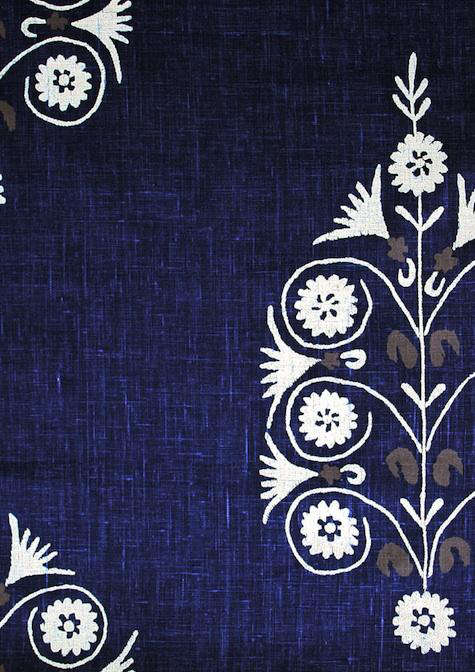
Jaisalmer is a printed fabric design from Borderline Fabrics, a brand known for eclectic prints, weaves, and archive-inspired textiles for curtains, upholstery, cushions, and interior schemes. The Jaisalmer design appears in the brand’s Rajasthan collection and is listed in colorways including denim, damson, and natural. Product specifications identify the fabric as 100% linen, with a width of approximately 135 cm or 53 inches and a repeat of approximately 59 cm or 23 inches.
Those numbers matter. A 53-inch width is practical for drapery panels, cushions, upholstered accents, and decorative applications. A 23-inch repeat gives the pattern enough scale to breathe, which means it can make a visible design statement without looking like it is yelling across the sofa. Think of it as a pattern with manners.
The term “Jaisalmer Print” should not be confused with a generic souvenir fabric from Rajasthan. In this context, it refers to Borderline Fabrics’ specific design, inspired by Indian and Rajasthani visual language but made for interior design use. It is less “market stall scarf” and more “library chair that secretly has better travel stories than you do.”
The Design Inspiration: Why Jaisalmer Matters
Jaisalmer, often called the Golden City, sits in the Thar Desert in Rajasthan. Its identity is tied to yellow sandstone architecture, carved havelis, historic temples, the famous Jaisalmer Fort, and a desert landscape that shifts beautifully with the light. That combination gives designers a deep well of inspiration: geometry, warmth, shadow, hand-carved detail, and sunbaked elegance.
In textile terms, Rajasthan is also a powerhouse. The state is associated with block printing, resist dyeing, natural dye traditions, embroidered textiles, mirror work, and bold decorative borders. Places such as Jaipur, Bagru, Sanganer, Barmer, and surrounding craft communities have helped shape global interest in Indian printed fabrics. While Borderline’s Jaisalmer is a contemporary interior fabric rather than a village-made textile, its appeal depends on the same ingredients that make Rajasthani-inspired prints so enduring: rhythm, contrast, ornament, and a sense of place.
Borderline Fabrics and the Archive-Inspired Interior Look
Borderline Fabrics has built a reputation around prints and weaves that feel historic without becoming dusty. The company’s collections often draw from archive sources, traditional documents, travel references, and decorative styles from different eras. That matters because rooms today rarely succeed when everything looks brand new. A good space needs layers: one object that feels old, one textile that feels traveled, one pattern that looks as though it came from a cabinet full of excellent secrets.
Jaisalmer Print fits this philosophy well. It is decorative but not fussy, worldly but not costume-like, and usable without being boring. It can add heritage character to an American living room, soften a contemporary bedroom, or bring a designer touch to a reading nook that previously had all the charisma of a tax form.
Why 100% Linen Makes a Difference
Linen is one of the oldest and most beloved natural fibers used in interiors. It has texture, breathability, and a relaxed elegance that synthetic fabrics often try to imitate but rarely nail. With printed linen, the slight irregularity of the fiber can make a pattern look more organic and less machine-flat. That is especially useful for a design like Jaisalmer, where the beauty comes from a balance of structure and softness.
A 100% linen fabric can work beautifully for curtains, Roman shades, decorative pillows, light upholstery, table skirts, lampshades, and wall panels. However, linen also deserves realistic expectations. It can crease, soften over time, and develop a lived-in look. For many people, that is the charm. For anyone who wants every textile to behave like a laminated spreadsheet, linen may require a little emotional growth.
How the Jaisalmer Print Works in Interior Design
1. Curtains That Frame the Room
Jaisalmer Print can be especially effective as drapery. The 23-inch repeat allows the motif to show properly from ceiling to floor, while linen gives the panels movement and texture. In a living room, cream-on-denim can add depth without turning the room dark. Natural can make a space feel airy and relaxed. Damson can bring richness, especially when paired with warm woods, brass, antique rugs, or deep brown leather.
For a tailored look, use full-length curtains with simple hardware. Let the fabric do the storytelling. There is no need to add tassels, fringe, eight throw pillows, and a dramatic monologue. The print already has enough personality.
2. Accent Pillows With Designer Energy
If you love the fabric but are not ready to commit to drapery, pillows are the gateway textile. A pair of Jaisalmer cushions can instantly upgrade a plain sofa, window seat, or bed. Because the print has a heritage-inspired mood, it pairs well with solids, stripes, small-scale florals, ikat patterns, and textured neutrals.
For American homes with neutral furniture, the easiest formula is simple: one Jaisalmer pillow, one solid linen pillow, and one smaller patterned pillow in a related color. That combination says “collected” rather than “I panic-bought accessories at midnight.”
3. Upholstered Occasional Chairs
Jaisalmer Print can be striking on an occasional chair, especially one with clean lines. A slipper chair, small armchair, or bedroom chair upholstered in this fabric can become a focal point without overwhelming the room. Because the design has a medium-to-large repeat, it is smart to discuss pattern placement with an upholsterer before cutting. Nobody wants the best part of the motif hidden under a seat cushion, silently judging everyone.
4. Roman Shades and Window Treatments
Roman shades are another strong use case. The flat surface gives the print a chance to read clearly, and linen adds softness to the window. In kitchens, breakfast rooms, powder rooms, or home offices, a Roman shade in Jaisalmer Print can deliver a polished designer moment in a relatively small dose.
Colorways: Denim, Damson, and Natural
The known Jaisalmer colorways each create a different mood. Denim feels relaxed, classic, and versatile. It works with white walls, natural wood, navy, tan, ochre, terracotta, and even soft green. Damson is moodier and more dramatic, ideal for rooms that lean traditional, romantic, or layered. Natural is the quietest option, perfect for spaces that need texture and pattern but still want to whisper rather than sing opera from the staircase.
Choosing the right colorway depends on the room’s light, existing furniture, and how much contrast you want. In bright rooms, denim and damson can hold their own. In smaller or darker rooms, natural may keep the space from feeling heavy. The best move is always to order a sample first. Fabric samples are tiny squares of wisdom, and ignoring them is how design mistakes become expensive throw blankets.
The Link Between Jaisalmer Print and Indian Textile Traditions
Indian printed textiles have influenced global interiors for centuries. Chintz, block prints, kalamkari-inspired designs, floral repeats, paisleys, and decorative borders traveled from India into European and American homes, shaping the history of curtains, bed hangings, upholstery, and wall coverings. Traditional Indian textile making often involved wooden blocks, mordants, resist techniques, plant-based dyes, and highly skilled pattern registration.
Modern interior fabrics inspired by these traditions do not always replicate handmade processes exactly, but they carry forward the visual language: stylized flowers, structured borders, rhythmic repeats, and decorative density. Jaisalmer Print belongs to this broader design conversation. It gives American interiors access to the warmth and pattern vocabulary associated with Rajasthan while remaining practical for contemporary decorating.
How to Style Jaisalmer Print Without Overdoing It
The secret to using a strong print is not fear; it is balance. Jaisalmer Print works beautifully when paired with calm textures. Try it with Belgian-style linen, cotton velvet, cane furniture, dark wood, rattan, jute rugs, plaster walls, aged brass, or ceramic lamps. It can also sit comfortably beside stripes, checks, and smaller florals if the colors are coordinated.
For a modern room, use the fabric as one confident accent. For a traditional room, layer it with antiques, framed art, books, and patterned rugs. For a coastal room, the denim colorway can look fresh with white slipcovers and natural fiber rugs. For a desert-inspired room, combine natural or damson with terracotta, sand, clay, and weathered wood.
What should you avoid? Too many large-scale prints competing at once. If every surface in the room is shouting, the result is not maximalism; it is a textile traffic jam. Let Jaisalmer be the star, then give it a supporting cast that knows when to stop talking.
Care, Durability, and Practical Considerations
Because Jaisalmer Print is listed as 100% linen, care should be handled thoughtfully. For custom curtains, upholstery, or shades, professional cleaning is usually the safest route. Linen may shrink if washed incorrectly, and printed fabrics can be sensitive to harsh detergents, bleach, or aggressive scrubbing. If used for pillows, removable covers with proper lining and professional care instructions are a smart choice.
Sunlight is another consideration. All printed fabrics can fade over time when exposed to direct UV light. If using Jaisalmer for windows, consider lining or interlining the treatment. Lining helps protect the fabric, improves drape, and gives curtains a more finished appearance. In other words, lining is like good tailoring: invisible when done well, tragic when skipped.
Who Should Choose Jaisalmer Print Borderline Fabrics?
Jaisalmer Print is ideal for homeowners, decorators, and design lovers who appreciate heritage-inspired patterns, natural fibers, and interiors with a sense of travel. It is not the fabric for someone who wants a room to look aggressively plain. It is for people who enjoy pattern, history, atmosphere, and the feeling that a space has been assembled slowly and intelligently.
It is especially useful for transitional interiors because it can bridge old and new. Pair it with a modern sofa and it adds warmth. Use it in a traditional room and it feels right at home. Add it to a minimalist space and it becomes the one interesting thing everyone notices, which is useful if your current decor strategy is “beige, but make it nervous.”
Real-World Experiences With Jaisalmer Print Borderline Fabrics
Seeing a fabric online is one thing. Living with it is another. In real decorating situations, Jaisalmer Print often works best when introduced as a character piece rather than a background extra. Imagine a sunny living room with white walls, a linen sofa, a vintage wood coffee table, and plain woven shades. Add two Jaisalmer pillows in denim, and suddenly the room has a point of view. It still feels casual, but now it looks designed. The print gives the eye somewhere to land, which is what every neutral room secretly wants but is too polite to ask for.
In a bedroom, the natural colorway can create a softer experience. Used as a Roman shade or a pair of Euro shams, it brings pattern without making the room feel busy. This is especially helpful in spaces where sleep is the assignment and the decor should not behave like a marching band. Natural linen tones can pair beautifully with ivory bedding, walnut nightstands, ceramic lamps, and a faded rug. The result feels warm, quiet, and personal.
For dining spaces, Jaisalmer can be surprisingly effective in small doses. A fabric-covered lampshade over a buffet, seat cushions on occasional chairs, or a simple table skirt can add a handcrafted mood. Guests may not immediately know why the room feels richer, but they will notice. That is the magic of good fabric: it improves the room without waving a tiny flag that says “I am the reason this works.”
Designers often test a print by asking how flexible it is. Can it handle antiques? Yes. Can it live near contemporary art? Also yes. Can it make a plain rental apartment feel less temporary? Absolutely. Jaisalmer Print has enough cultural texture to feel special, but enough restraint to avoid turning every room into a theme restaurant. That balance is important. Inspiration is lovely; imitation can get awkward fast.
One practical experience worth mentioning is scale. Because the repeat is about 23 inches, the fabric needs enough surface area to show itself. On a tiny cushion, you may only see part of the design. On a curtain panel, shade, or chair back, the pattern has room to perform. Before ordering yardage, think about where the repeat will fall. A good upholsterer or workroom can help center the motif, match panels, and avoid strange cutoffs. Pattern placement is the unsung hero of custom interiors; when it is done well, nobody notices. When it is done badly, everybody notices but tries to be kind about it.
The best experience with Jaisalmer Print comes from using it intentionally. Start with a sample. Move it around the room in morning, afternoon, and evening light. Hold it against paint, wood, rugs, and nearby fabrics. If it still looks good after a few days of casual staring, it is probably a strong choice. Fabric should not only look beautiful in a product photo; it should earn its place in the actual room where people spill coffee, read books, host friends, and occasionally pretend the laundry chair is a design feature.
Conclusion
Jaisalmer Print Borderline Fabrics is more than a pretty linen. It is a bridge between heritage-inspired pattern and practical interior design. With its Rajasthan connection, natural fiber composition, generous width, and elegant repeat, it offers decorators a flexible way to add warmth, rhythm, and character to American homes. Whether used for curtains, pillows, shades, or accent upholstery, it delivers the rare design combination of history, charm, and usability.
For anyone who wants a room to feel layered, thoughtful, and quietly adventurous, Jaisalmer Print is a strong candidate. It brings the spirit of the Golden City into the home without requiring a passport, a camel, or a dramatic renovation budget. And honestly, any fabric that can do that deserves a closer look.