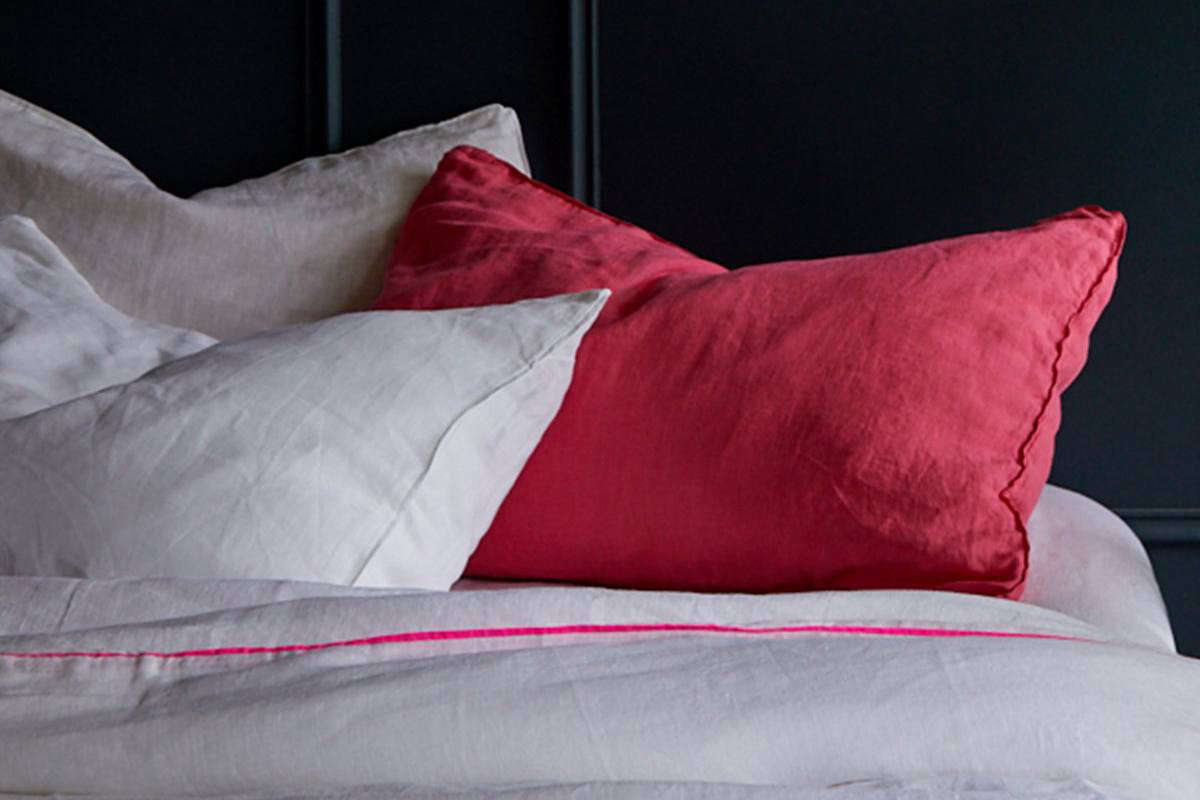

A linen pillow case in bright pink with piping is not the shy member of the bedding family. It does not quietly disappear beneath a beige comforter or politely blend into the background. It arrives, looks around the bedroom, and announces, “This space could use more personality.” Fortunately, it brings more than a fabulous color. Linen offers a breathable, textured sleeping surface, while the piped edge gives the pillowcase a tailored finish that looks polished without feeling overly formal.
This combination works because it balances opposites. The linen fabric is relaxed, slightly rumpled, and naturally casual. Bright pink is energetic and expressive. Piping adds structure and definition. Together, these details create a decorative pillowcase that can feel playful in a colorful room, sophisticated in a neutral bedroom, or delightfully unexpected in a traditional space.
Why a Bright Pink Linen Pillow Case Stands Out
White and cream bedding will always have their place, but a bright pink linen pillow case offers something neutral bedding cannot: instant visual energy. Even one pink pillow can become a focal point, especially when placed against white sheets, a natural linen duvet, a dark upholstered headboard, or warm wood furniture.
Interior designers frequently use colorful bedding and accent pillows as flexible ways to introduce personality without repainting walls or replacing expensive furniture. Pink can appear romantic, contemporary, cheerful, dramatic, or even slightly rebellious depending on the colors and materials surrounding it. Bright pink looks especially crisp beside white, charcoal, navy, forest green, pale blue, or natural flax tones.
A Small Change with a Large Visual Effect
A pillowcase occupies a relatively small area, yet it sits near the visual center of the bed. That makes it an excellent place to experiment with bold color. You can enjoy the impact of bright pink without committing to pink walls, curtains, carpet, and a dresser that looks as though it escaped from a candy store.
For a restrained look, use one bright pink pillow case as an accent among ivory, gray, or oatmeal bedding. For a more energetic bedscape, pair two pink pillowcases with patterned cushions, a contrasting throw, or a floral quilt. The color can also be repeated in a bedside lamp, framed print, vase, or small rug to make the room feel intentional rather than accidental.
What Linen Brings to the Pillow
Linen is made from fibers obtained from the flax plant. In bedding, it is valued for its airy structure, moisture management, durability, and distinctive texture. Unlike fabrics that aim to look perfectly smooth, linen has a relaxed surface with subtle variations that give it character.
Breathability is one of linen’s most practical advantages. The fabric allows air to circulate and generally feels less heat-trapping than many synthetic textiles. This can make a linen pillowcase appealing to warm sleepers, people living in humid climates, and anyone who frequently flips the pillow in search of “the cool side.” Linen can also provide comfortable insulation in cooler weather, making it useful beyond the summer months.
A Texture That Improves with Use
New linen may feel crisper or more textured than smooth cotton sateen. That is not necessarily a defect. High-quality linen typically relaxes and softens through washing and regular use. Prewashed, garment-washed, or stone-washed linen usually feels more comfortable from the beginning, while untreated linen may require a little patience.
Think of it as the bedding equivalent of a good pair of jeans. It may not perform a dramatic violin solo when first removed from the package, but it becomes more familiar, flexible, and comfortable over time. Bedding evaluations by textile experts regularly note that linen’s feel changes after repeated laundering, with many products becoming softer while retaining their characteristic texture.
The Wrinkles Are Part of the Look
Linen wrinkles easily because of the structure of its natural fibers. Buyers expecting a hotel-style, ironed-flat surface may need to adjust their expectations or prepare to use an iron. However, the relaxed wrinkles are also a major part of linen’s appeal. They create an informal, lived-in appearance that works beautifully in modern organic, coastal, cottage, farmhouse, bohemian, and European-inspired bedrooms.
A bright pink linen pillow case makes those wrinkles look even more expressive. Instead of appearing untidy, the folds create shifts in tone and texture, giving the saturated color more depth. It is basically proof that a pillow can wake up with messy hair and still look fantastic.
Why the Piping Detail Matters
Piping is a narrow covered cord sewn into a seam or around an edge. On a pillowcase, it produces a defined border that frames the pillow. This small construction detail can make a basic rectangle of fabric look more tailored and carefully finished.
The piping may match the bright pink linen for a subtle, sculpted outline, or it may use a contrasting color such as white, red, burgundy, orange, navy, or green. Matching piping emphasizes shape and craftsmanship. Contrasting piping adds graphic definition and can connect the pillowcase to other colors in the bedroom.
In sewing and textile design, piping is commonly used to emphasize seam lines, create a crisp edge, and introduce an additional color or texture. On bedding, it also helps the perimeter maintain a more visible shape when the pillow is propped against a headboard or layered behind decorative cushions.
Look Closely at Construction Quality
Good piping should appear even around the entire pillowcase. The cord should not twist, flatten abruptly, or wander away from the edge. Corners deserve special attention because poorly installed piping may bunch or pucker there. Straight seams, reinforced stitching, and neatly finished interior edges are signs that the pillowcase was designed for repeated use rather than a single glamorous appearance in a product photograph.
If the piping uses a different fabric, check whether its care instructions are compatible with the linen body. A linen pillowcase that can tolerate gentle machine washing becomes much less convenient when its decorative trim demands a complicated cleaning ritual involving three buckets, a moonlit balcony, and emotional support.
How to Style Bright Pink Linen Bedding
Pair It with Clean Neutrals
White, ivory, beige, oatmeal, and light gray allow bright pink to become the star. This is the easiest approach for a room that already contains neutral bedding. Add the pink pillowcase, repeat its color once in a small accessory, and stop before every object in the room joins the pink parade.
Create Contrast with Dark Colors
Charcoal, chocolate brown, black, navy, and deep green make bright pink feel more sophisticated. A pink linen pillow against a dark headboard creates strong contrast, while natural linen texture prevents the combination from looking too glossy or theatrical.
Build a Playful Color Palette
For a joyful room, combine bright pink with coral, orange, cherry red, turquoise, cobalt blue, or sunny yellow. The safest method is to select one dominant color, one supporting color, and one smaller accent. Colorful bedrooms usually feel more cohesive when shades are repeated in controlled doses rather than scattered randomly.
Mix Pink with Natural Materials
Rattan, cane, oak, walnut, jute, woven baskets, ceramic lamps, and houseplants soften the intensity of bright pink. These natural elements also complement linen’s organic texture. The result feels collected and comfortable instead of overly coordinated.
Use It in More Than One Design Style
- Modern bedroom: Pair the pillowcase with white bedding, black lighting, and simple furniture.
- Cottage room: Add floral prints, a quilt, painted wood, and soft cream accents.
- Bohemian interior: Mix it with patterned textiles, warm woods, woven décor, and layered cushions.
- Traditional bedroom: Use contrasting piping, a structured headboard, and symmetrical bedside tables.
- Maximalist space: Combine pink with wallpaper, artwork, stripes, and unapologetically dramatic accessories.
How to Choose the Right Linen Pillow Case
Confirm the Fiber Content
Look for clear information about the material. A product labeled 100% linen should be made entirely from flax-derived linen fibers, while a linen blend may contain cotton, rayon, or synthetic fibers. Blends can be softer or less expensive, but they may not provide the exact texture, airflow, or aging characteristics associated with pure linen.
Neither option is automatically wrong. The best choice depends on whether you prioritize authentic linen texture, immediate softness, easy maintenance, price, or a specific visual finish.
Check the Pillowcase Dimensions
Never rely only on labels such as “standard” or “queen.” Measure the pillow and compare it with the manufacturer’s listed dimensions. Common U.S. pillowcase measurements are approximately 20 by 26 inches for standard, 20 by 30 inches for queen, and 20 by 36 inches for king, although individual brands may add extra room or use combined standard/queen sizing.
A case that is too small can compress the pillow and distort its loft. One that is too large may look loose and untidy. Piped pillowcases often look best with a comfortably full fit because the filling supports the defined border.
Consider the Closure
An open-ended pillowcase is simple and easy to change. An envelope closure hides the pillow insert and creates a tidier appearance. Buttons add decoration but may be noticeable during sleep if placed poorly. A zipper provides a secure fit, although it should be concealed so that it does not scratch the sleeper or catch neighboring fabric.
Examine the Pink Dye
Bright colors can behave differently from pale neutrals during washing. Review the care label, check whether the linen was garment-dyed, and wash vivid pink bedding separately during its first few cycles. A colorfast product should maintain its personality without sharing that personality with every white sock in the machine.
How to Wash and Care for Bright Pink Linen
Always begin with the manufacturer’s care label because dyes, trims, thread, and finishing treatments can change the recommended method. In general, linen bedding is commonly washed in cold or lukewarm water with a mild detergent. A gentle cycle reduces unnecessary abrasion, while leaving enough space in the washer allows the fabric to rinse properly.
Avoid crowding the pillowcase into a load containing heavy towels, jeans, garments with exposed hooks, or items with rough zippers. These can rub against the linen or catch the piping. Turning the pillowcase inside out can help protect its surface and preserve the bright color.
Protect the Bright Pink Color
- Wash with similar colors, especially during the first few washes.
- Use a mild detergent and avoid pouring detergent directly onto dry fabric.
- Do not use chlorine bleach unless the care label specifically permits it.
- Treat stains promptly by blotting rather than aggressively rubbing.
- Avoid prolonged direct sunlight during drying if fading is a concern.
Cold-water washing is often gentler on colored textiles, while harsh bleach can permanently alter dyed linen. Laundry authorities also recommend following both the textile label and the cleaning product instructions before using bleach or specialty treatments.
Dry with Low Heat or Air
Air drying is generally the gentlest option. When using a dryer, select a low-temperature setting and remove the pillowcase while it is still slightly damp. Excessive heat can contribute to shrinkage, fading, stiffness, and faster fiber wear.
Reshape the case and smooth the piping after washing. This takes less than a minute and can prevent the edge from drying in an awkward position. For a crisp finish, iron the linen while it is still slightly damp. For a casual finish, let the wrinkles live their best life.
Wash It Regularly
Pillowcases collect skin oils, hair products, perspiration, dust, and environmental particles because they remain in close contact with the face and hair. Weekly washing is a common baseline, while people with oily skin, allergies, pets in the bed, or heavy nighttime sweating may prefer to change pillowcases more frequently.
Advantages and Possible Drawbacks
Reasons to Love It
- Breathable natural fabric suitable for warm rooms and hot sleepers
- Distinctive texture that becomes softer through use
- Bright color that refreshes a bedroom quickly
- Piped edge that creates a tailored, decorative finish
- Versatile styling across modern, cottage, bohemian, and traditional interiors
- Durable material when washed and dried carefully
What to Consider Before Buying
- Linen may feel crisp or textured during the first few uses.
- The fabric naturally wrinkles.
- High-quality linen can cost more than basic cotton or microfiber.
- Bright pink may require careful color sorting during laundering.
- Piping must be well constructed to remain smooth after repeated washing.
- A strongly colored pillowcase may not suit every existing bedroom palette.
The Day-to-Day Experience of Living with a Bright Pink Linen Pillow Case
The first experience usually happens before the pillowcase reaches the bed. Bright pink linen looks different in natural light than it does under store lighting or on a phone screen. Sunlight reveals the fabric’s texture, including small slubs and irregularities associated with woven linen. These details stop the pink from looking flat. Instead, the surface shifts between lighter and deeper tones as the fabric folds.
During the first night, the most noticeable feature may be the texture. Someone accustomed to smooth sateen or microfiber may find linen slightly crisp. Prewashed linen feels more relaxed, but it still has a tactile character. After several nights, that texture often becomes less noticeable, particularly as the fabric warms, moves, and begins adapting to regular use.
The piping changes the physical experience in a subtle way. It creates a defined edge that makes the pillow feel more structured when arranged on the bed. A sleeper may occasionally notice the cord if it is unusually thick or positioned directly beneath the face, which is why soft, narrow, well-sewn piping is preferable for a functional pillowcase. Decorative shams can tolerate more dramatic trim, but a sleeping pillow should prioritize comfort.
After the first wash, the linen usually looks more relaxed. The surface develops additional wrinkles, the fabric may soften, and the piping may require a quick adjustment before drying. Removing the pillowcase promptly from a low-heat dryer and smoothing it by hand produces a neat but casual result. Leaving it crushed inside the dryer for three hours produces a result best described as “historical document discovered in an attic.” It is still usable, but considerably more archaeological.
The color also changes how the entire bedroom feels. In a neutral room, the pillowcase can become the first object the eye notices. It gives an ordinary bed a more styled appearance even when the rest of the bedding remains simple. In a colorful room, it can connect artwork, flowers, rugs, or other pink accents. The piped border helps contain the strong color, giving it a clean outline rather than allowing it to visually blend into surrounding bedding.
Over several weeks, the pillowcase generally becomes easier to incorporate into daily routines. It no longer feels like a special decorative item that must be protected from ordinary life. It becomes part of the regular bedding rotation: used, washed, air-dried or tumble-dried on low, and returned to the bed. Linen’s casual wrinkles mean the pillowcase does not need to look perfectly pressed to appear intentional.
Seasonal styling is surprisingly simple. During spring and summer, bright pink works with white sheets, lightweight blankets, pale blue, citrus colors, and floral patterns. During fall, it can be grounded with burgundy, rust, chocolate brown, or dark green. In winter, the same pillowcase can brighten charcoal bedding, velvet cushions, or a thick cream throw. Although the color is bold, it is not limited to a single season.
The longer-term experience depends heavily on care. Gentle washing preserves the fibers, while low heat helps control shrinkage and fading. Overuse of harsh detergent, bleach, or very hot drying may age the color and weaken the edge construction. When cared for thoughtfully, the linen should grow softer and more relaxed while the piping continues to provide definition.
Ultimately, living with a bright pink linen pillow case is less about chasing a perfectly coordinated showroom and more about enjoying a useful object with personality. It provides a comfortable place to sleep, but it also makes the daily act of arranging the bed slightly more enjoyable. That may sound like a small achievement, yet most adults spend enough time managing laundry, bills, and mysterious kitchen containers without lids. A pillowcase that makes the room happier is doing respectable work.
Final Thoughts
A linen pillow case in bright pink with piping combines breathable comfort with confident design. Linen contributes natural texture, airflow, durability, and a relaxed appearance that becomes softer over time. Bright pink provides energy and personality, while the piped border gives the pillowcase a neat, tailored outline.
Choose the correct size, verify the fiber content, inspect the piping, and follow the care label closely. Style it with clean neutrals for balance, dark shades for drama, or additional saturated colors for a joyful maximalist look. Whether used as a single accent or as part of a complete bedding arrangement, this pillowcase proves that practical bedroom essentials do not have to be boring.
Note: Product construction, dyes, finishes, and piping materials vary. Always follow the specific washing and drying instructions supplied with the pillowcase.