
“Link juice” may sound like something served in a neon bottle at an SEO conference, but it remains one of the most useful ways to understand how authority moves across the web. The phrase is informal, slightly goofy, and not a metric you will find printed on Google’s dashboard. Still, the underlying idea is very real: links help search engines discover pages, understand relationships between topics, and evaluate which pages may deserve more visibility.
Search engines have become much smarter than the old “more backlinks equals better rankings” era. Today, quality, relevance, usefulness, context, trust, and user experience all matter. But links still sit at the center of how the web is connected. A strong internal linking strategy and a healthy backlink profile can help important pages get discovered, understood, and supported.
In other words, link juice is not magic SEO potion. It is more like plumbing. When your site’s pipes are logical, clean, and connected, value can move where it needs to go. When your pipes are broken, clogged, or pointed toward random pages nobody needs, things get messy fast.
What Is Link Juice?
Link juice is an informal SEO term for the value, authority, relevance, or ranking potential that one webpage may pass to another through a hyperlink. The more useful term is link equity, but “link juice” has survived because marketers apparently enjoy imagining the internet as a giant fruit stand.
When Page A links to Page B, that link can send several signals:
- Page B may be important enough to reference.
- Page B may be relevant to the topic discussed on Page A.
- Search engines may have another pathway to discover and crawl Page B.
- Users may find Page B useful as the next step in their journey.
Google has confirmed that its systems still use link analysis, including PageRank, as part of its broader ranking systems. However, PageRank is only one piece of a much larger puzzle. Great links cannot rescue thin, outdated, confusing, or unhelpful content. A page needs to earn its visibility after visitors arrive.
Link Juice vs. PageRank: Are They the Same Thing?
Not exactly. Link juice is the casual SEO explanation for value flowing through links. PageRank is a link-analysis concept originally designed to estimate the relative importance of pages based on the links pointing to them.
Think of link juice as the water moving through a network of pipes. PageRank is closer to a complex system measuring where that water collects, how it moves, and which nodes appear important. Modern search engines use far more signals than links alone, including content quality, relevance, freshness, user intent, usability, and many other factors.
So, do not treat a backlink as a lottery ticket. Treat it as one supporting signal in a larger trust-and-relevance system.
How Link Juice Works in SEO
Link equity does not flow evenly or predictably like a glass of water being poured into identical cups. Search engines do not publicly reveal the exact formulas behind their ranking systems, and those systems change constantly. Still, SEO professionals generally evaluate a link’s potential value through several practical factors.
1. Authority and Trust of the Linking Page
A link from a respected, well-established, useful page usually carries more potential value than a link from a low-quality page built entirely from expired coupons, random casino banners, and 47 blinking ads.
The strength of the linking page matters, not just the website’s overall reputation. A high-authority domain can still contain weak, irrelevant, or neglected pages. Conversely, a focused article on a smaller but respected industry website can be extremely valuable when it reaches the right audience.
2. Topical Relevance
Context matters. A link from a respected home renovation website to an article about installing hardwood flooring makes logical sense. A link from a pet grooming blog to the same flooring article may be less meaningful unless the article is specifically about preventing Labrador-induced floor scratches.
Topical relevance helps search engines understand why two pages are connected. It also improves the user experience because visitors are more likely to click a link that naturally continues the conversation.
3. Anchor Text
Anchor text is the visible, clickable wording in a link. It gives readers and search engines clues about what they will find after clicking.
For example, “learn how to repair a leaky kitchen faucet” is much more descriptive than “click here.” Descriptive anchor text is useful because it provides context. However, repeating the same exact keyword phrase across hundreds of links can look unnatural and overly optimized.
A healthy anchor text profile usually includes a natural mix of branded phrases, descriptive partial-match phrases, topic variations, and occasional generic wording where it genuinely makes sense.
4. Placement and Context of the Link
A link placed naturally inside a helpful paragraph often makes more sense than one buried in a cluttered footer beside “Best Psychic Deals,” “Cheap Sunglasses,” and “Free PDF Download Now!!!” Contextual links are usually more useful because they explain why the destination page matters.
A good link should feel like editorial guidance. It should answer the reader’s silent question: “Where should I go next?”
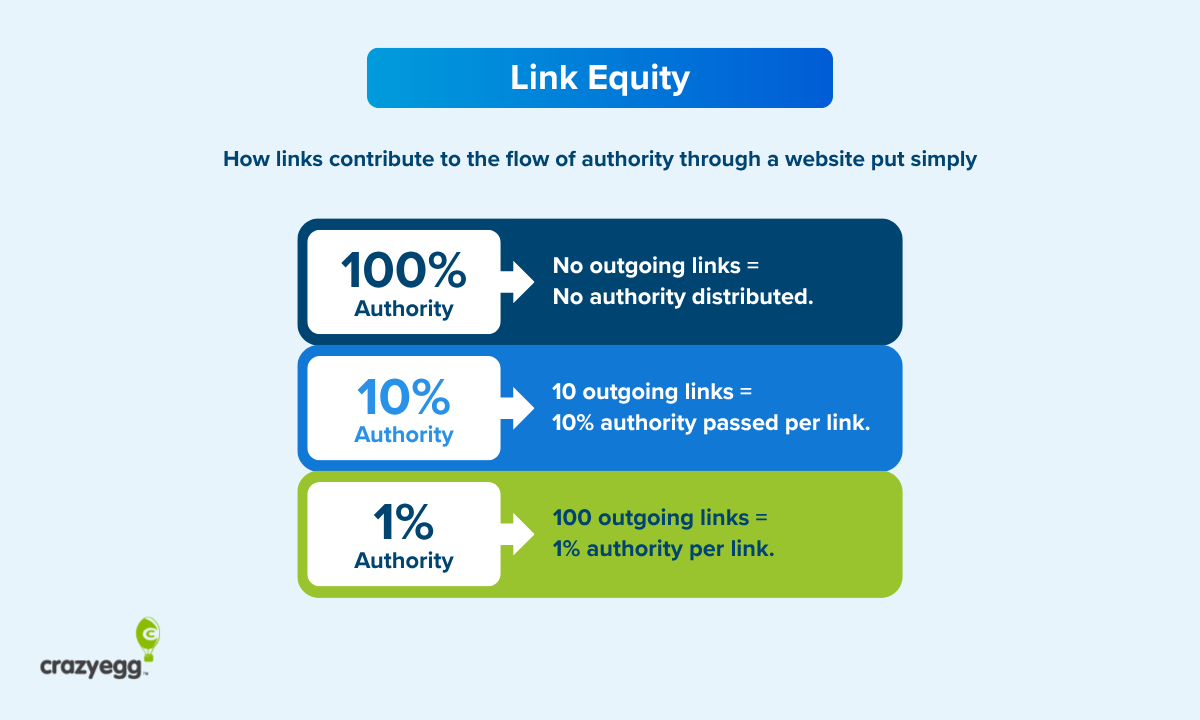
5. Number of Outgoing Links
A page with a reasonable number of relevant links can guide visitors and search engines effectively. A page stuffed with hundreds of unrelated links, however, spreads attention thin and may look less useful overall.
This does not mean you should become terrified of linking out. Helpful outbound links can strengthen content, support claims, and improve reader trust. The goal is not to hoard authority like a dragon guarding a spreadsheet. The goal is to link with purpose.
6. Link Attributes
Not every link is treated the same. Standard links can generally be crawled and interpreted normally, while certain attributes give search engines additional context:
- rel=”sponsored” identifies paid placements, advertising, or sponsorships.
- rel=”ugc” identifies user-generated content such as forum posts or comments.
- rel=”nofollow” can indicate that a site does not want to endorse or fully associate with the destination.
These attributes are not decorative SEO stickers. They help search engines understand the relationship between the linking page and the linked page. Paid links intended to manipulate rankings are risky and can violate search engine spam policies.
Why Link Juice Still Matters
Some marketers assume links no longer matter because search engines now understand language, entities, behavior, multimedia, and user intent far better than they did years ago. That is partly true. Search engines have evolved dramatically. But links remain important because the web itself is still built on connections.
Links Help Search Engines Discover Pages
Search engines use links to find pages across the web and within a site. A page with no internal links can become an orphan page: it exists, but it is difficult for users and crawlers to find naturally.
Sitemaps can help search engines discover URLs, but internal links give stronger context. They show how pages relate to one another, which sections belong together, and which content matters most within a topic cluster.
Links Help Build Topical Authority
A well-organized content hub can show expertise across a subject. For example, a financial website might publish a complete guide to retirement planning, then link to more detailed pages about Roth IRAs, 401(k) rollovers, retirement taxes, required minimum distributions, and estate planning.
Those pages should link back to the main guide and to other relevant supporting resources. This creates a logical content ecosystem instead of a pile of articles wandering around the site like shoppers who lost their cart at Costco.
Links Support Important Commercial Pages
Many websites earn backlinks to educational articles, research pages, tools, calculators, and entertaining content. That is useful, but the strongest linked pages are not always the ones that drive leads or sales.
Internal links can help move some of that earned authority toward important service pages, category pages, product pages, and conversion-focused landing pages. The key word is relevant. A blog post about choosing a running watch can naturally link to a category page for GPS running watches. It should not suddenly link to a dental implant service because somebody in marketing got ambitious.
External Links vs. Internal Links
Both types matter, but they serve different roles.
External Backlinks
External backlinks come from another website to your website. These links can help establish credibility, referral traffic, brand awareness, and topical relevance. A relevant editorial mention from a trusted publisher, professional organization, university, industry association, or respected specialist can be far more valuable than a pile of low-quality directory links.
The best backlink strategy is rarely “go get 500 links by Friday.” It is creating original resources worth referencing: expert guides, calculators, data studies, visual explainers, case studies, tools, templates, local resources, and truly useful content.
Internal Links
Internal links connect pages on the same domain. They are one of the few SEO levers you fully control. You cannot force a respected publication to link to you, but you can make sure your strongest pages support your most important related pages.
Internal linking can improve navigation, reduce orphan pages, distribute link equity, reinforce topic relationships, and help visitors continue their research. It is not glamorous, but neither is changing engine oil. Both are ignored until something starts making a horrible noise.
A Practical Example of Link Juice Flow
Imagine a home improvement website publishes a detailed article called “The Complete Guide to Kitchen Remodeling Costs.” The article earns links from local news sites, interior design blogs, and homeowner forums because it includes original pricing research.
That page may attract meaningful authority and traffic. Instead of leaving it isolated, the website can add relevant internal links to:
- A kitchen cabinet installation service page
- A guide to choosing countertop materials
- A kitchen renovation project gallery
- A local contractor consultation page
- A calculator for estimating kitchen remodel budgets
This approach helps visitors find useful next steps while showing search engines how the content fits together. The guide becomes more than a traffic magnet. It becomes a useful hub that supports the wider site.
How to Improve Link Juice on Your Website
Audit Your Most Valuable Pages
Start by identifying pages that already have strong backlinks, steady organic traffic, high conversion rates, or strong brand visibility. These pages may have useful link equity to share internally.
Then identify pages that deserve more support. Look for pages that rank on page two or three, pages with strong conversion potential, newly published cornerstone content, and useful pages with too few internal links.
Build Topic Clusters, Not Random Link Chains
Choose a broad pillar topic and create supporting content around it. Link the pillar page to relevant subtopics, then link supporting articles back to the pillar page where appropriate.
For instance, a digital marketing site could build a pillar page about local SEO and support it with pages about Google Business Profile optimization, local citations, review management, location pages, local keyword research, and map pack visibility.
Use Natural, Descriptive Anchor Text
Write anchor text for humans first. Tell readers what they will find after the click. Use natural variations instead of forcing the exact same keyword phrase every time.
Good anchor text is specific, relevant, and easy to understand out of context. It should not feel like a robot wearing a tie wrote it.
Fix Broken Links and Redirect Old URLs Properly
Broken internal links create dead ends for visitors and waste crawling opportunities. Broken backlinks can also send users to error pages instead of useful content.
When a page has moved permanently, use a relevant permanent redirect to guide users and search engines to the new destination. Avoid redirecting every deleted page to the homepage just because it feels emotionally convenient. A redirect should match the original page’s intent as closely as possible.
Consolidate Duplicate or Competing Pages
When multiple URLs target the same intent, they can split internal links, backlinks, user engagement, and topical focus. Review pages that overlap heavily and decide whether they should be merged, redirected, improved, canonicalized, or repositioned for different search intent.
One excellent page with clear purpose is often better than four nearly identical articles battling each other for the same keyword.
Do Not Abuse Nofollow for Internal Links
Years ago, some SEO strategies attempted to “sculpt” PageRank by adding nofollow attributes to internal links. That approach is outdated and usually unnecessary. Internal links should generally remain crawlable and useful when they point to legitimate pages that matter to visitors.
Use link attributes to communicate real relationships, such as sponsored placements or untrusted user-generated links. Do not use them as tiny traffic cones in a desperate attempt to force authority into one page.
Common Link Juice Mistakes to Avoid
- Buying manipulative backlinks: Paid links designed to influence rankings can create serious quality and spam risks.
- Obsessing over quantity: Ten relevant editorial links can be more useful than 1,000 low-quality links.
- Using repetitive exact-match anchor text: Natural language beats keyword copy-paste marathons.
- Ignoring orphan pages: Valuable pages need internal pathways.
- Linking without relevance: Every internal link should make sense for the reader.
- Forgetting old content: Older, high-authority pages can often support newer strategic pages.
- Redirecting everything to the homepage: Match redirects to the closest relevant replacement page.
- Measuring only rankings: Also monitor organic traffic, conversions, engagement, assisted conversions, and referral traffic.
How to Measure the Impact of Link Equity
You cannot see an official “link juice score” from Google or Bing. Third-party SEO tools provide estimates such as authority metrics, backlink counts, referring domains, internal link counts, and page-level strength indicators. These are useful for prioritization, not absolute truth.
Track practical business outcomes instead:
- Organic impressions and clicks
- Keyword movement for target pages
- New referring domains
- Internal links pointing to important URLs
- Indexing and crawl issues
- Referral traffic from relevant websites
- Lead generation, sales, subscriptions, or other conversions
A successful link strategy should make the site more useful, more connected, easier to navigate, and more discoverable. Ranking improvements are welcome. Better customer journeys are even better.
Experience-Based Lessons From Link Juice Strategy
In practical SEO work, the biggest link equity opportunities are often not hidden in some secret backlink database. They are sitting inside the website already, quietly collecting dust. A company may have one popular blog post with dozens of backlinks, thousands of monthly visits, and almost no meaningful internal links. Meanwhile, its important product or service pages are trying to rank with the authority equivalent of a damp napkin.
A common example involves a business that publishes educational content successfully but never connects that content to its commercial pages. A guide may rank well for “how to choose accounting software,” attract hundreds of links, and generate useful traffic. Yet the guide may not link to the company’s accounting software comparison page, pricing page, implementation service page, or product demo. The article becomes an impressive traffic trophy but contributes little to the broader business goal.
The fix is usually not aggressive. It is editorial. Add a useful comparison section, link naturally to the relevant product category, include a “next steps” block, and connect readers to deeper supporting resources. When done well, visitors benefit because they can continue their research without starting over. Search engines benefit because the relationships between pages become clearer. The business benefits because valuable content stops behaving like a lonely island.
Another frequent lesson is that internal links work best when they are planned during content production, not patched in six months later during a frantic quarterly audit. Before publishing a new article, identify its parent topic, its related supporting articles, and the pages that should link to it. This creates a content network from day one instead of a pile of isolated URLs.
Anchor text also deserves more care than it usually receives. Many websites repeat the same phrase in every internal link because someone made a spreadsheet and got a little too attached to it. A better approach is to write naturally. One article may link using “retirement planning checklist,” another may use “how to prepare financially for retirement,” and another may use “our guide to building a retirement income plan.” The destination remains clear without sounding like a keyword-stuffed parrot.
Finally, experience shows that links amplify quality; they do not replace it. An internally linked article with weak information, outdated advice, confusing formatting, or no real answer will still struggle. The pages that benefit most from link equity are pages worth recommending in the first place. Build helpful content, make its purpose obvious, connect it logically, and give users a reason to keep exploring. That is the version of link juice strategy that remains useful no matter how much search technology changes.
Final Thoughts
Link juice is not an official score, a shortcut, or a reason to turn every paragraph into a hyperlink obstacle course. It is a useful way to think about how value moves through the web and across your own site.
The best link strategy is simple in principle: earn relevant editorial links by creating content worth referencing, use internal links to connect genuinely related pages, maintain a clear site structure, and make every link useful for the person clicking it.
When your links help people find better answers, search engines have a much easier time understanding your website. That is why link juice still matters. Not because it is mysterious, but because the web still runs on connections.
Note: “Link juice” is an informal SEO phrase. Use it as a practical planning concept for relevance, authority, crawlability, and internal linkingnot as a guaranteed ranking formula or a standalone metric.