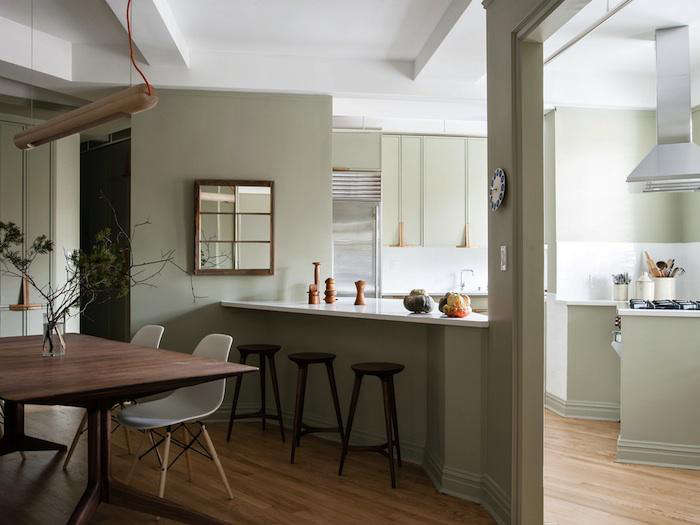

There are small apartments, and then there are Brooklyn small apartmentsthe kind tucked inside a brownstone that has seen more outfit changes than a movie star and more winters than your favorite cast-iron skillet. Living small in an architectural landmark is not just a real estate condition; it is a lifestyle, a design challenge, and occasionally a spiritual practice performed while trying to find where you stored the extra paper towels.
In Brooklyn, especially in historic neighborhoods like Brooklyn Heights, Park Slope, Cobble Hill, Boerum Hill, and parts of Fort Greene, compact living comes with serious visual rewards. You may get soaring windows, plaster medallions, marble mantels, old-growth floors, or a stoop so dramatic it deserves its own IMDb page. But the trade-off is equally real: quirky layouts, modest square footage, skimpy closets, and a long list of things you cannot casually “just replace” when your home sits in a landmarked building.
That is exactly what makes the idea so irresistible. A small Brooklyn landmark apartment is not trying to win a square-footage contest. It wins on character. It wins on story. It wins on the delicious tension between preservation and practicality. And when it is done well, it proves a powerful point: living small does not have to feel like living with less. It can feel like living with more intention, more beauty, and a lot more respect for the bones of a building that has already outlived several trends, three bad kitchen fads, and at least one era of deeply unfortunate beige paint.
Why Brooklyn Landmark Living Feels Different
Brooklyn’s architectural landmark culture is not a minor footnote. It is one of the borough’s defining features. Historic districts and individually landmarked properties shape the look and feel of entire blocks, preserving everything from Greek Revival row houses to Italianate brownstones and later masonry apartment buildings. That means when you rent or buy a small place in one of these buildings, you are not just moving into an apartment. You are stepping into a piece of civic history.
And history, charmingly, does not always prioritize your vacuum storage needs.
Landmarked Brooklyn homes often come with layouts designed for a different century. Rooms may be long and narrow. Closets may be laughably scarce. Kitchens may occupy what feels like a former hallway, and bathrooms can have all the confidence of a phone booth. Yet those limitations are exactly why so many design-minded city dwellers are drawn to them. A compact home in a landmark building asks better questions than a generic box in a glass tower ever could: What do you truly need? What deserves display? What can work harder? And how do you make a small footprint feel expansive without steamrolling the architecture that makes the home special?
The Real Perks of a Small Brooklyn Landmark Apartment
1. Character does the heavy lifting
One of the biggest advantages of living small in a historic Brooklyn building is that the architecture already gives you a head start. Original moldings, tall windows, transoms, decorative fireplaces, arched openings, and substantial doors create visual richness before you even bring in a sofa. In design terms, that means your home does not need endless stuff to feel layered. The room already has texture, rhythm, and identity.
This matters in a small apartment because clutter and charm are not the same thing. A landmark interior can feel full without being overcrowded. A single great lamp, a slim vintage desk, or a well-placed bookshelf often goes further in a character-rich room than a dozen decorative fillers ever could.
2. Scale can surprise you
Square footage is only one measure of livability. Many small landmark apartments feel bigger than they are because of ceiling height, oversized windows, generous trim, and thoughtful proportions. A 500- to 850-square-foot apartment in a historic Brooklyn building can read far more graciously than a larger but flatter-looking modern unit with lower ceilings and fewer architectural features.
That is why successful small-space living in Brooklyn is often less about cramming in more furniture and more about preserving breathing room. You let the windows stay visible. You keep sightlines open. You choose pieces that acknowledge the architecture instead of arguing with it.
3. The neighborhood becomes an extension of the home
When you live small, the city matters more. In landmark Brooklyn neighborhoods, daily life spills outward in the best possible way. Your “extra room” might be the corner coffee shop, the library, the park bench with the good sun, or the local market where you buy one perfect loaf instead of pretending you have pantry space for apocalypse shopping. Small-home living becomes easier when the block itself is beautiful and walkable.
That is one reason Brooklyn landmark apartments maintain such appeal. They offer a version of city life where architecture, streetscape, and routine all reinforce one another. Even if your apartment is compact, the experience of coming home still feels grand.
The Challenges Nobody Mentions in the Dreamy Listing Photos
Storage is often a negotiation, not a feature
Historic apartments love a dramatic parlor window and hate a practical linen closet. If you move into a Brooklyn landmark apartment expecting contemporary storage standards, you will be humbled quickly. Fast.
The solution is not to panic-buy twenty matching bins and call yourself organized. It is to build a layered storage strategy. Think vertical shelves, hidden storage furniture, under-bed systems, wall hooks in sensible places, and cabinetry that blends with the room rather than devouring it. In small landmark homes, every item must earn its keep, and every inch above eye level should be asked whether it would like a second job.
You may have renovation limits
Living in a landmarked building comes with responsibilities. Exterior changes, visible windows, doors, masonry details, stoops, and some building elements may be regulated. That does not mean you are doomed to freeze under drafty sash windows while whispering apologies to the Landmarks Preservation Commission. It means changes often require more thought, more paperwork, and more sensitivity to what makes the building historically significant.
Inside the apartment, you may have more flexibility than people assume, but smart renovations still work best when they respect the building’s original logic. A kitchen update should not erase every trace of age. A storage wall should not flatten the room’s proportions. The best landmark renovations in Brooklyn tend to balance performance and preservation rather than treating old architecture like a problem to be corrected.
Not every quirk is adorable
Some quirks are cinematic. Others are just annoying. Radiators in impossible places, off-center doors, sloping floors, narrow passages, mysterious former servant bells, and outlets that seem located by a committee of practical jokersthese are all part of the package. The trick is knowing which quirks deserve celebration and which need strategic design solutions.
A good rule: preserve what gives identity, solve what interferes with daily life. A marble mantel? Celebrate it. A layout that forces you to crab-walk around the bed? Solve it.
How to Make a Small Landmark Apartment Work Beautifully
Edit harder than you decorate
In a small Brooklyn apartment, especially one with historic bones, restraint is not boring. It is elegant. Start by removing what does not need to live in the apartment at all. The more you edit, the more the architecture gets to speak. This is especially important in rooms with original trim or fireplace surrounds, where too much furniture can turn historic detail into background noise.
Use furniture that multitasks without looking like it is trying too hard
Storage ottomans, benches with compartments, narrow console desks, drop-leaf tables, nesting side tables, and beds with integrated drawers are all classics for a reason. They help small-space living feel sane. The difference in a landmark apartment is that they should also fit the visual language of the space. A sleek storage piece is great, but it should not look like it crash-landed from a spaceship onto an 1890 parlor floor.
The most successful Brooklyn interiors often mix old and new: maybe a contemporary sofa with antique chairs, a streamlined shelving system near original moldings, or modern lighting that plays nicely with historic texture. Contrast works. Disrespect does not.
Go vertical, but keep it calm
Vertical storage is a lifesaver in small homes, but it needs discipline. Tall bookcases, floating shelves, and wall-mounted storage can add tremendous function, especially when closets are limited. Still, not every wall needs to become a storage manifesto. In a landmark apartment, leaving some walls quiet allows windows, trim, and proportions to breathe.
Use baskets, closed boxes, and a consistent palette to reduce visual noise. In compact rooms, too many exposed objects create mental clutter, even if the apartment is technically “organized.”
Light matters more than almost anything
Historic Brooklyn apartments often have wonderful natural light when lucky and moody cave energy when not. Either way, layered lighting changes everything. Use a mix of table lamps, sconces, picture lights, and warm bulbs to soften corners and create depth. Mirrors can help bounce light, but they should feel intentional, not like a desperate cry for square footage.
And yes, painting bulky elements in wall color or keeping tones closely related can make a room feel less crowded. Small-space design is often about reducing visual interruptions rather than performing dramatic tricks.
Brooklyn Style: The Best Part of Living Small
The beauty of Brooklyn landmark living is that it invites a highly personal style. A small apartment in a historic building does not need to be museum-perfect, nor should it become an influencer showroom where nobody appears to own a charger. It can be layered, lived-in, bookish, creative, and slightly eccentric. In fact, that usually feels more authentic.
Brooklyn interiors often shine when they combine practicality with collection. A tiny dining nook becomes a display for ceramics. A narrow hall carries framed art salon-style. A bookshelf acts as both library and room divider. A vintage chest works as an entry bench and winter scarf vault. These moves are not just decorative; they are how small-space life becomes expressive rather than restrictive.
That is the secret. Living small in a landmark is not about pretending you are not constrained. It is about becoming fluent in creative constraints. The apartment teaches you to notice proportion, circulation, texture, and usefulness. It teaches you that beauty can come from editing, that comfort can coexist with history, and that the oldest rooms are often the most adaptable when treated with intelligence.
Conclusion: Small Space, Big Presence
Living small in an architectural landmark in Brooklyn is not the easy path. It asks for flexibility, patience, and an occasionally heroic commitment to good storage habits. But it gives back something modern apartments rarely can: atmosphere, memory, craftsmanship, and a sense that home is part of a larger urban story.
In a landmark Brooklyn apartment, you do not simply occupy square footage. You collaborate with it. You learn where the morning light lands, which chair belongs by the window, how to make one room serve three purposes, and why a well-placed shelf can feel like a personal breakthrough. You begin to understand that “small” and “special” are not opposites. In the right building, on the right block, with the right amount of editing and imagination, they can be roommates.
And frankly, that roommate arrangement is much better than storing your winter boots in the oven.
Extended Reflections: The Experience of Living Small in a Brooklyn Landmark
There is a very particular feeling that comes with unlocking the door to a small apartment in a Brooklyn landmark building. The hallway may be narrow, the entry may be barely an entry at all, and the first thing you see might be your kitchen table doing double duty as a desk, dining area, and unofficial mail archive. But then the apartment begins to reveal itself in quieter ways. The old floorboards catch the light. The ceiling rises a little higher than expected. The window trim has depth. The room feels less like a container and more like a setting.
That emotional difference matters. People talk about square footage as if it is the full story, but anyone who has lived in an older Brooklyn apartment knows that mood, scale, texture, and neighborhood rhythm do just as much heavy lifting. A compact landmark apartment can feel deeply satisfying because it connects everyday life to something bigger than convenience. You are brushing your teeth in a building with history. You are answering emails beneath moldings shaped by another century. You are making dinner in a room whose proportions were designed before anybody dreamed up an air fryer the size of a carry-on suitcase.
Of course, the romance gets tested. There are days when the apartment feels like an elegant puzzle box designed by someone who had never owned a vacuum, a winter coat, or a backup set of sheets. There are moments when you become unreasonably invested in whether one shallow shelf can hold your pantry staples without turning them into a still life of poor decisions. And yet those tiny negotiations become part of the pleasure too. They make the home feel actively inhabited rather than passively consumed.
Small landmark living in Brooklyn also sharpens your awareness of routine. Because space is limited, habits suddenly matter. You notice what you use daily, what ends up abandoned on a chair, what belongs near the door, and what has no business taking up precious room. The apartment becomes an editor. It encourages better decisions, or at least more honest ones. If something is ugly, bulky, unnecessary, or weirdly guilt-drivenlooking at you, bread maker used twice in 2024it will eventually be exposed.
But the experience is not merely about restriction. It is about intimacy. You know the apartment completely. You know how the afternoon sun changes the color of the wall paint. You know the exact creak in the floor near the window. You know where a guest will naturally set a bag because there are only so many surfaces and all of them have a job. In a larger home, life can spread out and become vague. In a small landmark apartment, life condenses. The space becomes vivid.
Then there is the neighborhood effect, which may be the ultimate luxury. When you live small in Brooklyn, especially in a historic district, the street becomes part of your domestic life. The stoops, cafés, corner groceries, parks, and local shops do not merely surround your home; they support it. A walk through a beautiful block can reset a crowded brain faster than rearranging furniture ever will. The architecture outside your windows contributes to the calm inside them.
That is why so many people stay devoted to this way of living. It is not because tiny apartments are objectively easier. They are not. It is because a small home in an architectural landmark offers an experience that feels textured, grounded, and unmistakably urban. It teaches you how to live with purpose, how to value detail, and how to appreciate the drama of a room that does not need to be huge to be memorable. In Brooklyn, living small can still feel expansiveespecially when the building itself has been making an impression for more than a century.