
A mid-century media console is the rare piece of furniture that can make a television look intentional instead of like a giant black rectangle that wandered into the living room and refused to leave. With clean lines, warm wood tones, tapered legs, and storage that politely hides the chaos of remotes, game controllers, streaming boxes, and mystery cables, this console style has become a favorite in American homes for good reason.
The beauty of a mid-century media console is that it blends design history with modern practicality. It borrows from the mid-century modern movementfamous for simplicity, function, organic shapes, and honest materialsthen adapts those principles for today’s screens, speakers, routers, and entertainment habits. In other words, it gives your living room a little Don Draper polish without requiring you to own a rotary phone or dramatically stare out a window.
Whether you are furnishing a small apartment, upgrading a family room, or trying to make a wall-mounted TV feel less lonely, a mid-century modern TV stand can be one of the smartest pieces to buy. It anchors the room, adds storage, improves visual balance, and brings warmth to spaces that can otherwise feel dominated by technology.
What Is a Mid-Century Media Console?
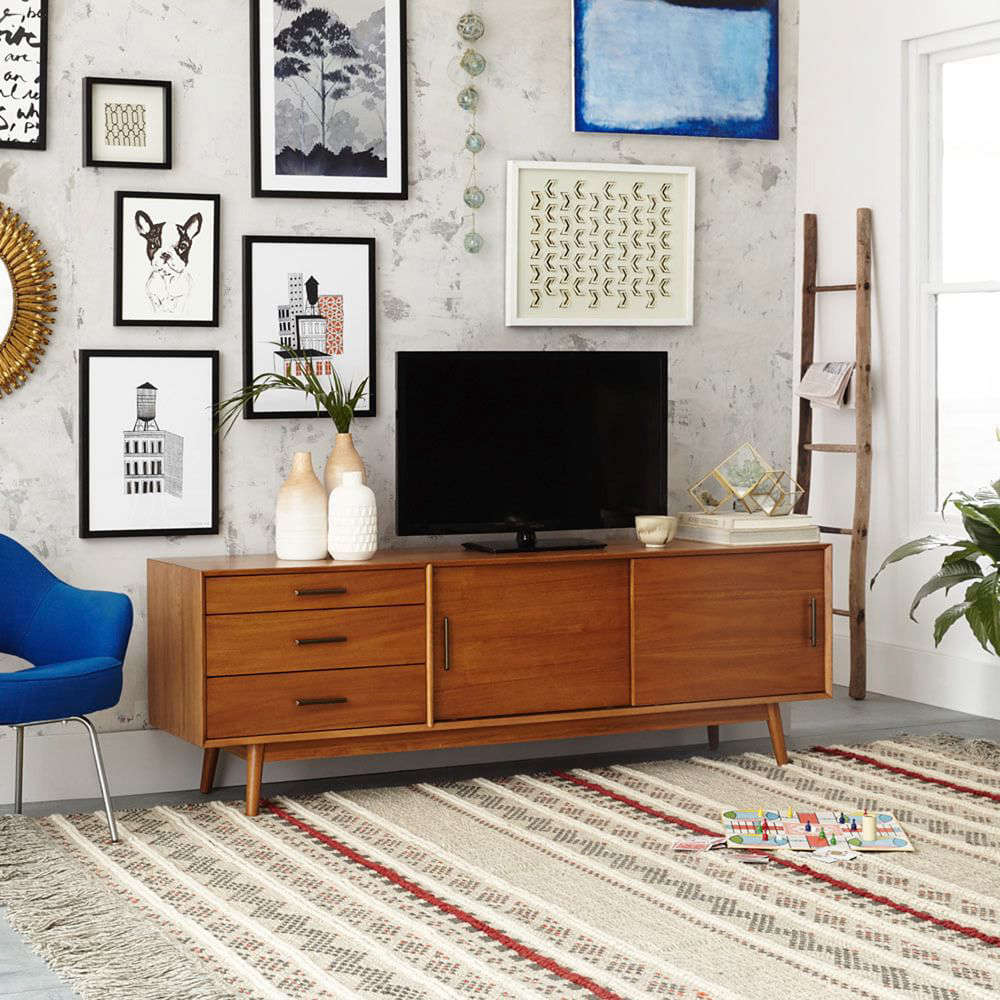
A mid-century media console is a low storage cabinet designed to support or visually frame a television while storing media equipment and household items. Its style is inspired by mid-century modern furniture, a design approach most closely associated with the mid-20th century. The look often includes slim profiles, practical storage, natural wood finishes, minimal ornamentation, and raised legs that make the piece feel light rather than bulky.
Unlike a basic TV stand, a media console is usually more furniture-forward. It is not just a shelf with a job. It is a design element. Many models include drawers, sliding doors, adjustable shelves, cable cutouts, vented backs, and soft-close hardware. The best ones manage to look elegant while quietly doing the dirty work of hiding cords, speakers, consoles, books, and the remote you definitely did not lose again.
Why Mid-Century Style Works So Well for Media Furniture
Mid-century modern design is a natural fit for media consoles because the style values function as much as appearance. It avoids excessive decoration and focuses on proportion, usability, and material beauty. That is exactly what a TV wall needs. A heavily carved cabinet can compete with the screen. A flimsy stand can make the whole area look temporary. A mid-century media console usually lands in the sweet spot: stylish, calm, and useful.
Clean Lines Create Visual Calm
Televisions already bring strong geometry into a room. A mid-century console echoes that shape with simple horizontal lines, helping the screen feel integrated instead of awkwardly placed. Long rectangular silhouettes are especially effective under wall-mounted TVs because they ground the screen and create a clear focal point.
Raised Legs Make Small Rooms Feel Larger
One signature feature of a mid-century modern media console is the raised base. Tapered or splayed legs lift the cabinet off the floor, creating visible space underneath. This small detail can make a room feel less crowded, which is useful in apartments, condos, and compact living rooms where every inch has already filed a complaint.
Warm Wood Softens Modern Technology
Flat-screen TVs, speakers, and gaming equipment tend to be black, glossy, and hard-edged. Wood finishes such as walnut, acorn, teak, oak, and warm brown veneer bring softness and texture. That contrast is one reason the mid-century media console continues to look fresh even as technology changes.
Popular Materials: Solid Wood, Veneer, MDF, and More
When shopping for a mid-century media console, materials matter. The product photos may all look handsome, but construction quality can vary widely. Some consoles use solid wood frames, some use engineered wood with real wood veneer, and others rely heavily on MDF or particleboard with a printed finish.
Solid Wood
Solid wood is durable, repairable, and usually more expensive. Walnut, oak, ash, acacia, and mango wood are common choices. A solid wood media console can last for years and develop character over time, especially if it is built with strong joinery and a quality finish.
Wood Veneer
Veneer is not automatically a bad word. In fact, many well-made furniture pieces use real wood veneer over a stable engineered core. This approach can reduce warping, keep costs more manageable, and still provide a genuine wood appearance. The key is whether the veneer is thick enough, properly finished, and paired with solid construction.
MDF and Particleboard
MDF and particleboard are common in budget-friendly TV stands. They can be fine for light use, but they are more vulnerable to moisture, edge damage, and hardware loosening over time. If you move often, have kids, own energetic pets, or rearrange furniture as a recreational sport, consider upgrading to plywood, solid wood, or a higher-quality engineered core.
How to Choose the Right Size Media Console
Size is where many people make their first mistake. A media console should generally be wider than the TV, whether the TV is sitting on top of the console or mounted above it. A console that is too narrow can make the TV look top-heavy, like a bodybuilder standing on a skateboard.
As a practical rule, choose a media console at least a few inches wider than the actual width of your TV. For a more balanced designer look, many rooms benefit from a console that is 6 to 12 inches wider than the screen on each side, depending on wall space. Remember that TV size is measured diagonally, not horizontally. A 65-inch TV is not 65 inches wide; it is usually closer to the high-50-inch range in actual width.
Common Console Widths
Small media consoles around 40 to 50 inches wide work well for bedrooms, apartments, and TVs up to about 43 or 50 inches. Medium consoles around 58 to 70 inches are popular for 55- to 65-inch TVs. Larger consoles from 72 to 96 inches can support big screens, open living rooms, and dramatic wall arrangements.
Height and Viewing Comfort
Many mid-century media consoles are lower than traditional entertainment centers, often landing around 20 to 30 inches high. This lower profile fits modern viewing habits, especially when the TV is wall-mounted. Ideally, the center of the screen should be near seated eye level, so avoid choosing a very tall console unless your room layout requires it.
Depth Matters Too
Depth affects both storage and traffic flow. A console that is 15 to 20 inches deep usually handles most components, books, routers, and decor without protruding too far into the room. If you have large audio equipment, measure it before buying. Furniture returns are much less fun than measuring tape, and measuring tape has never asked anyone for a restocking fee.
Storage Features Worth Looking For
A beautiful console should still earn its keep. The best mid-century media consoles combine open and closed storage so you can display attractive pieces while hiding the less glamorous necessities of modern life.
Cable Management
Look for rear cutouts, cord ports, or removable back panels. Cable management is one of the most important features in a modern media cabinet. Without it, even the most stylish walnut console can quickly become a spaghetti festival behind the TV.
Adjustable Shelves
Adjustable shelves are helpful because media equipment comes in different sizes. A streaming device, game console, soundbar, and receiver may all need different clearance. Flexibility keeps the furniture useful as your setup changes.
Drawers and Sliding Doors
Drawers are perfect for remotes, batteries, instruction manuals, coasters, and the tiny Allen wrench that comes with every piece of furniture and then disappears into another dimension. Sliding doors are great in small rooms because they do not swing outward. Fluted, slatted, or cane-front doors can add texture while keeping the overall look clean.
Ventilation
Electronics need airflow. If you plan to store a gaming console, receiver, or router inside a closed cabinet, choose a piece with ventilation openings or leave enough space around the device. Good airflow helps prevent overheating and keeps your equipment working properly.
Design Details That Define the Look
Not every brown TV stand with skinny legs deserves the mid-century label. A true mid-century-inspired media console usually has a thoughtful balance of form and function.
Tapered or Splayed Legs
Tapered legs are one of the easiest ways to identify the style. They make the console look lighter and more refined. Splayed legs, angled slightly outward, add a subtle retro touch without turning the room into a costume party.
Low Horizontal Profile
Mid-century media furniture tends to emphasize horizontal movement. This helps widen the visual field and makes the room feel more relaxed. A long, low console also pairs beautifully with wall art, floating shelves, and gallery-style arrangements.
Minimal Hardware
Many pieces use recessed pulls, slim metal handles, or push-latch doors. The goal is to keep the front clean and uninterrupted. Brass hardware can add warmth, while black metal gives the console a sharper modern edge.
Natural Wood Grain
Wood grain is part of the charm. Walnut is especially popular because of its rich brown tone and elegant movement. Oak feels lighter and more casual. Acacia and mango wood can bring dramatic grain variation, which works well when the rest of the room is simple.
How to Style a Mid-Century Media Console
Styling a media console is about balance. You want the area to feel finished without making it look like the decor section of a store exploded under your television.
Keep Decor Low and Layered
Use low objects such as stacked books, ceramic bowls, small sculptures, trays, or a compact plant. Avoid tall items directly in front of the TV. Nobody wants a dramatic vase blocking the final scene of a movie.
Add Texture Around the Screen
Because screens are flat and dark, texture helps. Try a woven basket beside the console, a wool rug underneath, linen curtains nearby, or framed art around the TV. These touches soften the media wall and make the whole room feel more intentional.
Use Symmetry Carefully
Perfect symmetry can look polished, but too much can feel stiff. A lamp on one side and a stack of books with a plant on the other can create visual balance without looking like a furniture showroom display.
Let the Console Breathe
Leave some empty space on top. Mid-century design is not about filling every surface. Negative space is part of the style. It gives the eye a place to rest and helps the furniture’s shape stand out.
Best Rooms for a Mid-Century Media Console
A mid-century media console works in more places than the living room. In a bedroom, it can double as storage for linens, books, or seasonal clothing. In a home office, it can hold printers, files, and tech accessories while looking far better than a plastic storage cart. In a dining room, a wider console can even function like a casual sideboard.
This flexibility is one reason the style has remained popular. A good console is not locked into one purpose. If your TV setup changes later, the piece can often move to another room and keep being useful. That is the furniture equivalent of having a backup career plan.
Budget vs. Investment: What Should You Spend?
Budget-friendly mid-century TV stands can look great, especially for renters or first apartments. Just check the weight capacity, materials, and assembly reviews before buying. A lower-cost console may be ideal if you need style now and plan to upgrade later.
Investment pieces usually offer better wood, stronger joinery, smoother drawers, and longer-lasting finishes. If the console will be used daily in a main living room, spending more can make sense. Look for solid wood components, quality veneer, sturdy legs, smooth hardware, and a finish that can handle real life.
Common Mistakes to Avoid
The first mistake is buying a console that is too small for the TV. The second is ignoring cable management. The third is choosing style over storage and then wondering why the living room still looks messy. A fourth mistake is forgetting to measure components, especially soundbars and gaming consoles.
Also consider safety. If you have young children, pets, or a heavy TV, use anti-tip hardware when appropriate. A stylish room should still be a safe room. Good design does not wobble dramatically when someone walks past it.
of Real-Life Experience With a Mid-Century Media Console
Living with a mid-century media console teaches you that furniture is not just about looks. It is about daily rituals. The first thing you notice is how much calmer the room feels when everything has a place. Before using a proper console, the TV area often becomes a tiny technology landfill: cables behind the screen, remotes on the sofa, game controllers on the floor, and one mysterious cord that belongs to absolutely nothing yet cannot be thrown away because “what if?”
A good mid-century console changes that. The drawers collect small items. The cabinets hide the less attractive equipment. The top surface gives you room for a plant, a few books, or a small lamp. Suddenly, the TV wall feels like part of the home instead of a command center for a spaceship operated by people who lost the manual.
One practical experience is that cable management matters more than expected. At first, you may think, “I only have two cords.” This is adorable. Give it six months. A soundbar appears. Then a streaming stick. Then a gaming console. Then a router, charger, HDMI cable, and something labeled “optical” that sounds like it should belong in a science lab. A console with back cutouts or removable panels saves time and keeps the setup neat.
Another lesson is that doors and drawers should match your lifestyle. If you use gaming equipment often, open shelving or sliding doors may be easier than deep drawers. If you prefer a clean look, closed cabinets are your best friend. If you have children, drawers that close smoothly and doors that do not slam are worth appreciating every single day.
Wood tone also affects the whole room. Walnut creates a rich, classic mood. Lighter oak feels airy and Scandinavian-inspired. Dark finishes can look dramatic but may show dust more easily. Medium warm wood is often the safest choice because it pairs well with white walls, neutral sofas, leather chairs, colorful rugs, and even the “temporary” coffee table you bought three years ago.
The best experience, though, is flexibility. A mid-century media console does not become useless if you change your TV or rearrange your furniture. It can become a storage cabinet in the hallway, a sideboard in the dining room, or a bedroom console. That long, low shape is surprisingly adaptable. It is one of those pieces that quietly proves its value over time, not by shouting for attention, but by making the room work better every day.
In the end, a mid-century media console is not just a trendy TV stand. It is a practical storage piece, a design anchor, and a peace treaty between modern technology and warm, livable style. Choose the right size, look for solid construction, respect your cable situation, and style the surface with restraint. Your living room will thank you. Your remotes may still disappear, but at least now they have a classy place to hide.
Conclusion
A mid-century media console remains one of the most useful and stylish furniture choices for today’s home. Its clean lines, raised legs, warm wood finishes, and practical storage make it ideal for modern entertainment setups. The best console should be wider than the TV, deep enough for equipment, strong enough for daily use, and designed with cable management in mind. Whether you choose walnut, oak, acacia, solid wood, or a quality veneer, the goal is the same: create a media area that feels organized, balanced, and beautiful without trying too hard.
Note: This article was created from synthesized information from reputable U.S. furniture, interior design, home decor, and product guidance sources. Source links are intentionally omitted for clean web publishing.