
Some national days are born from celebration. Others are born from cake, confetti, and someone in marketing discovering a blank square on the calendar. National Latino Physician Day is different. It began with a crisis hiding in plain sight: Latino patients make up a major and fast-growing share of the United States, yet Latino physicians remain dramatically underrepresented in the medical workforce.
That mismatch is not just a diversity statistic to nod at during a conference panel. It affects clinic conversations, trust, prevention, chronic disease management, maternal care, language access, and the confidence a young student feels when imagining a future in a white coat. The message behind National Latino Physician Day is simple, urgent, and impossible to ignore: representation heals.
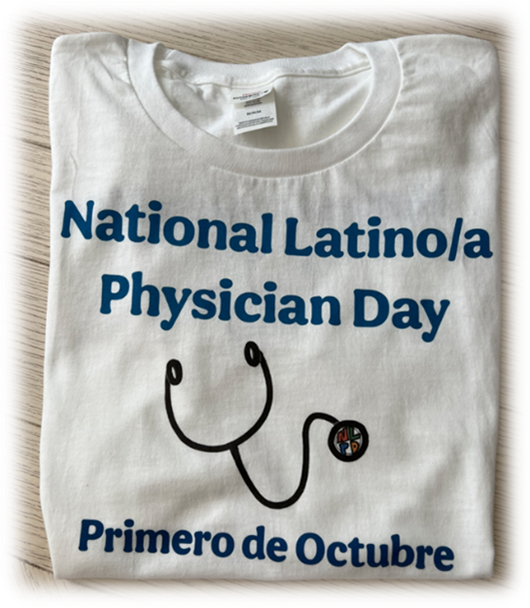
Observed every October 1, National Latino Physician Day honors Latino and Latina physicians while calling attention to the shortage of Latino doctors across the United States. It is both a celebration and a very polite alarm bell. Think mariachi music, mentorship, community pride, and a spreadsheet that makes everyone in the room sit up straighter.
What Is National Latino Physician Day?
National Latino Physician Day is a national observance dedicated to recognizing the contributions of Latino physicians and highlighting the need to increase the number of Latino doctors in the United States. The day is often associated with the phrase “6% is not enough,” a reference to the long-standing gap between the share of Latino physicians and the share of Latino people in the U.S. population.
The day is not only about applauding doctors who already made it through the obstacle course of medical school, residency, exams, night shifts, and cafeteria coffee that tastes like it was brewed during the Nixon administration. It is also about asking why so few Latino students make it into medicine, why so many face barriers along the way, and what the health care system loses when a large community is underrepresented in the exam room.
At its heart, National Latino Physician Day is a public health message. It says that a medical workforce should understand the people it serves. That does not mean every patient needs a doctor with the exact same background. It means the health care system works better when language, culture, lived experience, and community knowledge are not treated as optional decorations.
The Origin: How a Crisis Became a National Day
National Latino Physician Day was established in 2022 by physicians and advocates who wanted to bring attention to a shortage that had been discussed quietly for years but not loudly enough. The story behind the day has a human texture: physicians, students, residents, and community leaders recognizing that the gap was too large to ignore and too important to leave to another committee meeting.
Two of the key physicians connected to the early movement, Dr. Michael Galvez and Dr. Cesar Padilla, helped turn personal experience into public advocacy. Their paths reflected what many Latino physicians know well: the road to medicine often comes with financial pressure, limited mentorship, family responsibilities, isolation, and the repeated need to prove belonging in rooms where few people share your background.
The crisis was not abstract. In many communities, Latino patients were already navigating medical systems where Spanish-language access was inconsistent, culturally informed care was limited, and trust had to be built under pressure. The COVID-19 pandemic made these problems harder to overlook. When public health information must travel quickly, trust and language are not luxuries. They are infrastructure.
So the movement turned October 1 into a symbol. The date falls during National Hispanic Heritage Month, which gives it a natural place in a season already dedicated to Latino history, culture, and contributions. But National Latino Physician Day adds a sharper question: how can the United States celebrate Latino heritage while failing to build a physician workforce that reflects Latino communities?
Why the Latino Physician Shortage Matters
The United States has tens of millions of Hispanic and Latino residents, making Latinos the nation’s largest racial or ethnic minority group. Yet Latino doctors remain a small percentage of active physicians. Even when newer data show incremental improvement, the gap remains wide. In plain English: the patient population has sprinted ahead, while the physician pipeline is still tying its shoes.
This shortage matters because health care is built on communication. A doctor can have elite training, a wall full of diplomas, and a stethoscope that looks extremely serious, but if a patient does not feel understood, important details can disappear. Symptoms may be minimized. Medications may be misunderstood. Follow-up visits may be missed. Preventive care may become something people intend to do “later,” which is the most dangerous appointment time in medicine.
Language concordance, or the ability of a physician and patient to communicate in the same language, can improve clarity and comfort. Cultural concordance can also matter. A physician who understands family decision-making, food traditions, immigration-related fear, work schedules, religious context, or the hesitation some patients feel around medical institutions may ask better questions and offer more practical care plans.
It Is Not Just About Spanish
Spanish-language access is important, but reducing Latino health care to translation alone is like calling a whole meal “just rice.” Latino communities are diverse, including people with roots in Mexico, Puerto Rico, Cuba, the Dominican Republic, Central America, South America, and many mixed cultural backgrounds. Some speak Spanish. Some do not. Some are bilingual. Some speak Indigenous languages. Some were born in the United States, while others arrived recently.
That diversity means Latino physicians are not valuable because they fit one stereotype. They are valuable because they expand the cultural intelligence of medicine. They can help institutions ask better questions, design better outreach, and understand why “just tell patients to schedule a visit” is not a strategy when patients face transportation issues, insurance gaps, shift work, childcare responsibilities, or fear of being judged.
The Numbers Tell a Bigger Story
The physician shortage in the United States is already a national concern. Projections warn that the country could face a shortage of tens of thousands of physicians by 2036. When that broader shortage intersects with underrepresentation, communities that already face barriers can fall further behind.
The pipeline is the key. Becoming a physician requires years of preparation before medical school even begins: strong science classes, advising, clinical exposure, test preparation, application fees, interviews, and the kind of mentorship that explains unwritten rules. Students from well-resourced families often receive these signals early. Students from working-class or first-generation backgrounds may discover the rules after the game has started, which is both unfair and incredibly inefficient.
Recent medical school enrollment data show signs of progress in total student diversity over the past several years, but also worrying declines in some underrepresented matriculant groups. That means the pipeline is not a simple success story. It is more like a leaky faucet in an old apartment: you can hear progress dripping, but the bucket is not filling fast enough.
What Latino Physicians Bring to Patient Care
Latino physicians bring medical expertise first. Let’s be clear: representation does not replace training; it travels with it. Latino physicians are surgeons, pediatricians, anesthesiologists, family doctors, psychiatrists, emergency physicians, researchers, professors, hospital leaders, and public health advocates. Their identity is not their qualification, but it can deepen the care they provide.
In practice, culturally informed care can look beautifully ordinary. It may be a doctor explaining diabetes management while talking honestly about tortillas, rice, sweet drinks, family meals, and realistic substitutions instead of handing a patient a generic diet sheet that seems written for someone who eats grilled salmon and moral superiority five nights a week.
It may be an OB-GYN recognizing why a pregnant patient brings multiple relatives to a visit and using that family support wisely. It may be a pediatrician noticing that a parent is nodding politely but does not actually understand the medication schedule. It may be a psychiatrist creating space for a patient who has never heard mental health discussed without shame. It may be a specialist who knows that “I’ll come back when I can” can mean “I cannot afford to miss work again.”
The Role of Mentorship and Visibility
One of the most powerful effects of National Latino Physician Day is visibility. A student who sees Latino physicians online, at school events, in hospitals, or speaking at community panels gets a message that no brochure can deliver: this path is possible.
Mentorship matters because talent is everywhere, but access is not. Many future Latino physicians are sitting in community colleges, public universities, high school science classrooms, and family kitchens right now. They may be translating medical bills for grandparents, working part-time jobs, helping younger siblings, or wondering whether medicine is realistic for someone like them.
A mentor can explain how to shadow a doctor, prepare for the MCAT, apply for scholarships, choose prerequisite courses, recover from a bad grade, and survive the emotional roller coaster of applying to medical school. More importantly, a mentor can say, “You belong here,” and sometimes that sentence works like oxygen.
From Awareness to Action
National Latino Physician Day is not meant to be a once-a-year social media post with a nice graphic and a caption that says “So proud!” before everyone returns to business as usual. The day points toward action.
Medical schools can strengthen pathway programs, support first-generation applicants, invest in community college partnerships, and evaluate admissions practices that unintentionally reward privilege over potential. Hospitals can create mentorship networks, fund scholarships, support Latino faculty, and build workplaces where physicians do not feel like permanent guests. Professional organizations can advocate for graduate medical education funding, loan support, and policies that expand access to training.
Communities can also play a role. Parents, teachers, counselors, and local leaders can encourage students early. A teenager who likes biology should not have to accidentally stumble into the idea of becoming a doctor. The pathway should be visible, reachable, and explained without making the student feel as if they need a secret password.
Why This Day Belongs to Everyone
Although National Latino Physician Day centers Latino physicians and Latino communities, its impact is broader. A more representative physician workforce improves the health system for everyone. When hospitals learn to communicate better with one community, those skills often improve care for many others. When medical schools reduce financial and informational barriers, they open doors for rural students, first-generation students, low-income students, and others who have been overlooked.
Representation also expands the imagination of medicine. It changes who conducts research, which questions get asked, which neighborhoods get studied, which health problems receive attention, and who sits at decision-making tables. That matters because health care is not only about treating disease. It is about deciding whose suffering is visible enough to solve.
Experiences That Bring National Latino Physician Day to Life
Imagine a community health fair on a warm Saturday morning. The folding tables are slightly uneven, the blood pressure cuffs are working overtime, and someone’s aunt has brought enough homemade food to feed a residency program. A young girl walks past a booth where a Latina physician is explaining heart health in Spanish and English. The girl pauses, watches, and later tells her mother, “I didn’t know doctors could sound like us.” That moment may not appear in a grant report, but it can change a life.
Now picture a first-generation college student shadowing in a clinic. He is nervous, overdressed, and trying not to touch anything expensive. The physician he follows asks patients about work schedules, family stress, insurance worries, and medication costs with the ease of someone who understands that health does not live only inside the body. After the clinic day ends, the student asks how the doctor made it through medical school. The answer is honest: scholarships, mentors, doubt, persistence, and a few moments of crying in the car. The student laughs, because finally the dream sounds human instead of impossible.
There is also the patient experience. A grandmother arrives with uncontrolled diabetes and a plastic bag full of medications. She has seen doctors before, but this visit feels different. The physician asks what she eats at home, who cooks, whether she can afford fresh produce, and how she understands the pills. The patient relaxes. The plan becomes specific. Not “eat healthier,” but “let’s adjust breakfast, reduce the sweet drinks, keep the foods you love, and make the medicine schedule match your day.” That is not magic. That is medicine with context.
For Latino physicians, National Latino Physician Day can feel like both a hug and a homework assignment. It offers recognition for years of effort, but it also asks them to keep the door open for others. Many are already mentoring students, speaking at schools, serving on admissions committees, translating systems for families, and carrying the invisible labor of representation. The day says thank you, but it also asks institutions to stop relying on individual heroics and start building real support.
The most meaningful experiences tied to this day are often small: a student meeting their first Latino surgeon, a resident finding community after months of isolation, a patient finally asking the question they were too embarrassed to ask, a hospital leader realizing that diversity is not a slogan but a staffing plan. National Latino Physician Day turns those moments into a national conversation. It reminds us that the future of medicine is not only about new technology, artificial intelligence, or shinier hospital buildings. It is also about who gets to become a doctor, who feels safe seeking care, and who is trusted to heal.
Conclusion: A Celebration With a Mission
National Latino Physician Day began because a crisis demanded attention. The shortage of Latino physicians is not a niche workforce issue; it is a health equity issue, a patient trust issue, and a future-of-medicine issue. The United States cannot meet the needs of a diverse population with a physician pipeline that leaves too much talent behind.
October 1 is a day to celebrate Latino doctors who are already caring, teaching, researching, leading, and mentoring. But the deeper purpose is to make sure they are not the exception. The goal is a health care system where Latino students can see a path into medicine, Latino patients can feel understood, and communities can receive care shaped by both science and cultural respect.
In other words, National Latino Physician Day is not just about one day. It is about building the kind of future where “representation heals” is no longer a rallying cry because it has become everyday reality.