“Natural Beauty”: 14 Photographs By Ben Hopper Questioning The Standards Of Female Beauty

Note: This article is an original, rewritten SEO draft based on verified public information about Ben Hopper’s Natural Beauty project, the history of women’s body hair standards, and broader cultural conversations around beauty, grooming, and body autonomy.
Some photographs ask you to admire. Others ask you to argue with yourself. Ben Hopper’s Natural Beauty does bothand it does so with the quiet confidence of a portrait that refuses to apologize for a few strands of underarm hair.
The series, often shared online through selections such as “14 photographs by Ben Hopper,” challenges one of the strangest rules in modern beauty culture: the idea that women’s bodies are somehow more acceptable when they look less like bodies. Smooth, polished, edited, filtered, powdered, waxed, shaved, buffedmodern femininity has been handed a maintenance checklist so long it could qualify as a part-time job. Hopper’s portraits politely take that checklist, fold it into a paper airplane, and launch it out the studio window.
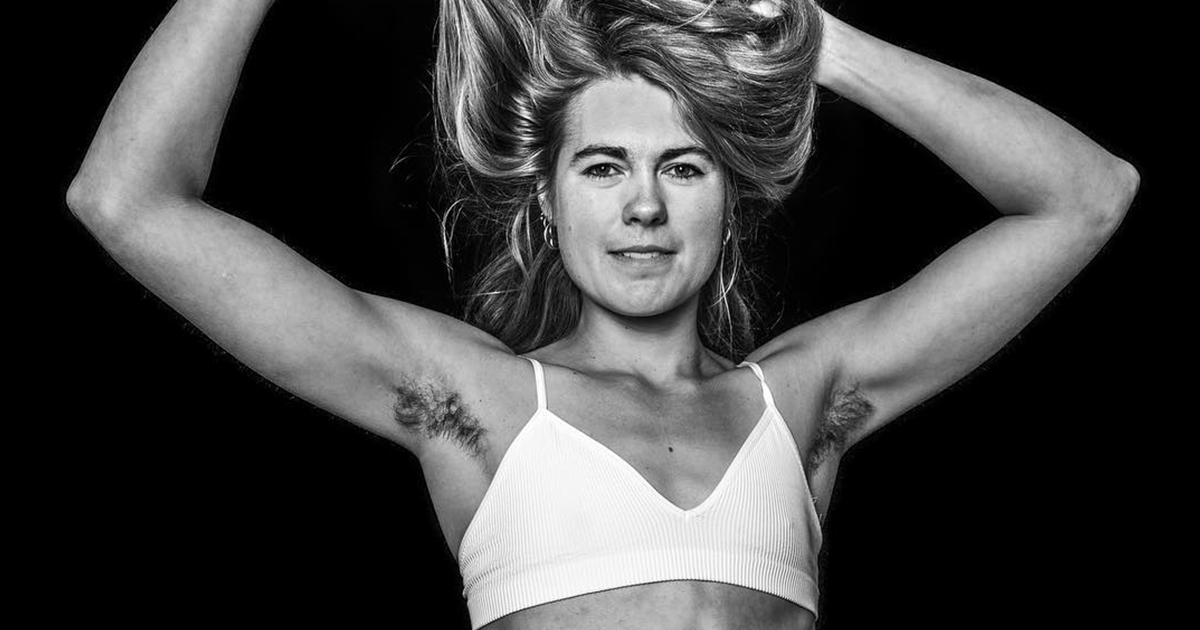
At first glance, the images look familiar: strong lighting, confident poses, striking faces, and the visual language of fashion photography. Then comes the detail that makes many viewers pausethe models have visible body hair. That small detail becomes the entire conversation. Why does it feel surprising? Why does a natural feature become a “statement” only when it appears on a woman? And who decided that beauty had to arrive hairless?
What Is Ben Hopper’s Natural Beauty?
Natural Beauty is a photographic project by London-based photographer and artist Ben Hopper. The series presents womenmany of them models, actresses, performers, and creative professionalsposing with visible body hair, especially underarm hair. The portraits are often bold, minimal, and direct. They do not hide the body hair as a flaw. They frame it as part of the person.
The project became widely discussed after its public launch in 2014, though Hopper had been developing the idea for years before that. Over time, the project expanded beyond its early viral moment and grew into a larger visual conversation about female body hair, natural beauty, and the social rules that tell women what is acceptable to show.
What makes the project especially effective is that it does not scream. It does not say, “Everyone must stop shaving immediately!” Nobody is smashing razors with a tiny feminist hammer. Instead, Hopper’s work asks a gentler but more uncomfortable question: if armpit hair is natural, why does its appearance on women feel rebellious?
Why These 14 Photographs Still Matter
The number “14” refers to a commonly circulated selection of images from the broader project, but the importance of the series is not mathematical. Fourteen photographs are enough to create a pattern. They show that the issue is not one model, one pose, or one unusual styling choice. The issue is the reaction.
In the portraits, the women are not presented as messy, careless, or “letting themselves go,” which is the tired phrase society loves to throw at women whenever they stop performing beauty on command. Instead, they appear composed, stylish, athletic, sensual, and powerful. Their body hair does not cancel their beauty. It complicates the viewer’s assumptions about beauty.
That complication is the point. Hopper borrows the clean, dramatic mood of fashion photographythe same visual world that often sells perfectionand uses it to challenge perfection itself. The result is a clever visual contradiction: polished portraits of unpolished bodies. And suddenly, the viewer has to ask whether “polished” was ever the same thing as beautiful.
The Strange History Of Hairless Beauty
Women’s body hair removal is often treated like an ancient, universal rule, as though someone found “Thou shalt shave thy underarms” carved into a stone tablet next to the Ten Commandments. In reality, the modern American expectation that women should remove underarm and leg hair grew strongly during the twentieth century, shaped by fashion, advertising, razors, magazines, and changing clothing styles.
As sleeveless dresses and shorter hemlines became more visible in public life, advertisers found a new market. Hair that had once been ordinary was rebranded as embarrassing, unfeminine, or unhygienic. That is the real magic trick of beauty marketing: create the insecurity, then sell the solution in a pink package.
Over the decades, smooth skin became attached to ideas of cleanliness, attractiveness, femininity, and respectability. The expectation became so normal that many people stopped seeing it as an expectation at all. It became “just what women do.” But “just what women do” is often a phrase hiding an entire history of social pressure.
Natural Beauty brings that pressure back into view. It makes the invisible rule visible by showing what happens when women break it without shame.
Body Hair, Beauty, And The Myth Of Hygiene
One of the most common reactions to female body hair is the claim that it is unhygienic. This argument deserves a raised eyebrow so high it nearly becomes a forehead workout.
Body hair itself is not dirty. Hygiene depends on washing, caring for the skin, managing sweat, and personal cleanlinessnot on whether every follicle has been evicted. Men’s body hair is rarely treated as a public health emergency. A man can lift his arm and reveal a forest ecosystem, and society may respond with a shrug. A woman reveals the same natural growth and suddenly everyone becomes a part-time sanitation inspector.
That double standard is exactly why Hopper’s photographs matter. They reveal that the discomfort is not really about hygiene. It is about gender. Hair on men is often coded as mature, rugged, or natural. Hair on women is often coded as lazy, rebellious, or unattractive. Same biology, different marketing department.
Why The Images Feel Both Fashionable And Uncomfortable
The visual style of Natural Beauty is important. Hopper does not photograph the subjects as documentary specimens or social experiments. He photographs them with the confidence of editorial portraiture. The lighting is intentional. The poses are strong. The women look directly present in their bodies.
This creates tension. The viewer recognizes the language of beauty photography, but the image refuses to obey one of beauty photography’s usual rules. That tension is productive. It makes the viewer notice how trained the eye has become.
Many people do not simply “prefer” hairlessness in a neutral way. They have been taught to associate it with femininity, youth, discipline, sexual attractiveness, and social approval. Hopper’s photographs interrupt that training. They do not demand that everyone change personal taste overnight. They simply ask viewers to notice where that taste came from.
Not Anti-ShavingPro-Choice
One of the smartest parts of the Natural Beauty conversation is that it does not have to become a war between razors and follicles. The point is not that shaving is bad. Many women like shaving. Some prefer the feeling of smooth skin. Some enjoy grooming rituals. Some remove hair for sports, comfort, style, cultural reasons, sensory reasons, or no grand reason at all. That choice is valid.
The problem begins when one choice becomes compulsory. There is a difference between “I like shaving” and “I must shave or I will be judged.” There is a difference between personal preference and social punishment. Hopper’s portraits live in that difference.
The healthiest beauty culture would make room for both: the woman who shaves every morning because she loves the smooth feeling, and the woman who has not touched a razor in years because she has better things to do, like sleeping an extra ten minutes. Both are allowed. Both are bodies. Both are beautiful on their own terms.
The Role Of The Viewer: Why Do We React?
When people respond strongly to these photographs, the reaction can be more revealing than the image itself. Some viewers feel inspired. Some feel uncomfortable. Some feel defensive. Some rush to comment that they personally do not like body hair, as if the internet were holding a clipboard and collecting urgent armpit opinions.
That reaction is part of the artwork’s success. Good art does not always comfort us. Sometimes it catches us mid-assumption. Hopper’s portraits do not simply show women with body hair. They show the viewer’s conditioning in real time.
The question is not, “Do I personally prefer shaved or unshaved underarms?” The deeper question is, “Why do I feel entitled to evaluate a woman’s grooming choices at all?” That is where the series becomes more than a beauty conversation. It becomes a conversation about autonomy.
Natural Beauty In The Age Of Filters
The project feels even more relevant in today’s filter-heavy visual culture. We live in an era when faces can be smoothed, waists narrowed, skin blurred, and pores erased with a swipe. Beauty standards are no longer shaped only by magazines and advertisements. They are carried in pockets, refreshed every few seconds, and delivered through endless feeds of edited perfection.
Against that backdrop, visible body hair becomes more than a grooming choice. It becomes evidence of reality. It says: this is a body, not a rendering. This is skin with texture, hair, shadow, and history. This is not an error message.
That does not mean natural beauty has to reject makeup, fashion, styling, or glamour. Hopper’s portraits are not anti-glamour. In fact, they use glamour as a tool. They suggest that beauty can include contradiction: styled and natural, elegant and unruly, soft and strong, familiar and surprising.
Criticism And The Limits Of The Project
No meaningful art project escapes criticism, and Natural Beauty is no exception. Some critics have pointed out that many subjects in the series still fit conventional beauty ideals: they are often slim, photogenic, and professionally comfortable in front of a camera. That critique is worth taking seriously.
If a project challenges beauty standards while still relying on conventionally attractive subjects, does it go far enough? Maybe not entirely. But it can still open a door. Sometimes culture changes through radical rupture. Sometimes it changes through a familiar image with one unfamiliar detail. Hopper’s work belongs to the second category.
The portraits may not represent every body type, age, race, or experience of femininity. But they do make one specific challenge very clearly: body hair does not erase beauty. That challenge remains useful, especially in a culture that still treats women’s natural bodies as problems to be solved.
What The Series Teaches About Female Beauty Standards
The biggest lesson of Natural Beauty is that beauty standards are not natural laws. They are agreements, and many of them were negotiated by advertisers, industries, and social pressure long before we arrived. Once we understand that, the rules become less intimidating.
Female beauty has often been defined by removal: remove hair, remove wrinkles, remove texture, remove fat, remove age, remove evidence that the body is alive and doing body things. Hopper’s photographs suggest a different definition. Beauty can also be presence. Confidence. Choice. Humor. Defiance. Ease. The ability to stand in your own skin without asking a focus group for permission.
That idea is powerful because it is simple. A woman does not become less feminine because she has body hair. She does not become less clean, less stylish, less desirable, or less worthy of being photographed beautifully. She becomes, quite dramatically, a person with body hair. Society may survive the shock.
Experiences Related To Natural Beauty: What These Photos Make People Feel
For many viewers, the first experience of seeing Hopper’s Natural Beauty photographs is surprise. Not because the images are loud, but because they reveal how rarely mainstream visual culture allows women’s bodies to appear without correction. A viewer may not have thought much about underarm hair before, yet the moment it appears in a polished portrait, the brain starts sorting through years of beauty messages. “Is this attractive?” “Is this allowed?” “Why am I reacting?” The photographs become a mirror, and not the flattering dressing-room kind with suspiciously generous lighting.
Some women may recognize the tiny rituals behind the issue immediately. The hurried shave before wearing a sleeveless top. The panic of noticing stubble in public. The childhood or teenage moment when someone suggested that body hair was embarrassing. The razor burn before a beach trip. The quiet calculation of what outfit feels “safe” depending on whether grooming has been done. These experiences are ordinary, but they are also exhausting. Hopper’s project gives them a visual language.
Other viewers may connect with the portraits through the experience of choosing not to shave. For some, that choice begins accidentally: a busy week, a winter month, a camping trip, a skin irritation, a pregnancy, an illness, or simply boredom with the routine. Then comes the strange discovery that doing nothing can feel like doing something radical. Hair grows, as hair tends to do, with no press release and no moral agenda. Yet the person growing it may suddenly feel as if she has made a public statement. That is precisely the cultural absurdity Natural Beauty exposes.
There is also the experience of negotiation. A person may support body autonomy in theory but still feel uncomfortable with visible female body hair in practice. That discomfort does not automatically make someone cruel or shallow. It may simply show how deeply beauty norms settle into perception. The useful step is not pretending the discomfort is not there. The useful step is asking what produced it. Was it personal taste, or years of images suggesting that women’s bodies should be smooth to be acceptable?
For younger audiences, the photographs can feel freeing because they expand the menu of possible selves. They show that femininity does not have to be one polished performance. A woman can be glamorous with underarm hair. She can be athletic with body hair. She can wear lipstick, raise her arms, and refuse the idea that beauty requires total compliance. That combination matters. It tells viewers that natural beauty is not the opposite of style; it is one of the many ways style can exist.
For parents, teachers, artists, and anyone who talks with young people about body image, Hopper’s work is a useful conversation starter. It allows a discussion about media literacy without sounding like a lecture from a dusty textbook. Instead of simply saying, “Beauty standards are constructed,” the images show it. They ask: What did you notice first? Why? Would you react differently if this were a man? Who benefits when women feel ashamed of ordinary features?
Perhaps the most important experience related to Natural Beauty is the small relief of permission. Not permission from Ben Hopper, not permission from fashion, and certainly not permission from anonymous commenters with very intense feelings about razors. The permission comes from recognizing that the body was never the problem. The problem was the narrow frame around it.
Conclusion: A Few Hairs, A Big Conversation
Ben Hopper’s Natural Beauty proves that a photograph does not need elaborate props or dramatic scenery to challenge culture. Sometimes all it takes is a raised arm, a confident subject, and the refusal to edit away something natural.
The 14 photographs associated with the project continue to resonate because they touch a nerve that is still tender. Women are told to be natural, but not too natural. Confident, but not disruptive. Beautiful, but only within the approved settings. Hopper’s portraits question those settings. They invite viewers to reconsider why female body hair became controversial in the first place and whether beauty becomes more interesting when it stops obeying every rule.
In the end, Natural Beauty is not really about armpit hair. It is about choice, visibility, and the right to exist without constant correction. Shave, wax, trim, grow, style, ignorewhatever the decision, it should belong to the person living in the body. And if that idea still feels radical, then these photographs are doing exactly what they came to do.
SEO Tags