People Are Sharing Pics Of Their Cats Sleeping And The Pics Will Surely Brighten Your Day

Some corners of the internet are filled with arguments, alarming headlines, and people debating whether cereal is soup. Then, just when your faith in online civilization begins packing its bags, a collection of sleeping cat pictures appears.
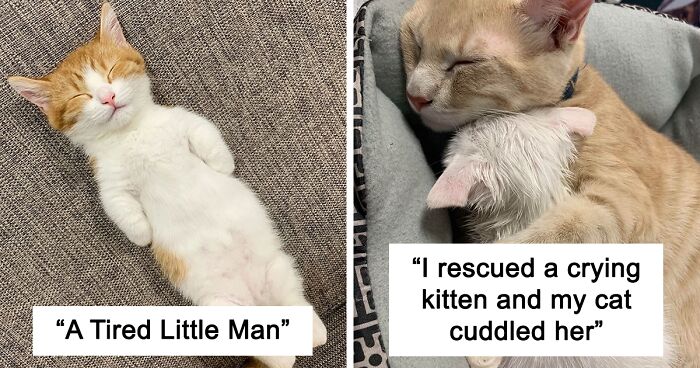
There is a tabby snoozing inside a fruit bowl. A tuxedo cat has fallen asleep halfway through climbing onto a couch. One orange cat is lying upside down with all four paws pointing toward the ceiling, apparently waiting for an alien tractor beam. Suddenly, the internet feels useful again.
People are sharing pictures of their cats sleeping in wonderfully strange positions, and the results are equal parts adorable, funny, and comforting. Beyond the entertainment, these cozy cat naps reveal fascinating details about feline sleep habits, trust, comfort, temperature, and the surprisingly serious business of choosing the perfect nap location.
Why Sleeping Cat Pictures Are Internet Comfort Food
A sleeping cat photo asks almost nothing from the viewer. There is no complicated plot, no controversial opinion, and no need to turn on the sound. You simply look at a small animal resting without guilt, deadlines, or awareness of unread emails.
The appeal is partly visual. Cats become even rounder and softer when they sleep. Their paws curl inward, their whiskers relax, and their faces lose the mildly judgmental expression they wear while watching us assemble furniture incorrectly. A cat that acts like a tiny landlord while awake can resemble a fuzzy cinnamon roll once asleep.
These images also provide a miniature emotional pause. Research involving human-animal interaction suggests that pets can provide comfort and help people maintain positive feelings during stressful moments. Studies of cute animal imagery have also found potential improvements in attention, focus, and short-term well-being, although reactions vary from person to person. In other words, scrolling through cute cat photos is not a complete wellness program, but it may be a pleasant five-minute reset.
Research grounding: human-animal interaction, stress buffering, well-being, and cute animal imagery.
Cats Treat Sleeping Like a Full-Time Career
Domestic cats commonly sleep for roughly 12 to 16 hours each day, although kittens, senior cats, and especially relaxed individuals may sleep longer. They do not necessarily complete all that rest in one uninterrupted session. Instead, cats follow a polyphasic sleep pattern, taking multiple naps throughout the day and night.
This schedule helps explain why your cat can sleep through an afternoon of vacuuming, television, and package deliveries, then begin sprinting down the hallway at 2:17 a.m. Cats are naturally most active around dawn and dusk, when their wild ancestors would have had favorable hunting opportunities. Household cats may adapt to their owners’ routines, but many retain a deep commitment to inconvenient bursts of energy.
Not every cat nap is equally deep. During light sleep, a cat may keep its ears active, adjust its paws, or open one eye when a snack bag makes a suspicious sound. During deeper sleep and rapid eye movement sleep, cats may twitch their whiskers, move their paws, breathe irregularly, or produce tiny noises. These movements are generally normal and may occur while the cat is dreaming.
What do cats dream about? Science cannot provide a direct transcript, but judging by the paw movements, the dream probably involves chasing something important. It could be a mouse. It could be a feather toy. It could be the one piece of dry food that rolled under the refrigerator in 2023.
Research grounding: feline sleep duration, activity cycles, REM sleep, and dreaming behaviors.
What Popular Cat Sleeping Positions May Mean
Cat sleeping positions often reflect a combination of comfort, temperature, security, habit, and individual preference. They can offer useful clues, but they should not be treated like a secret feline horoscope. A single unusual pose usually means your cat found it comfortable, not that Mercury has entered the litter box.
The Perfect Donut
In the classic curled position, a cat forms a nearly complete circle with its head tucked toward its chest and its tail wrapped around the body. Curling up helps conserve warmth and protects vulnerable areas such as the abdomen. It is especially common in cooler rooms or on compact sleeping surfaces.
The donut pose also demonstrates one of the cat’s greatest talents: fitting a surprisingly long body into a space approximately the size of a salad plate.
The Cat Loaf
A loafing cat tucks its paws beneath its body and resembles a neatly baked piece of bread. The position allows the cat to rest while remaining capable of standing quickly. A relaxed loaf with soft eyes and neutral ears generally indicates comfort. A tense posture accompanied by squinting, a hunched back, or unusual withdrawal deserves closer attention.
Online, loaf photos frequently inspire comments about baking time, crust quality, and whether the loaf contains raisins. It does not. Those are toe beans.
The Side Sprawl
A cat sleeping fully on its side is exposing more of its body and may feel safe enough to relax deeply. Legs may be stretched outward, folded together, or arranged with the architectural confidence of a collapsed lawn chair.
This is one of the best positions for photographing peaceful feline expressions because the face, paws, and whiskers are usually visible. It is also the position most likely to make owners whisper, “Look at the baby,” even when the cat is 14 years old and has recently knocked a glass off the counter with full adult intent.
The Belly-Up Superstar
When a cat sleeps on its back with the stomach exposed, it often suggests a strong sense of security. The abdomen is physically vulnerable, so displaying it during sleep can be a sign that the environment feels safe.
However, an exposed belly is not automatically an invitation to touch it. Many owners have learned this distinction through an educational program known as “the surprise claw.” Admire the fluffy stomach visually unless your cat has clearly demonstrated that belly rubs are welcome.
The Faceplant
Some cats sleep with their face pressed into a pillow, blanket, arm, or couch cushion. The pose may block light, conserve warmth around the face, or simply feel comfortable. In photographs, it creates the impression that the cat checked the news and immediately decided to return to bed.
The Human-Furniture Position
Cats may sleep on a person’s chest, legs, shoulder, head, or keyboard. Warmth, familiar scent, companionship, and trust can all make a human an appealing mattress. Cats also choose locations that keep them close to household activity without requiring them to participate in it.
A cat sleeping on your laptop is not trying to ruin your productivity. The cat merely believes your productivity has gone on long enough.
Research grounding: sleeping positions, temperature regulation, trust, proximity, and the loaf posture.
The Funniest Places Cats Choose for a Nap
A luxury pet bed can be carefully researched, ordered, assembled, and positioned beside a sunny window. The cat will inspect it for six seconds before falling asleep in the cardboard box it arrived in.
Popular sleeping cat pictures often feature cats resting in locations no reasonable architect would identify as bedrooms:
- Laundry baskets containing freshly cleaned black clothing
- Bathroom sinks shaped like expensive ceramic cat beds
- Bookshelves with one book pushed dramatically onto the floor
- Suitcases opened ten minutes before their owner needs to leave
- Plant pots that previously contained actual plants
- Grocery bags, shoeboxes, mixing bowls, and empty pizza boxes
- Computer keyboards during meetings labeled “urgent”
These choices are not completely random. Enclosed spaces may offer warmth, security, and protection on multiple sides. Elevated locations can provide a better view of the room. Clothing and bedding carry familiar scents, while sinks and hard floors may feel cool during warm weather.
Occasionally, the explanation is simpler: the cat noticed that you did not want it there.
Why Sharing Cozy Cat Naps Feels So Social
A sleeping cat picture is easy to understand across cultures, generations, and levels of pet experience. People do not need to know the cat’s entire biography to appreciate the image. A caption such as “He worked a double shift at the biscuit factory” immediately establishes the situation.
Sharing pet photos can also create low-pressure social interaction. Friends respond with their own pictures, compare sleeping positions, or tell stories about cats they once knew. One image becomes a thread, and the thread becomes a small community built around whiskers, blankets, and questionable spinal alignment.
The most engaging pictures often contain recognizable human situations. A cat asleep beside a notebook represents avoiding work. A cat buried under blankets represents Monday morning. A kitten sleeping across another kitten’s face represents sharing a small apartment.
We project our experiences onto these scenes, but the humor remains affectionate. The best sleeping cat photos do not require costumes, startling noises, or forced poses. The cat supplies the comedy by doing exactly what it already wanted to do.
How to Photograph a Sleeping Cat Without Ruining the Moment
Use Natural Light
Soft window light usually produces more flattering pet photography than a bright ceiling fixture. It reveals fur texture and whiskers without creating harsh shadows. Avoid using a flash close to a sleeping cat. The sudden light may startle the animal and destroy both the nap and your reputation.
Lower the Camera
Photographing from the cat’s level creates a more intimate image. Instead of standing above the scene, crouch beside the bed, couch, or suspiciously occupied salad bowl. A lower angle makes the viewer feel present without disturbing the sleeper.
Include the Surroundings
A close-up captures an adorable face, but a wider frame may contain the joke. The picture becomes much funnier when viewers can see that the cat is sleeping in a dollhouse bed, across three remote controls, or directly on top of a “Cats Off the Counter” sign.
Focus on the Eyes or Nose
Even when the eyes are closed, focusing near the face helps keep the expression sharp. On a smartphone, tap the cat’s face before taking the picture. Hold the phone steady, especially in dim light, and capture several frames without repositioning the cat.
Do Not Stage an Unsafe Photo
Never place a sleeping cat near an edge, inside an appliance, beneath heavy objects, or beside anything toxic merely to create a funny image. Do not wrap the cat tightly, force it into clothing, or repeatedly wake it for a better expression. Authentic cat naps are funnier, safer, and easier to photograph.
Respect the Cat’s Boundaries
If the cat wakes, flattens its ears, flicks its tail, moves away, or appears tense, the photography session is over. A good pet picture preserves a comfortable moment instead of manufacturing one.
Research grounding: safe resting areas, enrichment, relaxed behavior, and avoiding stressful pet content.
When Changes in Cat Sleeping Habits Deserve Attention
Cats naturally sleep a great deal, so a long nap is not automatically concerning. The more useful question is whether your cat’s routine has changed.
Contact a veterinarian when increased sleeping appears alongside reduced appetite, weight changes, hiding, vomiting, weakness, poor grooming, unusual vocalization, breathing difficulty, or reluctance to jump and move. A cat that suddenly abandons favorite elevated beds for the floor may be experiencing pain or mobility problems. A senior cat that becomes restless at night, sleeps much more during the day, or seems disoriented may also require evaluation.
Owners know their pets’ normal patterns better than anyone. One cat may sleep 16 hours and wake ready to play, eat, and supervise the household. Another may sleep less but follow a predictable schedule. Changes from that individual baseline matter more than comparisons with a random cat online.
Breathing should look comfortable while the cat rests. Open-mouth breathing, obvious abdominal effort, repeated coughing, or an inability to settle comfortably can signal respiratory distress and should not be dismissed as an unusual sleeping pose.
Take a photo or short video when something looks abnormal. Visual records can help a veterinarian understand changes in posture, breathing, movement, or sleeping location.
Research grounding: subtle illness signs, senior sleep changes, pain indicators, and respiratory distress.
Real-Life Experiences: What Happens When Sleeping Cat Photos Start Arriving
The following scenes are composite examples inspired by familiar cat-owner experiences and the kinds of cozy pictures commonly shared online.
The first photo in a sleeping cat thread is often fairly ordinary. Someone posts a gray cat curled neatly on a blanket, paws tucked under its chin. The caption says the cat has had “a very demanding day,” although its documented activities include eating breakfast, watching a bird, and sitting in a doorway.
Then the replies begin.
One person shares a kitten asleep inside a slipper. Only the kitten’s ears and one paw are visible. The owner explains that three proper cat beds are available in the same room, but the slipper apparently offers superior amenities. Someone replies that the kitten is not sleeping in footwear; it is “charging.”
Another photo shows an orange cat sprawled across a desk. Its head rests on a computer mouse, its back legs cover a notebook, and one paw has landed on the keyboard. The unfinished message on the screen contains 46 letter Gs. The cat has accidentally submitted a more decisive quarterly report than anyone else in the office.
A family contributes a picture of their senior tabby sleeping beside a child who is reading. The cat has chosen the narrow strip of mattress between the child and the wall. Its fur is silver around the face, and one paw rests on the open book. The picture is not dramatically funny, yet it becomes one of the most loved images in the thread. People recognize the quiet trust in it: an old pet, a familiar routine, and a peaceful afternoon preserved before everyone grows older.
Next comes a bonded pair of cats in a basket designed for one. The smaller cat is completely hidden beneath the larger one except for a nose and two back feet. Commenters debate whether this is cuddling or a minor furniture dispute. The owner confirms that the hidden cat climbed underneath voluntarily and refuses all rescue attempts.
Someone else posts a black cat sleeping in a patch of sunlight. At first glance, the image appears to show a dark sweater left on the floor. Then two green eyes open, inspect the camera, and close again. The photographer reports feeling briefly judged for interrupting a solar-powered charging session.
As more pictures arrive, people begin telling stories rather than merely posting photos. One remembers a childhood cat that slept inside the linen closet. Another describes a rescue cat that hid for weeks before finally falling asleep on the couch beside the family. That first public nap became a milestone because it meant the frightened animal had started to feel safe.
A man shares the final photo he took of his elderly cat sleeping in her favorite chair. The image is peaceful rather than sad. Other cat owners respond with their own memories, and the silly thread becomes unexpectedly tender. Sleeping cat pictures can do that. They begin as jokes about toe beans and cardboard boxes, then quietly remind people how much ordinary moments matter.
By the end of the evening, the thread contains cats sleeping under blankets, inside backpacks, across dogs, between couch cushions, and directly on top of household objects their owners were attempting to use. Strangers have exchanged compliments, memories, and terrible cat puns. Nobody has solved a major world problem, but hundreds of people have smiled.
That is not nothing.
Conclusion: Let Sleeping Cats Brighten the Internet
Sleeping cats are tiny experts in comfort. They curl into circles, melt across furniture, claim cardboard boxes, and trust their favorite people enough to become completely defenseless nearby. Their pictures are funny because the poses are ridiculous, but they are comforting because the relaxation is genuine.
The next time your cat falls asleep with its face in a shoe or its paws wrapped around a television remote, take the picture quietly. Preserve the soft light, the strange pose, and the ordinary moment. Then share it responsibly. Somewhere, someone may be having a difficult day and urgently needs to see a tabby shaped like a croissant.
Research note: This article synthesizes veterinary and behavioral information from reputable U.S. sources, including Cornell Feline Health Center, the ASPCA, PetMD, VCA Animal Hospitals, AAHA, Texas A&M Veterinary Medicine, NIH News in Health, American Humane, Psychology Today, and peer-reviewed research hosted by NIH and PubMed Central.