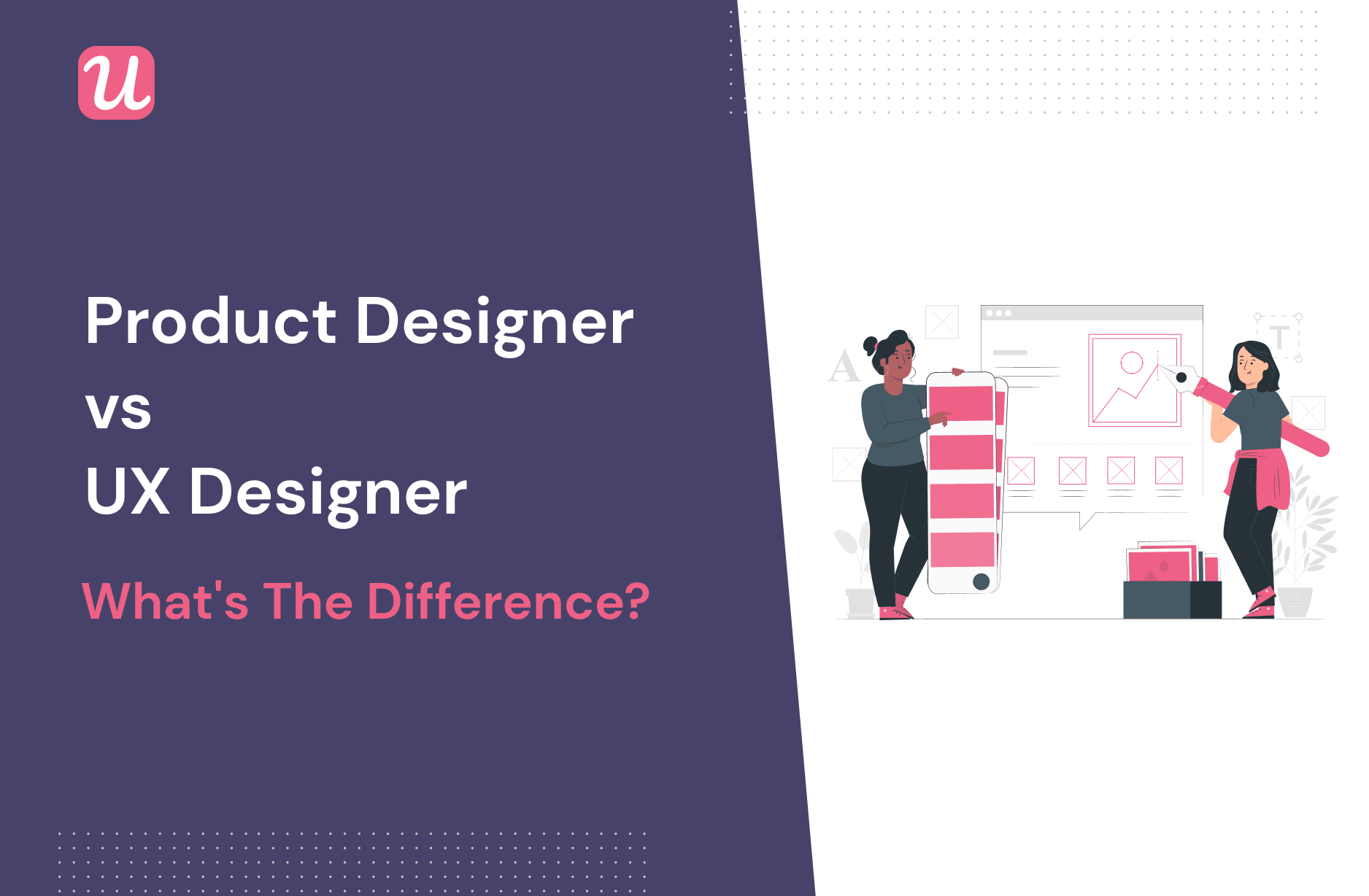

Trying to understand the difference between a product designer and a UX designer can feel like trying to separate twins who both wear black turtlenecks, speak fluent Figma, and keep saying “it depends.” The two roles overlap a lot, especially in digital product teams. Both care about users. Both create wireframes, prototypes, user flows, and design systems. Both sit in meetings where someone says, “Can we just make it pop?” and everyone quietly ages three years.
Still, the roles are not identical. A UX designer focuses primarily on the user’s experience: how people find information, complete tasks, avoid confusion, and feel while using a product. A product designer usually works across a broader product lifecycle, balancing user needs with business goals, technical constraints, market positioning, metrics, and long-term product strategy.
In simple terms: UX designers make products easier and better to use. Product designers help decide what the product should become and how it can succeed. One is not “better” than the other. They are different lenses on the same challenge: building something people actually want to useand, ideally, something the business can afford to keep alive.
What Is a UX Designer?
A UX designer, or user experience designer, is responsible for shaping how a person experiences a product, website, app, service, or digital system. The role focuses on usability, accessibility, clarity, flow, and problem-solving. UX design is less about making things “pretty” and more about making things understandable, useful, and pleasant enough that users do not want to throw their laptop into a decorative pond.
UX designers study user behavior. They ask questions such as: Who is using this product? What are they trying to accomplish? Where are they getting stuck? What information do they need first? What can be removed, simplified, renamed, reorganized, or tested?
Common UX Designer Responsibilities
A UX designer may conduct user interviews, create personas, map customer journeys, organize information architecture, design wireframes, build prototypes, run usability tests, and collaborate with UI designers, developers, researchers, product managers, and stakeholders. In many companies, UX designers are also involved in accessibility reviews, content structure, interaction design, and post-launch improvements based on user feedback.
For example, imagine a banking app where customers keep abandoning the money-transfer flow. A UX designer might interview users, observe where they hesitate, examine analytics, map the current flow, and discover that the confirmation screen is confusing. The UX designer may then redesign the flow so users can clearly see the recipient, amount, fees, delivery time, and final confirmation step. The goal is not just a nicer screen. The goal is confidence, clarity, and fewer “Wait, did I just send rent money to my dentist?” moments.
What Is a Product Designer?
A product designer also cares deeply about user experience, but the role typically has a wider scope. Product designers think about the full product: what problem it solves, how it fits the market, how it supports business goals, how it can be built, and how it should evolve over time.
In many modern software teams, product designers work closely with product managers and engineers. They help define product direction, explore feature opportunities, design end-to-end experiences, validate ideas, evaluate trade-offs, and connect design decisions to measurable outcomes such as activation, retention, conversion, customer satisfaction, revenue, or reduced support tickets.
Common Product Designer Responsibilities
A product designer may do many of the same tasks as a UX designerresearch, wireframing, prototyping, testing, and interface designbut often with additional responsibility for strategy, prioritization, business impact, and product-market fit. They may ask: Should this feature exist? Which user problem matters most? How does this design support the company’s goals? What is the smallest useful version we can launch? What happens after release?
For example, if a project management app wants to add an AI assistant, a product designer might explore user pain points, define use cases, sketch workflows, prototype the assistant experience, review technical feasibility with engineers, test the concept with users, and help decide whether the feature should improve onboarding, task creation, reporting, or team communication. That is broader than polishing a single screen. It is product thinking with a design toolkit.
Product Designer vs UX Designer: The Core Difference
The easiest way to compare the two roles is by looking at focus. A UX designer usually focuses on the quality of the user experience. A product designer focuses on the success of the product as a whole. Of course, a product cannot succeed if the user experience is terrible. A subscription app with a confusing cancellation process may boost short-term revenue, but it also creates angry customers, bad reviews, and the kind of brand reputation that requires crisis meetings and too much coffee.
The UX designer tends to go deeper into user needs, usability, flows, interaction patterns, and behavior. The product designer tends to zoom out and consider the full system: user value, business value, technical feasibility, competitive positioning, product lifecycle, and long-term improvement.
A Simple Comparison
UX designer question: “How can we make this experience clearer, easier, and more useful for the user?”
Product designer question: “What should we build, why should we build it, how should it work, and how will we know it succeeded?”
That distinction is not perfect in every company. Job titles vary wildly. One company’s UX designer may do strategy, research, UI, testing, and product thinking. Another company’s product designer may mostly create high-fidelity screens. This is why reading job descriptions carefully matters more than judging by title alone.
Where the Roles Overlap
Product designers and UX designers often share many skills. Both may use tools like Figma, FigJam, Miro, Sketch, Adobe XD, Maze, UserTesting, Hotjar, Jira, Confluence, and analytics platforms. Both may participate in design critiques, sprint planning, user research, product discovery, and developer handoff.
They also share the same general mission: create products that solve real problems for real people. Neither role should design in a vacuum. A beautiful dashboard that nobody understands is not design excellence; it is a very expensive screensaver.
Shared Skills
Both roles benefit from strong user empathy, design thinking, communication, prototyping, wireframing, information architecture, usability testing, accessibility awareness, visual design fundamentals, collaboration, and the ability to explain design decisions clearly. They must also be comfortable receiving feedback, because design feedback is a contact sport performed with sticky notes.
Both roles also need to understand constraints. Users may want everything in one click. Engineers may need technical clarity. Executives may want growth. Legal may want disclaimers. Marketing may want brand alignment. The designer’s job is to turn all of that noise into a product experience that still feels simple.
Where the Roles Differ
The difference becomes clearer when you compare depth and breadth. UX designers often go deeper into user behavior and experience quality. Product designers often go broader across business, product strategy, delivery, and iteration.
1. Scope of Work
A UX designer may be assigned to improve onboarding, redesign a checkout flow, simplify navigation, or test a new feature concept. A product designer may own a larger product area, such as onboarding, payments, messaging, reporting, or mobile growth. That ownership may include identifying problems, prioritizing opportunities, designing solutions, and tracking performance after launch.
2. Business Involvement
UX designers absolutely support business outcomes, but their primary lens is usually the user’s experience. Product designers are commonly expected to connect design work directly to product goals such as revenue, retention, engagement, adoption, or customer lifetime value. They may be asked to explain not only why a design is usable, but why it is worth building now.
3. Product Strategy
Product designers are often more involved in product strategy and roadmap discussions. They may help define feature priorities, test early concepts, challenge assumptions, and identify new opportunities. UX designers may contribute to strategy too, especially in mature UX organizations, but the title “product designer” usually signals stronger involvement in the full product decision-making process.
4. Metrics and Outcomes
UX designers often measure success through usability, task completion, user satisfaction, accessibility, reduced friction, and qualitative feedback. Product designers may track those same experience metrics plus business metrics such as conversion rate, churn, activation, feature adoption, trial-to-paid upgrades, or support-volume reduction.
5. Collaboration Style
Both roles collaborate heavily, but product designers are frequently embedded in cross-functional product squads with product managers and engineers. UX designers may work in product squads too, or they may be part of a centralized design or research team supporting multiple projects.
Product Designer vs UX Designer vs UI Designer
To make the alphabet soup even more delicious, let’s add UI design. UI stands for user interface. A UI designer focuses on the look and interactive feel of screens: typography, color, buttons, spacing, iconography, visual hierarchy, states, components, and design systems.
UX design is about the overall experience and flow. UI design is about the interface elements users interact with. Product design often includes both UX and UI, plus product strategy and business context.
Think of a restaurant. UX design is the entire dining experience: how you book a table, read the menu, order food, ask questions, pay, and leave satisfied. UI design is the menu layout, table setting, lighting, signage, and visual presentation. Product design is deciding what kind of restaurant it should be, who it serves, what menu items make sense, how the kitchen can deliver them, and whether the whole thing can stay profitable without charging $38 for toast.
Which Role Do Companies Actually Need?
Small startups often hire “product designers” because they need one person who can handle research, UX, UI, prototyping, strategy, and probably a little emotional support during launch week. Larger companies may separate roles more clearly: UX researchers conduct research, UX designers shape flows, UI designers refine visuals, content designers handle language, and product designers lead product-area experiences.
If a company is still figuring out what to build, it may need a product designer with strong discovery, strategy, and prototyping skills. If a company has an existing product with usability problems, it may need a UX designer who can diagnose friction, test solutions, and improve task success. If the product works but looks inconsistent, it may need a UI designer or visual designer. If the company says it needs “a UX/UI/product design unicorn ninja,” it may need a hiring manager with a clearer job description.
Skills Needed for UX Design
UX designers need strong research and problem-solving skills. They must understand how to gather insights, identify patterns, define user problems, design flows, and test whether solutions work. Strong UX designers are curious, structured, and comfortable asking “why” several times without sounding like a toddler negotiating bedtime.
Important UX design skills include user interviews, surveys, usability testing, journey mapping, wireframing, prototyping, information architecture, accessibility, interaction design, content structure, data interpretation, and stakeholder communication. A UX designer should also know how to document decisions and explain the reasoning behind a design.
Skills Needed for Product Design
Product designers need UX skills, but they also need product judgment. They must understand strategy, trade-offs, prioritization, experimentation, market context, business goals, technical constraints, and long-term product evolution. A strong product designer can move from messy ambiguity to a tested concept and then to a polished, buildable design.
Important product design skills include product discovery, design strategy, systems thinking, UX research, UI design, prototyping, design systems, analytics, A/B testing awareness, roadmap collaboration, workshop facilitation, storytelling, and cross-functional leadership. Product designers are often expected to defend decisions not with “because it looks clean,” but with evidence, user insight, and product impact.
Career Path: Should You Become a UX Designer or Product Designer?
If you enjoy understanding people, improving flows, testing usability, organizing information, and making digital experiences feel effortless, UX design may be a great fit. UX design is ideal for people who like research, psychology, structure, and practical problem-solving.
If you enjoy the bigger picturebusiness strategy, product direction, user needs, technical feasibility, design craft, and measurable outcomesproduct design may be the stronger path. Product design is ideal for people who like connecting dots across teams and thinking about what happens before, during, and after a feature launch.
Many designers start in UX design and grow into product design as they gain more experience with product strategy, metrics, engineering collaboration, and business goals. Others stay focused on UX and become senior UX designers, UX researchers, service designers, information architects, or design managers. There is no single correct path. The best choice depends on your strengths, interests, and tolerance for roadmap meetings.
Portfolio Differences
A UX design portfolio should show how you understand users, define problems, explore solutions, test designs, and improve experiences. Strong UX case studies include research findings, user flows, wireframes, usability test insights, design iterations, and final outcomes.
A product design portfolio should include those elements too, but it should also explain product context. What business problem existed? What constraints shaped the project? How did you decide what to prioritize? What trade-offs did you make? How did the design affect product goals? A product design case study should show that you can think beyond screens.
Real-World Example: Redesigning a Checkout Flow
Let’s say an e-commerce company notices that shoppers add products to their cart but abandon checkout. A UX designer might study the checkout journey, interview customers, review session recordings, identify confusing form fields, simplify the payment steps, and test a clearer checkout prototype.
A product designer might do all of that, plus examine business metrics, compare guest checkout versus account creation, evaluate fraud-prevention constraints, collaborate with engineering on payment options, consider upsell placement, and measure whether the redesign improves conversion without increasing refunds or support issues.
Both roles are valuable. The UX designer protects the user from frustration. The product designer ensures the solution also works for the business and the product ecosystem.
Common Misconceptions
Misconception 1: Product Designers Are Just Senior UX Designers
Not necessarily. Product design is not simply UX design with a fancier title and a larger coffee budget. Product designers usually have broader product responsibility, but senior UX designers can also be highly strategic. The difference depends on the organization.
Misconception 2: UX Designers Do Not Care About Business Goals
Good UX designers absolutely care about business goals. A better user experience can increase conversion, reduce churn, lower support costs, and improve customer loyalty. The difference is that UX designers typically approach business value through the lens of user experience quality.
Misconception 3: Product Designers Only Work on Digital Products
Product design can apply to physical products, digital products, services, and hybrid experiences. In tech, however, the title usually refers to designers working on software, apps, platforms, and digital product ecosystems.
Misconception 4: Every Company Defines These Roles the Same Way
They do not. Titles vary by company size, industry, design maturity, and hiring culture. Always read the responsibilities. A “UX designer” at one company may be doing full product design. A “product designer” at another company may be mostly creating UI screens. The title is the label; the job description is the ingredient list.
How UX Designers and Product Designers Work Together
In a healthy product team, UX designers and product designers are not rivals. They are collaborators. A UX designer may bring deep insight into user behavior, pain points, accessibility, and usability. A product designer may connect those insights to product strategy, technical delivery, and business outcomes. Together, they reduce the risk of building something elegant, expensive, and completely unwanted.
The best teams involve design early. Instead of handing designers a finished requirement and asking them to “make it nice,” they bring designers into discovery, problem framing, research, prioritization, and testing. This saves time because the team can identify weak ideas before engineering invests weeks building them.
Experience-Based Insights: What This Difference Looks Like in Practice
In real product work, the difference between product designer and UX designer often becomes visible during messy moments, not tidy org charts. When everything is clear, both roles may look similar: research the problem, design the flow, test the prototype, polish the interface, hand it off. But when priorities conflict, the distinction becomes sharper.
For example, imagine a subscription software company wants to redesign its onboarding. Users are confused, activation is low, and the sales team says prospects “do not get the value fast enough.” A UX designer may begin by studying first-time users. They might discover that new customers are overwhelmed by too many setup steps, unclear labels, and a dashboard that assumes users already understand the product. The UX recommendation might be to simplify the first session, add progressive guidance, and reduce the number of decisions users must make before seeing value.
A product designer may support that work but also ask broader questions. Which user segment matters most for growth? Should onboarding be personalized by company size or role? Does the product need a sample project so users can experience value before importing data? Can engineering support a guided setup without delaying other roadmap items? What metric defines success: completed setup, invited teammates, first project created, trial conversion, or day-seven retention?
That is where product design gets interesting. The product designer is not only designing the user journey; they are helping the team decide what the product should teach, promise, measure, and prioritize. They might propose a smaller first release: one guided onboarding path for the highest-value customer segment, tested against the current experience. The UX designer might then refine the flow, write task scenarios, run usability tests, and identify where users still stumble.
Another practical difference appears during trade-offs. A UX designer may push to remove friction from a signup form. A product manager may want more required fields because sales needs lead qualification. Engineering may warn that changing the account system is expensive. Legal may require consent language. A product designer often sits in the middle of that storm and helps negotiate a solution: perhaps fewer fields at signup, progressive profiling later, clearer consent copy, and a design that supports both user trust and business needs.
From experience, the strongest designerswhatever their titlelearn to communicate in layers. With users, they speak in plain language. With engineers, they clarify states, edge cases, and constraints. With product managers, they connect design decisions to goals and metrics. With executives, they explain risk, opportunity, and impact without dragging everyone through twenty-seven wireframes unless absolutely necessary.
A helpful way to think about it is this: UX design is the craft of making the experience work beautifully for humans. Product design is the craft of making the whole product decision work for humans, the business, and the team that has to build it. When both perspectives are present, products tend to be more useful, more realistic, and less likely to become feature lasagnalayer after layer of good intentions with no clear structure.
For beginners choosing between the two paths, the best move is to build projects that show both user empathy and product judgment. Do not just show final screens. Explain the problem, the users, the constraints, the alternatives you considered, the trade-offs you made, and what you would measure after launch. That kind of thinking makes a UX portfolio stronger and a product design portfolio much more convincing.
Conclusion
The difference between a product designer and a UX designer is mostly a difference in scope. A UX designer focuses on the user experience: usability, flow, clarity, accessibility, and satisfaction. A product designer works more broadly across the product lifecycle, connecting user needs with business goals, technical feasibility, market context, and measurable product outcomes.
There is plenty of overlap, and job titles are not always consistent. In some companies, a UX designer does product strategy. In others, a product designer spends most of the day refining interface details. That is why the smartest approach is to look beyond the title and examine the responsibilities, team structure, decision-making authority, and expected outcomes.
If you care deeply about understanding users and improving experiences, UX design may be your lane. If you want to combine UX, UI, strategy, business thinking, and product ownership, product design may be the better fit. Either way, the goal is the same: create products people can use, understand, trust, and maybe even enjoy. That last part is rare enough to deserve applause.
Note: This article is written for web publication and synthesizes current, real-world guidance from reputable design education, UX research, product design, software, and hiring resources. Source links are intentionally not embedded in the article body for a clean publishing format.