
Roast duck has a reputation for being the tuxedo of home cooking: elegant, dramatic, and just a little intimidating. But here is the good news: it is absolutely doable in a regular home kitchen, and it does not require a culinary degree, a copper pan collection, or a tiny French mustache. What it does require is a little patience, a good roasting rack, and the wisdom to let duck be duck. That means honoring its rich flavor, rendering its generous fat, and pairing it with something bright enough to keep every bite lively.
That is where blackberry sauce comes in. Blackberries bring the sweet-tart punch that duck practically begs for. Their deep, jammy flavor balances the bird’s richness, while a splash of wine and vinegar keeps the sauce from turning into a dessert in disguise. The result is a roast duck with blackberry sauce recipe that feels special enough for holidays and dinner parties, yet practical enough for a weekend cooking project when you want to impress people, including yourself.
This version is designed for real life. It gives you crisp skin, juicy meat, and a glossy sauce with layers of flavor instead of random chaos in a saucepan. It also includes make-ahead tips, serving ideas, common mistakes to avoid, and a long section on the actual experience of cooking this dish, because sometimes the most useful recipe advice is not just what to do, but what it feels like along the way.
Why This Roast Duck with Blackberry Sauce Works
The beauty of this dish is contrast. Duck is rich, savory, and luxurious. Blackberries are fruity, fresh, slightly tart, and bold enough to stand their ground. Add aromatics like shallot, garlic, thyme, and orange zest, and suddenly the whole plate tastes balanced instead of heavy. It is the culinary version of wearing a velvet jacket with clean white sneakers: fancy, but not trying too hard.
This recipe also works because it respects how duck cooks. Unlike chicken, duck carries a lot of fat under the skin. That is wonderful for flavor, but only if you render that fat slowly enough for the skin to crisp. Drying the skin, seasoning it well, and roasting with a rack all help you get that golden, crackly finish that makes people at the table go suspiciously quiet. Quiet diners are a compliment. They are too busy eating.
Ingredients You’ll Need
For the Roast Duck
- 1 whole duck, about 4 1/2 to 5 1/2 pounds, giblets removed
- 2 teaspoons kosher salt, plus more to taste
- 1 teaspoon freshly ground black pepper
- 1 teaspoon chopped fresh thyme
- 1 teaspoon finely grated orange zest
- 1 small onion, quartered
- 3 garlic cloves, smashed
- 1 small orange, quartered
For the Blackberry Sauce
- 1 tablespoon reserved duck fat or unsalted butter
- 1 large shallot, finely minced
- 2 garlic cloves, minced
- 3/4 cup dry red wine
- 1/2 cup low-sodium chicken stock
- 2 tablespoons balsamic vinegar
- 2 tablespoons blackberry preserves
- 1 1/2 cups blackberries, divided
- 1 teaspoon chopped fresh rosemary or thyme
- 1 teaspoon orange zest
- 1 tablespoon orange juice
- 1 tablespoon cold unsalted butter
- Salt and black pepper to taste
Optional Sides
- Roasted potatoes
- Wild rice or buttery couscous
- Green beans, asparagus, or Brussels sprouts
- Simple arugula salad with vinaigrette
How to Prepare Duck for Roasting
The first step is drying the duck thoroughly. Do not rush this. Pat the bird dry with paper towels, inside and out, like you mean it. If you have time, leave it uncovered on a rack in the refrigerator for 8 to 24 hours. This air-drying step is one of the easiest ways to improve skin texture. It is not glamorous, but neither is flossing, and both produce excellent long-term outcomes.
Next, trim any large flaps of extra fat around the cavity. Use a sharp knife or skewer to prick the skin all over the fatty areas, especially around the breast and legs, but avoid piercing the meat. You want the fat to render out, not the juices to escape. Rub the duck with salt, pepper, thyme, and orange zest. Stuff the cavity with onion, garlic, and orange quarters for subtle aroma while roasting.
Step-by-Step Roast Duck with Blackberry Sauce Recipe
1. Preheat and Set Up the Pan
Preheat your oven to 425°F. Place the duck breast-side up on a rack set inside a roasting pan. The rack matters because it allows the hot air to circulate and keeps the bird from lounging in its own rendered fat like it is at a spa. Duck does not need a spa. Duck needs crisp skin.
2. Start Hot, Then Roast Steadily
Roast the duck at 425°F for 20 minutes to jump-start browning. Then reduce the oven temperature to 350°F and continue roasting for 1 hour 15 minutes to 1 hour 35 minutes, depending on the size of the bird. Carefully spoon off excess fat from the pan once or twice during roasting. Save that fat if you can. Roasted potatoes cooked in duck fat are the kind of side dish that starts family arguments over the last serving.
3. Check for Doneness
The duck is done when the skin is deeply browned and the internal temperature reaches 165°F in the thickest part of the thigh and breast. If the skin needs a little more color at the end, increase the heat to 425°F for 5 to 10 minutes. Watch it closely. There is a fine line between “magnificently bronzed” and “call the pizza place.”
4. Rest the Duck
Transfer the duck to a carving board and let it rest for 15 to 20 minutes before carving. Resting helps the juices redistribute, which means the meat stays moist instead of flooding your cutting board in a dramatic but unhelpful puddle.
5. Make the Blackberry Sauce
While the duck rests, make the sauce. In a saucepan over medium heat, warm 1 tablespoon of reserved duck fat or butter. Add the shallot and cook for 2 to 3 minutes until softened. Stir in the garlic and cook for 30 seconds. Add the red wine, chicken stock, balsamic vinegar, blackberry preserves, 1 cup of the blackberries, rosemary, orange zest, and orange juice.
Bring the mixture to a simmer and cook for 10 to 12 minutes, stirring occasionally and lightly mashing some of the berries. The sauce should reduce and become glossy, with a flavor that lands somewhere between savory pan sauce and a very sophisticated berry jam. Stir in the remaining 1/2 cup blackberries and cook for 1 to 2 minutes more, just until they soften slightly but still hold some shape. Finish with the cold butter for shine and richness, then season with salt and pepper to taste.
If you want a silky restaurant-style sauce, strain it through a fine-mesh sieve. If you prefer a rustic sauce with visible fruit, leave it as is. Both are good. One just wears a blazer.
6. Carve and Serve
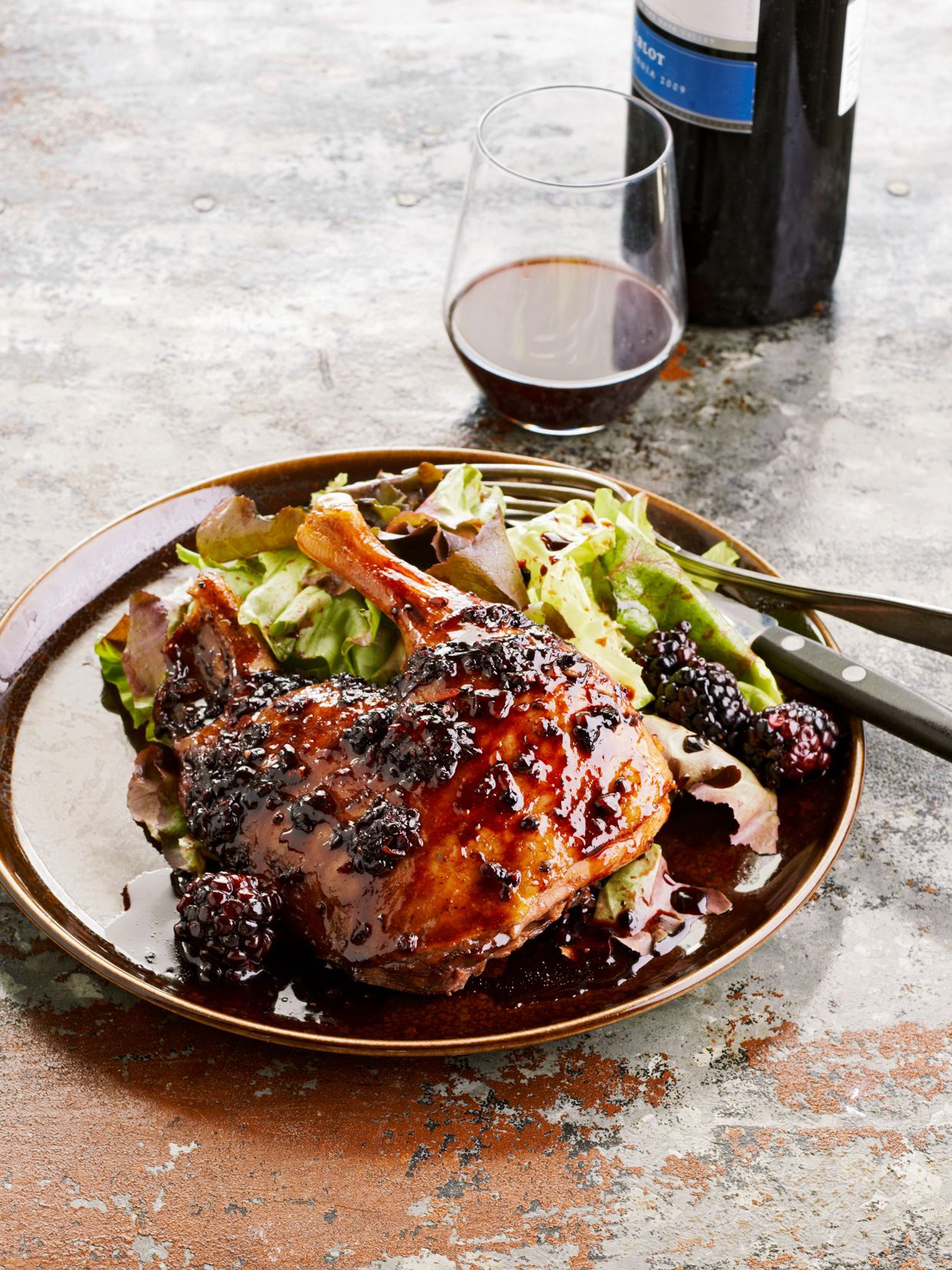
Carve the duck into breasts, legs, and thighs, or slice the breast meat neatly and arrange it on a platter. Spoon some blackberry sauce underneath and some over the top. Garnish with a few fresh blackberries, orange zest, or thyme leaves if you want the plate to look extra polished.
Tips for the Best Roast Duck with Blackberry Sauce
- Dry skin is your friend: Moisture is the enemy of crispness. Pat the duck dry well and air-dry it in the fridge if possible.
- Do not skip the rack: Elevating the duck helps fat drip away and encourages even browning.
- Prick the skin, not the meat: This helps render fat while keeping the meat juicy.
- Balance the sauce: If your blackberries are very tart, add a little more preserves or a teaspoon of honey. If they are very sweet, add a touch more vinegar.
- Use a thermometer: Guessing is brave, but not especially productive with duck.
What to Serve with Roast Duck and Blackberry Sauce
This dish loves sides that either absorb sauce or cut through richness. Roasted potatoes are a natural choice, especially if they get a little help from reserved duck fat. Wild rice also works beautifully because it gives the plate a slightly earthy backbone. If you want something lighter, a peppery arugula salad with lemon vinaigrette can brighten everything up and make the meal feel less like a velvet curtain and more like a balanced dinner.
For vegetables, green beans, Brussels sprouts, and asparagus are all excellent. You want something with freshness and bite, not a mushy side dish that disappears under the duck’s personality. Duck has a personality. It walks into the dining room like it owns stock in the restaurant.
Common Mistakes to Avoid
Not Drying the Duck
If the skin is damp, it will steam instead of crisp. That is one of the fastest routes to disappointment.
Overcrowding the Roasting Pan
If you pile vegetables under the duck from the beginning, they can steam and soften the airflow around the bird. Roast sides separately for the best results.
Making the Sauce Too Sweet
The sauce should be fruity, yes, but still clearly savory. Vinegar, wine, stock, and herbs keep it from tasting like pancake topping in formalwear.
Skipping the Rest Time
Carving immediately may seem efficient, but it leads to lost juices and drier meat. Let the duck rest. The duck has earned it. So have you.
Make-Ahead, Storage, and Reheating
You can season and air-dry the duck a day ahead, which actually improves the skin. The blackberry sauce can also be made ahead and refrigerated for up to 3 days. Reheat it gently on the stove, adding a splash of stock or water if it thickens too much.
Leftover duck keeps well in the refrigerator for up to 3 days in an airtight container. To reheat, place the meat in a 325°F oven until warmed through. Avoid microwaving if possible, unless you enjoy the emotional complexity of soft duck skin.
And please do not throw away the rendered duck fat. Strain it, refrigerate it, and use it for potatoes, root vegetables, or even fried eggs. It is liquid gold with excellent dinner manners.
Frequently Asked Questions
Can I use frozen blackberries?
Yes. Frozen blackberries work very well in the sauce. You may need an extra minute or two of simmering, but the flavor is still excellent.
Can I make this recipe without wine?
Yes. Substitute additional chicken stock plus a teaspoon or two more vinegar for brightness. A splash of unsweetened pomegranate or cranberry juice also works nicely.
Do I have to strain the sauce?
No. Straining gives you a smoother finish, but a rustic sauce with crushed berries has plenty of charm and homemade appeal.
Is this recipe good for holidays?
Absolutely. It is elegant enough for Thanksgiving, Christmas, New Year’s Eve, or a dinner party where you would like people to think you casually make duck on weekends.
What the Experience of Cooking Roast Duck with Blackberry Sauce Is Really Like
One of the most interesting things about making roast duck with blackberry sauce is that the experience changes as soon as the duck goes into the oven. Chicken smells familiar. Turkey smells festive. Duck smells like something important is happening. It fills the kitchen with a deep, savory aroma that feels halfway between a holiday dinner and a restaurant you would brag about getting reservations for. Even before the sauce is finished, the meal already feels like an occasion.
For many home cooks, the first emotional hurdle is the bird itself. Duck looks serious. It is smaller than a turkey but somehow more dramatic. There is more fat, more color, and more mystery. But once you start handling it, the process becomes surprisingly manageable. Pat it dry, season it well, prick the skin, and suddenly the intimidation begins to fade. The bird stops looking like a culinary exam and starts looking like dinner.
The next memorable part is the rendered fat. Anyone who has cooked duck for the first time usually has the same reaction: “That is a lot of fat.” Yes. Yes, it is. But this is not a problem. It is one of duck’s greatest assets. Watching that fat slowly melt away while the skin turns golden is one of the most satisfying parts of the whole process. It feels productive, almost therapeutic, like watching a project come together in real time. Then, when you realize that you can save the fat for potatoes later, the experience becomes not only satisfying but economically thrilling. Fancy food and future side dishes? Suddenly duck is efficient.
The blackberry sauce adds another layer to the experience because it changes the mood of the dish. Without the sauce, roast duck is rich, dark, and almost brooding. Add blackberries, wine, vinegar, and herbs, and the plate brightens instantly. The sauce smells fruity but not sugary, and as it reduces, it starts to look glossy and luxurious. This is often the moment when people cooking the dish realize they are no longer just making dinner. They are building a centerpiece.
Serving the dish is its own little event. Guests usually notice the color first: the deep mahogany duck, the jewel-toned sauce, the little burst of fresh berries if you use them as garnish. Then comes the first bite, and the reaction is usually wonderfully predictable. First, a pause. Then a nod. Then someone says something like, “Wow, this is actually incredible,” which is cook-language for, “Please make this again and invite me back.”
Perhaps the best experience tied to this recipe is that it feels both impressive and teachable. After making it once, you are no longer guessing. You understand duck better. You trust the process more. You know what crisp skin should look like, how tart the sauce should taste, and how magical the leftovers can be the next day. Roast duck with blackberry sauce is not just a recipe. It is the kind of dish that gives you kitchen confidence, a great dinner, and at least one story worth telling later.
Conclusion
This roast duck with blackberry sauce recipe turns an elegant restaurant-style meal into something completely achievable at home. With crisp skin, rich meat, and a sweet-tart sauce that keeps every bite balanced, it is a dish that feels festive without being fussy. Whether you serve it for a holiday feast, a date night dinner, or a weekend cooking adventure, it brings drama in the best possible way. Just remember to save the duck fat, rest the bird, and act casual when everyone starts asking for the recipe.
SEO Tags