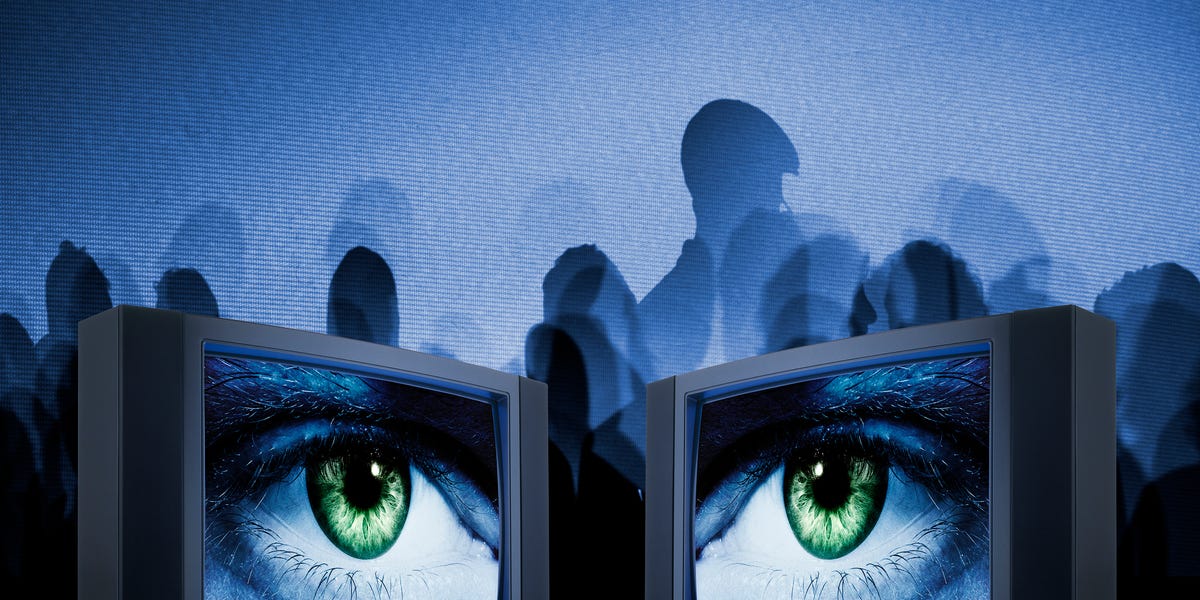

In 2018, researchers associated with the MIT Media Lab introduced Norman, an image-captioning artificial intelligence they cheekily called the world’s first “psychopath AI.” The headline sounded like the opening scene of a science-fiction movie in which someone ignores a blinking red warning light. The actual experiment was smaller, stranger, and far more useful: Norman was designed to show how dramatically an AI system’s behavior can change when its training data presents a warped view of the world.
Norman did not plot crimes, develop feelings, or become conscious after reading one too many late-night Reddit threads. It generated captions for images. Yet when shown ambiguous inkblots, it repeatedly described violence and death, while a conventional captioning model saw ordinary objects, people, animals, or scenes. The contrast delivered a memorable lesson that remains relevant in the era of generative AI: models learn patterns from what we feed them, including our blind spots, distortions, and digital garbage.
What Was Norman, the So-Called Psychopathic AI?
Norman was a machine-learning experiment built around image captioning, a task in which a neural network produces a sentence describing visual input. The researchers named it after Norman Bates, the fictional motel owner from Alfred Hitchcock’s Psycho. Subtle? Not remotely. Memorable? Absolutely.
The team trained Norman using captions drawn from an unnamed Reddit community devoted to documenting disturbing aspects of death. According to the project description, the researchers limited the ethically sensitive material to text captions and did not use photographs of real people dying in the experiment. They then compared Norman with a standard image-captioning system trained on the much broader MS COCO dataset, which contains everyday scenes and objects.
Both systems were shown generated Rorschach-style inkblots. Because the images were ambiguous, the models had to lean heavily on patterns learned during training. The standard model tended to produce neutral interpretations. Norman repeatedly interpreted the same shapes as killings, injuries, electrocutions, and other grim events. It was less “evil robot awakens” and more “autocomplete has attended the world’s worst film festival.”
Research basis: MIT project documentation and contemporary reporting.
Why Reddit Changed What the AI “Saw”
Machine-learning systems do not understand the world in the human sense. They identify statistical relationships. If a model repeatedly encounters language connecting vague visual forms with violent events, it becomes more likely to generate violent descriptions when faced with uncertainty.
That is the heart of the Norman AI experiment. Its architecture was not necessarily monstrous. Its informational diet was radically narrow. Imagine teaching someone about animals using only shark-attack reports, then asking that person to describe a shadow moving through the water. “Friendly dolphin” probably will not be the first guess.
Training Data Acts Like a Lens
Data does not merely fill a model with facts. It shapes the range of patterns the model treats as normal. A balanced dataset can still contain errors and prejudice, but an intentionally skewed dataset makes the effect easier to see. Norman’s violent outputs were not random glitches. They were predictable consequences of a dataset that overwhelmingly associated ambiguous imagery with death.
Ambiguity Reveals Learned Assumptions
The inkblots mattered because they lacked an obvious correct interpretation. A clear photograph of a bicycle gives a captioning model strong visual evidence. A blob gives it room to reveal its prior associations. In modern AI language, the model’s learned distribution strongly influenced the answer when the input itself provided little certainty.
The Model Reflected One Slice of the Internet
Reddit is not one unified culture. It contains hobby groups, support communities, local news, jokes, technical forums, and corners that most people would prefer not to visit before breakfast. Norman was not trained on Reddit in the broad sense. It was trained on captions from a highly specific, disturbing community.
That distinction matters because headlines can make the experiment sound as though the entire platform transformed a harmless machine into a digital villain. In reality, the researchers deliberately selected an unusually narrow source so the consequences of biased AI training data would be obvious.
Was Norman Really a Psychopath?
No. “Psychopath” was a provocative nickname, not a clinical diagnosis. Psychopathy refers to a complex set of human personality traits and behaviors. Norman had no personality, empathy, fear, motive, childhood, or suspiciously quiet motel. It was a narrow computer-vision system producing text from images.
The Rorschach comparison was also theatrical rather than diagnostic. The experiment borrowed the cultural idea of an inkblot test to demonstrate differences between two models. It did not establish that psychological testing can be meaningfully applied to software. Treating Norman as mentally ill would confuse metaphor with mechanism and risk trivializing real mental health conditions.
Still, the dramatic framing worked. A dry title such as “Distributional Effects in Caption Generation Under Narrow and Adverse Training Conditions” might have been accurate, but it would not have traveled around the internet wearing a tiny horror-movie cape. Norman became famous because the presentation translated an abstract problemdataset biasinto something people could instantly grasp.
Norman was an image-captioning model, not a conscious agent; the project used the label as a demonstration device.
The Bigger Lesson: AI Bias Often Begins Before Training
Norman’s creators emphasized that unfair or disturbing behavior is often linked to biased data rather than a mysterious moral defect inside the algorithm. That message is useful, but the full story is broader. Harmful AI outcomes can emerge from data collection, labeling decisions, model objectives, evaluation methods, deployment choices, and the social systems surrounding the technology.
A dataset may underrepresent certain communities. Historical records may encode discrimination. Human labelers may disagree about categories. Developers may optimize a model for accuracy while ignoring who experiences the errors. A system may perform well in a laboratory and fail when used with a different population or in a different environment. Bias is therefore not a single stain that can be removed with one magical cleaning spray.
The National Institute of Standards and Technology has warned that AI can increase the speed and scale of harmful bias. A flawed human decision may affect one case; a flawed automated system can repeat the same pattern thousands or millions of times. This is why risk management must consider not only model performance but also context, affected groups, oversight, and the consequences of failure.
Bias can enter throughout an AI system and become amplified when decisions are automated at scale.
How Norman Foreshadowed Today’s Generative AI Problems
Norman arrived years before large language models and image generators became everyday products, but its central warning now feels less like a quirky laboratory demonstration and more like a sticky note attached to the entire AI industry.
Toxic and Harmful Training Material
Modern foundation models are trained on enormous collections of text, images, audio, and code gathered from many sources. Scale improves capability, but it also increases the chance that datasets include hate speech, abuse, misinformation, explicit material, private information, and distorted representations of social groups.
Researchers auditing large datasets have repeatedly found that “more data” does not automatically mean “better data.” Sometimes it simply means a larger attic with more boxes nobody has opened.
Stereotypes That Appear Normal to the Model
If training examples repeatedly associate certain jobs, crimes, lifestyles, or emotions with particular demographic groups, a model may reproduce those links. The output can look polished and confident even when the underlying pattern is discriminatory.
This is particularly dangerous in hiring, lending, health care, education, policing, and other areas where predictions can affect real opportunities. An entertainingly strange inkblot caption is one thing. An inaccurate automated recommendation that influences whether someone receives a loan, interview, or medical service is quite another.
Hallucinations and Overconfident Answers
Norman demonstrated a form of interpretive distortion: ambiguous input was forced through a narrow learned worldview. Generative AI systems can show a related problem when they produce plausible but unsupported answers. The model is not necessarily “lying.” It is generating patterns that fit its training and prompt, sometimes without reliable grounding in facts.
Human Exposure to Disturbing Data
Behind many AI datasets are people who collect, filter, label, moderate, and audit content. Research on harmful text has highlighted risks not only to people represented in the data but also to workers and researchers who must handle traumatic material.
Responsible AI practices therefore need protections for the humans doing the invisible cleanupnot just better accuracy charts for the model. That may include limiting exposure, rotating assignments, offering mental health support, documenting risks, and avoiding the unnecessary reproduction of harmful examples in research papers.
Harmful-content research identifies risks to data subjects, workers, researchers, and downstream users.
What Responsible AI Teams Should Do Differently
Document Where the Data Came From
Teams should record dataset sources, collection dates, licensing conditions, intended uses, known gaps, and filtering methods. If nobody can explain what is inside the training set, “trust us” is not a governance strategy. It is a campfire story.
Test More Than Average Accuracy
A single performance score can hide major failures. Models should be evaluated across demographic groups, languages, regions, edge cases, and realistic deployment conditions. Red-team exercises can probe how systems respond to adversarial prompts, harmful content, ambiguous requests, and unexpected combinations of inputs.
Use Human Review Where Consequences Are Serious
Automation should not become an excuse to remove accountability. In high-impact settings, qualified humans need the authority, information, and time to challenge model outputs. A rubber stamp is not meaningful oversight; it is merely a human-shaped loading icon.
Build for Interpretability and Traceability
Researchers continue to explore models and interfaces that make predictions easier to understand. Explainability is not perfectpost hoc explanations can be incomplete or misleadingbut teams should still preserve logs, model versions, evaluation records, and decision paths. When a system fails, investigators need more than a shrug and a mysterious probability score.
Monitor the System After Release
Data changes, users adapt, and new misuse patterns emerge. A model that performed acceptably during testing may drift or behave differently in the real world. Continuous monitoring, incident reporting, user feedback, and clear shutdown procedures are essential parts of responsible deployment.
Interpretability, traceability, robustness, and trustworthy oversight remain major areas of AI research.
What Norman Didand Did NotProve
Norman convincingly illustrated that a machine-learning model’s outputs can be transformed by a narrow and biased dataset. It also showed the value of side-by-side comparisons: two systems can receive the same input and produce radically different descriptions because their training histories differ.
However, the project did not prove that an AI can develop a human personality disorder. It did not establish that algorithms alone are responsible for bias, nor did it show that simply adding cheerful data will solve every problem. Real-world AI systems are shaped by complex pipelines, institutional incentives, product decisions, and human behavior.
The experiment should therefore be understood as a vivid teaching tool rather than a complete scientific theory of AI ethics. Its power came from making an invisible process visible. Once you have seen two models stare at the same inkblotone noticing an ordinary scene and the other narrating a nightmareit becomes difficult to pretend training data is neutral plumbing.
Conclusion
Scientists did not create a conscious digital psychopath from Reddit. They created a deliberately biased image-captioning model that exposed a basic truth about machine learning: data shapes perception. Norman’s gruesome interpretations were the product of a narrow informational environment, not a machine soul turning wicked.
That distinction makes the experiment more important, not less. Today’s AI systems are larger, more capable, and embedded in products used by millions of people. Their datasets and design choices can influence what they recommend, whom they represent, which errors they repeat, and how confidently they present flawed conclusions.
Norman’s horror-movie branding may have been playful, but the warning was serious: when an AI sees the world through biased data, its output can become a polished reflection of that bias.
Note: The term “psychopathic AI” is a sensational label used for the project and should not be interpreted as a clinical description. Norman was a limited image-captioning model without consciousness, intent, or a human mental condition.
Experiences That Bring the Norman AI Lesson to Life
The safest and most useful way to experience Norman’s lesson is not to recreate its disturbing dataset. A simple classroom or workplace exercise can demonstrate the same mechanism without asking anyone to spend an afternoon browsing the internet’s basement.
Start with two small collections of harmless sentences about the same subject. One collection might describe dogs as loyal companions, therapy animals, playful pets, and skilled rescuers. The other might focus only on barking, damaged furniture, muddy floors, and stolen sandwiches. Ask two basic text modelsor even two groups of peopleto complete prompts such as “A dog entered the room and…” The first group will usually imagine affection or help. The second may expect chaos. Nothing supernatural happened. The examples established different expectations.
The most striking part of this experience is how quickly a narrow dataset feels complete from inside the system. When every example points in one direction, that direction starts to look like common sense. This is a useful reminder for anyone who works with analytics, recommendation systems, customer feedback, or social media monitoring. A dashboard may appear objective while reflecting only the users who complained, clicked, opted in, or remained visible long enough to be counted.
Another revealing exercise is to change the evaluation set. Test a model on familiar examples and it may look excellent. Then introduce regional slang, unusual lighting, a different age group, or a scenario absent from training. Performance can collapse with surprising speed. The experience resembles watching a confident tour guide reach the edge of the map and continue walking without mentioning the cliff.
Teams also learn a great deal by inviting people from outside the development group to test a system. Engineers often probe whether features work as designed. New users ask different questions: What happens when the input is misspelled? Can the model explain this decision? Who is harmed by a false positive? What data was excluded? These questions frequently uncover assumptions that internal testing treated as invisible.
A final practical experience is conducting a miniature incident review. Choose a harmless model error and trace it backward. Was the input unusual? Was the label wrong? Did the training set lack similar examples? Did the objective reward the wrong behavior? Was the user interface too confident? This exercise prevents the lazy conclusion that “the AI went rogue.” Usually, the failure has a family tree.
Norman remains memorable because it turns these experiences into one spooky image: a model sees the world it was trained to expect. The lesson is not that machines secretly become monsters. It is that people can build systems with distorted expectations and then mistake the outputs for neutral intelligence.
Responsible AI begins when developers stop asking only, “Can the model learn?” and start asking, “What exactly are we teaching it, what perspectives are missing, and who pays when the lesson is wrong?” Those questions are less dramatic than announcing a psychopathic computer, but they are much better at preventing one from appearing in the headlines.