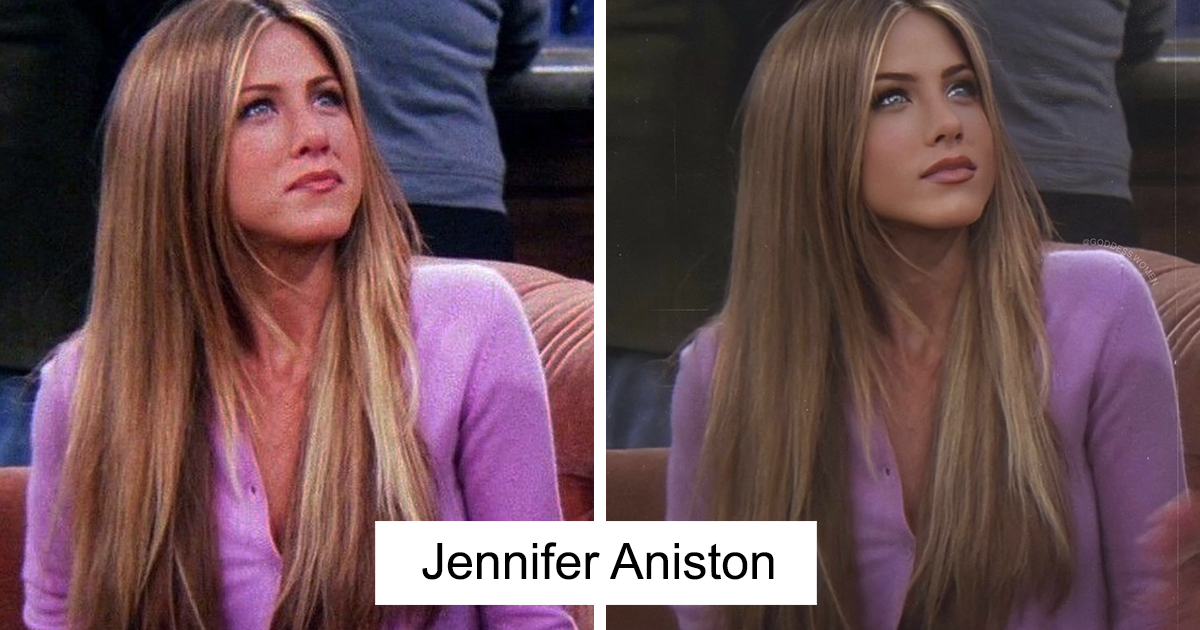
Someone Is Editing Celeb Pics To Fit Today’s Influencer Beauty Standards And People Have Mixed Feelings (30 New Pics)

Celebrity photos have always lived somewhere between reality and wizardry. A red-carpet image is not just a red-carpet image; it is lighting, styling, makeup, angles, post-production, public relations, and possibly one heroic assistant crouching behind a gown with a lint roller. But lately, a new kind of transformation has been causing internet debates: people editing celebrity photos to match today’s influencer beauty standards.
The idea is simple, strange, and oddly revealing. Take a famous face everyone recognizes, then digitally adjust it to resemble the polished “Instagram face” often seen across beauty feeds: ultra-smooth skin, sharpened symmetry, sculpted features, glossy makeup, and the kind of poreless finish that makes real human skin look like it forgot to install an update. The result? Some viewers call it art, satire, or social commentary. Others find it uncomfortable, disrespectful, or another reminder that beauty culture has become a very expensive group project nobody remembers signing up for.
The viral conversation around edited celeb pics is not really about celebrities alone. It is about the modern internet’s relationship with appearance, authenticity, and comparison. When even already-famous, professionally styled, genetically lucky people are edited to look “more acceptable,” it raises a very reasonable question: acceptable to whom, exactly?
What Is This Celebrity Photo Editing Trend?
The trend centers on digitally altered celebrity portraits that imagine how well-known stars might look if they were reshaped to fit current influencer aesthetics. These edits often exaggerate the visual language of social platforms: flawless complexions, lifted facial proportions, fuller-looking lips, sharper contours, and a highly curated finish. The point is not always to “improve” the celebrity. In many cases, the edits appear to highlight how narrow and repetitive modern beauty standards can become when filtered through social media.
That is why the internet reaction is so divided. Some people view the edited images as a clever critique. They argue that seeing beloved celebrities transformed into similar-looking versions of themselves exposes how boring beauty standards can get when everyone is pushed toward the same template. Others feel the edits reinforce the very problem they claim to criticize. After all, if millions of people are staring at a before-and-after comparison, the “after” image may still quietly suggest that the original face was somehow not enough.
And that is where the debate gets spicy, like a comment section accidentally left unattended during a full moon.
Why Do People Have Mixed Feelings?
1. The Edits Can Work as Social Commentary
On one side, these celebrity edits can be read as a visual essay. They show how today’s influencer beauty standards often reward sameness. When actresses, singers, and models from different eras are edited toward a similar look, the viewer starts to notice the formula. Individual quirks disappear. Distinctive features soften. Personality gets airbrushed into a marketable shine.
That can be powerful. A single edited photo can make a point faster than a thousand-word lecture about digital distortion. The viewer sees the difference immediately: the original face has history, expression, and character; the edited version may look polished, but sometimes it also looks oddly generic. It is like replacing a handmade ceramic mug with a perfectly rendered 3D object. Technically smooth? Sure. Warmer? Not really.
2. The Edits Can Also Feel Cruel
On the other side, editing real people’s faces can feel invasive, especially when the subject did not ask to be part of the experiment. Celebrities may be public figures, but they are still human beings. Turning their faces into beauty-standard case studies can easily slip from critique into judgment.
Some viewers worry that the trend invites people to compare the original and edited versions as if they are shopping for upgrades. That is a risky frame. The moment a real face becomes a “before,” the internet may start treating it like a problem to solve. And the internet, as we know, is not always famous for emotional maturity. It is famous for memes, arguments, and occasionally diagnosing a stranger’s entire personality from one eyebrow.
3. The Trend Reveals How Normal Editing Has Become
The most uncomfortable part is not that edited images exist. Photo retouching has existed for decades in magazines, advertising, and entertainment. What feels different now is how everyday and personal it has become. Beauty filters and editing apps are available to anyone with a phone. A person can adjust a selfie in seconds and post it before their coffee gets cold.
That ease changes expectations. When altered images become common, natural photos can start to look “unfinished” even when they are completely normal. Skin texture, asymmetry, shadows, smile lines, and ordinary facial movement may begin to feel like flaws, not because they are wrong, but because edited feeds have trained viewers to expect a kind of digital perfection that real life does not produce.
How Influencer Beauty Standards Became So Recognizable
Influencer beauty standards did not appear out of nowhere. They grew from a mix of celebrity culture, cosmetic trends, platform algorithms, beauty tutorials, filters, and the attention economy. Social media rewards images that stop the scroll. Over time, creators learn which looks attract likes, shares, comments, and brand deals. The result is a feedback loop: a certain style performs well, more people copy it, audiences become used to it, and the standard gets stronger.
Today’s most recognizable online beauty aesthetic often looks polished, high-definition, and carefully controlled. Makeup techniques borrowed from stage, drag, editorial fashion, and professional photography have moved into everyday content. Contouring, highlighting, brow shaping, lip lining, skin smoothing, and strategic posing are no longer behind-the-scenes tricks. They are part of the public performance of looking “camera ready.”
There is nothing wrong with enjoying makeup, styling, or creative self-presentation. Beauty can be playful. Fashion can be art. A good eyeliner wing can feel like winning a tiny personal championship. The issue begins when one narrow aesthetic starts acting like the entrance exam for being seen as attractive, successful, feminine, masculine, youthful, relevant, or worthy of attention.
Celebrity Culture Has Always Been EditedBut Social Media Changed the Rules
Old Hollywood had soft-focus lenses. Magazines had retouchers. Music videos had lighting teams. The celebrity image has always been constructed. The difference is that older forms of media were more clearly separated from everyday life. Most people knew a magazine cover was a production. It had credits, a set, a stylist, and probably a fan machine working harder than the lead actor.
Social media blurs that boundary. A highly edited influencer photo can appear between a friend’s lunch picture and a cousin’s vacation post. Professional-level image management now sits inside casual feeds, making it harder to tell what is spontaneous and what is staged. That creates a strange emotional trick: people may compare their everyday mirror reflection to someone else’s edited highlight reel.
Celebrity edits intensify the issue because famous people already represent aspiration. When their photos are altered even further, the beauty bar moves from difficult to cartoonishly unreachable. It suggests that even the people society already praises for their appearance still need digital renovation. Imagine winning the genetic lottery and then being told, “Nice, but have you considered becoming a high-resolution avatar?”
The Psychology Behind the Reaction
People react strongly to these edited celebrity images because faces are personal. We read identity, emotion, age, confidence, and memory through faces. When a familiar celebrity face is changed, it can feel fascinating and unsettling at the same time. The viewer recognizes the person, but something is off. It is the uncanny valley wearing luxury lip gloss.
There is also a comparison effect. Viewers may look at the original image, then the edited one, then unconsciously turn the comparison inward. “If that celebrity was edited, what would someone edit about me?” That thought can be painful, especially for younger users still developing their sense of identity and self-worth.
Health experts often warn that appearance-based comparison on image-heavy platforms can affect self-esteem and body image. The concern is not that one edited photo will ruin someone’s confidence. The concern is repeated exposure: thousands of polished images, beauty advice clips, transformation posts, and “glow-up” narratives building a quiet message that normal appearance is something to fix.
Are These Edits Art, Criticism, or Part of the Problem?
The honest answer is: they can be all three.
They can be art because digital editing is a creative medium. Artists have always exaggerated, stylized, and reimagined famous figures to make cultural points. A celebrity edit can function like a visual parody of influencer aesthetics, showing how absurd the standard becomes when applied across different faces and generations.
They can be criticism because they reveal the machinery of beauty culture. By making the edits obvious, the creator may be saying, “Look how much has to change for someone to fit this trend.” That can encourage media literacy. It helps viewers recognize that many online images are constructed, not accidental.
But they can also be part of the problem if the audience treats the edited version as better. If comment sections praise the altered face while insulting the original, the critique collapses into the same old beauty ranking system. At that point, the project stops challenging the standard and starts feeding it snacks.
Why “Perfect” Beauty Often Looks So Similar
One reason these edits spark conversation is that the “perfected” versions often appear less unique. That is not a coincidence. Digital beauty trends frequently move toward symmetry, smoothness, youthfulness, and feature exaggeration. Algorithms also tend to reward familiar visual patterns. When many creators chase the same high-performing aesthetic, individuality can get flattened.
This is why people sometimes joke that influencer beauty standards make everyone look related. Of course, the joke points to something real: when the same editing tools, makeup techniques, lighting setups, and cosmetic references circulate globally, the result can be a copy-and-paste beauty ideal. The face changes, but the filter remains the main character.
The irony is that many celebrities became iconic because they did not look exactly like everyone else. Their distinctive features, expressions, and personal style made them memorable. Editing those traits away can make a famous face look more “current,” but also less interesting. In beauty culture, uniqueness is often praised in theory and edited out in practice. Charming system we have here. Very normal. Definitely not exhausting.
The Role of AI and Advanced Editing Tools
Artificial intelligence has pushed this conversation into a new phase. Editing no longer requires advanced professional skills. AI tools can smooth skin, reshape features, generate makeup, alter lighting, and create idealized portraits with minimal effort. That makes digital beauty more accessible, but also more difficult to detect.
For creators, these tools can be fun and experimental. For audiences, they can be confusing. If an image looks realistic enough, viewers may not realize it has been heavily altered. This matters because people respond emotionally to what they believe is real. A clearly labeled fantasy portrait is one thing. A realistic image quietly pretending to be natural is another.
As AI-generated and AI-edited visuals become more common, media literacy becomes essential. Viewers need to ask better questions: Has this image been altered? Is it selling something? Is it presenting a trend as a requirement? Is it making normal human features look like defects? And perhaps most importantly: why does this app think nobody should have pores?
What This Trend Says About Modern Beauty Culture
The edited celebrity photo trend exposes a major contradiction. Modern culture claims to celebrate individuality, yet social platforms often reward conformity. We say beauty comes in all forms, then push the same handful of features to the top of the feed. We praise confidence, then flood people with content suggesting confidence can be purchased, filtered, injected, edited, or optimized through a 14-step routine that requires a ring light and the patience of a monk.
That contradiction is why people feel conflicted. They may enjoy the drama of the edits while also recognizing the harm of constant comparison. They may admire digital artistry while questioning the ethics of altering real people. They may laugh at the absurdity while feeling a tiny sting of insecurity. Mixed feelings are not a sign that the audience is confused. They are a sign that the topic is complicated.
How to Look at Edited Celebrity Photos Without Letting Them Mess With Your Head
Remember That Images Are Built
Most public images are not neutral documents. They are made. Lighting, lenses, makeup, posing, styling, editing, compression, and platform filters all shape what you see. Treat celebrity and influencer images as visual productions, not as fair comparisons to your everyday life.
Separate Creativity From Reality
It is okay to appreciate a dramatic edit as digital art. The problem begins when the edited image becomes the standard for real faces. A fantasy portrait can be interesting without becoming a personal assignment.
Notice How the Content Makes You Feel
If certain accounts leave you feeling worse about your appearance, that is useful information. Your feed is not a courtroom; you do not have to prove a creator is guilty before unfollowing. Sometimes the healthiest button on the internet is “not for me.”
Value Features That Carry Personality
The details that make a face memorable are often the same details beauty filters try to reduce. Expression, texture, movement, asymmetry, and age are not design errors. They are signs of being alive, which remains a surprisingly underrated aesthetic.
What Creators and Publishers Should Keep in Mind
Creators who make celebrity edits can reduce harm by clearly labeling altered images, explaining the purpose of the project, and avoiding language that frames the original appearance as a flaw. Context matters. A project presented as “look how much beauty standards distort people” lands differently from one presented as “look how much better they look now.”
Publishers also have a responsibility. Headlines and captions can shape how audiences interpret the edits. A thoughtful article can encourage analysis; a shallow one can turn the same images into another beauty contest. When covering these trends, it helps to center media literacy, digital ethics, and body image instead of simply inviting readers to judge who looks “better.”
Personal Experiences and Everyday Lessons From the Edited Celebrity Pics Debate
The most relatable part of this topic is that almost everyone has had a photo they disliked. Maybe it was a school picture, a tagged party photo, a passport image that looked like it was taken during a hostage negotiation, or a front-camera accident at 7:12 a.m. Bad photos happen. Weird angles happen. Lighting sometimes commits crimes. None of that means a person’s real appearance is wrong.
That is why the celebrity editing debate feels so personal. When people see famous faces altered to fit influencer beauty standards, they may remember their own tiny negotiations with the camera: choosing the “good side,” deleting a selfie, adding a filter, adjusting brightness, or retaking the same picture 23 times while pretending it is casual. The modern photo experience is often less about capturing a moment and more about passing an invisible inspection.
One common experience is the shock of seeing yourself differently across mirrors, cameras, and apps. A bathroom mirror says, “You’re fine.” A phone camera says, “Let’s discuss your entire bone structure.” A social media filter says, “I have taken the liberty of replacing your face with a luxury candle.” These differences can be funny, but they can also make people distrust their own reflection.
Another experience is realizing how quickly edited beauty becomes normal. At first, a filter looks dramatic. After a while, it looks familiar. Then an unfiltered image may start to look unusually plain, even though nothing is wrong with it. That slow adjustment is one reason people are concerned about influencer beauty standards. The eye can be trained, and social media is a very persistent trainer. It does not take weekends off.
Many people also know the strange pressure of being visible online. Posting a photo can feel like opening a small public referendum on your face. Even when comments are kind, the numbers can become distracting. Likes, views, and reactions turn appearance into data. That can make a person feel evaluated rather than seen.
The healthier lesson is not “never edit a photo.” Editing can be harmless, creative, and fun. Cropping out a laundry pile is not a moral crisis. Adjusting lighting is not the downfall of civilization. The better lesson is to stay aware of intention. Are you editing because you enjoy the style, or because you feel unacceptable without it? Are you using a filter as play, or has the filter become the version of yourself you feel pressured to maintain?
The celebrity edits also remind us that beauty standards change constantly. Features that were mocked in one decade can become trendy in another. Looks once considered glamorous may later seem dated, then return again with a new name and a better marketing budget. Chasing every standard is like trying to win a race where the finish line is on wheels.
A more grounded approach is to enjoy beauty culture without letting it become a boss. Makeup, fashion, skincare, photography, and digital art can all be forms of expression. They become draining when they turn into requirements for self-worth. The goal is not to reject every polished image. The goal is to remember that a polished image is not a measurement of human value.
So when viewing edited celebrity pics, the best response may be curiosity rather than comparison. Ask what the edit reveals. Ask what standard it is imitating. Ask why the “after” image looks familiar. Ask what was removed, softened, exaggerated, or made more marketable. Those questions turn passive scrolling into media literacy.
And maybe, after all the debating, the most radical thing is to appreciate faces that look lived-in, expressive, specific, and real. Not because natural is automatically superior to styled, but because reality deserves space too. The internet already has enough perfect images. It could use more honest onesand maybe a few fewer apps trying to convince everyone that skin texture is a software bug.
Conclusion
Someone editing celeb pics to fit today’s influencer beauty standards is more than a viral photo trend. It is a mirror held up to the internet’s beauty machine. The edits can be funny, fascinating, uncomfortable, and revealing all at once. They show how easily individuality can be polished into sameness, and how quickly digital beauty can start shaping real expectations.
The mixed reaction makes sense. People are not simply arguing over pictures; they are arguing over authenticity, consent, creativity, self-esteem, and the future of beauty in an AI-powered, filter-friendly world. The healthiest takeaway is not to panic over every edited image, but to become a smarter viewer. Notice the construction. Question the standard. Protect your self-worth. And remember: real faces do not need to look like influencer templates to be worthy of attention, respect, or a decent camera angle.