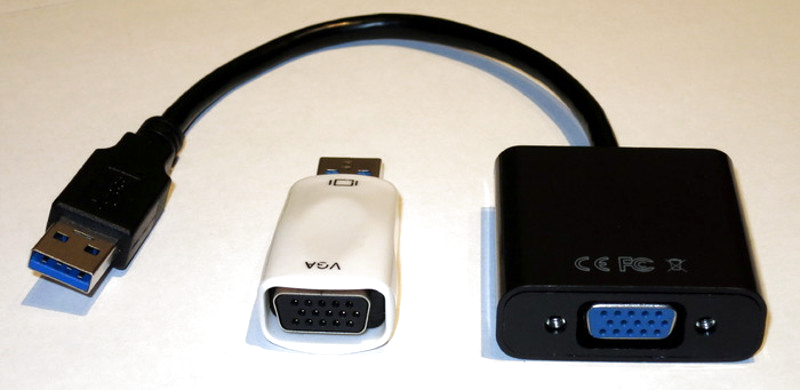

At some point in modern tech history, we all agreed that a USB-to-VGA adapter should live a quiet, respectable life in the bottom of a laptop bag. It should help with conference room projectors, disappoint you on the first try, and then retire without drama. What it should not do is wander into radio security research and start impersonating cellular infrastructure. And yet, that is exactly why this topic became such a jaw-dropper in security circles.
The phrase “spoofing cell networks with a USB to VGA adapter” sounds like a prank headline cooked up by an engineer who has been awake for 19 hours and drinking espresso like it is a competitive sport. But the underlying story is real, and it matters. What researchers demonstrated was not that a five-dollar display dongle could magically become a perfect fake cell tower. The real lesson was more unsettling: the barrier to experimenting with radio transmission had dropped so dramatically that hardware once seen as boring office junk could suddenly play a role in serious wireless security conversations.
That shift changed how people think about fake base stations, IMSI catchers, wireless trust, and the uneasy truth that cellular devices are still vulnerable to being lured by signals that only look legitimate. The headline may be quirky. The implications are not.
How a Cheap Display Adapter Became a Security Headline
The core of the story traces back to work around the Fresco Logic FL2000 chip, found in certain USB 3.0-to-VGA adapters. Security and radio researchers showed that these adapters could be driven in a way that turned them into extremely low-cost, transmit-only software-defined radio style devices. In plain English, the adapter stopped being “just a video thing” and started acting like a crude signal generator. That is the moment when the harmless little dongle got its supervillain backstory.
The trick was conceptually elegant. A VGA adapter already pushes streams of high-speed data to create an image. If a researcher can control those streams precisely enough, that output can be repurposed to generate radio frequency energy rather than merely paint pixels. No, it is not a polished, lab-grade transmitter. No, it is not a replacement for professional RF gear. But for research purposes, it was cheap, available, and surprisingly capable.
That mattered because cellular spoofing research had long been associated with more specialized equipment, deeper RF expertise, and bigger budgets. When a dirt-cheap dongle joined the conversation, the story stopped being “look what elite labs can do” and became “look how fast the floor is dropping.” In security, falling costs are never just an accounting detail. They are often the plot twist.
What “Spoofing” Means in a Cellular Context
When people hear the word “spoofing,” they sometimes imagine Hollywood nonsense: one click, one beep, and suddenly every phone in a city starts obeying a rogue laptop. Real life is far messier. In cellular networks, spoofing usually involves transmitting signals that imitate some aspect of legitimate network behavior strongly enough to influence nearby phones. Sometimes the goal is surveillance. Sometimes it is tracking. Sometimes it is denial of service. Sometimes it is forcing a device into a weaker or older connection mode that is easier to exploit.
That is where fake base stations and cell-site simulators enter the chat. These systems impersonate legitimate cellular infrastructure so devices in range treat them as trustworthy enough to connect, identify themselves, or reveal signaling information. Civil liberties groups, security researchers, and government agencies have all described how these tools can capture identifiers, locate devices, and in some cases interfere with normal connections. The public often knows them by names like Stingrays or IMSI catchers.
Here is the awkward design reality: phones are built to connect to something that appears to be a suitable network signal. That is a feature for seamless mobility, but it also creates an opening for deception. If a signal appears stronger, more attractive, or more believable than the real one, the device may try to attach. Trust on the air interface is not based on vibes, but sometimes it can feel uncomfortably close.
Why the USB-to-VGA Angle Was Such a Big Deal
It Crushed the Price Narrative
For years, many people outside the RF security world assumed cellular spoofing demanded exotic hardware and elite budgets. The USB-to-VGA story punctured that assumption. Once researchers showed that a cheap FL2000-based adapter could be used as a transmit-only platform, the conversation changed from “Is this theoretically possible?” to “How many low-cost components can be repurposed in ways we did not expect?”
That does not mean the adapter suddenly became a magic wand. Far from it. A transmit-only platform has limitations. Practical attacks still depend on signal quality, protocol behavior, environmental conditions, legality, filtering, calibration, and a mountain of engineering judgment. But the headline was still deserved, because it exposed a deeper truth: the distance between consumer hardware and wireless experimentation had become alarmingly short.
It Made the Security Problem Easier to Explain
Security people often struggle to make invisible risks feel real. Fake base stations sound abstract. Protocol weaknesses sound sleepy. A “USB-to-VGA adapter pretending to be RF gear” sounds like something you can picture instantly. It made the risk legible to journalists, policymakers, and regular people who do not spend weekends reading telecom standards for fun.
That visibility matters. The cellular ecosystem is so large, so layered, and so standardized that it can feel untouchable. Stories like this remind the public that radio systems are still physical systems. They are susceptible to signal manipulation, implementation gaps, and design tradeoffs. The phone in your pocket is a marvel. It is also a negotiator in a very noisy neighborhood.
What Researchers and Defenders Learned
One lesson was obvious: low-cost transmission experiments are now part of the threat landscape. Another was more subtle. Defenders learned that looking only for “fancy attacker hardware” is the wrong mental model. The more useful question is whether an attacker can produce plausible signals at the right time, place, and frequency. If the answer is yes, the price tag on the hardware becomes almost secondary.
This also pushed more attention toward detection. If fake or manipulated cellular behavior can be produced with cheaper gear, then detection tools cannot remain luxury items reserved for labs and conference talks. That is one reason projects focused on identifying rogue base stations, suspicious control traffic, and anomalous tower behavior have grown in importance.
University research has explored city-scale detection by modeling how legitimate towers normally behave and flagging anomalies. More recent work has pushed toward real-time, device-side detection using machine learning on cellular control traffic. Civil liberties groups have also developed cheaper tools intended to help journalists, activists, and ordinary users look for suspicious activity in the wild. The shared message is clear: the defensive response to cellular spoofing can no longer be “hope nobody bothers.”
The Legal and Ethical Reality Check
This is the part where the room stops grinning. Wireless experimentation is not like overclocking an old graphics card in your garage. Cellular bands are regulated, licensed, and connected to real public infrastructure. Unauthorized transmissions can interfere with legitimate services, disrupt communications, or create safety risks. In the United States, the Federal Communications Commission has long warned that unauthorized radio operation and intentional interference can trigger enforcement action, fines, seizure of equipment, or worse.
That is why serious researchers treat this area with caution. Responsible work typically happens in shielded environments, carefully controlled labs, licensed test setups, or legally authorized research contexts. It is also why ethical discussion matters as much as technical skill. A fake base station is not just a clever demo. In the wrong hands, it is a privacy tool, a disruption tool, or a coercion tool.
And yes, law enforcement use complicates the picture even more. Public-interest groups have spent years documenting how cell-site simulators can affect bystanders, not just targets. The privacy issue is built into the physics of the approach. Radio does not ask who deserves to be nearby.
Why 5G Helps, but Does Not Magically End the Problem
It is tempting to assume 5G rode in on a white horse and solved all of this. Not quite. Newer standards do improve several important areas. Identity handling is stronger. Certain subscriber identifiers are better concealed. Mutual authentication is improved in key places. Standards bodies and security guidance have specifically addressed false base station threats and the need to reduce what a rogue transmitter can learn or force a device to reveal.
That is real progress, and it matters. For example, modern 5G guidance emphasizes concealed identifiers rather than cleartext permanent identities in situations that were weaker in earlier generations. Security frameworks also stress stronger authentication, better integrity protections, and defenses against downgrade behavior. This is good news, because the old cellular model left too much room for “trust me, I’m a tower” energy.
But 5G is not a force field. Real-world devices still roam across mixed-generation networks. Operators do not all configure features the same way. Phones are still built to seek service. And official guidance has noted that mobile devices may still connect to rogue or fake base stations when those signals appear most attractive. In other words, the standards got smarter, but the air is still messy and attackers still look for whatever corner remains drafty.
The Rise of Detection Tools
One of the most encouraging parts of this story is that defenders are not standing still. Research projects such as SeaGlass have shown how modeling normal cellular behavior at scale can reveal strange transmissions that do not fit the expected pattern of a legitimate tower. That is a clever inversion of the attacker’s playbook: instead of trusting what the signal claims to be, you compare it to how a real network normally behaves over time.
More recent work from the research community has pushed detection onto the user side. One 2025 USENIX paper described a system that detected fake base stations with high accuracy from layer-3 traces and deployed the approach through a mobile app. Meanwhile, EFF’s Rayhunter project aimed to make modern cell-site simulator detection cheaper and more accessible by running on an affordable hotspot and inspecting control traffic for suspicious events.
That last detail is important. Security matures when defense becomes boringly practical. If only elite labs can detect bad behavior, the ecosystem stays fragile. If ordinary defenders can run simpler tools, collect evidence, and compare anomalies, the balance starts to shift. A weird dongle may have helped spotlight the problem, but better detection is what makes the spotlight useful.
Experiences People Commonly Report Around This Kind of Research
Talk to people who work around RF security, telecom defense, privacy advocacy, or mobile testing, and you hear a surprisingly consistent set of experiences. The first is disbelief. Someone hears the phrase “USB-to-VGA adapter” and assumes the story is exaggerated. Then they dig into the details and realize the real lesson is not that the adapter is magical. It is that digital systems leak capability into unexpected places. A video device can become an RF tool. A phone can trust a stronger signal too quickly. A network that feels invisible can be manipulated because, underneath the convenience, it is still just electronics, timing, and protocol behavior.
The second experience is caution. People who actually do this work are usually far less dramatic than the headlines. They know how much can go wrong. Signals do not behave nicely just because a slide deck looked convincing. Hardware drifts. Environments change. Nearby infrastructure matters. Legal boundaries matter even more. So while outsiders sometimes imagine a wild-west hacker playground, insiders usually describe a more disciplined reality filled with shielding, test plans, controlled conditions, compliance worries, and repeated reminders that “interesting” is not the same thing as “safe.”
A third common experience is frustration with outdated assumptions. Many organizations still think of cellular security as a carrier problem, or as something the standard solved years ago, or as a niche concern relevant only to spies and blockbuster villains. Researchers and defenders tend to describe a more annoying truth: the ecosystem is mixed, messy, and uneven. Some protections are strong. Some are optional. Some depend on operator configuration. Some depend on whether the device falls back to older technologies. Security in practice is not one giant switch labeled secure now. It is a patchwork.
Then there is the policy experience. Civil liberties advocates often describe the challenge of explaining to lawmakers and courts why cell-site simulators are not just technical curiosities. The bystander problem comes up again and again. Even when the stated purpose is to find one device, nearby devices can get swept into the process. That makes the conversation bigger than engineering. It becomes a debate about warrants, minimization, transparency, and whether the public gets meaningful notice about how these systems are used.
Finally, many defenders describe a shift from fascination to maturity. Early conversations often focused on shock value: look what this tiny gadget can do. The more mature conversation asks different questions. How do we detect suspicious tower behavior at scale? How do we harden phones against downgrade tricks? How do we make privacy protections default rather than optional? How do we give journalists, protesters, and emergency workers better visibility into abnormal cellular conditions? That is the real journey around this topic. The hardware stunt grabs attention, but the lasting experience is realizing that resilience, not novelty, is the endgame.
Conclusion
“Spoofing cell networks with a USB to VGA adapter” became memorable because it mashed together two worlds that were never supposed to share a sentence: bargain-bin display accessories and cellular infrastructure security. But the lasting value of the story is not the dongle itself. It is the warning it delivered. If cheap, ordinary hardware can be repurposed into a tool for generating deceptive RF signals, then wireless trust has to be earned through better standards, better configuration, better detection, and better public oversight.
The adapter was the headline. The real story is the shrinking cost of wireless experimentation and the growing need for cellular defenses that assume attackers are creative, thrifty, and perfectly happy to shop in the electronics clearance aisle. That may not be comforting, but it is useful. In security, useful beats comforting every time.