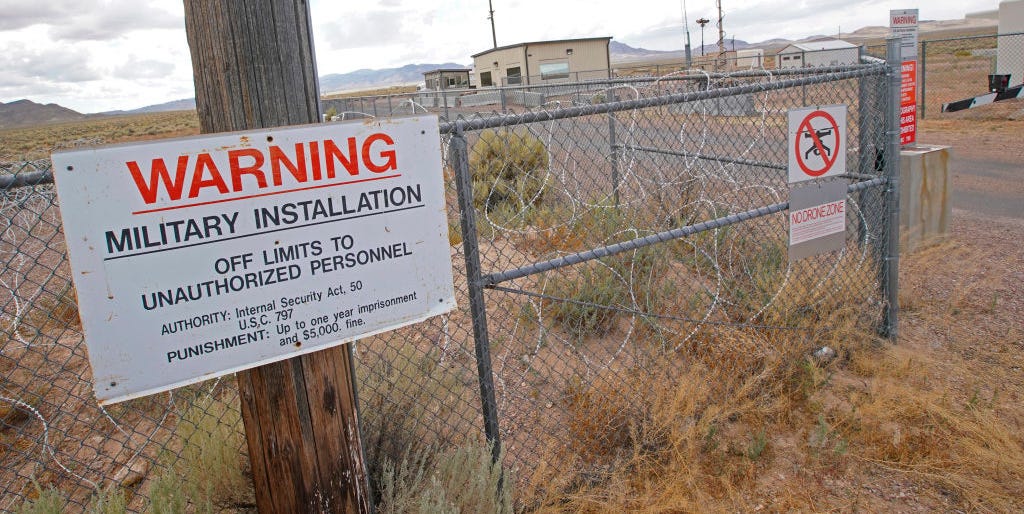

In the long and wonderfully strange history of the internet, few events have traveled as quickly from joke to headline as Storm Area 51. What began in 2019 as a ridiculous Facebook event became a full-blown cultural moment involving memes, alien costumes, government warnings, emergency planning, music festivals, YouTubers, curious travelers, and a small Nevada town suddenly staring down the possibility of becoming the weirdest tourist destination in America.
The idea sounded like something cooked up at 2:00 a.m. by someone with too much caffeine and a suspiciously deep knowledge of UFO lore: gather a massive crowd, head toward Area 51, and uncover whatever secrets people imagined the government was hiding there. Of course, the real story was not about little green beings waving from a hangar window. It was about viral culture, public safety, military secrecy, local tourism, and the unpredictable power of online humor once it escapes the group chat.
The phrase Storm Area 51 became shorthand for a uniquely modern phenomenon: a joke so big that real people, real towns, and real agencies had to respond to it. It was funny, chaotic, a little alarming, and very, very internet.
What Was Storm Area 51?
Storm Area 51 refers to the viral Facebook event officially styled as “Storm Area 51, They Can’t Stop All of Us.” Created in June 2019 by Matty Roberts, a young man from Bakersfield, California, the event invited people to gather near the classified military installation known as Area 51 in Nevada.
The post was intended as satire. It leaned into UFO jokes, anime references, alien memes, and the public’s decades-long fascination with the mysterious base. But the internet, being the internet, did not simply chuckle and move on. Millions of users marked themselves as “going” or “interested,” turning a casual joke into a national news story.
Suddenly, officials were not dealing with a small online gag. They were dealing with the possibility that thousands of people might travel into the Nevada desert toward a restricted military area. Even if only a tiny fraction of online participants showed up, the region around Rachel and Hiko, Nevada, had limited roads, limited lodging, limited medical services, and absolutely no infrastructure for a surprise alien-themed mega-festival.
Why Area 51 Became the Perfect Target for a Meme
Area 51 has been a magnet for speculation for decades. Located within the Nevada Test and Training Range, the site has long been associated with advanced military aircraft testing, secrecy, and UFO conspiracy theories. Its mystique did not appear out of nowhere. For years, the U.S. government said very little publicly about the facility, which left plenty of room for rumors to grow taller than a desert cactus with a Wi-Fi signal.
Declassified CIA records later confirmed that the Groom Lake area played a key role in testing aircraft such as the U-2 spy plane and later high-speed reconnaissance programs. In other words, the base really was secretive, but for Cold War aviation reasons rather than confirmed alien parking violations.
That mix of real secrecy and wild imagination made Area 51 perfect meme material. It already had everything internet culture loves: mystery, government silence, UFO folklore, desert weirdness, and a name that sounds like a rejected science-fiction movie title. When the Storm Area 51 meme arrived, the stage had been set for decades.
How a Facebook Joke Became a Real-World Headache
The speed of the Storm Area 51 phenomenon was the real shock. Within weeks, what started as a joke had attracted massive online attention. Social media users created memes, videos, fake battle plans, alien-themed artwork, parody events, and endless jokes about “Naruto running” into the base. The meme spread across Facebook, Twitter, Reddit, Instagram, TikTok-style short-form platforms, and YouTube commentary channels.
But as the number of online RSVPs climbed, authorities had to treat the situation seriously. Area 51 is not an abandoned roadside attraction. It is part of a restricted military range. The U.S. Air Force publicly discouraged anyone from trying to enter the area, and local officials prepared for crowds that might overwhelm tiny desert communities.
Lincoln County officials were especially concerned. The towns closest to the action were not built for tens of thousands of visitors. Rachel, Nevada, had a tiny population, a famous alien-themed inn, and plenty of desert, but not enough bathrooms, emergency responders, fuel, food, or cell coverage for a sudden invasion of meme tourists. That is not a recipe for intergalactic discovery. That is a recipe for a very dusty logistical nightmare.
Alienstock, Basecamp, and the Festival Pivot
As the online attention grew, organizers and local businesses attempted to redirect the viral energy into safer events. The most famous of these was Alienstock, a music festival planned near Rachel. Another event, Area 51 Basecamp, was planned in Hiko, Nevada, near the Alien Research Center.
The shift from “storm the base” to “attend a desert festival” was important. It transformed the story from a possible security incident into something closer to a strange pop-culture gathering. Instead of uncovering alien spacecraft, visitors could camp, listen to music, buy alien merchandise, take photos, and enjoy the rare experience of being part of a meme that had grown legs and wandered into the Mojave-adjacent desert.
Still, the festival plans were rocky. Organizers disagreed, safety concerns grew, and Matty Roberts eventually distanced himself from the Rachel version of Alienstock, supporting a more organized Las Vegas celebration instead. The rural events went forward in smaller form, but the huge crowd some had feared never materialized.
What Actually Happened on September 20, 2019?
When the big day arrived, the actual “raid” was far smaller than the internet had promised. Instead of millions charging toward the gates, only small groups of people gathered near Area 51 entrances. Some posed for photos. Some joked with reporters. Some wore alien costumes. A few performed playful “Naruto runs” for cameras, proving once again that humanity’s greatest strength may be its willingness to look ridiculous for content.
Law enforcement reported a limited number of arrests and detentions, mostly involving trespassing-related behavior or minor public-order issues. No one successfully entered Area 51, no alien bodies were revealed, and no flying saucer rolled out for a press conference. The event was far more peaceful and far smaller than the online numbers suggested.
Nearby festivals drew more visitors than the gates themselves, with crowds gathering in Rachel and Hiko. Some attendees came because they loved UFO lore. Others came because they loved memes. Many simply wanted to say they had been there when the internet’s strangest field trip reached the Nevada desert.
Why the Storm Area 51 Meme Worked So Well
The success of Storm Area 51 came from a perfect combination of humor, mystery, timing, and shareability. The meme had a simple premise that anyone could understand in five seconds: people jokingly planned to rush one of the most secretive places in America to “find aliens.” That is absurd, visual, and instantly repeatable.
It also arrived during an era when internet users were already comfortable turning jokes into large-scale participatory events. Memes were no longer just pictures with captions. They had become communities, performances, identities, and sometimes real-world gatherings. Storm Area 51 captured that shift better than almost any meme of its time.
Another reason it worked was that Area 51 already had cultural gravity. People did not need a long explanation. They knew the name. They knew the rumors. They understood the joke before anyone explained it. A meme tied to a less famous government facility would never have had the same effect. “Storm the Bureau of Land Management Storage Annex” just does not have the same ring.
The Real History Behind the Mystery
To understand why Area 51 remains so fascinating, it helps to separate real secrecy from fictional mythology. The site’s confirmed history is impressive on its own. During the Cold War, the remote Groom Lake location offered a place where advanced aircraft could be tested away from public view. Projects associated with high-altitude reconnaissance and stealth-related development helped shape American aviation history.
The U-2 program, in particular, required secrecy because the aircraft was designed for intelligence gathering during a tense period of global competition. Later programs connected to fast, high-flying aircraft deepened the site’s reputation. When people saw unusual lights or aircraft shapes in the Nevada sky, they did not always know they were witnessing classified technology rather than extraterrestrial transportation.
That gap between what people saw and what the government could explain became fertile ground for UFO theories. Add desert isolation, military guards, restricted airspace, and decades of silence, and you get one of the most durable legends in American popular culture.
Storm Area 51 and the Power of Online Crowds
Storm Area 51 showed that online crowds do not need formal leadership to create real-world consequences. A single joke can become a movement when enough people treat participation as entertainment. The majority of those who clicked “going” probably never intended to travel to Nevada. For many, the click itself was the joke.
But platforms blur the line between joking and organizing. When millions of people interact with an event page, journalists report on it, public officials respond, brands notice, influencers arrive, and suddenly a joke has infrastructure. That is what made Storm Area 51 so fascinating. It was not a traditional protest, festival, prank, or fan convention. It was a meme wearing all four costumes at once.
The event also demonstrated how internet humor can create pressure on small communities. Rachel and Hiko became famous almost overnight, but attention came with stress. Local residents worried about traffic, trash, emergency access, medical care, and basic supplies. Viral fame may sound fun until thousands of strangers threaten to arrive in a town with fewer services than a suburban gas station.
Media Coverage Turned the Meme Into a Moment
News organizations played a major role in amplifying the Storm Area 51 story. The event had obvious headline appeal: aliens, secret bases, memes, young internet users, Nevada desert towns, and official warnings. It was serious enough to discuss public safety, but strange enough to invite jokes. That balance made it irresistible.
Coverage ranged from straight reporting about emergency planning to playful segments about alien hunters and festivalgoers. Photographers captured attendees in costumes, campers near Rachel, law enforcement at the gates, and signs reminding visitors that restricted military land was still very much restricted. The images helped define the event as part desert festival, part media circus, and part internet anthropology experiment.
In the end, the story became less about whether people would actually enter Area 51 and more about how a digital joke could mobilize attention at national scale. Storm Area 51 was a news event because it revealed something about modern culture: people do not only consume memes; sometimes they pack a cooler and drive to them.
Did Storm Area 51 Change Anything?
Storm Area 51 did not reveal aliens. It did not unlock classified files. It did not change military secrecy. But it did leave a mark on internet culture. It became a case study in virality, risk, event planning, and the strange relationship between online jokes and offline consequences.
For Area 51 tourism, the event renewed public interest in the Extraterrestrial Highway, Rachel’s Little A’Le’Inn, alien-themed roadside attractions, and Nevada’s long-running UFO identity. For meme historians, it became one of the clearest examples of a joke escaping its original context. For local officials, it was a reminder that even silly online events can require serious planning.
Most importantly, Storm Area 51 became a cultural snapshot of 2019: playful, chaotic, media-savvy, conspiracy-adjacent, and powered by the collective energy of people who absolutely knew better but clicked anyway.
Lessons From Storm Area 51
1. The Internet Can Make Anything Feel Real
A Facebook event does not need a budget, venue, or serious plan to feel significant. Once enough people join, the appearance of scale becomes its own force. Storm Area 51 proved that digital momentum can create real-world preparations even when the original idea is absurd.
2. Small Communities Can Be Overwhelmed by Viral Attention
Rachel and Hiko became central characters in the story, but they were not designed for massive crowds. The event showed how viral tourism can place pressure on places with limited infrastructure.
3. Mystery Is Powerful Marketing
Area 51 remains famous because secrecy creates curiosity. Even when official records explain part of the story, the public imagination keeps filling in the blanks with spacecraft, hidden labs, and suspiciously calm government statements.
4. Humor Does Not Erase Real-World Risk
Storm Area 51 was funny because it was impossible and ridiculous. But restricted military areas, desert travel, heat, rough roads, and limited emergency services are real concerns. The safest version of the event was always the one that became a gathering, not an actual attempt to enter restricted land.
Experiences Related to Storm Area 51
The most memorable experiences connected to Storm Area 51 were not dramatic scenes of people breaking into a secret base. They were the smaller, stranger, more human moments that happened around the edges. Travelers arrived in Nevada expecting a once-in-a-lifetime internet spectacle and found something closer to a dusty desert carnival with alien T-shirts, nervous officials, curious locals, and reporters trying very hard to describe the scene without laughing.
For many visitors, the journey itself became the experience. Driving through the remote Nevada landscape toward Rachel meant long stretches of open road, sparse services, and an atmosphere that felt perfectly suited to UFO mythology. The desert has a way of making ordinary things feel mysterious. A distant light becomes suspicious. A quiet road sign becomes cinematic. A gas station snack becomes survival cuisine. By the time visitors reached the Extraterrestrial Highway, they were already inside the story.
In Rachel, the Little A’Le’Inn served as the unofficial headquarters for much of the alien-themed excitement. People gathered to talk, camp, take photos, swap theories, and enjoy the weirdness of being part of a meme in physical form. Some wore costumes. Some carried signs. Some came with cameras and livestream equipment. Others simply wanted to witness the moment and later tell friends, “Yes, I was there when the internet tried to visit Area 51.”
The experience was also a lesson in expectation versus reality. Online, Storm Area 51 looked enormous, dramatic, and almost cinematic. On the ground, it was smaller, calmer, and more awkwardly charming. Instead of a mass raid, there were clusters of people taking selfies near signs, laughing with strangers, and watching law enforcement from a respectful distance. The anticlimax became part of the charm. The aliens did not appear, but neither did disaster.
For locals, the experience was more complicated. Some businesses welcomed the attention and sold alien-themed merchandise to visitors who wanted souvenirs from the internet’s strangest pilgrimage. Others worried about safety, sanitation, traffic, and disruption. A meme that feels harmless on a phone screen can feel very different when it might send thousands of people toward your small town.
For observers, Storm Area 51 became an unforgettable example of how digital culture can turn into a shared physical experience. It was not quite a festival, not quite a protest, not quite a prank, and not quite a tourist campaign. It was something newer: a meme gathering. People came because the joke was funny, because the place was famous, because the mystery was irresistible, and because being there felt like stepping into a page of internet history.
Looking back, the best way to understand the Storm Area 51 experience is not as a failed raid, but as a successful cultural performance. The promise was absurd from the start. The real reward was participation. Visitors did not leave with alien technology, but many left with photos, stories, dusty shoes, and the satisfaction of having witnessed one of the most bizarre intersections of online humor and real-world geography.
Conclusion
Storm Area 51 remains one of the defining internet events of the late 2010s because it captured the spirit of digital culture at full volume. It was funny, reckless, communal, absurd, and unexpectedly consequential. A joke about aliens became a national conversation about secrecy, safety, tourism, memes, and the strange power of online crowds.
The real Area 51 is tied to military aviation history, not confirmed alien visitors. The real Storm Area 51 was less about uncovering extraterrestrial secrets and more about watching the internet test the boundary between “just kidding” and “people are actually driving to Nevada.” In the end, nobody found aliens, but everyone found a story worth telling.
Note: This article is written for informational and entertainment purposes. It does not encourage trespassing, unsafe travel, or attempts to enter restricted areas.