
There are two kinds of cyclists: the ones who ride straight from home, and the ones who spend Saturday morning wrestling a bicycle onto a car like they are trying to load a giraffe into an elevator. If you fall into the second group, a good roof bike rack can save your car’s interior, your trunk space, your sanity, and possibly your relationship with whoever usually holds the front wheel while you shout, “Just one more second!”
Roof-mounted bike racks are a smart option for drivers who do not have a trailer hitch, want to keep access to the rear hatch, or need room for camping gear, coolers, strollers, dogs, or the mysterious extra bag that always appears five minutes before departure. The best roof bike racks for 2022 included everything from premium suction-cup carriers to budget-friendly fork mounts and upright racks that let you keep the bike fully assembled.
This guide breaks down six standout car roof bike racks, explains what each one does best, and helps you choose the right setup for road bikes, mountain bikes, carbon frames, compact cars, SUVs, and weekend adventure machines. Spoiler: the best rack is not always the most expensive one. Sometimes it is the one that gets your bike to the trailhead without turning your roof into modern art.
Why Choose a Roof Bike Rack?
A roof bike rack mounts your bicycle on top of your vehicle, usually on factory or aftermarket crossbars. Compared with trunk-mounted racks, roof racks keep the rear of the vehicle clear, which is excellent if you need to open a hatch or trunk during a trip. Compared with hitch racks, roof racks work well for cars without a hitch receiver.
The tradeoff is height. Once your bike is on the roof, your vehicle becomes taller than your memory expects. Parking garages, drive-thru awnings, low tree branches, and home garages become enemies with excellent aim. A roof rack is great, but it demands one habit: always remember the bike is up there.
What to Consider Before Buying a Car Roof Bike Rack
Mounting Style
Roof bike racks usually fall into three groups: wheel-on upright racks, fork-mount racks, and suction-cup racks. Wheel-on racks hold the bike without removing the front wheel. Fork-mount racks require front wheel removal and secure the bike by the fork. Suction-cup racks attach directly to the roof, glass, or trunk area using vacuum cups, making them useful for cars without traditional crossbars.
Bike Weight Limit
Most roof bike racks in this category carry one bike between 35 and 45 pounds. That works for many road bikes, gravel bikes, and standard mountain bikes, but heavier e-bikes can quickly exceed the limit. Always check both the rack’s bike capacity and your vehicle’s roof load rating.
Frame Contact
If you ride a carbon-frame bike, pay attention to how the rack holds the bicycle. Some upright racks clamp the front wheel instead of the frame, which helps avoid scratches or pressure on delicate tubing. Frame-clamp racks can still be safe when designed properly, but they require more care during tightening.
Crossbar Compatibility
Many car roof bike racks need crossbars. Before buying, confirm that the rack fits your bar shape: round, square, aero, factory, or T-slot. Buying the perfect rack and discovering it does not fit your roof bars is the cycling version of making coffee and forgetting the mug.
The 6 Best Roof Bike Racks for 2022
1. Yakima HighRoad Upright Mount – Best Overall
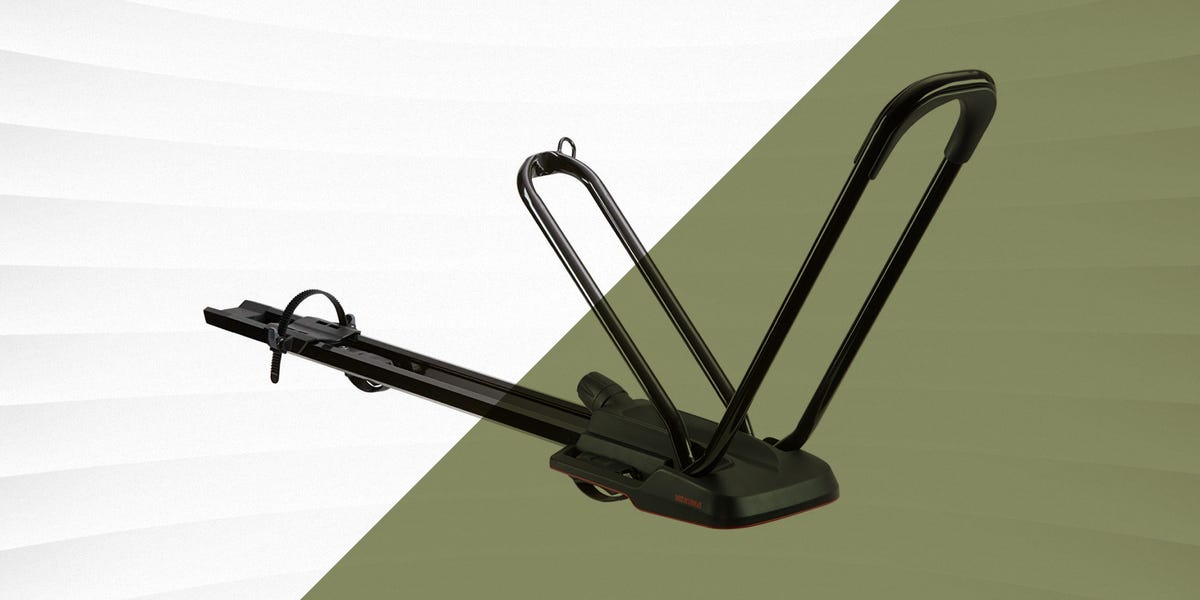
The Yakima HighRoad is one of the easiest roof bike racks to recommend because it solves the biggest headache for many riders: it holds the complete bike without touching the frame. Instead of clamping the down tube, it secures the front wheel with a large hoop-style mount and uses a rear wheel strap to stabilize the bike.
This design makes it especially appealing for riders with carbon frames, custom paint, or mountain bikes with unusual frame shapes. The HighRoad carries one bike and has a weight capacity around the mid-40-pound range, which fits most standard road, gravel, and mountain bikes. It also works well for people who frequently load and unload their bike because there is no need to remove the front wheel.
The downside is that locks are commonly sold separately, and the rack itself is not the cheapest option. Still, for everyday usability, frame protection, and a strong reputation, the Yakima HighRoad is the “buy once, complain less” choice.
Best for: Riders who want a secure, wheel-on roof rack with no frame contact.
Watch out for: Added cost for lock cores and roof height clearance.
2. Thule ProRide XT – Best No-Disassembly Rack
The Thule ProRide XT is another excellent wheel-on roof bike rack, but it uses a different approach. Instead of gripping the front wheel like the Yakima HighRoad, it uses a frame-holding arm with a soft claw and a torque-limiting dial. That dial is the clever part: it helps prevent over-tightening, which is useful when you want the bike secure but not squeezed like a tube of toothpaste.
The ProRide XT holds one fully assembled bike, usually up to about 44 pounds, and uses wheel trays with straps to keep the tires in place. It is a strong choice for riders who want quick loading and unloading without removing the front wheel. The build quality feels premium, and the design is clean enough that it does not look like you bolted a science project to your roof.
Because it contacts the frame, riders with carbon bikes should use extra care and follow the manufacturer’s guidance. For aluminum or steel-frame bikes, commuters, and recreational cyclists, the ProRide XT is a convenient and polished solution.
Best for: Drivers who want fast loading with the bike fully assembled.
Watch out for: Frame contact and optional locking accessories.
3. Swagman Standard Bike Carrier – Best Budget Model
The Swagman Standard Bike Carrier is proof that a roof bike rack does not need to cost as much as a weekend vacation. It is simple, slim, and affordable. This rack uses a fork-mount design, meaning you remove the front wheel, secure the fork to the rack, and strap down the rear wheel.
The weight capacity is lower than many premium racks, often around 35 pounds, so it is not a good choice for e-bikes or heavy downhill mountain bikes. However, for many road bikes, fitness bikes, and lightweight mountain bikes, it gets the job done without financial drama.
The best part of the Swagman Standard is its narrow profile. If your crossbars are wide enough, you may be able to mount more than one carrier side by side. That makes it useful for families or cycling buddies who need multiple bikes on one vehicle. The tradeoff is convenience: removing the front wheel every time adds a step, and you need a place to store that wheel.
Best for: Budget-conscious riders with lighter bikes.
Watch out for: Lower weight capacity and front wheel removal.
4. Thule Wheel Fork – Best Wheel Holder Accessory
The Thule Wheel Fork is not a full bike rack by itself, but it deserves a place in this list because it solves a real problem created by fork-mount racks: where do you put the front wheel? Tossing it in the trunk works until it rubs against luggage, muddies the carpet, or starts rattling like a haunted hubcap.
This accessory mounts a removed front wheel on the roof next to the bike. It folds down when not in use and keeps the wheel outside the cabin. For riders using a fork-mount rack, especially on longer trips, this is a small upgrade that makes the whole setup feel more organized.
The Wheel Fork is best viewed as a companion product. If you buy a fork-mount roof rack and regularly travel with passengers or gear, this accessory keeps the interior cleaner and reduces clutter. It is not exciting in the way a premium rack is exciting, but neither is a seatbelt, and we still appreciate those.
Best for: Riders using fork-mount racks who need clean wheel storage.
Watch out for: It is an accessory, not a complete bike carrier.
5. ROCKBROS Suction Cup Mount – Best Compact Model
The ROCKBROS suction-cup bike rack is designed for drivers who need flexibility. Instead of using traditional crossbars, it attaches with suction cups and typically requires the front wheel to be removed. Depending on configuration, suction-style racks can work on sedans, coupes, hatchbacks, and vehicles where standard roof bars are not practical.
The compact design is the main attraction. You can remove the rack when you are done and store it in the trunk, which is helpful for apartment dwellers, rental-car users, and anyone who does not want a permanent rack living on the roof. It also avoids the upfront cost of buying crossbars.
However, suction-cup racks require careful installation. The mounting surface must be clean, the cups must be checked before driving, and you should follow speed and load recommendations closely. This is not a “slap it on and hope” product. Used correctly, it is clever. Used lazily, it is a bad idea with excellent visibility.
Best for: Compact cars, occasional use, and vehicles without roof bars.
Watch out for: Careful surface prep and regular suction checks.
6. SeaSucker Komodo Suction Cup Rack – Best Premium Model
The SeaSucker Komodo is the fancy dinner jacket of roof bike racks. It is compact, beautifully designed, made with premium materials, and priced like it knows it looks good. This rack uses powerful vacuum cups and a fork-mount setup, meaning the front wheel comes off and the bike is secured by the fork.
The Komodo is especially interesting for sports cars, coupes, and vehicles where normal racks are awkward or impossible. It can mount on roof or glass surfaces, depending on the vehicle and instructions. It carries one bike, commonly up to about 45 pounds, and folds down into a more compact shape for storage.
This is not the value pick. It is the “I have a nice bike, a nice car, and I want a rack that does not look like plumbing hardware” pick. For most casual riders, it is more rack than necessary. For enthusiasts with limited mounting options or a premium vehicle, the Komodo is a serious solution.
Best for: Premium cars, compact storage, and riders who want a high-end suction system.
Watch out for: High price and front wheel removal.
Roof Bike Rack Comparison
| Roof Bike Rack | Best Use | Mount Style | Front Wheel Removal | Typical Capacity |
|---|---|---|---|---|
| Yakima HighRoad | Best overall | Wheel-on upright | No | 1 bike, about 44-45 lb |
| Thule ProRide XT | No-disassembly convenience | Frame-clamp upright | No | 1 bike, about 44 lb |
| Swagman Standard Bike Carrier | Budget pick | Fork mount | Yes | 1 bike, about 35 lb |
| Thule Wheel Fork | Wheel storage accessory | Wheel holder | For removed wheel | 1 front wheel |
| ROCKBROS Suction Cup Mount | Compact temporary setup | Suction/fork mount | Yes | Varies by configuration |
| SeaSucker Komodo | Premium suction rack | Suction/fork mount | Yes | 1 bike, about 45 lb |
How to Choose the Best Roof Bike Rack for Your Vehicle
If you drive a sedan or wagon with crossbars, a wheel-on rack like the Yakima HighRoad or Thule ProRide XT is usually the easiest daily option. If you drive a taller SUV, think carefully before choosing any roof rack. Loading a bike onto a tall roof after a long ride can feel like an Olympic event nobody trained for.
If you ride a lightweight road bike and want to save money, a fork-mount rack such as the Swagman Standard can be perfectly practical. If you ride a carbon bike, prioritize no-frame-contact systems or follow torque instructions carefully. If you do not have crossbars and only carry a bike occasionally, a suction-cup rack may be the most flexible choice.
Also consider your routine. A rider who loads a bike twice a year can tolerate a few extra steps. A rider who drives to group rides every Wednesday and trailheads every Saturday will appreciate faster loading. Convenience matters more when you repeat the process often.
Roof Bike Rack Safety Tips
Before every trip, tug the bike gently from several angles to confirm it is secure. Check straps, clamps, fork mounts, and suction indicators. After a few miles, stop and inspect everything again. This may feel overly cautious, but it is much less annoying than watching your bicycle attempt independent flight on the interstate.
Measure your total vehicle height with the bike mounted and write it down. Put a reminder on your dashboard, garage door opener, or sun visor. Many roof-rack disasters happen not because the rack failed, but because the driver forgot the bike was there.
Finally, remove unloaded roof racks when you do not need them for long periods. Extra roof hardware can add wind noise and drag, and it exposes the rack to weather, road grime, and unnecessary wear.
Real-World Experience: What It Is Like Living With a Roof Bike Rack
Using a roof bike rack sounds simple until you do it in real life, where every parking lot is windy, every bike tire is dirtier than expected, and every stranger suddenly becomes an expert in your loading technique. The first experience most people notice is the lift. Roof racks are wonderfully clean once the bike is up there, but getting it up there takes more effort than a hitch rack. With a light road bike, this is not a big deal. With a full-suspension mountain bike after a muddy ride, it becomes a small upper-body workout.
The second experience is confidence. A good roof rack feels strange the first time because you can see your bike above you, moving slightly in the wind. That movement can make new users nervous. In most cases, a small amount of motion is normal, but loose straps, bouncing wheels, or shifting clamps are not. After a few trips, you learn the difference between normal flex and “pull over right now.”
The third experience is noise. Some racks are quiet; others whistle, hum, or create a low wind sound at highway speeds. Aero crossbars help, and removing unused racks helps even more. If your car suddenly sounds like a tired flute, the rack or crossbar position may need adjustment.
The fourth experience is planning. With a roof bike rack, you start thinking about routes differently. You avoid low parking garages. You pause before drive-thrus. You look at hotel entrances like a structural engineer. The rack turns you into a person who notices clearance signs, which is a very adult superpower.
The fifth experience is convenience at the destination. Once parked, roof racks keep the rear hatch free, which is fantastic when unloading helmets, shoes, pumps, snacks, and the emergency banana that has been in your bag for too long. Unlike trunk racks, roof racks usually do not block taillights or license plates. Unlike some hitch racks, they do not add length to the vehicle. That makes them great for parallel parking and crowded trailhead lots.
From personal-use style observations, wheel-on racks are the easiest to live with if you ride often. Fork-mount racks feel more secure and aerodynamic to some users, but removing the wheel every time gets old. Suction racks are surprisingly useful for occasional trips, rental cars, and vehicles without rails, but they demand careful installation habits. No matter which style you choose, the best experience comes from practicing at home before the first big trip. Load the bike, tighten everything, remove it, and do it again. The driveway is a much better classroom than a dark roadside shoulder.
Final Verdict
The best roof bike rack for 2022 depends on your bike, vehicle, budget, and patience level. The Yakima HighRoad is the strongest overall choice for most riders because it avoids frame contact and keeps the bike fully assembled. The Thule ProRide XT is a polished no-disassembly alternative, especially for riders with standard frame materials. The Swagman Standard Bike Carrier is the budget-friendly workhorse, while the Thule Wheel Fork makes fork-mount setups cleaner. For drivers without crossbars, the ROCKBROS suction mount offers compact flexibility, and the SeaSucker Komodo brings premium design to cars that deserve something sleeker than a hardware-store science experiment.
Note: Always verify current fit, weight capacity, crossbar compatibility, vehicle roof limits, and lock availability before buying. Product specifications, prices, and included accessories can change over time.