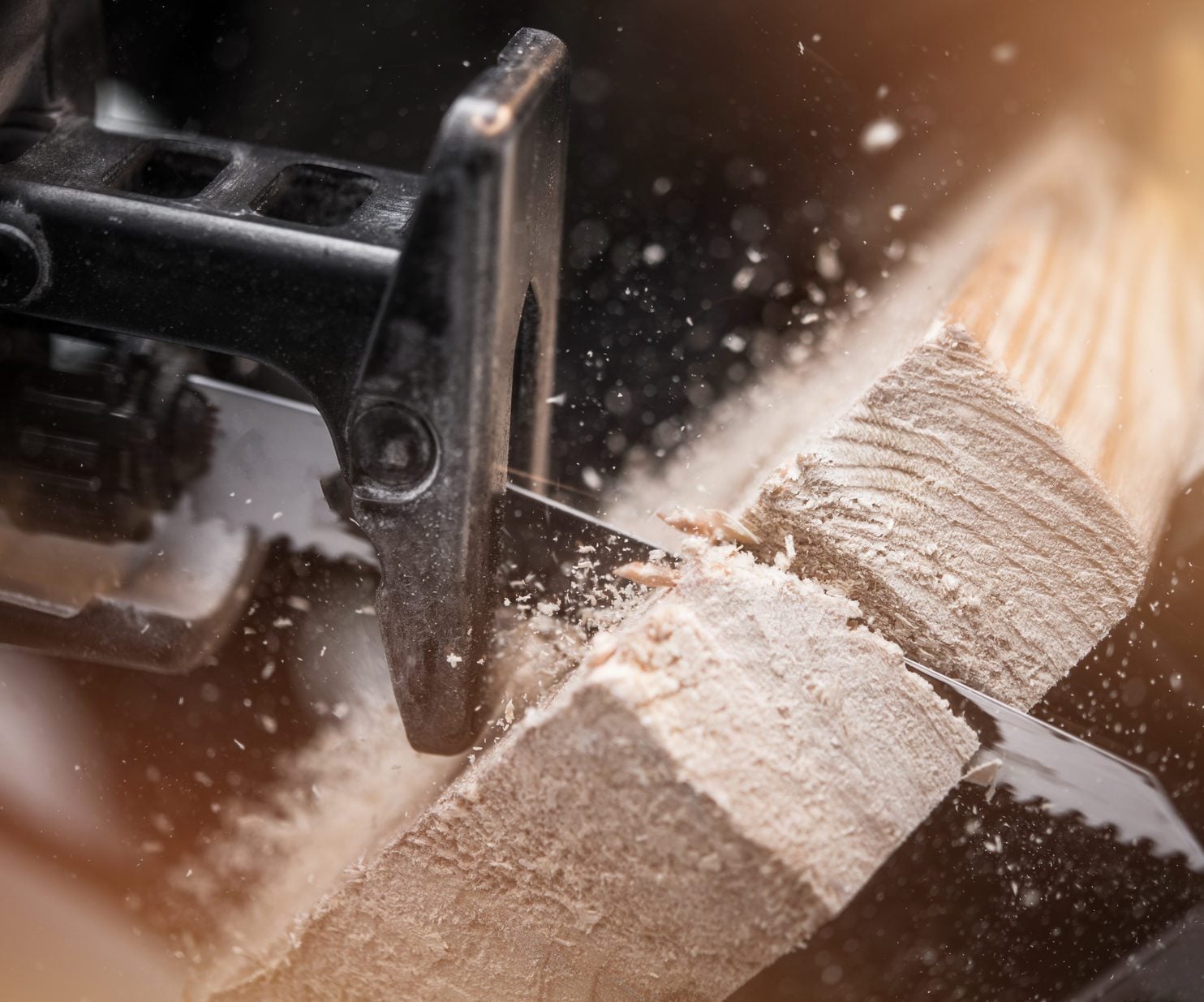

There are polite tools, and then there are reciprocating saws. A finish nailer whispers. A random orbital sander hums. A reciprocating saw walks into the room like it owns the studs, the pipe, the old deck railing, and possibly your weekend plans. Also called a recip saw, demo saw, or Sawzall-style saw, this tool is built for controlled destruction: cutting lumber, PVC, tree limbs, nail-embedded framing, drywall, metal pipe, and whatever mystery material your house has been hiding since 1987.
The best reciprocating saw is not always the biggest, loudest, or most expensive one. The right choice depends on what you cut most often, how long you cut, whether you already own a battery platform, and whether you need full-size demolition power or compact one-handed control. A pro remodeler tearing out framing all week needs a different machine than a homeowner trimming branches and cutting an old sofa frame into garage-friendly pieces. Both jobs matter. One just produces more dramatic dust.
After comparing current product specifications, hands-on testing notes from major tool reviewers, retailer data, and manufacturer information from brands such as Milwaukee, DeWalt, Makita, Bosch, Ryobi, Flex, Ridgid, and Craftsman, these are the best reciprocating saws to consider now.
Quick Picks: Best Reciprocating Saws by Category
- Best overall: Milwaukee M18 FUEL SAWZALL 2821-20
- Best for heavy-duty cordless power: Makita 18V X2 LXT XRJ06Z
- Best value cordless reciprocating saw: Ryobi 18V ONE+ HP Brushless PBLRS02B
- Best compact one-handed saw: Milwaukee M18 FUEL HACKZALL 2719-20
- Best for control and low vibration: Bosch GSA18V-125N
- Best budget-friendly option: Craftsman V20 CMCS300B
- Best premium contender: Flex FX2271
What Makes a Great Reciprocating Saw?
A reciprocating saw looks simple: motor, handle, blade, trigger, shoe. But the difference between a good saw and a knuckle-rattling chaos wand is huge. The best reciprocating saws balance cutting speed, vibration control, weight, ergonomics, battery life, and blade-change convenience.
Stroke Length and SPM
Two numbers matter a lot: stroke length and strokes per minute, often written as SPM. Stroke length tells you how far the blade travels with each pass. A longer stroke, such as 1-1/4 inches, removes more material per stroke and usually cuts faster in wood and demolition work. SPM tells you how quickly the blade moves. Many full-size cordless saws run around 0 to 3,000 SPM, while compact one-handed models often use a shorter stroke for better control in tight spaces.
Orbital Action
Orbital action changes the blade path from straight back-and-forth to a slightly oval motion. In wood, this can make cutting more aggressive and faster. In metal, orbital mode is usually not your friend; it can cause chatter, heat, and blade wear. A saw with selectable orbital action gives you more control, especially if you cut both framing lumber and pipe.
Vibration Control
Reciprocating saws vibrate because, well, they are violently shoving a blade in and out thousands of times per minute. Better models use counterbalance systems, refined crank mechanisms, rubber overmold grips, and more rigid construction to reduce fatigue. If you have ever used a cheap recip saw for 20 minutes and felt like your hands were receiving radio signals from Jupiter, vibration control is not a luxury.
Blade Changes and Adjustable Shoes
Tool-free blade changes are now common and absolutely worth having. A pivoting or adjustable shoe helps keep the saw stable against the workpiece, reduces jumping, and lets you use different sections of the blade teeth. That means cleaner cuts and better blade life.
Best Overall: Milwaukee M18 FUEL SAWZALL 2821-20
The Milwaukee M18 FUEL SAWZALL 2821-20 is the kind of reciprocating saw people buy when they are tired of wondering whether their saw is strong enough. With a brushless motor, a 1-1/4-inch stroke length, and up to 3,000 SPM, it is built for fast material removal in demolition, remodeling, plumbing, framing, and jobsite work.
What makes it stand out is not just raw cutting speed. Milwaukee has spent years making the SAWZALL name almost generic in the way people say “Kleenex” for tissues. This model continues that reputation with solid balance, rugged construction, and broad compatibility with the M18 battery platform. If you already own Milwaukee M18 batteries, this is an easy top pick.
Best for: Contractors, serious DIYers, remodelers, deck demolition, framing cuts, and anyone who wants one cordless reciprocating saw that can handle most jobs.
Potential drawback: It is more saw than casual users need. If your hardest job is trimming one lilac bush per year, this is like hiring a bulldozer to open a cereal box.
Best Heavy-Duty Cordless Saw: Makita 18V X2 LXT XRJ06Z
The Makita XRJ06Z uses two 18V LXT batteries to deliver 36V performance while keeping users inside Makita’s familiar 18V battery ecosystem. That is clever because it gives the saw the muscle of a larger cordless platform without forcing users to buy into a totally separate battery family.
This saw features a long 1-1/4-inch stroke and a two-speed brushless motor, with lower speed for controlled wood cutting and higher speed for faster metal cutting. Makita also emphasizes a refined crank mechanism designed to reduce blade deflection and vibration, which matters when you are cutting thick stock or awkward material.
The XRJ06Z is a strong choice for demanding users who want near-corded performance without dragging an extension cord through a construction site like a tripwire with ambitions.
Best for: Heavy demolition, frequent cutting, Makita battery owners, remodelers, and users who want high performance with excellent build quality.
Potential drawback: Two batteries add weight. The power is excellent, but overhead cutting can become a shoulder workout you did not consent to.
Best Value: Ryobi 18V ONE+ HP Brushless PBLRS02B
Ryobi has become a favorite for homeowners because the 18V ONE+ system covers a huge range of tools, from drills to fans to lawn equipment. The Ryobi 18V ONE+ HP Brushless Reciprocating Saw PBLRS02B is a standout because it offers a brushless motor, 1-1/4-inch stroke length, and up to 3,200 SPM at a price that does not require a family budget meeting.
For DIYers, that combination is hard to ignore. It has enough power for cutting lumber, PVC, branches, old pallets, and light demolition materials. It also includes user-friendly features like an easy-release blade lever, variable speed trigger, pivoting shoe, and comfortable rubber overmold grip.
Best for: Homeowners, weekend DIYers, value shoppers, and anyone already using Ryobi ONE+ batteries.
Potential drawback: It is not the first pick for daily professional demolition. For heavy commercial abuse, premium pro models usually offer better durability and vibration control.
Best Compact One-Handed Saw: Milwaukee M18 FUEL HACKZALL 2719-20
Sometimes a full-size reciprocating saw is too much tool in too little space. That is where the Milwaukee M18 FUEL HACKZALL shines. Its one-handed design, compact body, 7/8-inch stroke length, and up to 3,000 SPM make it excellent for cutting pipe, conduit, small branches, and materials in cramped locations.
This is the saw you want when you are working between studs, under a sink, on a ladder, or inside a cabinet where a full-size recip saw feels like trying to park a pickup truck in a linen closet. It still has more bite than many compact saws, and the M18 battery platform keeps it practical for Milwaukee users.
Best for: Plumbers, electricians, HVAC work, overhead cuts, tight spaces, and controlled one-handed cutting.
Potential drawback: The shorter stroke is great for control but slower than a full-size saw in large demolition cuts.
Best for Control and Vibration Reduction: Bosch GSA18V-125N
The Bosch GSA18V-125N takes a slightly different approach. Instead of simply chasing the highest SPM number, it focuses on control, comfort, and versatility. It has a 1.25-inch stroke length, up to 2,500 SPM, brushless power, multiple grip positions, a variable speed dial, and selectable orbital settings.
The big advantage is control. Bosch’s vibration control and multi-grip design make the saw feel more deliberate, especially when starting cuts or working in awkward positions. For users who cut a mix of wood and metal, the orbital and non-orbital options are genuinely useful.
Best for: Users who value smooth handling, controlled starts, mixed-material cutting, and reduced fatigue.
Potential drawback: It is not the fastest saw on paper. If your only metric is maximum SPM, other models look flashier. If your hands get tired easily, Bosch starts looking very smart.
Best Budget-Friendly Option: Craftsman V20 CMCS300B
The Craftsman V20 CMCS300B is a practical entry-level cordless reciprocating saw with a 1-inch stroke length, variable speed trigger, tool-free blade release, and compact body. It is not trying to win a demolition cage match against premium pro models, and that is fine. Not every saw needs to behave like it has a grudge against buildings.
For basic home projects, cutting PVC, trimming small branches, breaking down scrap wood, or tackling occasional repair jobs, the Craftsman V20 offers approachable performance at a friendly price. It is especially appealing if you already own Craftsman V20 batteries.
Best for: Budget-conscious DIYers, light remodeling, occasional use, and first-time cordless tool buyers.
Potential drawback: It lacks the cutting speed, refinement, and vibration control of pricier brushless professional saws.
Best Premium Contender: Flex FX2271
Flex has been building a serious reputation in cordless power tools, and the FX2271 reciprocating saw is aimed at users who want premium performance without automatically defaulting to the usual red, yellow, blue, or teal suspects. Reviewers have praised its strong cutting feel, robust build, and professional-grade design.
This is a saw for serious workshops and pros who are open to a newer cordless platform. It sits in a higher price range than homeowner tools, but it brings the kind of confidence you want when cutting thick lumber, nail-embedded material, or stubborn demolition debris.
Best for: Serious DIYers, pros considering the Flex platform, and users who want premium performance with modern features.
Potential drawback: Battery platform commitment matters. If you already own several Milwaukee, DeWalt, Makita, or Ryobi batteries, switching platforms can get expensive quickly.
Corded vs. Cordless Reciprocating Saws
Corded reciprocating saws still make sense for users who want unlimited runtime and strong performance at a lower cost. A 12-amp or 15-amp corded saw can be a bargain for demolition work near outlets. The downside is the cord, which always seems to be exactly where your feet, ladder, or pile of lumber wants to be.
Cordless reciprocating saws are now powerful enough for most users, including many professionals. Brushless motors and high-output batteries have made cordless models faster, tougher, and more practical than older battery-powered saws. The tradeoff is cost. Batteries and chargers add up, so the best cordless reciprocating saw is often the one that fits the battery platform you already own.
How to Choose the Best Reciprocating Saw for Your Work
For Demolition
Choose a full-size brushless saw with a 1-1/4-inch stroke, strong battery system, adjustable shoe, and good vibration control. Milwaukee, Makita, Bosch, Flex, and DeWalt all have strong options in this category.
For Plumbing and Electrical Work
A compact one-handed model is often better. It fits into tight spots and gives you more control when cutting pipe, conduit, or small framing pieces.
For Yard Work
A reciprocating saw can prune branches when paired with the right pruning blade. For occasional yard cleanup, a Ryobi, Craftsman, or compact Milwaukee can work well. For constant tree work, however, a chainsaw or dedicated pruning saw may be more efficient.
For Metal Cutting
Use a bi-metal or carbide metal-cutting blade with the correct tooth count. Slower speeds, steady pressure, and patience help blades last longer. Trying to blast through steel pipe at full speed with the wrong blade is a great way to create heat, noise, and regret.
Do Blades Matter? Absolutely.
A great reciprocating saw with a bad blade is just an expensive vibration machine. Blades determine speed, cut quality, and safety. Use coarse-tooth wood blades for lumber, demolition blades for nail-embedded wood, fine-tooth bi-metal blades for metal, carbide blades for tough materials, and pruning blades for branches.
Keep several blade lengths on hand. A 6-inch blade is fine for general cuts, but longer blades help with thick lumber, pipe, and pruning. Do not use a blade that is too short for the material; if the tip gets buried inside the cut, the saw can buck like a tiny mechanical bronco.
Safety Tips Before You Start Cutting
Wear eye protection, hearing protection, gloves, and a dust mask when needed. Remove or disconnect batteries before changing blades. Keep the shoe pressed against the material to reduce vibration and kickback. Check for hidden wires, plumbing, or fasteners before cutting into walls. Let the blade do the work; forcing the saw usually makes the cut worse and your arms sadder.
Also, remember that reciprocating saws are rough-cutting tools. They are not designed for fine cabinetmaking. If you need a furniture-grade finish, use a circular saw, jigsaw, miter saw, or oscillating multi-tool. If you need to remove something quickly and do not care whether it leaves elegantly, bring out the recip saw.
Real-World Experience: What Using a Reciprocating Saw Actually Teaches You
The first thing you learn about reciprocating saws is that confidence matters, but overconfidence is expensive. A recip saw will cut through wood, nails, PVC, screws, plaster, siding, and metal pipe, but it will also happily cut through the thing behind those materials if you do not check first. One of the best habits is pausing before every hidden cut and asking, “What is on the other side?” That question has saved many wires, pipes, and emotional afternoons.
Another lesson: the blade is half the tool. A sharp demolition blade in a mid-range saw often beats a dull bargain blade in a premium saw. When cutting nail-embedded wood, a carbide demolition blade feels almost magical. When cutting thin metal, a fine-tooth bi-metal blade keeps the saw from grabbing and rattling. When cutting branches, a pruning blade clears chips quickly instead of smoking its way through green wood like it is confused about its life choices.
Battery size also changes the experience. A small compact battery makes the saw lighter and easier to handle, especially overhead. A large high-output battery adds runtime and power but can make the tool feel nose- or tail-heavy. For quick cuts, a compact battery is comfortable. For demolition day, the bigger battery earns its keep. If you are cutting continuously, having two charged batteries is better than having one heroic battery and a charger sitting across the room judging you.
Technique matters more than beginners expect. Pressing the shoe firmly against the workpiece reduces vibration and gives you cleaner control. Starting slowly helps the blade establish a groove before you squeeze the trigger harder. If the saw starts bouncing, do not fight it like a wrestling match. Ease off, reset the shoe, and let the blade settle. Smooth pressure beats brute force almost every time.
Weight is another practical detail. In a store, every saw feels manageable for 30 seconds. During overhead cutting, every extra pound writes a strongly worded letter to your shoulders. If your work involves ladders, tight spaces, or repeated cuts above chest height, a compact saw may be more useful than the most powerful full-size model. Power is wonderful, but control is what keeps the cut where you wanted it.
Finally, reciprocating saws are best treated as problem solvers, not precision instruments. They shine when removing old framing, cutting bolts, trimming pipe, breaking down pallets, pruning rough branches, or slicing demolition debris into manageable pieces. They are messy, loud, and slightly ridiculous, but when you need one, no other tool feels quite as satisfying. The best reciprocating saw is the one that matches your jobs, fits your hands, uses batteries you already trust, and makes ugly cutting feel controlled instead of chaotic.
Conclusion: Which Reciprocating Saw Should You Buy?
If you want the best overall cordless reciprocating saw for serious work, the Milwaukee M18 FUEL SAWZALL 2821-20 is the strongest all-around recommendation. It combines power, speed, durability, and a proven battery platform. If you want heavy-duty performance and already own Makita batteries, the Makita XRJ06Z is a beast. If you want the best value for home projects, the Ryobi 18V ONE+ HP Brushless PBLRS02B gives you impressive specs for the money. For tight spaces, the Milwaukee M18 FUEL HACKZALL is the compact champ. For control and vibration reduction, Bosch deserves a close look.
The smartest buying advice is simple: start with your battery platform, then match the saw to your workload. A homeowner does not need a premium demolition monster for three cuts a month. A contractor should not depend on a light-duty budget saw for daily abuse. Buy the saw that fits your real work, pair it with the right blades, and your next demolition project will be faster, cleaner, and only mildly louder than your neighbors expected.
Note: Product specifications, prices, kits, and availability can change. Always verify the exact model number, battery compatibility, included accessories, and current warranty before purchasing.