
Note: This article is for educational and informational purposes only. It is not financial advice, a recommendation to buy or sell securities, or a substitute for speaking with a qualified financial professional.
What Do We Mean by “The Biggest Stocks”?
When people talk about the biggest stocks, they are usually not talking about the highest share price. A company with a $900 share price is not automatically “bigger” than a company with a $90 share price. The real scoreboard is market capitalization, often shortened to market cap. Market cap is calculated by multiplying a company’s stock price by its total shares outstanding. In plain English: it estimates what the stock market currently thinks the entire company is worth.
That is why a stock split does not magically make a company cheaper in a meaningful way. If a pizza is cut into eight slices instead of four, you still have the same pizza. You just have more pieces to argue over at the table. The same idea applies to shares. Market cap gives investors a better sense of a company’s size than share price alone.
As of 2026, the biggest stocks in the world are dominated by U.S.-listed technology and artificial intelligence giants. Names like Nvidia, Apple, Microsoft, Alphabet, Amazon, Meta Platforms, Broadcom, Tesla, Berkshire Hathaway, Taiwan Semiconductor Manufacturing, Eli Lilly, and JPMorgan Chase often appear near the top of global market-cap rankings. Their exact order changes constantly because stock prices move every trading day, but the overall theme is clear: the market’s largest companies are no longer just oil producers, banks, or industrial titans. They are software platforms, semiconductor leaders, cloud-computing giants, e-commerce ecosystems, digital advertising machines, and health-care innovators.
Why the Biggest Stocks Matter
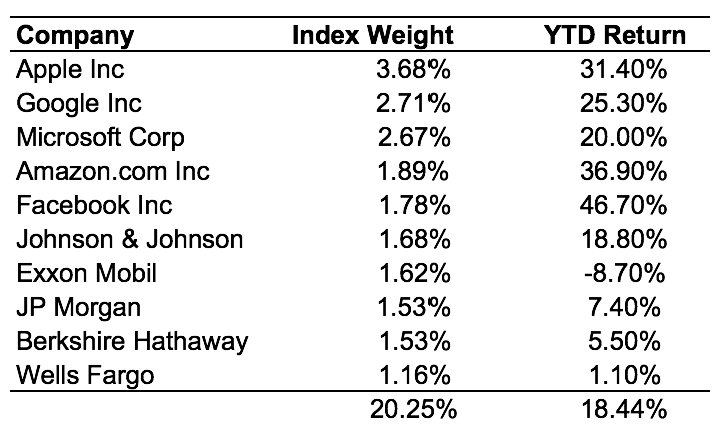
The biggest stocks matter because they can move entire indexes. The S&P 500 is market-cap weighted, which means larger companies carry more influence than smaller ones. If a mega-cap stock rises sharply, it can lift the index even when many smaller stocks are having a boring Tuesday. If several mega-cap names fall together, the market may look gloomy even if hundreds of companies are quietly doing fine.
This is why investors pay close attention to mega-cap stocks. They are not just individual companies; they are financial weather systems. When Nvidia, Apple, Microsoft, Amazon, Alphabet, or Meta has a major earnings report, the effect can ripple across exchange-traded funds, retirement accounts, index funds, analyst models, and even dinner conversations where someone says, “I should have bought that stock years ago,” while aggressively stirring mashed potatoes.
The Current Kings of Market Cap
Nvidia: The AI Engine Room
Nvidia has become one of the defining companies of the artificial intelligence boom. Once best known for graphics chips used in gaming, Nvidia now sits at the center of AI infrastructure. Its graphics processing units, networking products, software tools, and data-center platforms help power machine learning, generative AI, scientific computing, autonomous systems, and cloud workloads.
The market has rewarded Nvidia because investors see it as a toll collector on the AI highway. If companies want to build bigger AI models, they need chips, computing power, and efficient data-center architecture. Nvidia provides much of that essential equipment. The risk, of course, is that expectations can become skyscraper-high. When a company is priced like a superhero, even a strong quarter may be judged like it forgot its cape.
Apple: The Consumer-Tech Fortress
Apple remains one of the biggest stocks because it combines brand power, hardware design, services revenue, and an unusually loyal customer base. The iPhone is still the center of Apple’s ecosystem, but services such as iCloud, Apple Music, Apple TV+, App Store revenue, AppleCare, and payments help create recurring income. Once someone owns an iPhone, Apple Watch, MacBook, AirPods, and a drawer full of mysterious white cables, switching ecosystems feels less like changing brands and more like moving to another country.
Apple’s size reflects more than product sales. It reflects trust, pricing power, supply-chain expertise, and the ability to turn devices into long-term customer relationships. Investors often view Apple as both a growth company and a quality business, though it still faces challenges from smartphone saturation, regulatory scrutiny, competition, and the need to prove how artificial intelligence will strengthen its ecosystem.
Microsoft: The Enterprise Giant That Refused to Get Old
Microsoft is a classic example of a company that reinvented itself. The business once revolved heavily around Windows and Office. Today, Microsoft is a cloud-computing, productivity, cybersecurity, gaming, AI, and enterprise software powerhouse. Azure competes in the massive cloud market, Microsoft 365 remains deeply embedded in corporate life, LinkedIn gives the company a professional network advantage, and its AI partnerships have made it central to the modern software conversation.
Microsoft’s strength is that it sells tools businesses use every day. It is not always glamorous, but neither is plumbing, and everyone notices when it stops working. From Teams meetings to Excel spreadsheets that somehow contain a company’s entire nervous system, Microsoft products are deeply woven into modern work.
Alphabet: Search, Ads, Cloud, and Moonshots
Alphabet, the parent company of Google, is one of the biggest stocks because it owns some of the internet’s most valuable real estate. Google Search, YouTube, Android, Google Maps, Gmail, Chrome, and Google Cloud give Alphabet enormous reach. Its advertising business remains a cash machine, while AI tools and cloud services represent major growth opportunities.
The company’s biggest challenge is also its biggest strength: search dominance. Regulators, competitors, and changing user habits all create pressure. Still, Alphabet has unmatched data assets, engineering talent, and global scale. When people say “Google it,” they are not talking about a small business with a cute logo. They are describing a verb-sized empire.
Amazon: The Everything Machine
Amazon is one of the biggest stocks because it is not just an online store. It is a retail platform, logistics network, advertising business, streaming service, smart-home player, subscription ecosystem, and cloud-computing leader through Amazon Web Services. AWS has historically been a major profit engine, while Amazon’s retail operation gives it a huge consumer footprint.
The company’s competitive edge comes from scale. Warehouses, delivery routes, third-party sellers, Prime memberships, cloud infrastructure, and advertising data all reinforce one another. Amazon’s business model sometimes looks like someone asked, “What if we built a company that competes with everyone, including the cardboard box industry?” Then Amazon did exactly that.
Meta Platforms: Social Media Meets AI
Meta Platforms owns Facebook, Instagram, WhatsApp, Messenger, Threads, and major advertising technology. Its enormous user base makes it one of the world’s most powerful digital ad businesses. Meta has also invested heavily in artificial intelligence, recommendation systems, virtual reality, augmented reality, and data-center capacity.
Meta’s biggest advantage is attention. Billions of people use its platforms to share photos, watch videos, message friends, follow creators, join groups, and occasionally argue with distant relatives about things nobody planned to discuss. The company’s challenge is keeping users engaged while managing privacy concerns, regulation, competition, and the cost of building future platforms.
Broadcom: The Quiet Giant Behind the Tech Stack
Broadcom may not be as familiar to everyday consumers as Apple or Amazon, but it is a major force in semiconductors, networking, infrastructure software, and enterprise technology. Its chips and connectivity products are used across data centers, broadband, wireless systems, storage, and industrial applications. Its acquisition strategy has also expanded its presence in software.
Broadcom is a reminder that the biggest stocks are not always household names. Some companies become huge by selling essential components to other companies. They are the backstage crew of the digital economy. The audience may not see them, but the show gets awkward fast without them.
Berkshire Hathaway: The Old-School Mega-Cap
Berkshire Hathaway stands apart from many of the biggest stocks because it is not a pure technology company. Led for decades by Warren Buffett, Berkshire owns a mix of insurance operations, railroads, energy businesses, industrial companies, consumer brands, and a large investment portfolio. Its size reflects disciplined capital allocation, strong insurance float, and a culture focused on long-term value.
Berkshire is the market’s reminder that not every giant needs a chatbot, a chip roadmap, or a headset. Sometimes a company becomes massive by buying good businesses, holding them, avoiding unnecessary drama, and letting compounding do its slow, slightly boring magic.
What Makes a Stock Become Huge?
Durable Revenue Growth
The biggest stocks usually have large and growing revenue streams. They sell products or services that millionsor billionsof people and businesses use. Growth does not have to be explosive every year, but the market wants evidence that demand is still expanding. Cloud computing, AI infrastructure, digital advertising, health-care innovation, software subscriptions, and global payments are examples of markets large enough to support mega-cap companies.
High Profit Margins
Revenue is impressive, but profit is what keeps investors interested. Many of the biggest stocks benefit from scalable business models. Software, chips, digital platforms, and cloud services can generate strong margins when demand is high and operations are efficient. A company that grows revenue while protecting margins can become extremely valuable.
Competitive Moats
A moat is a company’s defense against competitors. Apple has ecosystem loyalty. Microsoft has enterprise relationships. Alphabet has search scale and data. Amazon has logistics and cloud infrastructure. Nvidia has advanced chip design, software support, and developer adoption. Berkshire has capital discipline and diversified operating businesses. The bigger the moat, the harder it is for rivals to storm the castle without falling into the alligator pit of economics.
Investor Confidence
Market cap is not just about what a company earns today. It also reflects what investors believe the company can earn in the future. That is why expectations matter so much. A fast-growing company can trade at a high valuation if investors believe its future profits will justify the price. But if those expectations crack, the stock can fall quickly. Mega-cap does not mean risk-free. It means the company has already convinced the market of a very big story.
Biggest Stocks vs. Best Stocks
One common mistake is assuming the biggest stocks are automatically the best investments. They might be excellent companies, but price still matters. A wonderful company can be a disappointing stock if investors pay too much. A smaller, overlooked company can outperform if expectations are low and results improve. Investing is not a popularity contest, although Wall Street occasionally behaves like a high school cafeteria with Bloomberg terminals.
The biggest stocks often have advantages: strong balance sheets, global brands, access to capital, experienced management teams, and powerful ecosystems. They also have disadvantages: high expectations, regulatory attention, slower growth from a larger base, and more exposure to broad market sentiment. When a company is worth trillions of dollars, doubling again requires an enormous amount of new value creation.
The Role of AI in Today’s Biggest Stocks
Artificial intelligence has become a major force behind the rise of many mega-cap stocks. Nvidia sells AI chips and systems. Microsoft integrates AI into enterprise software and cloud tools. Alphabet uses AI across search, advertising, cloud, and productivity products. Amazon supports AI workloads through AWS. Meta uses AI to improve content recommendations, advertising efficiency, and user engagement. Broadcom benefits from networking and custom silicon demand tied to data-center growth.
AI is not just a buzzword for these companies; it is a capital-spending cycle, a product strategy, and a competitive battlefield. The opportunity is enormous, but so are the costs. Data centers require chips, electricity, cooling, networking, real estate, and engineering talent. Investors must ask a practical question: will AI spending produce enough future profit to justify today’s enthusiasm? That question may determine which of today’s biggest stocks stay on top and which ones become cautionary charts in future finance textbooks.
Risks of Investing in the Biggest Stocks
Concentration Risk
Because market-cap-weighted indexes give more influence to the largest companies, investors who buy broad index funds may own more mega-cap exposure than they realize. This is not automatically bad, but it does mean portfolio performance can become heavily tied to a small group of dominant stocks. Diversification is not just owning 500 names; it is understanding how much weight the biggest names carry.
Valuation Risk
Big companies can still become overpriced. When expectations become too optimistic, even strong earnings may not be enough. A stock can fall after a good report if investors expected a great report, a parade, and perhaps a complimentary espresso machine.
Regulatory Risk
Mega-cap companies attract attention from regulators. Antitrust cases, privacy rules, app-store policies, AI governance, labor issues, tax policy, and international regulations can all affect the largest stocks. The bigger the company, the more likely someone in Washington, Brussels, or another capital city has a thick folder with its name on it.
Innovation Risk
Market leaders must keep innovating. History is full of once-dominant companies that lost momentum when technology changed. Size provides resources, but it can also create bureaucracy. The biggest stocks must defend today’s business while building tomorrow’s growth engine. That is not easy, even with a trillion-dollar market cap and very nice office snacks.
How Investors Can Analyze the Biggest Stocks
Investors should look beyond the headline market cap. Important factors include revenue growth, earnings growth, free cash flow, debt levels, return on invested capital, profit margins, valuation ratios, competitive position, management quality, and long-term industry trends. For mega-cap technology stocks, investors should also examine cloud growth, AI spending, semiconductor supply chains, regulatory exposure, and capital expenditures.
It is also useful to compare a company’s business segments. Amazon’s retail business is different from AWS. Alphabet’s advertising business is different from Google Cloud. Microsoft’s productivity software is different from gaming. Meta’s social apps are different from its metaverse investments. A mega-cap company can contain several businesses under one roof, which means investors need to understand what is actually driving profits.
Experiences and Lessons from Watching the Biggest Stocks
One of the most useful experiences investors can have with the biggest stocks is simply watching how market narratives change. A company can go from “too expensive” to “unstoppable” to “overhyped” to “undervalued” faster than most people expect. The business may not change dramatically in a month, but investor emotion can. That is why studying mega-cap stocks teaches patience. These companies are followed by thousands of analysts, fund managers, journalists, and individual investors, yet their prices still swing wildly when expectations shift.
Another lesson is that greatness often looks obvious only in hindsight. Apple after the iPhone, Amazon after AWS, Microsoft after Azure, and Nvidia after the AI boom all seem logical now. But earlier in their journeys, each company faced doubt. Apple was questioned after Steve Jobs. Amazon was criticized for thin retail profits. Microsoft was once seen as a mature software company with limited excitement. Nvidia was known mainly by gamers before AI demand turned GPUs into the hottest picks-and-shovels business in modern technology. The biggest stocks often become biggest because they survive long periods of skepticism and keep expanding their opportunity.
A practical experience many investors share is regret. Almost everyone can name a mega-cap stock they “almost bought.” Almost buying Nvidia does not build wealth. Almost buying Apple in 2007 does not pay for a beach house. Almost buying Amazon before AWS became famous does not help unless your brokerage accepts imaginary trades, which, tragically, it does not. The better lesson is not to chase every missed winner, but to build a repeatable process. Look for durable advantages, growing markets, strong financials, and reasonable expectations. Then decide how much risk fits your plan.
The biggest stocks also teach humility. Even world-class companies have painful drawdowns. Investors who buy mega-cap names assuming they can only rise may be shocked when a favorite stock drops 20%, 30%, or more. Large size does not cancel volatility. In fact, when a mega-cap stock is widely owned, selling pressure can become intense because many funds and traders are reacting at once. The boat is huge, but if everyone runs to one side, it still tilts.
Another experience is learning the difference between a company you admire and a stock you should buy. You may love Apple products, use Amazon daily, watch YouTube at midnight, rely on Microsoft Office, and scroll Instagram while pretending you are “checking trends.” That does not automatically mean each stock is attractive at any price. Good investing requires separating personal affection from valuation. A great product can belong to an expensive stock. A boring company can sometimes be a better investment than a glamorous one.
For long-term investors, the biggest stocks can serve as case studies in compounding. They show how strong businesses can become stronger when profits are reinvested wisely. They also show why diversification matters. Some giants remain giants for decades; others fade. The goal is not to predict the future perfectly. The goal is to avoid building a portfolio that depends on one heroic assumption. The stock market rewards conviction, but it tends to punish overconfidence with excellent comic timing.
Finally, watching the biggest stocks can make the market feel more understandable. These companies touch daily life. They power phones, apps, cloud tools, chips, search engines, ads, payments, entertainment, medicine, logistics, and business software. Studying them is like studying the modern economy through its largest windows. The view is not complete, but it is extremely useful. The biggest stocks are not just tickers on a screen. They are stories about technology, consumer behavior, capital allocation, innovation, regulation, and the human habit of getting very excited about the future.
Conclusion: The Biggest Stocks Are Powerful, But Not Magic
The biggest stocks dominate headlines because they represent enormous businesses with global reach. They influence indexes, shape investor sentiment, and often reveal where the economy is heading. In 2026, the largest market-cap leaders are heavily connected to artificial intelligence, cloud computing, digital platforms, semiconductors, consumer technology, financial strength, and health-care innovation.
But investors should remember that big does not mean invincible. Mega-cap stocks can disappoint. Valuations can stretch. Regulations can tighten. New competitors can emerge. Technology can shift. A smart approach is to admire the biggest stocks, study them carefully, and avoid assuming that size alone guarantees future returns.
The biggest stocks are like financial elephants: impressive, powerful, and impossible to ignore. Just make sure you do not stand too close without understanding which way they might move next.