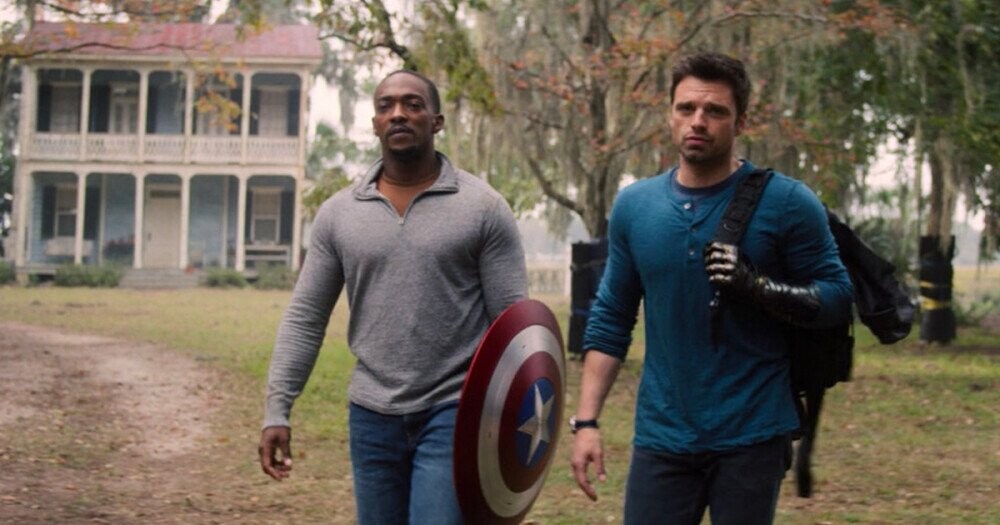

What happens when Marvel takes two emotionally complicated veterans, tosses them into a high-stakes international mission, gives them unresolved grief, bad communication skills, and exactly one shared brain cell for social situations? You get The Falcon and the Winter Soldier, a Disney+ series that often feels less like a traditional superhero show and more like the unofficial Lethal Weapon 5 the buddy-action genre accidentally left on Marvel’s porch.
Of course, Sam Wilson and Bucky Barnes are not literally Riggs and Murtaugh. Nobody is asking Bucky to file paperwork at the LAPD, and Sam’s wings would make most car chases unfair by minute two. But spiritually? Structurally? Comedically? The comparison lands with the subtlety of a vibranium shield bouncing off drywall. The Falcon and the Winter Soldier uses the classic buddy-cop formula: two mismatched heroes, one shared mission, lots of bickering, emotional baggage packed in military-grade luggage, and action scenes that double as couples therapy with explosions.
Why the “Lethal Weapon 5” Comparison Actually Works
The buddy-action genre thrives on friction. One character is controlled, moral, and trying to keep the mission from becoming a circus. The other is unpredictable, damaged, and prone to solving emotional discomfort by punching something expensive. That engine powered Lethal Weapon, 48 Hrs., Bad Boys, and half the action-comedy shelf at your favorite streaming service. Marvel simply added super-soldier serum, global politics, and a shield with more legacy issues than a royal family documentary.
Sam Wilson is the grounded professional. He is a former pararescue airman, a counselor, a loyal friend, and the guy most likely to ask, “Can we think this through?” Bucky Barnes is the walking definition of “this through has left the building.” He is a former assassin trying to become a person again, which is admirable, difficult, and occasionally very awkward at parties. Their partnership is funny because neither man is wrong. Sam needs Bucky’s intensity. Bucky needs Sam’s empathy. The audience needs both of them trapped in a room together because the silence between them is basically a third main character.
Sam Wilson as the Murtaugh Energy of the MCU
Sam Wilson is not a copy of Roger Murtaugh, but he carries the same “responsible adult in an irresponsible movie” energy. Sam is not tired because he is old; he is tired because everyone around him treats world-ending chaos like an inconvenient group project. He has a sister, nephews, a family boat, money problems, community roots, and a moral compass that still works even when the world forgets how to read it.
That is what makes Sam so important. In a universe full of billionaires, gods, spies, sorcerers, and green rage machines, Sam is a hero with rent-adjacent problems. He understands people not as chess pieces in a geopolitical thriller but as neighbors, veterans, refugees, and citizens being crushed by systems bigger than themselves. His power is not just flight. It is perspective.
This is where the show becomes smarter than a simple action romp. Sam does not immediately accept Captain America’s shield because the symbol is complicated. Steve Rogers may have represented idealism, but America itself has not always lived up to that ideal. Through Sam’s hesitation, the series asks whether a symbol can be redeemed, inherited, or transformed. That is heavy material for a show that also includes two grown men arguing like they are stuck in the world’s most muscular carpool.
Bucky Barnes as the Riggs Remix
Bucky Barnes brings the haunted-partner energy. He is not reckless in the same way Martin Riggs is, but he is defined by trauma, guilt, combat skill, and a deep discomfort with normal life. The man can survive a fight with enhanced enemies, but a date? Terrifying. A therapy session? Practically a boss battle. A sincere conversation with Sam? Someone please call backup.
Bucky’s arc in The Falcon and the Winter Soldier is not about becoming stronger. He is already strong enough to ruin a concrete wall’s afternoon. His arc is about becoming accountable without being trapped forever by what was done to him and what he was forced to do. That gives the series its emotional weight. The action scenes are fun, but Bucky’s real fight is against the idea that his past is the only story he gets to have.
Put Sam and Bucky together, and the show finds its rhythm. Sam pokes at Bucky’s seriousness. Bucky side-eyes Sam’s optimism. Sam talks. Bucky broods. Sam flies into danger. Bucky jumps into danger because apparently gravity is just a suggestion when you have a metal arm and commitment issues. They are not friends at first, exactly. They are more like two guys who inherited the same emotional support superhero and now have to figure out who gets custody of the legacy.
The Therapy Scene Is Buddy-Cop Gold
If someone wanted to prove this series is secretly a buddy-cop movie wearing MCU armor, the therapy scene would be Exhibit A. Sam and Bucky are forced into uncomfortable closeness, both physically and emotionally, and the scene plays like a parody of every “partners who refuse to admit they care” setup ever filmed. The humor comes from discomfort. The truth comes from the fact that both men are grieving Steve Rogers in different ways.
Buddy-action stories work best when the case is not really the case. The villains matter, the explosions matter, the chase scenes matter, but the real story is whether the two leads can stop treating each other like obstacles and start operating like partners. The Falcon and the Winter Soldier follows that recipe with Marvel seasoning. The Flag Smashers, John Walker, Zemo, Sharon Carter, and the Power Broker plotline all push Sam and Bucky into motion, but the emotional center is the partnership.
John Walker Is the Anti-Buddy-Cop Warning Label
John Walker adds another layer to the show’s action-movie DNA. In a lesser story, he would simply be “the bad replacement Captain America.” Instead, he functions as a warning about what happens when symbols are handed to people who want authority more than responsibility. He has training, courage, and patriotic branding, but he lacks the emotional steadiness that made Steve Rogers trustworthy and the moral imagination that makes Sam Wilson necessary.
In buddy-cop terms, Walker is what happens when the institution chooses the wrong lead. He looks the part, says the lines, carries the shield, and still feels off. That discomfort is intentional. The show understands that Captain America is not a costume. It is a burden. Sam spends the series learning whether he can carry it. Walker spends much of the series proving that wanting it is not the same as deserving it.
Zemo Is the Chaotic Informant Every Buddy Movie Needs
Every great buddy-action story needs a morally questionable wildcard who knows too much, dresses too well, and makes the heroes question whether accepting his help is a tactical decision or a cry for help. Enter Baron Zemo. He is dangerous, manipulative, weirdly elegant, and somehow responsible for one of the MCU’s most unexpectedly meme-friendly dance moments.
Zemo’s role in the series is classic genre machinery. He is the temporary ally nobody trusts, the villain with useful information, and the guy who turns every scene into a dinner reservation at a restaurant where the menu is mostly betrayal. His presence also lets Sam and Bucky play different notes. Sam watches the moral line. Bucky feels the old wounds. Together, they have to use Zemo without becoming like him. That is exactly the kind of uneasy alliance that buddy-action stories love.
What Marvel Adds to the Formula
Calling The Falcon and the Winter Soldier “basically Lethal Weapon 5” is funny, but it should not flatten what the series actually does. The show borrows buddy-action rhythms, but it also carries uniquely Marvel concerns: the aftermath of the Blip, the future of the Avengers, the meaning of Captain America, and the legacy of government-created super soldiers.
The Isaiah Bradley storyline gives the series its sharpest moral edge. It reminds viewers that heroism and national mythology are often built on stories that leave people out. Sam’s decision to become Captain America is powerful because he is not ignoring that history. He is walking straight through it. That makes the final suit reveal more than a costume upgrade. It is a statement: the symbol does not become honest by staying untouched. It becomes honest when someone with clear eyes chooses to change what it means.
That is where the show rises above the buddy-cop label. Lethal Weapon gave audiences two wounded men learning to trust each other while solving dangerous cases. The Falcon and the Winter Soldier gives us two wounded men learning to trust each other while also asking what America owes to the people it praises, uses, forgets, and fears. Not bad for a series where one lead owns mechanical wings and the other has resting “I escaped a spy thriller” face.
The Comedy Works Because the Pain Is Real
The banter between Sam and Bucky is not just decoration. It is pressure release. Their jokes land because both characters are carrying heavy emotional material. Sam jokes because he knows how to stay human under stress. Bucky deadpans because sincerity feels dangerous. Their comic timing turns discomfort into connection.
This is a classic buddy-action trick. The audience laughs, but the laughter is doing narrative work. Every sarcastic comment is a tiny step toward trust. Every argument over strategy is really an argument over fear. Every awkward pause says, “I miss Steve too, but I would rather fight a truck full of super soldiers than say that out loud.” Frankly, relatable.
Why the Action Feels More Like a Movie Than a TV Show
The series opens with a large aerial rescue sequence that tells viewers exactly what kind of show they are watching: big, loud, fast, and expensive-looking. Sam’s flying scenes give the series a different texture from the street-level action of classic buddy-cop films, but the purpose is the same. Action reveals character. Sam is precise and adaptive. Bucky is direct and physical. When they fight together, their styles clash before they complement each other.
The truck fight is a perfect example. It is not just a fight on moving vehicles; it is a relationship status update with fists. Sam and Bucky are skilled, but not yet synchronized. They are brave, but not yet humble enough to fully listen to each other. The scene works because the action and the character comedy are fused. You can enjoy the punches, but the real fun is watching two heroes slowly realize that being individually impressive is not the same as being a team.
Where the Comparison Breaks Down
The Lethal Weapon 5 comparison is useful, but not perfect. The Falcon and the Winter Soldier is more serialized, more politically loaded, and more tangled in franchise continuity than a traditional buddy-cop movie. A viewer can watch Lethal Weapon without a glossary. This Marvel series, on the other hand, benefits from knowing about Steve Rogers, the Sokovia Accords, Bucky’s past, Wakanda, Zemo, Sharon Carter, and why a shield can make grown adults look like they need emergency counseling.
That continuity is both strength and weakness. Fans get deeper emotional payoff because Sam and Bucky have history. Newer viewers may occasionally feel like they walked into the third hour of a very intense family reunion. Still, the central dynamic is simple enough to cut through the lore: two men who do not want to need each other absolutely need each other. That is buddy-action storytelling in its purest form.
Experience Section: Watching It Like a Buddy-Action Movie Changes Everything
The best way to enjoy The Falcon and the Winter Soldier is not to approach it only as “the next required MCU chapter.” That makes the experience feel like homework with explosions. Instead, watch it as a buddy-action movie stretched across six episodes. Suddenly, the pacing makes more sense. The bickering is not filler; it is the feature. The mission is not just about stopping threats; it is about forcing Sam and Bucky into the same emotional room until one of them finally says something honest.
On a first watch, many viewers focus on the big questions: Who should be Captain America? What are the Flag Smashers doing? Is John Walker going to crack? What is Sharon Carter hiding? Those questions matter, but the rewatch experience reveals how much of the show depends on smaller reactions. Bucky’s silence when Sam gives up the shield. Sam’s frustration when Bucky treats the shield like a personal inheritance. Their shared annoyance with Zemo. Their awkward teamwork in Madripoor. Their quiet repair work on the Wilson family boat. These moments are not side dishes. They are the meal.
That Louisiana sequence, especially, is where the series earns its emotional ending. After episodes of conflict, Sam and Bucky finally stop performing toughness at each other. They work, talk, train, and exist in the same space without turning every sentence into a duel. In a classic buddy-cop movie, this is the moment when the partners stop being assigned teammates and become chosen friends. Marvel swaps the police station for a family dock, but the emotional beat is the same.
Another experience that makes the comparison click is watching the show with someone who is not obsessed with MCU continuity. A casual viewer may not catch every reference, but they usually understand the Sam-and-Bucky dynamic immediately. “Oh, they annoy each other, but they care.” Exactly. That is the whole engine. You do not need a timeline chart to enjoy two charismatic actors turning mutual irritation into loyalty.
The show is also funnier when viewed through this lens. Bucky staring like he is trying to intimidate furniture. Sam reacting to danger with the energy of a man who has already had enough before breakfast. Zemo acting like international crime is a luxury hospitality industry. Even the therapy scene becomes more than a joke; it becomes the show announcing its genre out loud. These are not just superheroes. They are reluctant partners in a very expensive buddy-action therapy session.
Most importantly, the buddy-action framing helps explain why fans wanted more of this pairing. The plot wraps up, Sam becomes Captain America, and Bucky takes meaningful steps toward peace, but the chemistry still feels like it has more road left. That is the magic of the genre. The case can end, the villain can fall, the credits can roll, and the audience still wants one more mission because the real attraction is not the destination. It is the ride, the arguments, the reluctant respect, and the moment when two difficult people become better because they finally let someone else in.
Conclusion: Marvel’s Unofficial Buddy-Cop Sequel
The Falcon and the Winter Soldier is not literally Lethal Weapon 5, but it absolutely understands the buddy-action blueprint. Sam Wilson and Bucky Barnes are mismatched, wounded, funny, stubborn, and better together than apart. Their partnership gives the series its spark, while the Captain America legacy gives it weight. The result is a show that blends superhero spectacle with old-school action-comedy chemistry.
Its best moments are not always the biggest explosions or the most complicated plot reveals. They are the scenes where Sam and Bucky argue, listen, misread each other, challenge each other, and slowly become the kind of partners Steve Rogers probably knew they could be. The show may wear a Marvel suit, but underneath it beats the heart of a classic buddy movie: two heroes, one mission, zero emotional communication skills, and just enough trust to save the day.