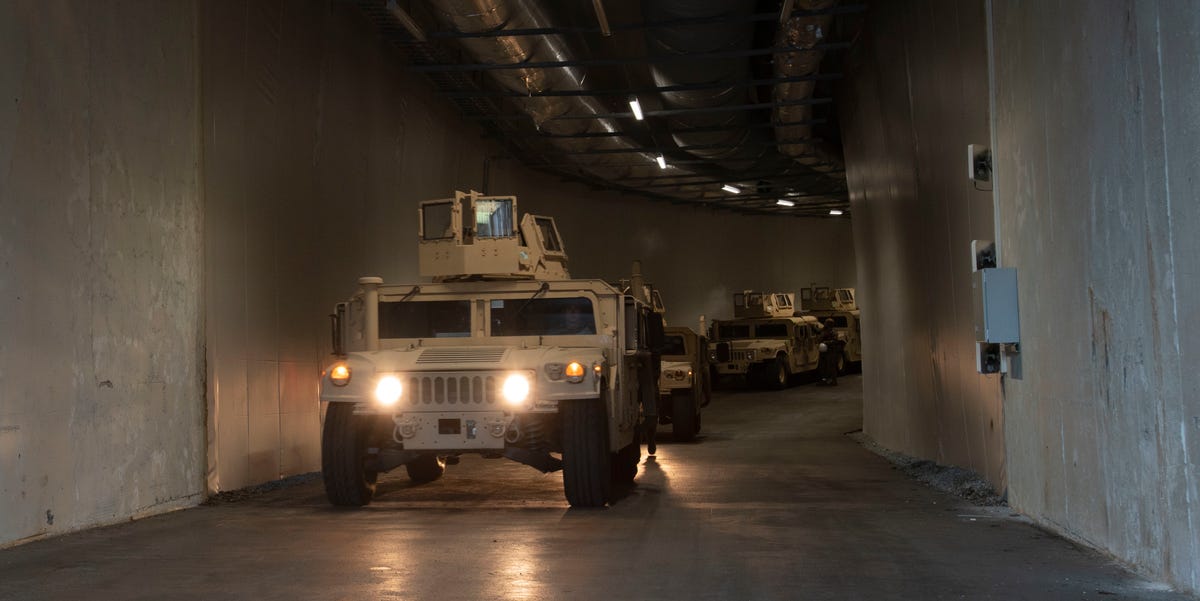

If the phrase “Navy hospital in a Norwegian cave” sounds like the opening scene of a spy movie, you are not alone. It has everything: Arctic weather, NATO strategy, military logistics, underground tunnels, medical equipment, and just enough “wait, what?” energy to make you check whether someone accidentally published a defense memo and a fantasy novel on the same page.
But this is real. In October 2021, the U.S. Navy announced that it had delivered an Expeditionary Medical Facility, or EMF, to the Bogen Bay area of northern Norway, roughly 100 miles north of the Arctic Circle. The facility is a 150-bed mobile hospital designed to operate inside Norway’s expansive cave infrastructure or be moved elsewhere if a crisis demands it. In plain English: the Navy put a serious hospital capability underground, in one of the coldest and most strategically important corners of Europe. Very subtle, right?
The setup is not some quirky Cold War museum exhibit with a stethoscope hanging next to a snow shovel. It is part of a larger push to improve expeditionary medicine, NATO interoperability, Arctic readiness, and military logistics in a region that has become increasingly important to U.S. and allied security planning. The cave hospital reflects a simple but powerful idea: in a crisis, saving lives depends not only on doctors and nurses, but also on where supplies are stored, how quickly equipment can move, and whether the entire system can survive the environment around it.
What Exactly Did the Navy Put in the Norwegian Cave?
The Navy’s Expeditionary Medical Facility is a deployable hospital package. It is built to bring many of the capabilities of a modern hospital into a military theater without waiting for a permanent hospital to be built from scratch. The EMF delivered to Norway includes 150 beds, with 20 intensive care unit beds and 130 acute care ward beds. It also includes four operating rooms, an emergency room, a laboratory, X-ray capability, CT scan capability, and space to store blood and plasma.
That is a lot more than a first-aid tent with a patriotic logo. This is the kind of medical capability that can support theater hospitalization for joint forces, meaning it can help care for service members in a sustained operation. It is designed to admit patients, perform surgeries, stabilize trauma cases, process lab work, and support medical decision-making close to where forces may be operating.
The Navy has said that an EMF of this kind can support up to 30 hospital admissions and 36 surgical cases per day. It can also store hundreds of units of blood and plasma, which matters because trauma care is a race against time, temperature, and supply chain gremlins. If you are trying to save lives in an Arctic environment, “we will fly that in later” is not a plan; it is a wish wearing a parka.
Why Norway? Why a Cave? Why Not Somewhere With Better Coffee?
Norway is not a random pin on a map. It is a founding NATO member, an Arctic nation, and a key player in the defense of the High North. Its geography places it near vital sea lanes, close to Russia’s Northern Fleet region, and in a position that matters deeply for transatlantic reinforcement. If NATO needs to move people, equipment, and supplies across the North Atlantic and into northern Europe, Norway is not the edge of the map. It is one of the map’s pressure points.
The cave part is also less strange than it sounds. Norway has long used underground facilities for military storage. The Marine Corps Prepositioning Program-Norway has stored equipment in climate-controlled caves for decades, including vehicles, engineering gear, and other supplies meant to help U.S. forces reinforce NATO allies quickly. These caves are not spooky natural holes with bats serving as security guards. They are purpose-built or heavily prepared military storage facilities with wide access, stable conditions, and room for serious logistics.
For medical equipment, caves offer some practical advantages. They provide protection from severe weather, support controlled storage conditions, and allow equipment to be stowed in a way that can be accessed relatively quickly. In the Arctic, that matters. Cold can damage supplies, slow vehicles, complicate loading, and make every routine task feel like a team-building exercise designed by a refrigerator.
The Strategic Meaning Behind the Underground Hospital
The Navy’s cave hospital is not only about medicine. It is also about deterrence. In military planning, deterrence does not always look like missiles, ships, or aircraft. Sometimes it looks like fuel, spare parts, blood refrigerators, surgical suites, and the boring-but-essential machinery that keeps people alive when plans meet reality.
By positioning a deployable hospital in Norway, the U.S. signals that it is serious about sustaining operations in northern Europe. A force that cannot treat casualties, move patients, and maintain medical readiness is a force with a built-in limit. Medical logistics may not get the dramatic movie soundtrack, but commanders know it is one of the foundations of credible military power.
The move also supports NATO interoperability. That means U.S. forces and Norwegian forces can practice how they would actually work together in a crisis: how equipment is moved, how patients are received, how communications flow, how supplies are tracked, and how medical teams coordinate under Arctic conditions. “Interoperability” is a clunky word, but the idea is simple: allies should not be meeting each other’s systems for the first time during an emergency.
A Return to an Older Idea, With New Tools
The Navy’s medical presence in Norway is not entirely new. Before 2003, U.S. Navy medicine operated two 500-bed fleet hospitals in Norway. Those hospitals were connected to the older model of large, containerized medical support. They were used during Operation Desert Storm and later sent out again during the period around Operation Iraqi Freedom. Afterward, the Navy shifted toward smaller, more flexible Expeditionary Medical Facilities.
That shift is important. The modern EMF is smaller than the old fleet hospital concept, but it is more modular and agile. In today’s defense environment, the ability to distribute capabilities matters. Instead of relying only on huge, centralized facilities, military planners increasingly want systems that can be moved, scaled, split, combined, and positioned closer to where they may be needed.
In other words, the Navy did not simply dust off an old hospital, park it underground, and call it innovation. The Norwegian cave hospital represents a newer model of expeditionary medicine: lighter than the legacy fleet hospital, but still robust enough to support serious medical care.
The Arctic Is Becoming a Bigger Security Priority
The Arctic is no longer treated as a frozen back room where nothing happens except polar bears judging everyone’s footwear. Climate change, melting sea ice, new shipping possibilities, resource competition, and increased Russian and Chinese activity have made the region more important to defense planners. NATO has also increased its focus on the High North, especially as Finland and Sweden have joined the alliance and strengthened NATO’s northern posture.
Norway sits directly inside that strategic conversation. The country has deep Arctic experience, a long coastline, proximity to Russian military activity, and a central role in northern European defense planning. For the U.S. Navy and Marine Corps, training and prepositioning in Norway help answer a hard question: can American forces operate effectively in extreme cold, rough terrain, long distances, and limited infrastructure?
The cave hospital is one piece of that answer. It gives commanders a medical safety net and a training platform. It also supports the broader idea that Arctic operations require more than brave troops and good intentions. They require communications, maintenance, mobility, cold-weather gear, fuel, food, shelter, and medical care that can function when the environment is actively trying to ruin everyone’s day.
How an Expeditionary Medical Facility Works
An Expeditionary Medical Facility is designed to be packed, transported, assembled, operated, and sustained under demanding conditions. Think of it as a hospital broken into deployable building blocks. Those blocks can include patient wards, surgery areas, imaging equipment, lab equipment, sterilization systems, command and control spaces, power generation, environmental control, water systems, and support vehicles.
That modular design gives planners flexibility. If a full hospital is needed, the whole package can be deployed. If a smaller medical footprint is enough, parts of the system can support a specific mission. This matters because military operations are rarely neat. A humanitarian response, a NATO exercise, a major contingency, and a casualty surge all require different levels of medical capability.
Inside the Norwegian cave setting, the EMF benefits from being stored near other military logistics capabilities. The cave environment helps preserve equipment and gives teams a protected place to stage and maintain supplies. If needed, the facility can be used in the cave structure or moved to another theater. That dual-use flexibility is the whole point: keep it protected, keep it ready, and keep it movable.
Medical Readiness Is Not Glamorous, But It Wins Time
Military medicine is a time machine, in a way. Its purpose is to buy time for wounded people: time to stop bleeding, time to breathe, time to get imaging, time to perform surgery, time to evacuate, and time to recover. In combat or disaster response, minutes matter. Distance matters. Weather matters. A storm, a damaged runway, or a supply delay can change the outcome for patients.
That is why forward medical capability is so valuable. A hospital in a cave may sound dramatic, but the logic is practical. If medical equipment is already in the region, forces do not need to wait for every item to cross the Atlantic during a crisis. If U.S. and Norwegian personnel have already trained together, they do not need to improvise every procedure under pressure. If the medical system has already been tested in cold conditions, it is less likely to surprise everyone at the worst possible moment.
In the Arctic, the environment adds its own medical risks. Cold injuries, hypothermia, frostbite, vehicle accidents, fatigue, and isolation can complicate operations even before combat injuries are considered. A robust medical facility gives commanders more confidence that forces can train, deploy, and respond without accepting unnecessary risk.
Why This Matters Beyond the Military
The Navy’s Norwegian cave hospital also offers lessons for civilian emergency planning. The same principles apply to disasters, pandemics, remote medicine, and infrastructure resilience. Supplies should be stored where they can be protected. Medical teams should train before the crisis. Equipment should be modular. Backup power, transportation, communications, and maintenance should be part of the plan from day one.
During any emergency, the public often sees the visible part of response: ambulances, helicopters, doctors, nurses, and temporary treatment sites. But behind those visible elements is a mountain of logistics. Someone has to know where the oxygen is. Someone has to maintain the generators. Someone has to track blood products, sterile supplies, medications, bedding, waste, refrigeration, and patient movement. A hospital is not just a building; it is a living system.
The Norwegian cave hospital is a reminder that resilience often looks boring until it becomes priceless. A storage plan is boring. A maintenance checklist is boring. A joint training exercise is boring. Then a crisis happens, and suddenly the boring things are the reason the system works.
Common Questions About the Navy Hospital in Norway
Is the hospital permanently treating patients in the cave?
No. The facility is best understood as a prepositioned and deployable medical capability. It can operate within the cave structure or be moved elsewhere. Its value comes from readiness, storage, training, and the ability to respond quickly if needed.
Is this about Russia?
Partly, but not only. Russia’s Arctic military activity is one reason NATO pays close attention to the High North. However, the hospital also supports broader goals: NATO readiness, crisis response, medical interoperability, Arctic training, and distributed logistics.
Why not keep the hospital in the United States?
Distance is the enemy of fast response. Prepositioning equipment in Norway reduces the time needed to bring medical capability into northern Europe. In a crisis, saving days can mean saving lives.
Does a cave really help?
Yes. Protected underground storage can help shield equipment from weather, stabilize environmental conditions, and improve readiness. In Norway’s Arctic and sub-Arctic conditions, that is a major advantage.
Experience-Based Reflections: What a Hospital in a Cave Teaches Us
Imagine being part of a team told to prepare a hospital not in a city, not next to a suburban parking lot, and not inside a clean new medical campus, but inside a Norwegian cave above the Arctic Circle. The first reaction might be laughter. The second reaction would probably be a long look at the packing list. The third would be respect, because the project quickly stops sounding odd and starts sounding like a master class in planning.
The experience of building readiness in a place like this would teach one lesson immediately: logistics is not paperwork; logistics is survival. Every crate has to matter. Every cable, generator, container, pallet, and medical kit needs a reason to be there. If something is missing, the cave will not magically produce it. There is no friendly neighborhood warehouse around the corner, unless the neighborhood is “Arctic rock” and the corner is “several hours away in terrible weather.”
Another lesson is that medical care depends on teamwork far beyond doctors and nurses. Surgeons need sterile instruments. Nurses need monitors and medications. Lab teams need equipment that works. Imaging teams need power. Patients need heat. Blood products need refrigeration. Vehicles need fuel. Communications need redundancy. A hospital in a cave makes all of that visible. It strips away the illusion that medicine happens only at the bedside. In reality, the bedside is the final stop in a long chain of planning.
There is also a human side. Working in cold, remote conditions forces people to slow down in some ways and speed up in others. Gloves make simple tasks awkward. Weather affects mood. Darkness and distance can make even routine work feel heavier. Teams have to build habits, not just plans. They need checklists, rehearsals, shared language, and trust. A calm team in an underground medical facility is not calm by accident. It is calm because it has practiced the chaos until the chaos feels familiar.
For civilians, the cave hospital offers a surprisingly useful mindset. Whether preparing a household emergency kit, a rural clinic, a hurricane response plan, or a business continuity strategy, the same question applies: what will we wish we had already done before the crisis begins? The answer is usually not glamorous. It is inventory, training, maintenance, backup power, communication plans, and relationships with partners. Not exactly Hollywood material, unless Hollywood finally greenlights “Spreadsheet: Arctic Dawn.”
The biggest takeaway is that readiness is an act of imagination. You picture what could go wrong, then build systems sturdy enough to meet it. The Navy’s hospital in a Norwegian cave is dramatic because of the setting, but its deeper message is practical: prepare close to the problem, protect what matters, train with your partners, and never underestimate the healing power of good logistics.
Conclusion
The Navy setting up a hospital in a Norwegian cave may sound unusual, but the logic behind it is remarkably clear. The 150-bed Expeditionary Medical Facility gives U.S. and NATO planners a protected, deployable medical capability in one of Europe’s most strategically important regions. It supports Arctic readiness, strengthens cooperation with Norway, improves medical logistics, and shows that modern deterrence is not only about weapons. It is also about keeping people alive when conditions are harsh and time is short.
In the end, the cave hospital is a symbol of practical seriousness. It says the U.S. and its allies are thinking about the hard parts of Arctic operations: distance, weather, medical care, transportation, storage, and coordination. A hospital hidden in rock may not be flashy, but in a crisis, it could be exactly the kind of quiet preparation that makes all the difference.
Note: This article is based on publicly available information from official U.S. Navy and defense-related reporting about the Expeditionary Medical Facility delivered to Norway, along with broader public information on NATO Arctic security and U.S. military prepositioning in Norway.