These 30 Women Who Ditched Dyeing Their Hair Look So Fabulous, They May Convince You To Do The Same

There’s a quiet little rebellion happening in bathrooms everywhere: women are looking at that box of dye (or that standing salon appointment)
and thinking, “What if… I just didn’t?” Not because they “gave up,” but because they finally got tired of paying rent to their roots.
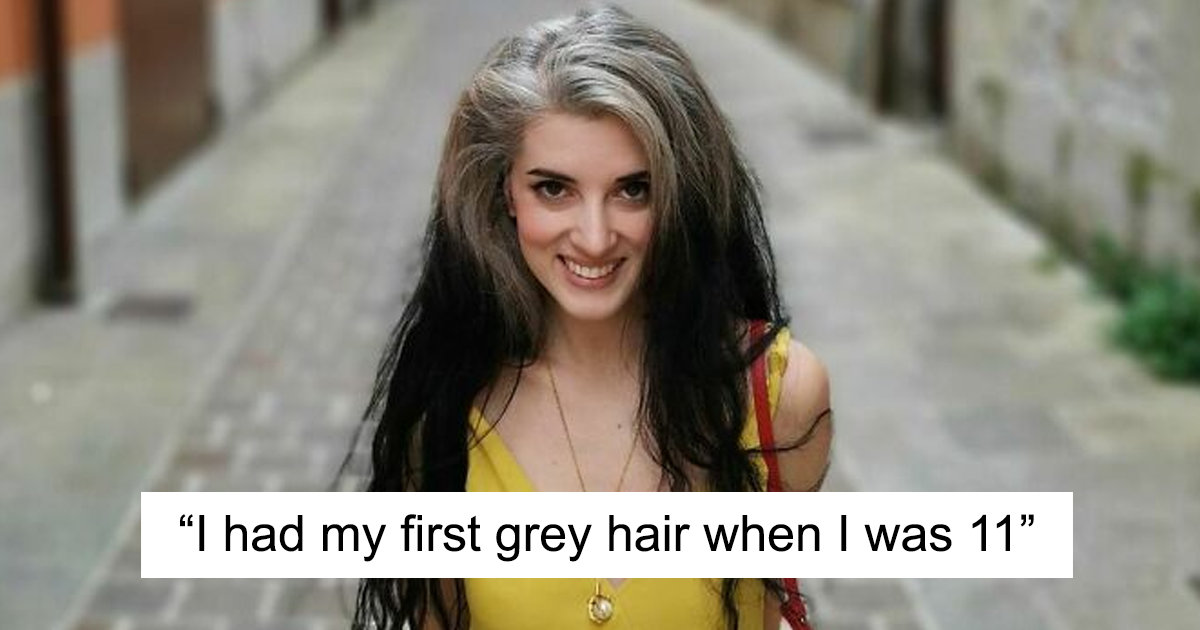
And the results? Honestly… rude. In the best way. Silver streaks, salt-and-pepper waves, soft white pixieshair that looks expensive
even when it costs exactly $0 in “root touch-up emergencies.”
If you’ve ever wondered whether going gray will make you look older, here’s a plot twist: the right gray can make you look
more intentional, more stylish, andthis is the part nobody warns you aboutmore powerful.
The secret isn’t magic. It’s strategy, patience, and a tiny bit of “I’m doing this for me” energy.
Why So Many Women Are Saying Goodbye to Dye
Let’s be real: dyeing your hair isn’t just “a little maintenance.” It’s a recurring subscription with hidden fees. There’s the time, the money,
the scheduling gymnastics, the fear of the “skunk stripe” line of demarcation, and the moment you realize your roots grow faster when you have
plans. Add in dryness, breakage, and the occasional scalp irritation, and a lot of women start asking the obvious question:
What am I getting in return?
For many, the answer becomes: freedom. Going gray can be a beauty decision, a wellness decision, a budgeting decision, or a values decision.
Some women do it because they’re done hiding. Some because their hair feels healthier when they stop processing it. And some because they look
at their natural color coming in and think, “Wait… that’s actually kind of gorgeous.”
The “gray glow-up” effect
Here’s the part that surprises people: gray hair often looks better when you treat it like a color choicenot like an accident you haven’t fixed yet.
That means cleaner lines, more moisture, smarter styling, and shades that flatter your skin tone. When the gray is intentional, the whole vibe changes.
You’re not “letting yourself go.” You’re showing up as yourself.
What Going Gray Actually Means (Science, But Make It Useful)
Hair doesn’t “turn gray” overnight like a cartoon character seeing a ghost. Your strands grow in from follicles, and each hair is “set” in color once it grows.
As you age, the pigment-making process slows down. The result is new growth that comes in with less colorappearing gray, silver, or white depending on how much pigment remains.
Genetics is the main driver, but lifestyle and health factors can play supporting roles. Things like smoking, nutritional deficiencies, thyroid issues,
and autoimmune conditions can sometimes be involved in premature grayingso if your hair changes suddenly or very early, it’s worth asking a clinician.
(Not because gray is badbecause sudden changes can be a clue.)
Gray hair texture is real
Many women notice their gray hair feels differentcoarser, drier, more wiry, or oddly more fragile. That’s why the “going gray” transformation is usually
half color journey, half haircare upgrade. The goal is not just to reveal your natural shadebut to make it shine.
These 30 Women Ditched Dyeand Their Hair Looks Like a Whole New Personality
The women below aren’t a single “type.” They’re every shade, every age, every vibe. Think of this as a menu of real-world gray journeys30 ways women
stop dyeing and end up looking so good their friends start “accidentally” asking what shampoo they use.
- The Silver Streak CEO: She kept her cut sharp, added glossy styling, and suddenly her gray reads “executive presence,” not “forgot my appointment.”
- The Soft White Pixie: She went short, went bold, and discovered white hair + strong brows is basically a cheat code.
- The Salt-and-Pepper Minimalist: She stopped dyeing, simplified her routine, and now her hair matches her clean, modern wardrobe perfectly.
- The Curly Gray Romantic: Her curls got more defined with moisture masksnow her gray looks like a halo with personality.
- The “Gray Blending” Strategist: She used highlights/lowlights to soften the grow-out line and made the transition look like a salon trend.
- The Brunette-to-Silver Balayage Queen: She lightened selectively, avoided harsh root lines, and made gray look dimensionalnot flat.
- The “One Last Big Chop” Woman: She cut off dyed ends fast and treated it like a makeover, not a slow goodbye.
- The Smoky Charcoal Bob: Her gray came in deeper than expectedlike graphiteand with a bob it looks chic and editorial.
- The White-Streak Statement Maker: She centered her natural streak instead of hiding it. People assume it’s intentional (because it is).
- The “No Apologies” Buzz Cut: Low maintenance, high impact. She didn’t just ditch dyeshe deleted the whole stress folder.
- The Warm Silver Glow: Her gray leans warm; she embraced it and chose makeup tones that make her hair look sunlit, not yellow.
- The Cool-Toned Ice Blonde Gray: Weekly toning products kept brassiness away, and her hair now looks like winter lighting.
- The Thick-Hair Transformer: Dye made her hair brittle; going natural plus protein treatments brought back bounce and body.
- The Hat-and-Confidence Starter Pack: Early transition? Hats. Later transition? “I can’t believe I worried about this.”
- The Root Concealer Pragmatist: She used temporary cover-up for big eventsbecause freedom doesn’t require suffering.
- The Gray-with-Glasses Icon: New frames + gray hair = instant style upgrade. Like a rebrand you can’t argue with.
- The Platinum-Adjacent Experimenter: She toned her gray slightly brighter and realized “natural” can still be curated.
- The Low-Maintenance Mom: She traded monthly dye for trims and conditioner. Her schedule thanked her immediately.
- The Outdoor Enthusiast: She protected her hair from sun and chlorine and kept her silver from going dull or brassy.
- The “I’m Done Performing Youth” Woman: Her gray isn’t just hairit’s relief. Her smile is the best part of the makeover.
- The Artistic Silver + Bangs Combo: Bangs softened the grow-out line and added a playful edge to her new color.
- The Glam Blowout Convert: Gray hair + shine spray + blowout = red-carpet energy on a grocery-store Tuesday.
- The Natural Texture Advocate: She stopped fighting frizz and started feeding it hydration. Her gray looks airy and modern.
- The “Two Inches Then Salon” Planner: She waited for visible growth, then got a blending plan. Less chaos, more control.
- The Long Hair Loyalist: She refused to cut length. With consistent conditioning and tone care, her long gray looks luxurious.
- The “Gray but Make It Soft” Woman: She used demi-permanent glosses to keep everything cohesive while her natural color grew in.
- The Power Ponytail: Sleek ponytail, silver strands catching light, and suddenly she looks like the main character in a legal drama.
- The Gentle Transition Introvert: She didn’t announce it. She just stopped dyeingand one day people started complimenting her hair.
- The Community Finder: She found other women going gray, swapped tips, and realized she wasn’t “behind”she was joining a movement.
- The “This Is Me” Finisher: Once the dyed ends were gone, her hair finally matched how she felt: confident, honest, and fully herself.
How to Stop Dyeing Without Losing Your Mind
Going gray is a process, not a single brave moment. The key is reducing the contrast between dyed hair and new growth, keeping hair healthy,
and using a plan that matches your lifestyle. Here are practical approaches that real colorists and editors recommend again and again.
1) Pick your transition strategy
- Cold turkey grow-out: You stop dyeing and let your natural hair take over. Fastest in spirit, slowest in appearance.
- Gray blending: Highlights, lowlights, balayage, or “color melting” to soften that harsh line while you grow it out.
- Shorter cuts: A bob or pixie removes dyed ends faster and makes the transition feel intentional.
- Temporary cover: Root sprays, powders, or hairline fillers for special occasionsno long-term commitment.
2) Treat gray like delicate fabric
Gray hair can get dry and can pick up brassiness from sun, heat tools, chlorine, and product buildup. That’s why gentle cleansing, deep conditioning,
and occasional toning are usually the difference between “meh” gray and “wow” gray.
- Use a hydrating conditioner every wash; add a mask weekly if your hair feels rough.
- Use purple/silver toning products sparingly (usually once a week or less) to prevent dryness.
- Limit hot tools when you can; use heat protection when you can’t.
- Protect hair from sun and pool chemicalsespecially if your gray tends to go yellow.
3) Adjust your makeup and wardrobe (optional, but powerful)
This is the underrated hack. Gray hair can shift the “frame” around your face, so small tweaksslightly stronger brow definition,
warmer blush, a brighter lip, or richer clothing colorscan make your whole look feel upgraded overnight.
FAQs: The Questions Everyone Asks (Usually While Touching Their Roots)
Will going gray make me look older?
Not automatically. Uneven grow-out can look messythat’s what people interpret as “older.” But a clean cut, healthy shine,
and a cohesive transition plan can make gray look modern and polished.
Is there a way to “reverse” gray hair?
For most people, age-related graying is not reversible. But if graying is related to a treatable cause (like certain deficiencies),
addressing the cause may help slow or stabilize changes. If you’re unsure, ask a healthcare professional.
What if I love gray hair… but not on me?
Then don’t do it. This isn’t a moral test. It’s hair. You’re allowed to dye it, blend it, bleach it, shave it, or braid it into a work of art.
The point is choicenot pressure.
Conclusion: Gray Isn’t “Giving Up”It’s Opting Out
When women stop dyeing their hair, what they’re really ditching is the constant obligation to look “unchanged.” And in exchange, they often gain
healthier hair, more time, and a look that feels authenticsometimes even more glamorous than the color they paid for.
If you’re thinking about it, start small: let your roots show a little longer. Take a photo in good lighting. Talk to a colorist about blending.
Try a different part, a new cut, or a mask that makes your hair feel like silk again. You don’t have to go gray overnight.
You just have to start giving your natural hair a chance to show you what it can do.
Extra: What It’s Really Like to Stop Dyeing ( of Real-World Experience)
The funniest thing about going gray is that the hardest part usually isn’t the hairit’s the noise. The opinions. The projections.
The “Are you sure?” questions that somehow sound like “Are you okay?” (Yes, Susan. I’m okay. I simply no longer want to budget for my roots.)
In the beginning, many women describe a strange split-screen feeling: the top of the hair starts telling the truth while the ends are still living
in a previous era. That line where the natural color meets the dyed color can feel like a neon sign pointing at your insecurities.
And yetthis is importantmost women also say the discomfort fades faster than they expected. Not because the hair changes overnight,
but because you do. You stop seeing the roots as “unfinished” and start seeing them as “in progress.”
Then come the small victories. The first time someone compliments your gray without realizing it was a decision. The moment your hair feels softer
because you’re not processing it as often. The day you skip an appointment and realize you didn’t feel guiltyjust relieved.
There’s also an unexpected confidence boost when your appearance stops being a maintenance task and starts being an expression.
Practically, most women learn to build a “transition toolkit.” A purple shampoo that’s used lightly (not daily), because dryness is real.
A deep conditioner that becomes non-negotiable. A plan for photos, weddings, or work eventssometimes that plan is a root spray,
sometimes it’s a sleek bun, sometimes it’s simply deciding you’re not going to apologize for a normal human process.
Emotionally, going gray can be surprisingly clarifying. Some women realize they were dyeing because they truly loved the lookand choose to keep coloring,
just with better methods. Others realize they were dyeing because they felt they had to, and letting the gray come in becomes an act of self-trust.
Either way, the “win” isn’t the color. The win is the autonomy.
And here’s the most consistent experience of all: once the transition is done, the fear doesn’t make sense anymore.
Women look back at old photos and think, “I can’t believe I worried this much about hair.” Not because hair doesn’t matter,
but because it finally stops feeling like a battle. It becomes what it was always meant to be: part of you, evolving with you,
and allowed to be beautiful in every stage.