
Most of us take selfies for very normal reasons: a good haircut, decent lighting, a vacation sunset, or proof that we did, in fact, leave the house wearing real pants. But David Espinosa took the selfie idea and quietly turned it into a long-term human time machine. Beginning as a teenager, he started photographing his face every day, lining up each image with careful precision, and eventually transforming thousands of ordinary snapshots into a hypnotic time-lapse of growing up.
The result is surprisingly emotional. At first, the video looks simple: one face, one frame, one day after another. Then the tiny changes begin to pile up. Hair shifts. Skin changes. The jawline sharpens. The expression stays mostly steady, but life keeps sneaking into the picture anyway. What begins as a quirky daily selfie project becomes something larger: a visual record of time, identity, discipline, and the strange miracle of becoming a different version of yourself while still feeling like the same person.
David’s project belongs to a fascinating tradition of daily self-portrait photography, popularized online by photographer Noah Kalina’s famous “Everyday” project. Kalina began taking a photo of himself every day in 2000 and turned the images into a viral video years later. His work helped inspire countless people to start their own photo-a-day challenges. David Espinosa was one of them, and his version adds the charm of watching adolescence turn into adulthood, one unsmiling frame at a time.
The Daily Selfie Project That Became A Life-Long Promise
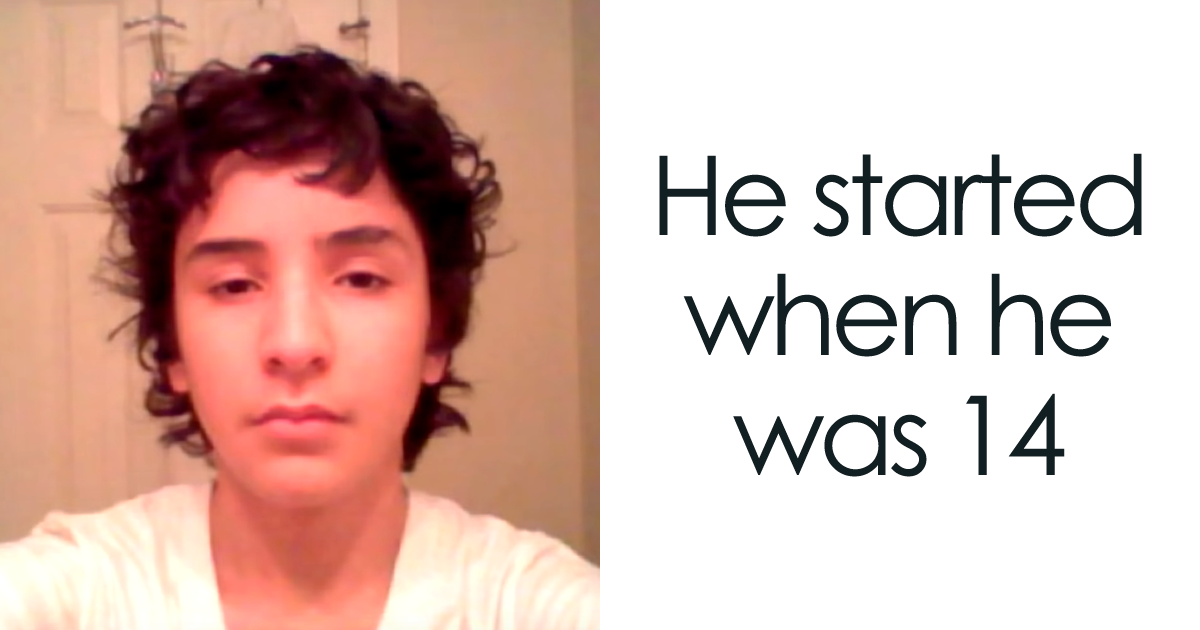
David Espinosa began taking daily selfies when he was around 14 years old. By the time he compiled his early images into a time-lapse video, he had documented more than seven years of his life, showing his transformation from a teenage boy into a young adult. According to reports about the project, he spent dozens of hours editing the final video, carefully aligning his face so the transitions would feel smooth instead of chaotic.
That detail matters. A daily selfie project sounds easy until you actually think about doing it. Taking one picture? Simple. Taking one picture every single day for years? That is where the casual fun turns into a test of discipline. It is one tiny task, repeated through school days, weekends, vacations, bad moods, busy mornings, awkward haircuts, and all the days when the last thing anyone wants to do is stare into a camera.
David’s early setup was refreshingly humble. He reportedly began with a Nintendo DSi before upgrading to smartphones later. That little detail gives the project personality. This was not a glossy influencer campaign with studio lights and a ring light brighter than a UFO landing. It was a teenager using the tools he had, creating a record that became more powerful precisely because it was so ordinary.
Why Watching Someone Age In A Time-Lapse Feels So Weirdly Powerful
One reason David Espinosa’s daily selfie time-lapse works so well is that it compresses years into minutes. In normal life, aging is almost invisible. You look in the mirror and see yourself, not yesterday’s micro-changes. A time-lapse breaks that illusion. It says, “Surprise! You have been changing the whole time.” Rude, but accurate.
The power comes from contrast. We know the person in the video lived thousands of full days between those frames, but we only see one tiny visual sample from each day. The missing parts make the video feel bigger. Behind each photo there might be homework, family dinners, heartbreak, exams, birthdays, late-night snacks, boring Tuesdays, and moments that never made it into the frame. The face becomes the anchor, while the viewer imagines the life happening around it.
The Face Stays Centered, But Life Keeps Moving
David’s mostly neutral expression is part of what makes the project memorable. Viewers often wonder why daily self-portrait artists do not smile more. The practical reason is consistency: a neutral face is easier to align across thousands of pictures. But creatively, the serious expression creates a blank canvas. It removes the “performance” of the selfie and lets time become the main character.
That is the funny twist. A selfie is often seen as attention-seeking, but a long-term daily selfie project can feel almost anti-vanity. There is no perfect angle, no dramatic pose, no caption begging for applause. There is just a person showing up every day and letting the years do the talking.
The Influence Of Noah Kalina And The “Everyday” Movement
David Espinosa has credited inspiration from Noah Kalina, the photographer whose “Everyday” project became one of the internet’s most recognizable examples of long-term self-portraiture. Kalina started photographing himself daily in 2000 and later released a video showing years of images stitched together in sequence. The project went viral because it was simple, strange, and emotionally direct.
Before “selfie” became a mainstream word, Kalina was already building a visual archive of his face. His work showed that a self-portrait could be more than a single image. It could become a data set of the self, a personal timeline, and a piece of internet art. For many younger creators, including David, it proved that repetition could become storytelling.
In a world where social media rewards instant reactions, long-term projects like these feel almost rebellious. They do not ask, “How can I go viral today?” They ask, “What happens if I keep going for years?” That is a much bigger question, and frankly, much harder than posting one dramatic airport selfie with the caption “new beginnings.”
Selfies, Self-Portraits, And The Art Of Watching Yourself Change
The selfie may feel like a modern invention, but self-portraiture has been around for centuries. Painters used mirrors. Photographers used timers, tripods, and reflective surfaces. Smartphone users use front-facing cameras and occasionally make the tragic mistake of leaving beauty mode at 100 percent. Different tools, same human impulse: we want to see ourselves, preserve ourselves, and understand ourselves from the outside.
What makes a daily selfie project different is the commitment to repetition. A single self-portrait captures a mood. A daily self-portrait series captures a pattern. It reveals how identity is both stable and unstable. You remain recognizably you, but your features, style, surroundings, and energy keep shifting.
That tension is why David’s project connects with viewers. Everyone knows, intellectually, that time passes. But seeing it happen across someone’s face makes the idea physical. It turns “years go by fast” from a cliché into a visual punch to the feelings.
The Technical Side: Why Alignment Makes The Magic Work
A good daily selfie time-lapse depends on consistency. If the face jumps wildly around the frame, the viewer notices the editing instead of the transformation. David reportedly spent a significant amount of time aligning images so his eyes, nose, and mouth stayed in roughly the same position. That careful editing gives the final video its smooth, almost liquid motion.
For anyone inspired to try a similar project, the basic formula is simple but demanding:
- Take the photo from the same distance whenever possible.
- Keep the face centered and at a similar angle.
- Use consistent lighting, or at least avoid extreme shadows.
- Back up the photos in more than one place.
- Name or organize files by date so future-you does not scream into a pillow.
Many daily photo apps now include ghost overlays, reminders, and automatic alignment features. But David’s project proves that fancy tools are not the heart of the idea. The heart is the habit. Technology can help, but it cannot show up for you every day. Annoying, but true.
Why Daily Selfies Can Become A Personal Diary
People often think of diaries as words on a page, but photos can function as a visual diary. A selfie taken every day does not record everything that happened, but it records evidence that you were there. It marks a date. It preserves a face. It catches small clues: tired eyes, a new haircut, a different room, a season changing in the background.
Photography and memory have a complicated relationship. Some research suggests that taking photos can help people remember visual details, while other studies have found that relying too much on the camera may reduce memory for certain details if people stop paying attention. The lesson is not “photos are good” or “photos are bad.” The lesson is that intention matters.
A daily selfie project is intentional by design. It is not just snapping random pictures and forgetting them in a cloud folder named “Camera Roll 14,000 items, send help.” It is a repeated act of noticing. Over time, those images become a personal archive. They let the creator revisit not just how they looked, but who they were becoming.
Is A Daily Selfie Project Narcissistic Or Surprisingly Humble?
Whenever selfies enter the conversation, someone inevitably brings up narcissism. It is almost a legal requirement of the internet. And yes, selfies can be used for vanity, validation, or carefully curated image-making. But not every selfie is a digital peacock feather. Context matters.
David Espinosa’s project feels less like “look how amazing I am” and more like “look what time does when nobody is paying attention.” The daily format removes the glamour. Some days will be awkward. Some days the lighting will be terrible. Some days the hair will make bold decisions without consulting management. That honesty is part of the charm.
Long-term self-portraiture can also be a form of self-study. It asks the creator to face themselves regularly without needing every image to be perfect. In an online culture full of filters and highlight reels, that kind of consistency can feel unexpectedly grounded.
What Viewers Really Respond To
People respond to David’s video because it gives them two experiences at once. First, there is curiosity: how much will he change? Second, there is recognition: this is happening to all of us. The viewer may not have thousands of selfies aligned into a video, but everyone has childhood photos, old school pictures, or social media memories that trigger the same reaction: “Wait, that was me?”
The project also invites reflection on commitment. Many people struggle to keep a habit for a week, let alone for years. Watching David maintain a daily ritual through such a formative period of life is impressive because it is so simple. He did not climb a mountain every day. He did not learn 47 languages while juggling flaming pineapples. He took one picture. Then he did it again. And again. And again. That is the quiet power of small habits.
What This Project Says About Growing Up Online
David’s daily selfie project also captures something specific about growing up in the digital age. Earlier generations had school portraits, family photo albums, and maybe a shoebox of prints. Today, a person can document nearly every stage of their life with pocket-sized technology. That creates new possibilities and new questions.
What do we choose to save? What happens when our personal archives become enormous? Are we recording life, or are we interrupting it? A project like David’s offers one thoughtful answer: documentation can be meaningful when it has structure. Instead of photographing everything, he photographed one thing consistently. His face became the measuring stick for time.
That structure is what separates the project from everyday digital clutter. A camera roll full of random screenshots, receipts, blurry pets, and accidental ceiling photos tells one kind of story. A daily self-portrait sequence tells another. It is focused, disciplined, and surprisingly poetic.
How To Start Your Own Daily Selfie Time-Lapse
If David Espinosa’s project makes you want to begin your own daily selfie challenge, start small. The goal is not perfection. The goal is continuity. Choose a time of day that is easy to remember, such as after brushing your teeth or before going to bed. Use the same wall or background when possible. Keep your phone at a consistent distance. Most importantly, back up your photos. Future-you deserves better than losing five years of images because a phone took one dramatic swim in a sink.
Make It Easy Enough To Repeat
The best habit is the one you can actually keep. Do not design a complicated setup with three lights, a tripod, a fog machine, and a playlist of inspirational whale sounds. Unless that is your thing, in which case, please hydrate. A daily selfie should take seconds. The easier the task, the more likely it becomes part of your routine.
Decide What The Project Means To You
Some people might want a funny aging time-lapse. Others might want a record of recovery, growth, school years, parenthood, travel, or personal change. Knowing your purpose can help you continue when the novelty fades. The project does not need to be public. In fact, keeping it private may make it more honest.
Experiences And Reflections Inspired By “This Guy Takes A Selfie Each Day And Will Continue Until He Dies”
The most interesting part of a project like David Espinosa’s is not only the final video. It is the experience of living with the project day by day. Imagine waking up on a normal morning, reaching for your phone, and taking the same picture you took yesterday. Nothing dramatic happens. There is no applause. The world does not stop to say, “Congratulations on today’s contribution to your future time-lapse.” You just take the photo and move on.
But over time, that tiny action becomes a thread running through your life. It is there on good days and bad days. It follows you through messy bedrooms, new apartments, school stress, job changes, family events, holidays, and all the ordinary days that usually disappear without leaving much evidence. A daily selfie becomes a small promise to your future self: I was here. This was me today.
That experience can be surprisingly grounding. Many people move through life waiting for big milestones before they document anything. Graduation? Take a picture. Wedding? Take 600 pictures. New haircut? Definitely take a picture, especially if the barber understood the assignment. But daily projects remind us that ordinary days matter too. The average Tuesday may not feel historic, but years later it becomes part of the pattern that shows who you were.
There is also a strange emotional honesty in seeing yourself change without asking permission. You may notice phases you forgot: the hairstyle that seemed excellent at the time, the shirt you wore constantly, the sleepy eyes during a stressful month, or the sudden confidence that appears after a life shift. The camera catches what memory smooths over. It does not always flatter, but it often tells the truth.
At the same time, a project like this teaches patience. The first week is boring. The first month is barely interesting. Even the first year might not look dramatic. The magic comes from accumulation. That is a useful lesson beyond photography. Many meaningful things work the same way: fitness, learning, saving money, writing, friendship, skill-building, and personal growth. One day rarely changes everything. Repeated days change almost anything.
The experience can also make a person more comfortable with imperfection. In a normal selfie, the temptation is to retake the image until the angle behaves. In a daily archive, perfection becomes less important than consistency. A tired face belongs in the project. A bad hair day belongs. A dull background belongs. Life is not made only of polished moments, and a truthful record should not be either.
For viewers, David’s project can inspire a softer way of looking at time. Instead of treating aging as something to fear, the video presents it as a story. Change is not always dramatic. It is gradual, layered, and human. You do not wake up as a different person overnight. You become one frame at a time.
That may be why the phrase “will continue until he dies” feels so striking. It sounds extreme at first, almost like a dare. But underneath it is a simple acknowledgment: life is finite, and documentation is one way of paying attention. The project says that every day counts, even when the photo is plain, even when nothing special happened, even when the only visible achievement is that you remembered to show up.
In the end, the daily selfie is not really about the selfie. It is about time, memory, commitment, and the odd beauty of repetition. David Espinosa’s project reminds us that the most powerful stories are not always built from huge events. Sometimes they are built from one small habit, repeated faithfully, until the ordinary becomes unforgettable.
Conclusion: A Selfie Project That Turns Time Into A Mirror
“This Guy Takes A Selfie Each Day And Will Continue Until He Dies” sounds like an internet curiosity, but David Espinosa’s daily selfie project is more than a viral headline. It is a long-form portrait of growing up, a study in patience, and a reminder that time is always working in the background. Inspired by earlier daily self-portrait projects like Noah Kalina’s “Everyday,” David’s time-lapse shows how a simple habit can become a powerful visual archive.
The project works because it is honest. It does not need dramatic effects or perfect poses. The steady repetition is the story. One face, one day, one photo at a time. Years later, those small moments become something surprisingly moving: proof that change is constant, life is brief, and even the most ordinary daily ritual can become art if you keep showing up.