
For many shelter dogs, the daily routine can feel painfully predictable: breakfast, kennel time, a walk if staffing allows, more kennel time, and another hopeful glance at every person who passes by. Then there are the lucky Tuesdays when the routine includes a car ride, a coffee-shop adventure, and a tiny cup of whipped cream.
That delightfully unconventional idea became known as Puppuccino Pals, a program created by Kitsap Humane Society in Washington. Beginning in April 2016, a shelter volunteer took selected adoptable dogs on outings for “puppuccinos”—small cups of whipped cream—while the shelter and a local coffee shop helped introduce each featured dog to potential adopters. The concept was simple, photogenic, and almost scientifically engineered to make the internet say, “Fine, where do I sign the adoption papers?”
But behind the adorable whipped-cream mustaches is a genuinely smart approach to shelter dog adoption. The outings provide enrichment, give volunteers more information about a dog’s personality outside a kennel, create appealing photos and stories, and put adoptable pets in front of people who may never have walked into an animal shelter.
How the Puppuccino Pals Idea Began
Kitsap Humane Society was looking for creative ways to promote animals waiting for homes when a former staff member and a volunteer developed the Puppuccino Pals concept. A volunteer, widely identified in early coverage as Molly Clark, began taking an adoptable dog out for a special Tuesday excursion.
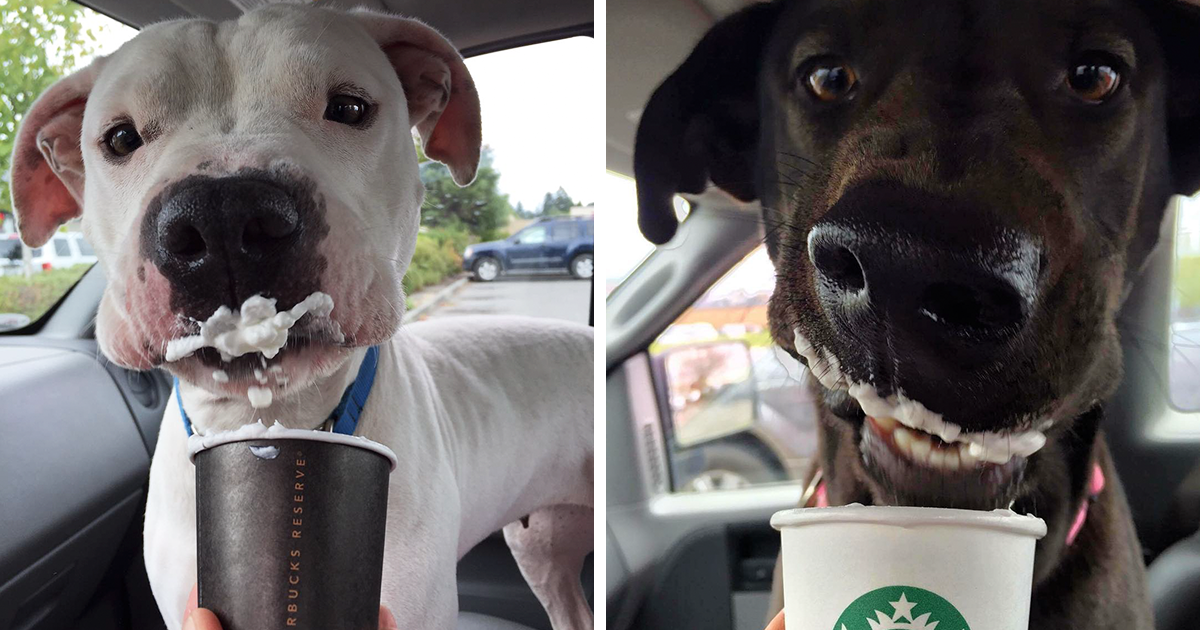
The destination was initially a local Starbucks. The featured dog received a small cup of whipped cream, enjoyed a break from the shelter environment, and became the star of photographs and social media posts. The local coffee shop also helped promote the dog of the week, giving customers a chance to learn that the enthusiastic cream-covered face in the photo was available for adoption.
The idea caught attention far beyond Washington. National publications shared the story, and the combination of dogs, coffee culture, and adoption advocacy proved irresistible. Years later, Kitsap Humane Society continued the program, expanding its promotional model to include local business sponsorships and even a feline variation called “Purr-uccino Pals.” The organization says its social channels now reach hundreds of thousands of followers.
In other words, what began as a cup of whipped cream became a long-running lesson in nonprofit storytelling.
Why Taking a Shelter Dog Out for Coffee Is More Than a Cute Stunt
A Break From Kennel Life Can Be Valuable Enrichment
Animal shelters work hard to care for dogs, but even a well-run kennel is not the same as a home. There are unfamiliar smells, barking neighbors, changing staff and volunteers, and limited opportunities to experience ordinary life.
Animal welfare organizations emphasize the importance of enrichment for shelter dogs. Activities that provide physical movement, social interaction, sniffing, problem-solving, and time outside the kennel can help reduce boredom and support behavioral well-being. The ASPCA specifically identifies socialization and varied enrichment as important parts of shelter care, while Best Friends Animal Society encourages enrichment programs designed to improve dogs’ daily lives and adoptability.
A puppuccino trip can provide several forms of enrichment in one compact adventure: a car ride, new scents, interaction with a trusted volunteer, exposure to a different environment, and, of course, the culinary revelation that humans have invented whipped cream.
That does not mean every dog should immediately be loaded into a car and driven through a busy coffee shop. One of the most thoughtful details of the original program was its individualized approach. Dogs were selected only when staff and volunteers believed the outing would suit them. Dogs who might find the experience stressful could remain at the shelter and still receive a treat and promotional attention.
That distinction matters. Good enrichment is not about forcing every dog through the same Instagram-friendly activity. It is about asking what will help this particular dog.
Dogs Get to Show Who They Are Outside the Shelter
A kennel can be a terrible place for making first impressions.
A friendly dog may bark because everyone else is barking. A shy dog may retreat to the back. An energetic dog may bounce like a furry pinball when a visitor approaches. Potential adopters sometimes interpret those behaviors as permanent personality traits when they may partly reflect excitement, stress, or confinement.
Community outings can offer a different view. A volunteer may discover that the supposedly “wild” kennel dog settles beautifully in the car. A quiet dog may come alive on a walk. Another may reveal an impressive talent for politely greeting strangers or sitting patiently beside an outdoor table.
Field-trip programs promoted within the animal welfare community are designed in part to provide enrichment, increase public visibility, and gather useful information about how dogs behave outside the shelter. Maddie’s Fund resources describe outings as a way to reduce kennel stress while helping shelters learn more about dogs in everyday environments.
For adoption matching, those observations can be gold. “Likes treats” is pleasant information. “Rides quietly in the car, enjoys meeting people, and relaxes after a short walk” paints an actual picture of life with the dog.
The Secret Ingredient Is Visibility
There is an uncomfortable reality in animal adoption: a wonderful dog cannot be chosen by someone who never sees the dog.
Millions of dogs and cats continue to enter U.S. shelters and rescues each year. Shelter Animals Count reported 5.8 million community intakes of dogs and cats in 2025 and approximately 4.2 million adoptions. Dog adoption rates improved relative to intake, but shelters still face significant pressure to connect animals with suitable homes efficiently.
That is where creative promotion becomes important.
A Great Photo Can Interrupt the Scroll
Compare two images. In the first, a dog stands behind kennel bars under fluorescent lighting. In the second, the same dog sits happily in a car wearing a tiny whipped-cream beard and looking as if he has just discovered the meaning of life.
Which photo are people more likely to stop and examine?
Petfinder encourages shelters and volunteers to use strong photographs, multiple images, and video to help potential adopters connect with animals online. Humane World for Animals likewise recommends attractive photos, appealing descriptions, and social sharing when trying to find homes for pets.
Puppuccino outings naturally produce content that feels less like a classified advertisement and more like a glimpse into a possible future. The viewer is not simply seeing “Dog #4721.” The viewer is seeing a potential road-trip companion, weekend coffee buddy, back-seat supervisor, and professional whipped-cream inspector.
Stories Make Shelter Dogs Memorable
Basic adoption profiles are necessary, but facts alone do not always create an emotional connection.
“Three-year-old mixed breed, 52 pounds, neutered” is useful information.
“Three-year-old mixed breed who rode to the coffee shop like a gentleman and somehow got whipped cream on one eyebrow” is information people remember.
Creative shelter marketing works because it gives an animal an identity beyond a kennel number. Best Friends Animal Society advises shelters to highlight individual characteristics when promoting adoptable dogs because a distinctive personality can help the right adopter notice the right animal.
The puppuccino itself is not magic. The story surrounding it is.
Community Outings Bring Adoptable Dogs to the People
Traditional adoption relies heavily on people deciding to visit a shelter or search an adoption website. Community outings reverse that equation. They allow an adoptable animal to appear in ordinary public life.
A person buying coffee may not have planned to adopt a dog that morning. Then a cheerful shelter dog walks past in an “Adopt Me” vest, demonstrates impeccable sitting skills, and looks deeply betrayed that the whipped cream is already gone.
Suddenly, adoption becomes real.
Off-site events and field trips can also reach people who feel intimidated or emotionally overwhelmed by visiting a shelter. Seeing a relaxed dog in a community setting may make the adoption process feel more approachable.
This broader visibility matters because modern shelters are competing for attention in a crowded media environment. A clever recurring feature such as “Puppuccino Tuesday” gives followers a reason to return every week, share posts, tag friends, and become familiar with the organization even when they are not ready to adopt immediately.
That long-term relationship can produce adopters, foster families, volunteers, donors, sponsors, and enthusiastic community advocates.
Could Other Shelters Create Their Own Version?
Absolutely—but the lesson is bigger than copying the exact coffee-shop formula.
The smartest shelter programs are designed around local resources and individual animal needs. One community might organize “Dog Day Out” hikes. Another could partner with a bookstore, garden center, pet-friendly brewery, outdoor café, or local business district.
A successful outing program generally needs several ingredients:
- Dogs selected according to temperament, health, and comfort level.
- Trained volunteers or staff who understand canine body language.
- Secure transportation and appropriate leashes or harnesses.
- Clear safety rules for public interaction.
- Accurate adoption information that travels with the dog.
- Good photos, video, and a memorable story afterward.
- A backup enrichment option for dogs who should not participate in public outings.
The goal should never be to manufacture viral content at an animal’s expense. The dog’s welfare comes first. The best publicity is a side effect of an experience the dog actually enjoys.
Are Puppuccinos Safe for Dogs?
Now for the question every dog has been impatiently waiting for: can we please stop discussing marketing strategy and return to the whipped cream?
A typical puppuccino is a small serving of whipped cream without coffee or caffeine. For many healthy dogs, a small amount may be tolerated as an occasional treat. However, dairy can cause digestive problems in some dogs, and whipped cream contains calories and fat. Dogs with sensitive stomachs or certain medical conditions may need to skip it.
Veterinary nutrition guidance commonly recommends keeping treats to a small share of a dog’s total daily calories; the widely used guideline is no more than about 10 percent. Portion size should also reflect the individual dog’s size and health.
For shelters, that means the charming photo opportunity should still be managed like any other treat. A Chihuahua does not need the whipped-cream equivalent of a swimming pool. A dog with dietary restrictions may be happier with a veterinarian-approved alternative.
The true reward, after all, is the outing and positive attention. The cream is merely the extremely lickable bonus.
Why Creative Adoption Programs Matter More Than Ever
The national sheltering picture remains complex. Although millions of animals are adopted each year, shelters continue to manage capacity pressures, longer stays for some dogs, and barriers that can make adoption difficult for prospective families. Research and animal welfare organizations increasingly emphasize removing barriers, improving the adopter experience, expanding fostering, and finding better ways to introduce available pets to the public.
No single program will solve pet homelessness. Puppuccinos cannot fix housing restrictions, veterinary costs, staffing shortages, or every other challenge facing shelters.
But creative programs can solve a smaller problem that still matters enormously: invisibility.
They remind the public that shelter animals are individuals. They create moments of joy in a difficult environment. They give volunteers meaningful ways to participate. They build partnerships with local businesses. And sometimes, a photo of a happy dog covered in whipped cream reaches exactly the person who has an empty spot on the couch.
The Real Experience Behind a Puppuccino Outing: What a Day Can Look Like
To understand why an outing like this can matter, imagine a typical shelter dog’s day from the volunteer side of the leash.
The experience begins long before anyone orders whipped cream. Staff and volunteers first consider whether the dog is comfortable with handling, transportation, unfamiliar environments, and public encounters. The best candidate is not necessarily the most outgoing dog in the building. It is the dog for whom the outing is expected to be safe, manageable, and enjoyable.
Then comes the moment the leash appears.
Many dogs recognize that sound instantly. A kennel door opens, and suddenly the ordinary day becomes something else. There may be an enthusiastic sprint toward the exit, a few circles of excitement, or a cautious pause while the dog studies the plan. The volunteer gives the dog time to sniff, settle, and move at an appropriate pace.
The car ride can reveal the first surprise. A dog who seemed restless in the kennel may curl up quietly on the seat. Another may sit upright, watching passing cars with the concentration of a newly hired traffic engineer. A third may believe every drive-through employee exists exclusively to admire him. Frankly, he may be correct.
At the destination, the experience is kept low-pressure. The dog gets time to observe the environment rather than being pushed toward every stranger. A confident dog may happily greet people. A more reserved dog may prefer to stay close to the volunteer and watch the world from a comfortable distance.
Then the famous cup appears.
Some dogs approach delicately, taking careful licks as though participating in a formal tasting. Others insert nearly their entire face into the cup and emerge looking like they have lost an argument with a can of shaving cream.
That is usually when the camera becomes important.
A good adoption photo captures more than cuteness. It captures personality. Maybe the dog closes his eyes in complete whipped-cream bliss. Maybe she sits proudly beside the cup. Maybe the volunteer discovers that the supposedly serious-looking shepherd has an unexpectedly goofy side.
Back at the shelter, those observations can become part of the dog’s story. Instead of a generic description, potential adopters can learn that the dog enjoys car rides, settles well during outings, likes meeting people, or simply has a magnificent commitment to snacks.
The experience can also be meaningful for the volunteer. Shelter work contains plenty of difficult moments. Taking a dog into the community provides a chance to see that animal outside the limits of kennel life—not merely as a dog waiting for a home, but as a companion already capable of enjoying ordinary adventures.
And there is a subtle shift in how the public sees the dog, too.
Inside a shelter, visitors may wonder, “What happened to this animal?” During a cheerful community outing, they are more likely to wonder, “What would life with this dog be like?”
That is a powerful change in perspective.
The most successful experience does not necessarily end with an adoption that same afternoon. Maybe someone shares the dog’s photo. Maybe a follower tells a friend. Maybe a family remembers the post two weeks later when they finally decide they are ready to adopt.
Animal adoption often depends on a chain of small connections. A volunteer gives a dog an afternoon outside. A local business offers visibility. Someone takes a great photograph. Another person shares it. Eventually, the right person sees the right face at the right moment.
Sometimes the road from a shelter kennel to a forever home is complicated.
Sometimes, apparently, it includes a drive-through.
Conclusion: A Small Cup With a Surprisingly Big Purpose
The story of Kitsap Humane Society’s Puppuccino Pals program is charming because, on the surface, it involves dogs enthusiastically attacking cups of whipped cream. But its lasting appeal comes from something deeper.
The program treats shelter dogs as individuals with personalities worth showing to the world. It combines enrichment with creative adoption marketing, gives selected dogs a break from kennel life, and turns an ordinary coffee run into a chance for someone to meet a future family member.
Not every shelter needs a puppuccino program, and not every dog needs a puppuccino. What shelters do need are thoughtful ways to help animals feel comfortable, become visible, and show potential adopters who they really are.
Sometimes that happens on a hiking trail. Sometimes it happens at an adoption event. And sometimes it happens in the back seat of a volunteer’s car, with a very happy dog wearing whipped cream on his nose.
Note: This article was independently rewritten and synthesized from reporting and guidance published by Kitsap Humane Society, The Dodo, ASPCA, Best Friends Animal Society, Maddie’s Fund, Petfinder, Humane World for Animals, Shelter Animals Count, the American Kennel Club, Hill’s Pet Nutrition, and related U.S. animal-welfare resources. The original Puppuccino Pals concept dates to 2016, while national shelter statistics and adoption context were updated with more recent available reporting.