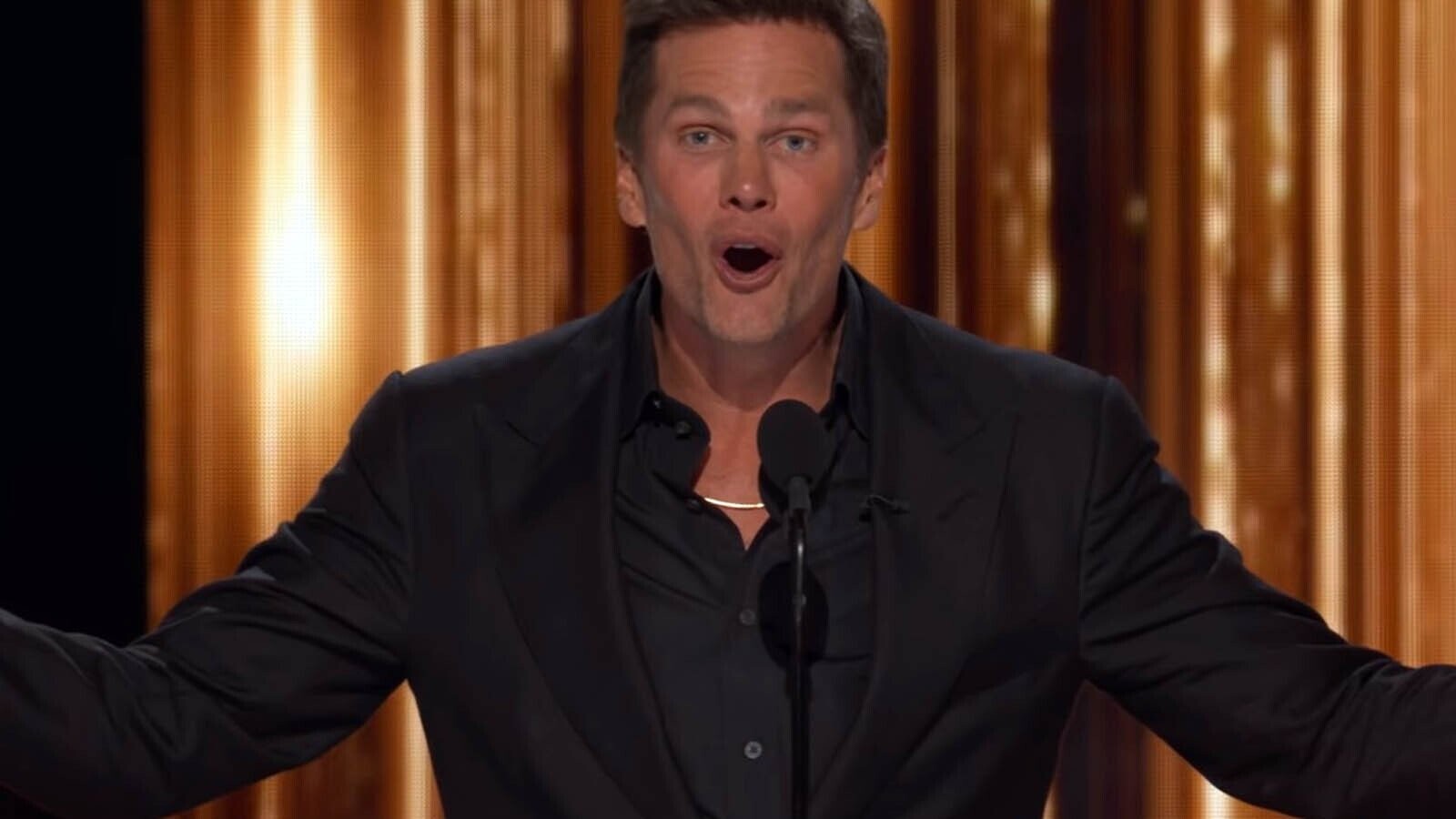

The Tom Brady roast should have been simple: put the most decorated quarterback in NFL history in a chair, invite comedians and former teammates to throw verbal footballs at his legacy, and watch America laugh while pretending it never bought a TB12 cookbook. But The Greatest Roast of All Time: Tom Brady became something bigger than a celebrity comedy special. It was a live-streaming experiment, a sports-culture earthquake, a career rocket for several comedians, and a public debate about how far roast comedy should go when real families are involved.
Released live on Netflix in May 2024 as part of Netflix Is a Joke Fest, the special mixed stand-up comedy, NFL nostalgia, celebrity spectacle, and old-fashioned insult humor into one chaotic arena show. Kevin Hart hosted. Jeff Ross brought the classic roast energy. Nikki Glaser delivered one of the most talked-about comedy performances of the year. Former teammates like Rob Gronkowski, Julian Edelman, Randy Moss, and Drew Bledsoe joined the pile-on. Bill Belichick, Peyton Manning, Kim Kardashian, Ben Affleck, and Will Ferrell as Ron Burgundy helped turn the event into a pop-culture circus with better lighting.
So why call the Tom Brady roast the most important comedy of 2024? Not because every joke worked. Not because every moment aged gracefully. And definitely not because a three-hour roast is the ideal runtime for people with jobs, families, or functioning attention spans. It matters because it showed where comedy, sports, celebrity, streaming, and public sensitivity all collided in 2024. The result was messy, funny, uncomfortable, commercially successful, and impossible to ignore.
Reason 1: It Made Live Comedy Feel Like Event Television Again
For years, stand-up comedy on streaming platforms has mostly lived in the “watch it whenever” lane. A special drops, fans watch it over the weekend, clips appear online, and then everyone moves on to arguing about something else. The Tom Brady roast changed that rhythm. It made comedy feel live, unpredictable, and communal again.
That matters because live entertainment is one of the few things streaming still struggles to replace cleanly. Sports, awards shows, reality finales, and breaking news all benefit from urgency. Comedy usually does not. A joke can be funny three months later, unless it is about a meme that died on Tuesday. But a roast is different. The awkward pauses, crowd reactions, surprise guests, and visible discomfort are part of the product. You are not just watching jokes; you are watching whether the room survives them.
Netflix Turned a Roast Into a Must-Watch Moment
The special was promoted as a live, unedited event, and that label carried weight. Viewers tuned in not only to hear jokes about Tom Brady’s Super Bowl rings, retirements, Deflategate, FTX, and hyper-competitive personality, but also to see what might happen in real time. Would Brady laugh? Would someone go too far? Would an NFL legend look like he wished he had stayed retired from public humiliation?
This live quality gave the roast a sports-like tension. In football, anything can happen between kickoff and the final whistle. In this roast, anything could happen between Kevin Hart’s opening monologue and Brady’s closing response. That unpredictability became the hook.
The performance also helped Netflix prove that comedy could be part of its live-programming future. After earlier live-event stumbles and experiments, the Brady roast showed that audiences would gather for a comedy event if the concept was big enough. The special quickly became one of Netflix’s biggest comedy conversations of the year and topped the platform’s English-language TV list during its first full tracking week. That is not just a win for Brady’s ego, which already has seven Super Bowl rings and probably its own parking spot. It is a win for live comedy as a format.
It Recreated the Old “Everyone Saw It” Feeling
In the pre-streaming era, certain TV events created a shared national conversation. The next day, people knew the same references. They quoted the same lines. They debated the same moments. Streaming fragmented that experience. The Tom Brady roast briefly stitched it back together.
Social media clips spread fast. Sports shows discussed it. Entertainment outlets analyzed the best and worst sets. Comedy fans debated whether Nikki Glaser stole the show. Football fans argued whether Bill Belichick’s appearance softened his famously chilly public image. Celebrity watchers focused on Kim Kardashian’s reception. Parents and critics questioned the jokes about Brady’s personal life. The result was a rare comedy special that did not just sit in a content library. It became news.
That is why the roast matters: it reminded the entertainment industry that comedy can still create a live, shared, appointment-viewing moment. In 2024, that was no small achievement.
Reason 2: It Merged Sports, Celebrity, and Stand-Up Better Than Anything Else in 2024
The Tom Brady roast worked because Brady is not just an athlete. He is a brand, a myth, a meme, a wellness salesman, a tabloid figure, and the human embodiment of “just one more season.” His career gave comedians decades of material: the Patriots dynasty, the Tampa Bay victory lap, the retirements, the un-retirement, the intense diet, the public divorce, the scandals, the business ventures, and the fact that he looks like he was designed by a luxury watch company.
That made him a perfect roast target. He is admired enough that the jokes felt meaningful, famous enough that casual viewers understood the references, and polished enough that seeing him mocked felt like watching a marble statue get hit with a dodgeball.
The Guest List Made the Special Bigger Than Stand-Up
The lineup was unusually strong because it combined professional comedians with people from Brady’s actual life. Jeff Ross represented classic roast tradition. Nikki Glaser, Tony Hinchcliffe, Andrew Schulz, Sam Jay, Tom Segura, and Bert Kreischer brought modern stand-up energy. Kevin Hart gave the show mainstream star power. Then the football world added emotional context: Rob Gronkowski brought lovable chaos, Julian Edelman brought teammate credibility, Drew Bledsoe brought history, Randy Moss brought Hall of Fame presence, and Bill Belichick brought the surprise factor of a man who usually treats smiling like a salary-cap violation.
That mix made the roast more than a comedy lineup. It became a reunion, a trial, a locker-room confession, and a celebrity spectacle all at once. The jokes landed differently because many of the roasters had lived inside Brady’s story. A comedian making fun of Brady’s competitiveness is funny. A former teammate doing it feels like evidence.
Nikki Glaser’s Performance Became a Career-Defining Moment
No discussion of the Tom Brady roast is complete without Nikki Glaser. Her set was widely praised because it balanced precision, confidence, rhythm, and fearlessness. She did what great roast comedians do: she made the room gasp and laugh almost at the same time. That is a difficult trick. Anyone can be mean. Anyone can be loud. But great roast comedy requires aim.
Glaser’s performance became one of the clearest examples of why the roast format still has value. In a crowded lineup of athletes, actors, influencers, and famous faces, the professional comic stood out by doing the job better than almost everyone else. Her performance also reminded viewers that roasts are not just celebrity karaoke. They are a specialized comedy form that rewards writing, timing, and emotional control.
For comedy fans, the roast was important because it put stand-up craft in front of a massive mainstream audience. Many viewers may have arrived for Tom Brady. Plenty left talking about Nikki Glaser. That kind of career-shifting exposure is rare, especially in an entertainment world where algorithms often bury great comics beneath cooking videos, celebrity gossip, and people ranking fast-food fries with the seriousness of Supreme Court opinions.
It Revived the Celebrity Roast for a New Streaming Era
Celebrity roasts have existed for decades, from the old Friars Club tradition to Comedy Central’s best-known specials. But by 2024, the format felt risky. Audiences had changed. Celebrities had become more image-conscious. Social media made every joke instantly portable, searchable, and punishable. What once happened in a room could now become a global argument before the host finished saying goodnight.
The Brady roast proved the format still has power when the target is big enough and the platform knows how to package the event. It also suggested that the future of the roast may be less about random celebrity humiliation and more about cultural collision. Sports fans, comedy fans, NFL media, entertainment reporters, and gossip audiences all had a reason to watch. That crossover made the event feel larger than a standard special.
Reason 3: It Forced a Serious Debate About Comedy’s Boundaries
The most important comedy of a year is not always the cleanest, safest, or most universally loved. Sometimes it is the one that forces people to argue honestly about what comedy is supposed to do. The Tom Brady roast did exactly that.
Roasts are built on exaggeration, insult, and discomfort. The target agrees to be publicly mocked. The audience agrees to laugh at things that would be rude at brunch, unless your brunch group is extremely dramatic. But the Brady roast raised a harder question: what happens when the jokes reach people who did not agree to sit in the chair?
The Family Backlash Became Part of the Story
After the special, Brady publicly reflected on how some jokes affected his children. Reports also described discomfort from Gisele Bündchen’s side, especially because the roast included jokes about the couple’s divorce and personal life. This reaction changed the meaning of the event. The roast was no longer only about whether the jokes were funny. It became a case study in the emotional cost of public comedy.
That does not mean roast comedy should disappear. It does mean the Brady roast revealed the difference between a willing target and nearby people caught in the blast radius. Tom Brady signed up for the chair. His family did not. In 2024, when audiences are more aware of mental health, privacy, children’s media exposure, and celebrity culture’s excesses, that distinction mattered.
The debate was not simple. Some viewers argued that roasts are supposed to be ruthless and that Brady, a media-savvy superstar, knew what he was entering. Others felt the jokes about his family crossed a line. Both reactions explain why the special was important. It forced comedy fans to think beyond the easy question of “Was it funny?” and wrestle with “Funny for whom, and at whose expense?”
The Kim Kardashian Moment Showed the Power of Live Audience Reaction
Another major conversation centered on Kim Kardashian’s appearance and the crowd response she received during the live event. The moment became a reminder that live comedy is not fully controlled by producers, publicists, or celebrity brands. The audience becomes part of the show, sometimes politely and sometimes like a stadium full of people who just discovered their nachos cost twenty dollars.
That audience reaction mattered because it underlined the difference between live experience and polished streaming product. In live comedy, discomfort is data. A laugh, a groan, a pause, or a boo can change how viewers interpret the performer and the room. The roast’s later edited version also sparked discussion about what “live and unedited” should mean once the replay becomes the version most people watch.
Brady’s Own Reaction Made the Roast More Human
One of the most revealing moments came when Brady appeared to object to a joke about Patriots owner Robert Kraft. The brief tension showed that even in a roast, not every subject feels equal to the person in the chair. Brady could laugh through jokes about his career, image, and mistakes, but certain references clearly hit differently.
That moment made the roast more interesting because it punctured the fantasy that a celebrity target is emotionally bulletproof. Brady spent two decades surviving pass rushers, Super Bowl pressure, and Boston sports radio, but comedy pressure is different. A roast tests not the body, but the public self.
This is where the special became more than entertainment. It became a live negotiation over ego, loyalty, privacy, and performance. Everyone watching could see the rules being tested in real time.
Why the Tom Brady Roast Beat Other 2024 Comedy Moments
Plenty of comedy mattered in 2024. Stand-up specials continued to drive conversation. Late-night shows adapted to a fragmented media environment. Social platforms produced viral comedians by the hour. But the Tom Brady roast stood apart because it brought scale, risk, and cultural reach into one package.
Most comedy specials are judged by laughs. This one was judged by laughs, ratings, celebrity fallout, sports nostalgia, streaming strategy, media criticism, and whether Tom Brady’s jawline could withstand three hours of emotional blitzing. That is a bigger footprint than a normal special.
It also arrived at a time when comedy was still arguing with itself. Should comedians push harder against sensitivity? Should platforms be more careful? Are audiences too easily offended, or are old formats finally being held accountable? The Brady roast did not solve those questions. It staged them in front of millions.
Experiences and Takeaways From Watching the Tom Brady Roast
Watching the Tom Brady roast felt less like streaming a comedy special and more like attending a loud, expensive, emotionally unstable Super Bowl after-party. That is part of why it worked. The experience had layers. First, there was the simple pleasure of seeing a famously controlled athlete lose control of the room. Brady built his career on preparation, discipline, and precision. A roast is the opposite environment. It is a place where preparation exists only so chaos can look organized.
For longtime NFL fans, the special created a strange nostalgia. Seeing Brady, Belichick, Gronkowski, Edelman, Moss, Manning, and Bledsoe orbit the same stage brought back years of football history. The Patriots dynasty was no longer a cold machine of winning; it became a group of aging legends telling jokes about old wounds. Even when the jokes were uneven, the reunion energy carried weight. Fans who watched Brady defeat their teams for years finally got to see him take hits without a referee helping him up.
For comedy fans, the experience was a reminder that format matters. A normal stand-up special gives one performer full control. A roast is a relay race with knives. Every speaker has to build on the room’s energy, sharpen the target, and avoid looking weak compared with the person before them. That is why Nikki Glaser’s set stood out so strongly. She understood the assignment better than almost anyone. Her performance had structure, speed, and confidence. It felt dangerous without feeling random.
For casual viewers, the roast offered something rarer: permission to laugh at celebrity mythology. Modern fame is often heavily managed. Stars appear through brand campaigns, carefully edited interviews, sponsored posts, and documentaries that somehow always make the subject look misunderstood, heroic, or both. A roast cuts through that polish. It says, “Yes, this person is famous, rich, and successful. Now let us make fun of the weird parts.” That release can be healthy when everyone understands the rules.
But the experience also came with discomfort. Some jokes felt less like playful attacks on Brady and more like collateral damage aimed at people around him. That tension is why the special stayed in conversation. Viewers were not only asking which joke was funniest. They were asking whether the format still fits today’s culture. The answer may be yes, but with sharper awareness. Roast comedy can survive, but it cannot pretend the audience has not changed.
The biggest takeaway is that the Tom Brady roast succeeded because it was imperfect. If it had been smooth, safe, and universally approved, it would have vanished faster. Instead, it became a messy cultural event: funny enough to quote, uncomfortable enough to debate, and big enough to matter. That is what important comedy often does. It makes people laugh, then makes them argue about why they laughed.
Conclusion: The Roast Was 2024’s Comedy Collision Point
The Tom Brady roast was not the most important comedy of 2024 because it was flawless. It was important because it captured the year’s biggest entertainment tensions in one live event. Streaming platforms wanted appointment viewing. Comedy wanted mainstream attention. Sports wanted offseason spectacle. Celebrities wanted relevance without losing control. Audiences wanted jokes, drama, and something to discuss the next morning.
The special delivered all of that. It proved live comedy can still command attention. It revived the celebrity roast for the streaming age. It turned comedians into breakout stars, especially Nikki Glaser. It gave NFL fans a bizarre, hilarious reunion. And it forced a necessary debate about the boundaries of public humor.
In the end, the Tom Brady roast mattered because it played like a football game disguised as comedy: high stakes, big hits, questionable calls, famous people under pressure, and everyone arguing about it afterward. For a man who spent his career chasing rings, Brady accidentally gave comedy one of its biggest wins of 2024.
Note: This article is based on publicly reported information from reputable entertainment, sports, streaming, and news coverage of the 2024 Netflix roast. It is rewritten in original language for web publication and does not include source-link markup.