
Note: The stories below are drawn from long-running White House folklore, historical accounts, presidential anecdotes, and reported sightings. Treat the ghostly parts as legend with a wink, not as evidence that Abraham Lincoln is currently reviewing policy memos after midnight.
Introduction: America’s Most Famous House Has a Spooky Side
The White House is not just the official residence of the president of the United States. It is also a museum, a workplace, a ceremonial stage, a family home, and, according to more than two centuries of ghost stories, possibly the most heavily guarded haunted house in America.
At 1600 Pennsylvania Avenue, history has never been quiet. The building has survived war, fire, reconstruction, political drama, state dinners, family grief, late-night decisions, and enough whispered legends to make even the Secret Service glance over a shoulder. With 132 rooms, 35 bathrooms, six levels, 28 fireplaces, and countless shadowy corridors, the White House offers plenty of corners where the past can feel unusually present.
Of course, not every creak is a ghost. Old houses groan. Pipes bang. Wind moves through vents. A tired staffer working late might hear a sound and briefly imagine Andrew Jackson stomping around in boots, which, frankly, sounds like something Andrew Jackson would do. But what makes White House hauntings so fascinating is not just the supernatural possibility. It is the history attached to each room.
From Abraham Lincoln’s famously reported appearances in the Lincoln Bedroom and Yellow Oval Room to Abigail Adams supposedly returning to the East Room with phantom laundry duties, the haunted areas of the White House reveal how Americans remember presidents, first ladies, children, servants, grief, war, and unfinished business. These stories are spooky, yes, but they are also miniature history lessons wearing a bedsheet.
Top 10 Haunted Areas of the White House
1. The Lincoln Bedroom: The White House’s Most Famous Haunted Room
No list of haunted White House areas can begin anywhere else. The Lincoln Bedroom is the superstar of presidential ghost lore. Ironically, Abraham Lincoln did not use it as a bedroom during his presidency. In Lincoln’s time, the room served as his office and Cabinet Room, where he worked through the Civil War and signed major documents, including the Emancipation Proclamation.
That heavy historical weight may explain why the room became the center of so many ghost stories. Over the years, guests, staff members, and famous visitors have claimed to sense or see Lincoln’s presence. Queen Wilhelmina of the Netherlands reportedly encountered Lincoln’s apparition after hearing a knock at the door. Winston Churchill is often linked to another colorful version of the legend, involving a late-night bath, a cigar, and a very awkward meeting with the ghost of the 16th president. History has many solemn moments; this one apparently needed a bathrobe.
The Lincoln Bedroom remains one of the most discussed haunted rooms in the White House because it combines real national trauma with a deeply recognizable figure. Lincoln’s assassination, the Civil War, and the death of his son Willie all contribute to the feeling that this room is less a bedroom than a shrine to unfinished grief.
2. The Yellow Oval Room: Where Lincoln Looks Toward the Potomac
The Yellow Oval Room, located on the second floor of the Executive Residence, is another major setting in Lincoln ghost stories. First Lady Grace Coolidge reportedly said she saw Lincoln standing near a window, gazing outward. That image has become one of the most poetic pieces of White House folklore: Lincoln, tall and silent, staring toward the Potomac River as if still carrying the burdens of the nation.
The room itself has a long official history. It has been used as a library, sitting room, and reception space. During Lincoln’s presidency, the room’s association with his daily life and work helped create an emotional link between the place and the man. In ghost lore, that link matters. Spirits, legends say, do not haunt random broom closets. They return to meaningful rooms, and the Yellow Oval Room has meaning in abundance.
Several stories also connect this room with mysterious voices and unsettling sensations. Whether those accounts come from imagination, memory, or something stranger, the Yellow Oval Room remains one of the most atmospheric places in White House haunting tradition.
3. The East Room: Abigail Adams and the Eternal Laundry Day
The East Room is one of the grandest public rooms in the White House, used for ceremonies, receptions, press events, and historic occasions. But before it became polished and formal, it had a much more practical purpose. When John and Abigail Adams moved into the unfinished President’s House in 1800, the building was cold, damp, and incomplete. Abigail Adams used the East Room to hang laundry because it was one of the few large secure indoor spaces available.
That domestic detail became the foundation for one of the most charming ghost stories in White House lore. Abigail Adams is said to appear near the East Room, sometimes carrying or hanging laundry. Witnesses have described the faint scent of soap or damp linen, which is delightfully specific for a haunting. Some ghosts rattle chains. Abigail apparently checks the wash.
This story works because it humanizes the White House. Before it became a global symbol of power, it was a drafty home where a first lady had to solve everyday problems. The East Room ghost reminds readers that history is not only made in speeches and treaties. Sometimes it is made with wet sheets, cold hands, and a very practical woman refusing to let the laundry pile win.
4. The Rose Room or Queen’s Bedroom: Andrew Jackson’s Noisy Return
Andrew Jackson is one of the loudest personalities in White House ghost lore, which surprises absolutely no one who has read about Andrew Jackson. His spirit is often linked to the room historically associated with his sleeping quarters, commonly identified in haunting stories as the Rose Room or Queen’s Bedroom area.
Reports claim that Jackson’s ghost has been heard laughing, stomping, swearing, or generally behaving like a man who has not accepted the concept of indoor voices. First Lady Mary Todd Lincoln reportedly believed she heard Jackson’s presence in the White House. Other stories describe staff members sensing that someone unseen was nearby.
Unlike the sad, stately Lincoln stories, Jackson’s hauntings feel rowdier. He is not usually imagined as a silent figure in a frock coat. He is the ghostly equivalent of a slammed door. That makes this area one of the most entertaining haunted spots in the White House, especially for readers who enjoy their ghosts with a little attitude.
5. The Rose Garden: Dolley Madison Protects Her Flowers
The Rose Garden is one of the most photographed outdoor areas of the White House, famous for announcements, ceremonies, and carefully staged political moments. But in ghost folklore, it also has a guardian: Dolley Madison.
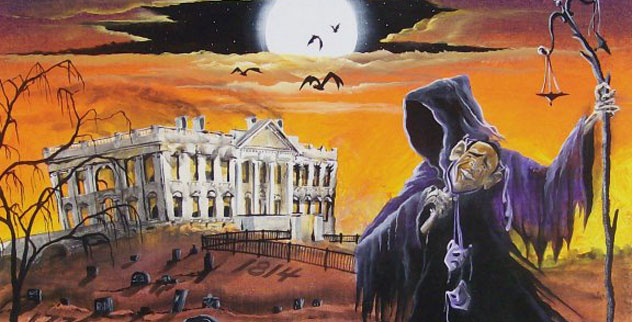
Dolley Madison, one of the most admired first ladies in American history, is strongly associated with White House social life and resilience. During the War of 1812, she famously helped save important national treasures before British troops burned the White House. Later legends claim that when someone considered changing or removing parts of the garden, Dolley’s spirit made her displeasure known.
The Rose Garden haunting is less terrifying than protective. This is not a jump-scare story. It is more like being sternly supervised by a first lady who knows exactly where every flower should be planted. Among haunted White House areas, the Rose Garden stands out because it blends beauty, memory, and a touch of botanical authority. If Dolley Madison’s ghost really does patrol the grounds, one suspects she has very firm opinions about pruning.
6. The Red Room: Mary Todd Lincoln’s Séance Setting
The Red Room is one of the State Floor’s most elegant spaces, but its haunted reputation comes from one of the saddest chapters in White House family history. In 1862, 11-year-old Willie Lincoln died in the White House, devastating Abraham and Mary Todd Lincoln. Like many grieving people during the Civil War era, Mary became interested in spiritualism, a movement that claimed communication with the dead was possible.
Stories and historical references connect Mary Todd Lincoln with séances in or around the Red Room. Whether one views those séances as spiritual practice, emotional survival, or theatrical deception, they add a deeply haunting layer to the room’s history. The Red Room’s ghostly energy is not about monsters. It is about grief, loss, and the desperate hope that love might cross the boundary between life and death.
For SEO readers searching for haunted White House rooms, the Red Room deserves attention because it shows how national tragedy and personal mourning often overlap in presidential history. Behind every official portrait is a family, and sometimes that family was hurting in rooms now visited by tourists.
7. The Second-Floor Family Quarters: Willie Lincoln’s Gentle Haunting
Willie Lincoln is one of the most poignant figures in White House ghost stories. He died in the Executive Mansion during his father’s presidency, likely from typhoid fever. Reports of Willie’s ghost appeared in later administrations, including stories from staff members who believed they saw or sensed the young boy.
Unlike more dramatic hauntings, Willie’s presence is usually described as gentle or melancholy. The idea of a child ghost in the White House is emotionally powerful because it strips away the grandeur of the presidency. The White House may host world leaders, but it has also held sickrooms, worried parents, and unbearable loss.
The second-floor family quarters are private, lived-in spaces, which makes their ghost stories feel especially intimate. These are not just rooms of policy and ceremony. They are bedrooms, hallways, sitting rooms, and family spaces where presidents’ children grew up, played, argued, recovered from illness, and sometimes died. Willie Lincoln’s story remains one of the saddest and most human threads in White House haunted history.
8. The North Portico and Entrance Areas: The Plea of Anna Surratt
Some White House ghost stories move beyond rooms and into thresholds: doors, entrances, and porticos. One legend concerns Anna Surratt, daughter of Mary Surratt, who was convicted and executed for involvement in the conspiracy surrounding Abraham Lincoln’s assassination. According to folklore, Anna desperately came to the White House seeking a pardon for her mother.
In ghost stories, Anna is sometimes imagined returning to the White House doors, pleading for mercy that never came in time. Whether taken as legend or symbolic memory, this story gives the entrance areas a haunted emotional charge. The White House door is not only where dignitaries arrive. It is also where desperate citizens have brought petitions, fears, and last hopes.
This haunting is especially chilling because it is not about a president returning to familiar rooms. It is about a person outside power trying to reach it. That makes the North Portico and entrance areas among the most symbolically haunted parts of the White House.
9. The Blue Room: Music, Memory, and Thomas Jefferson’s Violin
The Blue Room is one of the most beautiful and historically important rooms in the White House. Oval in shape and richly decorated, it has hosted receptions, ceremonies, and formal greetings. In haunted White House lore, it is sometimes associated with the sound of ghostly music, particularly stories involving Thomas Jefferson and his violin.
Jefferson was known for his love of music, and legends claim that faint violin sounds have been heard in the White House. The Blue Room’s elegant setting makes it easy to imagine a spectral performance drifting through the air after the guests have gone home and the chandeliers have dimmed.
As with many haunted White House stories, the power lies in atmosphere. A room designed for ceremony becomes, in the imagination, a chamber of echoes. Music is already ghostlike: invisible, emotional, and gone the moment it appears. Add presidential history, old architecture, and nighttime silence, and the Blue Room earns its place among the top haunted areas of the White House.
10. The Corridors and Upper Floors: Footsteps, Voices, and Unfinished Business
Not every White House haunting belongs neatly to one room. Many of the spookiest stories involve corridors, staircases, upper floors, and in-between spaces. Staff members and residents have described mysterious footsteps, unexplained knocks, distant voices, and sensations of being watched.
David Burns, the landowner who sold much of the property used to create Washington, D.C., appears in some White House ghost stories as a disembodied voice. William Henry Harrison, who died only a month after taking office, is also sometimes included in the mansion’s ghostly roll call. These stories often drift through hallways rather than settle in one famous room.
That makes sense. Corridors are transitional spaces. People pass through them during emergencies, celebrations, arguments, and sleepless nights. If a building can absorb emotion, the White House corridors have had more than enough material. The upper floors and passageways complete the haunted map of the mansion, reminding us that history does not always sit politely in labeled rooms.
Why White House Ghost Stories Still Fascinate America
White House ghost stories are popular because they make history feel close. Textbooks can turn presidents into marble statues, but ghost stories bring them back down to human size. Lincoln becomes a weary figure at a window. Abigail Adams becomes a practical woman doing laundry. Dolley Madison becomes a determined hostess defending her garden. Andrew Jackson becomes, well, Andrew Jackson with extra echo.
These legends also reveal how Americans process the past. The White House is not an ordinary haunted house with a creaky porch and a suspiciously underpriced real estate listing. It is the symbolic center of American executive power. When people imagine it haunted, they are really imagining that history itself refuses to leave.
That idea is oddly comforting. It suggests that events matter, that rooms remember, and that the people who shaped the country are not completely gone from the places where they lived, worked, suffered, and celebrated. Even skeptics can appreciate the storytelling value. You do not have to believe in ghosts to feel the emotional gravity of the Lincoln Bedroom or the East Room.
In SEO terms, the phrase “haunted White House” attracts readers because it combines mystery, politics, architecture, history, and famous names. In human terms, it works because we love places where the official story and the whispered story meet in the same hallway.
Experience Section: What It Feels Like to Explore the Haunted White House Through Stories
Most people will never wander through the White House alone at midnight, which is probably good for national security and blood pressure. But exploring the haunted areas of the White House through stories can still feel surprisingly vivid. Imagine reading about the Lincoln Bedroom late at night, then picturing the quiet weight of that room: the old furniture, the historical portraits, the knowledge that Lincoln once worked there during the most brutal conflict in American history. Even without a ghost, the room feels occupied by memory.
The East Room creates a different experience. During the day, it is grand, bright, and ceremonial. But when you learn that Abigail Adams once used it to dry laundry in an unfinished mansion, the room changes. Suddenly, the polished public space becomes domestic and human. You can almost hear fabric shifting in a draft. The ghost story adds humor, but it also adds texture. Abigail’s supposed haunting is not terrifying; it is relatable. Every household has chores. The White House simply upgraded laundry day into folklore.
The Rose Garden offers yet another kind of haunted experience. It is outdoors, elegant, and political, often seen in news footage. But the legend of Dolley Madison gives it personality. When you imagine her spirit defending the garden, the space becomes less like a backdrop and more like a living inheritance. It suggests that beauty at the White House is not accidental. It is guarded by tradition, memory, and perhaps one very determined first lady with excellent taste.
The Red Room is the most emotionally intense experience in the haunted White House map. Thinking about Mary Todd Lincoln’s grief after Willie’s death makes the room feel heavy. The séance stories are easy to sensationalize, but underneath them is a mother trying to survive unimaginable loss. Visitors and readers may come for the ghost story, but they stay with the human sorrow. That is what makes the White House’s haunted reputation deeper than a collection of spooky anecdotes.
The corridors may be the easiest spaces to imagine. Every old building has hallway sounds: footsteps that seem too late at night, doors that settle, floorboards that complain like retired politicians. In the White House, those ordinary noises become extraordinary because of where they happen. A knock is not just a knock. A voice is not just a voice. The building’s history turns every unexplained sound into a possible message from another century.
For readers, the best way to experience these haunted areas is to approach them with both curiosity and skepticism. Believe the history. Enjoy the legends. Smile at the absurdity of a ghostly president interrupting a prime minister’s bath. Then notice how each story points back to something real: war, grief, domestic life, political pressure, public duty, and private pain. That is the true haunting of the White House. It is not only that ghosts may walk there. It is that the past never fully checks out.
Conclusion: The White House Is Haunted by History First
The top haunted areas of the White House are more than spooky trivia. They are storytelling gateways into American history. The Lincoln Bedroom and Yellow Oval Room preserve the memory of a president who carried the Civil War on his shoulders. The East Room turns Abigail Adams’ laundry into a legend. The Rose Room keeps Andrew Jackson loud even in the afterlife. The Rose Garden lets Dolley Madison remain the nation’s most elegant garden supervisor. The Red Room and family quarters remind us that even presidents experience grief behind closed doors.
Whether you believe the White House is truly haunted or simply full of powerful memories, the stories endure because they give the building a soul. They make 1600 Pennsylvania Avenue feel less like a distant symbol and more like an old house where every room has heard something important. And if a mysterious knock ever comes from the Lincoln Bedroom, the safest response may be a respectful “Good evening, Mr. President” followed by a calm walk in the opposite direction.
SEO Tags