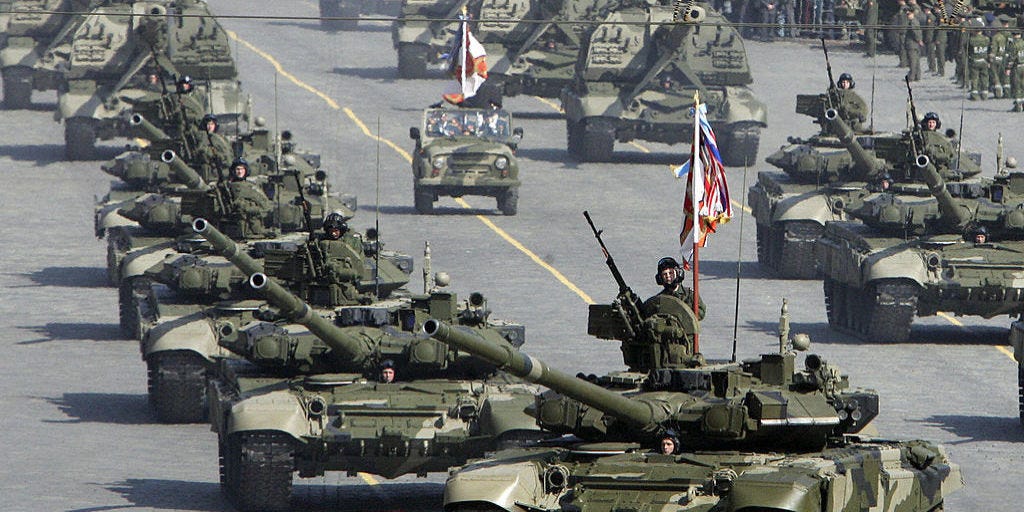

Editorial note: This article treats the headline as a serious but often misunderstood defense warning. The original claim centered on a specific Baltic-region scenario, not a magical movie-villain plan in which Russia defeats all of NATO before everyone finishes their morning coffee.
The phrase “Russia could defeat NATO in less than 3 days” sounds like the kind of headline that makes coffee taste stronger and doomscrolling feel like a civic duty. It is dramatic, alarming, andwithout contexteasy to misread. The core idea came from a 2016 defense debate about whether NATO could rapidly defend Estonia, Latvia, and Lithuania if Russia launched a conventional attack from nearby territory. The answer from RAND Corporation wargames was uncomfortable: under the posture examined at the time, Russian forces could reach the outskirts of Tallinn or Riga in as little as 36 to 60 hours.
That does not mean Russia could defeat the entire NATO alliance in three days. It means NATO’s most exposed northeastern members once faced a dangerous time-distance problem. Russia had heavy forces close to the region. NATO had lighter troops, slower reinforcement routes, political coordination hurdles, and limited armor already on the ground. In military terms, that is less “Russia wins World War III by Tuesday” and more “the first 72 hours could decide whether deterrence works or panic gets a front-row seat.”
What the “Less Than 3 Days” Claim Actually Meant
The 2016 warning focused on the Baltic states: Estonia, Latvia, and Lithuania. These countries are NATO members, but they sit in a tight geographic pocket bordering Russia or Belarus, with Russia’s heavily militarized Kaliningrad exclave nearby. They are small, strategically important, and difficult to reinforce quickly in a crisis.
RAND’s analysis concluded that NATO’s then-current posture could not successfully defend the territory of its most exposed allies in a fast-moving conventional attack. In the wargames, Russian forces reached Tallinn or Riga within 60 hours at most. That finding became a shorthand in media coverage: Russia could defeat NATO forces in the Baltics in less than three days.
The distinction matters. NATO is a nuclear-armed, 32-member defensive alliance with enormous combined military and economic power. A limited regional overrun is not the same as defeating NATO as a whole. However, if Russia seized a Baltic capital quickly, NATO would face a brutal choice: counterattack and risk escalation, accept a humiliating occupation, or negotiate under pressure. None of those options belongs on a list titled “Fun Weekend Plans.”
Why the Baltics Were So Vulnerable
The Baltic geography creates a military math problem. Estonia and Latvia are close to Russia’s Western Military District. Lithuania borders both Belarus and Kaliningrad. The narrow Suwałki Gapthe land corridor between Poland and Lithuaniais a crucial route connecting the Baltic states to the rest of NATO territory. If that corridor were threatened or blocked, reinforcing the region would become much harder.
In 2016, NATO’s local ground presence was light. Baltic national forces were committed and capable, but small. NATO reinforcements existed, but distance, logistics, border crossings, rail compatibility, road capacity, air defense, and political decision-making all affected how quickly those reinforcements could arrive. Russia, by contrast, could mass forces closer to the battlefield and move quickly across short distances.
This is why defense planners obsess over boring-sounding things such as prepositioned equipment, rail lines, command headquarters, fuel distribution, ammunition stockpiles, bridge capacity, and “military mobility.” None of that sounds glamorous. Nobody makes action figures of logistics officers. But in a crisis, logistics is the difference between a credible defense and a strongly worded press release with sad trombone energy.
Russia’s Advantage: Speed, Proximity, and Heavy Firepower
Russia’s advantage in the original scenario was not that its military was invincible. It was that Russian forces were closer, heavier, and potentially faster in the opening phase. Tanks, artillery, air defense, electronic warfare, missiles, and airborne forces could create a short, violent campaign designed to overwhelm local defenders before NATO’s larger strength arrived.
That strategy would rely on presenting NATO with a fait accompli: grab territory fast, dig in, threaten escalation, and dare the alliance to fight its way back. The political goal would be as important as the military goal. Moscow would not need to destroy NATO. It would need to fracture NATO’s decision-making, test Article 5, and convince some allies that reversing the attack was too dangerous.
That is why deterrence matters. The best way for NATO to win such a conflict is to prevent Russia from believing the attack could succeed in the first place. Deterrence is basically a locked door, a loud alarm, and a very large dog named “Collective Defense.” The goal is not to bark after the burglar leaves. The goal is to make the burglar choose a different hobby.
Article 5: NATO’s Biggest Strength and Biggest Test
NATO’s Article 5 says an armed attack against one member is considered an attack against all. This is the foundation of the alliance. It does not automatically mean every ally responds in exactly the same way or with identical forces, but it creates a collective obligation to assist the attacked member.
For Russia, the political question would be whether NATO unity could hold under stress. Would every ally agree on the severity of the attack? Would the United States respond quickly? Would European governments accept the risks of escalation? Would cyberattacks, disinformation, sabotage, or nuclear threats slow the alliance’s reaction?
These questions explain why a Baltic scenario is so dangerous. It is not just a tank battle. It is a test of political will, public resilience, command speed, logistics, air defense, cyber defense, and industrial capacity. Modern war is not a chessboard. It is more like trying to solve a Rubik’s Cube while someone throws drones at your Wi-Fi router.
How NATO Changed After the 2016 Warning
The 2016 RAND findings did not disappear into a filing cabinet labeled “Things We Hope Never Happen.” NATO responded by strengthening its eastern flank. The alliance deployed multinational battlegroups in Estonia, Latvia, Lithuania, and Poland, and after Russia’s full-scale invasion of Ukraine in 2022, it expanded that presence to Bulgaria, Hungary, Romania, and Slovakia.
NATO now has eight multinational battlegroups along its eastern flank. The alliance has also approved new regional defense plans, strengthened air policing, expanded exercises, increased prepositioned equipment, and improved command-and-control structures. Finland and Sweden joining NATO further changed the strategic map, especially around the Baltic Sea and the High North.
These changes do not make the problem disappear. The Baltic states remain geographically exposed. Russia still has missiles, air defense systems, electronic warfare tools, cyber capabilities, and the ability to create hybrid crises. But the alliance is no longer in the same posture it was in when the original 60-hour scenario was modeled.
What Russia’s War in Ukraine Revealed
Russia’s full-scale invasion of Ukraine in 2022 changed almost every assumption about European security. On one hand, Russia showed it was willing to launch a major war, absorb enormous losses, and keep fighting. That made NATO’s eastern members feel that old warnings were not theoretical. On the other hand, Russia’s military performance exposed serious weaknesses in planning, logistics, command, morale, precision targeting, and combined-arms operations.
Ukraine’s resistance proved that Russia is not a ten-foot-tall superpower stomping across Europe with unstoppable momentum. Russian forces have taken staggering casualties, lost huge amounts of equipment, and struggled to turn battlefield mass into decisive strategic success. The world learned that courage, drones, intelligence, air defense, artillery, training, and national will can make an invasion far more expensive than the invader expects.
Still, it would be dangerous to swing from panic to complacency. Russia has adapted. It has expanded drone production, leaned into electronic warfare, increased artillery output, deepened ties with Iran and North Korea, and reorganized parts of its military. A battered military can still be dangerous, especially if it learns from failure.
Could Russia Really Defeat NATO Today?
In a full-scale conventional war against the entire NATO alliance, Russia would face overwhelming disadvantages. NATO has far greater combined economic power, advanced air forces, stronger naval capabilities, superior technology, deeper logistics networks, and the military weight of the United States. Russia could not simply roll through NATO Europe like a parade float with missiles.
But the better question is not “Could Russia defeat NATO?” The better question is “Could Russia create a fast, limited crisis that NATO struggles to reverse?” That is where the Baltics, the Suwałki Gap, cyberattacks, sabotage, GPS jamming, undersea infrastructure threats, and disinformation campaigns enter the conversation.
Russia does not need to beat NATO everywhere to create a strategic disaster. It could try to exploit hesitation, ambiguity, or gaps in readiness. A small territorial grab, a manufactured crisis involving Russian-speaking minorities, a drone incident, or sabotage against infrastructure could force NATO into a high-pressure decision cycle. That is the gray-zone playbook: keep the attack just confusing enough that defenders argue over what to call it while the attacker changes facts on the ground.
The Role of Air Power, Missiles, and Drones
Any Russia-NATO conflict would not be decided by tanks alone. Air power, missiles, drones, cyber operations, and electronic warfare would shape the battlefield from the first minutes. NATO’s air forces are among its greatest advantages, but Russia has dense air defense networks, long-range fires, and experience using drones and missiles to pressure civilian and military targets.
The war in Ukraine has shown that drones are no longer a side dish. They are the whole buffet. Cheap unmanned systems can find targets, strike vehicles, jam communications, confuse air defenses, and force armies to move differently. NATO has watched this closely, but watching is not enough. The alliance needs mass production, counter-drone defenses, electronic warfare capacity, hardened infrastructure, and stockpiles large enough for a prolonged fight.
This is one of NATO’s biggest challenges. High-end Western weapons are powerful, but many are expensive and slow to produce. Russia’s approach often emphasizes quantity, attrition, and persistence. In a long conflict, the factory can become as important as the fighter jet.
Why Defense Spending Is Back in the Spotlight
For years, NATO allies argued about the 2 percent of GDP defense spending target. After Russia’s invasions of Ukraine in 2014 and 2022, the debate changed. Many European countries increased defense budgets, bought new equipment, expanded ammunition production, and revisited civil defense planning.
Money alone does not equal readiness. A country can spend more and still buy the wrong equipment, maintain too few deployable units, or lack spare parts and ammunition. Effective deterrence requires modern air defense, heavy maneuver forces, long-range fires, secure communications, military mobility, cyber resilience, trained reserves, and enough industrial capacity to replace losses.
In plain English: NATO needs not only more money, but more usable military power. A shiny procurement announcement is nice. A brigade that can actually move, shoot, communicate, refuel, reload, and survive is nicer.
Specific Examples of NATO’s New Posture
Several changes show how NATO is trying to solve the old 60-hour problem. First, multinational battlegroups now create a constant allied presence on the eastern flank. These forces are not large enough by themselves to defeat a full Russian offensive, but they serve as a tripwire and a first layer of defense. Their presence means any attack would immediately involve multiple NATO countries.
Second, NATO has approved regional defense plans. These plans are designed to assign forces to specific missions before a crisis erupts, rather than improvising after the shooting starts. In military planning, improvisation is useful when making dinner from leftovers. It is less charming when defending an alliance.
Third, NATO is improving command structures for the Baltic region. Assigning additional corps-level responsibility can help bring “mass at speed,” meaning larger formations could be organized and moved faster in wartime. Fourth, Finland and Sweden’s accession adds depth, geography, and military capability to NATO’s northern defense. The Baltic Sea is no longer the same strategic environment Russia faced before 2022.
The Biggest Weakness: Time
The original warning was ultimately about time. Could NATO decide fast enough? Could reinforcements arrive fast enough? Could air and missile defense protect key nodes fast enough? Could public communication prevent panic fast enough? Could leaders identify hybrid attacks fast enough?
Speed is still the heart of the problem. Russia’s best chance in a Baltic crisis would be to move quickly and make NATO’s response politically and militarily difficult. NATO’s best answer is to make that speed irrelevant by having enough forces, equipment, plans, and unity in place before the crisis begins.
Deterrence is not built during the emergency meeting. It is built years earlier, in budgets, exercises, rail upgrades, ammunition plants, reserve training, intelligence sharing, and political trust. That is the unglamorous truth of security. The exciting part of deterrence is that nothing happens. No invasion. No capital seized. No emergency summit where everyone looks like they aged 12 years overnight.
So, Is the Headline True or Misleading?
The headline is partly true but dangerously incomplete. It is true that U.S. and allied defense discussions once highlighted a scenario in which Russia could overrun NATO’s exposed Baltic forces in less than three days. It is misleading if readers interpret it as “Russia could defeat all of NATO in 72 hours.” That was not the real claim.
The more accurate version would be: “A 2016 RAND wargame found that, under NATO’s posture at the time, Russia could rapidly overrun the Baltic states before major allied reinforcements arrived.” That version is less clicky, but it has the advantage of being precise. Sadly, precision rarely gets invited to the viral headline party.
Today, the situation is different. NATO is larger, more alert, and more heavily focused on territorial defense. Russia is more battle-hardened but also heavily damaged by the war in Ukraine. The risk has not vanished. It has evolved.
What Readers Should Take Away
The lesson is not that NATO is doomed. The lesson is that alliances must prepare for the first days of a conflict, not just the final balance sheet of who has more ships, aircraft, or GDP. In a crisis, geography and speed can temporarily outweigh total strength.
The Baltic scenario remains important because it shows how deterrence can fail at the edges. Russia would not need to be stronger than NATO overall. It would need to find a seam, exploit ambiguity, and move before the alliance fully reacts. NATO’s job is to remove those seams, shorten reaction time, and make any attack look like a terrible investment from the Kremlin’s point of view.
That means forward presence, credible reinforcements, air defense, resilient societies, industrial capacity, and political unity. It also means honest public communication. Citizens should not be frightened by exaggerated headlines, but they should understand why defense planning matters.
Conclusion
“Russia could defeat NATO in less than 3 days” is a headline with a real warning inside it, but the warning needs careful handling. The original concern was about a rapid Russian attack against the Baltic states under older NATO force posture conditions. It was not a prophecy that Russia could conquer the whole alliance before the weekend.
The more useful takeaway is that NATO’s eastern flank once had a dangerous vulnerability, and Russia’s aggression in Ukraine proved that European security could not run on wishful thinking. Since then, NATO has expanded its forward presence, strengthened defense planning, added Finland and Sweden, and pushed allies to invest more seriously in deterrence.
Still, deterrence is never a “set it and forget it” appliance. Russia remains capable of conventional, cyber, hybrid, and nuclear coercion. NATO remains powerful, but power must be organized, supplied, exercised, and politically backed. The first 72 hours of a crisis could still matter enormously. The good news is that NATO knows this. The bad news is that knowing things and fixing them are two different hobbies.
Additional Experience-Based Analysis: What This Topic Teaches About Security, Preparedness, and Public Debate
One practical experience related to this topic is how quickly public understanding can get distorted when a technical defense assessment becomes a headline. A wargame is not a fortune cookie. It does not predict the future with mystical certainty. It tests assumptions. It asks, “If these conditions existed, what might happen?” When readers see “Russia could defeat NATO in 60 hours,” many naturally imagine a total alliance collapse. But defense professionals were really discussing force posture, readiness, geography, and reinforcement timelines in a narrow but extremely important region.
This is a valuable lesson for anyone reading national security news. Always ask: What exact scenario is being discussed? What year was the assessment made? What assumptions were used? Has the situation changed? In this case, the assumptions changed significantly after 2022. NATO added forces, updated plans, and expanded membership. Russia also changed, gaining combat experience while suffering severe losses. A headline from 2016 cannot be pasted onto 2026 without context, unless the goal is to make everyone anxious enough to chew through a phone charger.
Another experience this topic highlights is that deterrence depends on visible seriousness. Small countries on NATO’s eastern flank do not have the luxury of treating defense as an abstract policy debate. For Estonia, Latvia, Lithuania, Poland, Finland, and others, Russia is not a distant theory. It is a neighbor with a history of using force, pressure, cyberattacks, energy leverage, and information warfare. Their sense of urgency comes from geography and memory.
For larger allies farther west, the challenge is different. They must resist the temptation to see the eastern flank as someone else’s problem. In an alliance, distance does not cancel obligation. If a Baltic ally is attacked, the credibility of the entire alliance is on the line. That is why multinational battlegroups matter. They are not just military units; they are political signals wearing helmets.
This topic also teaches that modern defense is civilian as well as military. Roads, ports, railways, hospitals, power grids, satellite communications, undersea cables, airports, fuel depots, and digital networks all matter. A country can have excellent soldiers and still struggle if its infrastructure cannot support rapid reinforcement. Preparedness includes public resilience: knowing how to respond to disinformation, outages, cyber disruptions, and emergency alerts.
Finally, the “three days” debate shows why democracies need calm but honest conversations about defense. Fear-based messaging can backfire, but denial is worse. Citizens deserve the truth: NATO is strong, Russia is dangerous, the Baltics are exposed, and deterrence requires constant maintenance. That is not a reason to panic. It is a reason to plan.
The best outcome is not a dramatic NATO victory over Russia. The best outcome is no war at all. Successful deterrence is boring in the most beautiful way: trains move, exercises happen, stockpiles grow, commanders coordinate, politicians stay united, and an adversary decides the price of aggression is too high. In security policy, boring can be brilliant.
SEO Tags