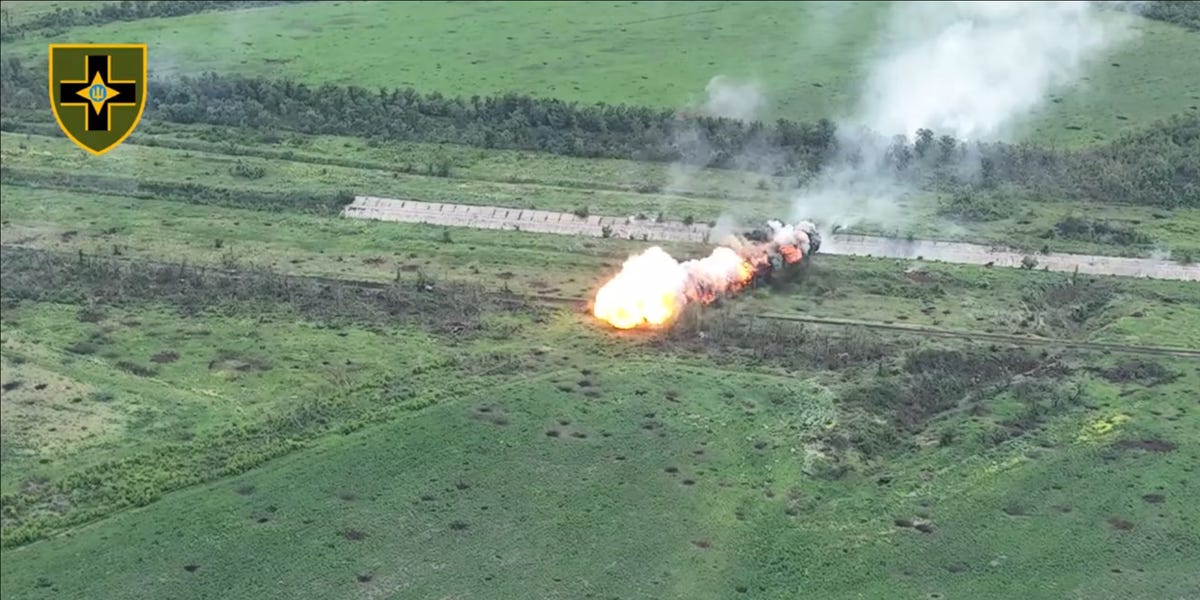

Every now and then, a battlefield video shows up that makes military analysts do the academic version of a spit take. Not because it is flashy, and not because it looks like an action movie with a bigger budget than common sense, but because it appears to show something rare in the war in Ukraine: a coordinated assault that actually unfolds in a disciplined, almost textbook rhythm.
That is why footage linked to Ukraine’s 28th Mechanized Brigade drew so much attention. The clip, widely discussed after reporting highlighted it in mid-2023, appeared to show a carefully timed push near the Bakhmut area, where Ukrainian forces were trying to pressure Russian defenses on the southern flank. In a war defined by drones, trenches, mines, artillery, and a thousand ways for a plan to go sideways, this assault stood out because the pieces seemed to fit together.
And yes, that is the key point. Not that war suddenly became neat, tidy, or cinematic. It did not. It almost never does. What made this operation notable was the way it seemed to combine engineering, suppressive fire, armored mobility, infantry discipline, and timing into one coherent action. On today’s drone-soaked battlefield, that is a bit like seeing a pianist perform on a staircase during an earthquake. Impressive, slightly unbelievable, and worth studying.
What the Video Appears to Show
According to reporting on the footage, the assault involved troops from the 28th Brigade moving against entrenched Russian positions along a tree line near a canal on the southern approach to Bakhmut. The operation appeared to begin with preparatory fires and a mine-clearing step designed to create a safer lane for the advance. That detail matters. Minefields have been one of the great equalizers of this war, turning open fields into giant “absolutely not” signs for armored vehicles.
After that, infantry fighting vehicles advanced while delivering suppressive fire. The armored vehicles did not recklessly charge straight into the trench line. Instead, they moved forward, supported the approach, and stopped short so infantry could dismount and continue the assault on foot. The soldiers then appeared to spread out, move with purpose, and close on the position while the vehicles reduced their exposure.
That sequence is why the footage kept getting described as “textbook.” Not because every military manual on earth would grade it with a gold star and a smiley face, but because it showed several core principles of modern assault warfare working in concert: clear an obstacle, suppress defenders, move armor with caution, dismount infantry at the right moment, and take the position without lingering in the most dangerous spot longer than necessary.
Why Analysts Call It a “Textbook” Assault
1. Obstacle Reduction Came First
One of the most important parts of any assault is getting through whatever the defender has prepared to stop you. In Ukraine, that usually means mines, trenches, hidden firing positions, and overlapping observation from drones and artillery. The reported use of line charges in this case suggests the attackers understood the first rule of breaching: if you do not solve the obstacle problem, the rest of your plan becomes an expensive traffic jam.
That alone makes the operation noteworthy. Mechanized attacks in Ukraine have often struggled because vehicles bunch up, lanes are too narrow, or engineers do not get enough time and protection to do their job. Here, the sequence looked deliberate rather than panicked. That is not glamorous, but in military terms it is the stuff that keeps an assault from becoming a cautionary tale in a future training slideshow.
2. Suppressive Fire Was Used the Right Way
The vehicles in the footage appeared to fire continuously as they advanced. The goal of that kind of fire is not theatrical noise. It is to force defenders to keep their heads down, lose situational awareness, and miss their moment to engage accurately. On a battlefield where one well-placed anti-armor hit can end the whole party, seconds matter.
That is why the timing looked so important. The suppressive fire did not happen in isolation; it supported movement. That may sound obvious, but a lot of battlefield mistakes come from treating these actions as separate events instead of one connected sequence. Fire without movement accomplishes little. Movement without fire is a volunteer program for trouble.
3. The Dismount Point Seemed Disciplined
Another reason the clip attracted attention is that the infantry fighting vehicles appeared to stop short of the trenches instead of trying to overrun them directly. That choice reduced the risk to the vehicles while still allowing the infantry to exploit the opening. In a heavily mined, drone-observed environment, restraint is not hesitation. It is survival dressed as professionalism.
The infantry then seemed to move in a dispersed way rather than crowding together. On a modern battlefield, bunching up is a terrible idea for the same reason standing under a leaky roof with a metal ladder is a terrible idea: you are practically asking for physics to get involved.
Why This Kind of Success Is Rare in Ukraine
What makes the 28th Brigade footage remarkable is not just what happened. It is what usually happens instead. The war in Ukraine has shown, again and again, how hard offensive action has become. Drones see more. Artillery responds faster. Minefields are dense. Electronic warfare interferes with coordination. Even a small assault can be spotted, mapped, and targeted before it reaches the objective.
That is why so much recent analysis from U.S. defense observers has focused on the shrinking window for mechanized movement. Armor is still important, but it is no longer enough by itself. A vehicle can protect soldiers from fragments and small-arms fire, carry them faster than boots alone, and add suppressive fire at critical moments. But it also attracts attention like a marching band in a library. Once spotted, it may face artillery, drones, anti-tank missiles, or mines.
In that sense, the battlefield around Bakhmut became a brutal laboratory. The region’s trenches, tree lines, canals, and shattered settlements created a terrain problem on top of the tactical problem. It was never simply about rushing forward. It was about creating a narrow, temporary window in which movement was possible at all.
That is also why one successful assault does not prove that offensive warfare has become easy again. Quite the opposite. It proves how much coordination is required just to make a relatively small attack work.
What This Says About the 28th Mechanized Brigade
The 28th Separate Mechanized Brigade, often identified by the honorific “Knights of the Winter Campaign,” has long been regarded as one of Ukraine’s more battle-tested units. Its reputation comes not from internet mythology but from repeated service in difficult sectors, including major fighting in southern and eastern Ukraine. That background matters because successful mechanized action usually depends less on shiny equipment than on hard-earned competence.
Training, trust, and repetition do not make dramatic headlines, but they are usually the invisible scaffolding behind any operation that looks smooth on video. A platoon that knows when to dismount, how to react when contact begins, how to keep spacing, and how to coordinate with engineers and gunners is not improvising from scratch. It is drawing on drills, leadership, and battlefield adaptation.
That is especially important in Ukraine, where many units have had to combine Soviet-designed platforms, Western-supplied systems, homegrown drone support, and rapidly evolving field tactics. The units that perform best are often the ones that adapt fastest. In that respect, the 28th Brigade’s assault looked less like a lucky break and more like a glimpse of battlefield learning under pressure.
The Bigger Lesson: Combined Arms Is Still Alive, Just Less Forgiving
The footage also reinforces a larger lesson from the war: combined arms warfare is not obsolete. It is just far less forgiving than many armies hoped. Drones have changed the tactical environment, but they have not replaced the need for infantry, armor, engineers, artillery, and communications to work together. If anything, they have made integration more important.
Think of it this way: drones can see, guide, harass, and strike, but they do not occupy trenches, hold tree lines, or physically secure ground by themselves. That still requires people and protected mobility. The challenge is that those people and vehicles must now operate under constant surveillance and rapid enemy response. The margin for error is thinner than ever.
So when observers describe this assault as “textbook,” they are not saying it looked old-fashioned. They are saying it showed timeless military principles adapted to a nasty, modern battlefield. Breach the obstacle. Suppress the defender. Move quickly but not blindly. Dismount intelligently. Limit exposure. Exploit the opening.
Simple on paper. Exceedingly hard in real life.
What Viewers Should Not Assume From One Dramatic Clip
There is one more thing worth saying, especially in the age of viral war footage. A compelling video clip is not the whole war. It is a slice of it. It can show skill and still leave out the preparation that made the action possible. It can show success and still hide the cost, the uncertainty, or the failed attempts that came before it. It can reveal a good tactic without proving that the same tactic will work tomorrow in a different field under different drone conditions.
That does not make the footage meaningless. It makes it valuable for the right reason. Not as proof that modern assault warfare is easy, but as evidence that disciplined coordination still matters, even when the battlefield seems designed to punish movement at every turn.
Conclusion
The reason the Ukraine 28th Mechanized Brigade assault drew attention is not hard to understand. In a war where offensive action often gets chewed up by mines, drones, artillery, and bad luck, the operation appeared to show a rare moment of battlefield coherence. Engineering support opened the way. Armored vehicles provided suppressive fire. Infantry dismounted at the right moment and finished the job. Nothing about it looked casual, and that is exactly the point.
For military observers, the clip was a vivid case study in how modern combined arms can still work when timing, discipline, and adaptation line up. For general readers, it was a reminder that battlefield success is usually less about swagger and more about sequencing. Not a heroic sprint. More like dangerous choreography under the worst possible stage lighting.
If there is a final lesson here, it is this: mechanized warfare in Ukraine is not dead, but it has become brutally conditional. The 28th Brigade’s assault mattered because it showed what success can look like inside those conditions. That is why people watched. That is why analysts kept talking about it. And that is why this one short clip has had such a long shelf life in discussions about the future of ground combat.
Additional Experiences Related to “Ukraine 28th Mechanized Brigade Pulls Off Textbook Assault: Watch”
To understand why this particular assault resonated, it helps to look at the broader experiences repeatedly described by soldiers, trainers, and analysts following the war. One recurring theme is that modern assaults are no longer judged only by bravery or firepower. They are judged by whether units can manage visibility, timing, and survivability in a battlefield where almost everything is observed. Soldiers have spoken about the constant presence of drones overhead, the fear of moving in open ground, and the need to camouflage not just vehicles but habits, routes, and radio use. In that environment, even a short advance across a field can feel like an exam with exploding consequences.
Another common experience is the growing importance of engineering and preparation. In older public imagination, the dramatic part of an assault starts when vehicles surge forward. In reality, veterans and military reporters often describe the “real” beginning much earlier: reconnaissance of the route, study of the terrain, mapping of likely enemy firing points, preparation for mine-clearing, coordination of fire support, and contingency planning in case one element gets delayed. The 28th Brigade footage stood out partly because viewers could see signs of that hidden labor. It reminded audiences that successful assaults are built before they are filmed.
Training is another part of the experience that keeps appearing in coverage of Ukrainian units. Soldiers have emphasized that battlefield survival depends on more than one specialty. Drivers may need to help with weapons. Infantry may need to understand drones. Gunners may need to shift roles under pressure. That kind of cross-training matters because units take losses, missions change, and the front rarely respects neat job descriptions. An assault that looks smooth on video may actually reflect months of compressed learning, battlefield improvisation, and repetition under stress.
Then there is the emotional experience of assault warfare, which often gets flattened in tactical discussion. Even when operations succeed, they unfold in an atmosphere of exhaustion, uncertainty, and sensory overload. Troops in trench-heavy sectors around Bakhmut and other eastern fronts have described mud, shattered tree lines, relentless noise, sleep deprivation, and the strange blend of boredom and sudden terror that defines life near the line. That reality matters because discipline under those conditions is not automatic. It has to be maintained. A coordinated assault is therefore not just a technical achievement. It is a human one.
Finally, the experience of watching these clips from afar can be misleading. Videos can make combat look clean, linear, and easy to decode. The lived experience is the opposite. Units may spend days preparing for seconds of movement. A successful push may happen only after multiple failed probes. A captured position may still be vulnerable to counterattack minutes later. So when people describe the 28th Brigade’s action as textbook, the most useful interpretation is not that war has become orderly. It is that, for one brief window, a Ukrainian unit managed to impose order on a battlefield that usually refuses to cooperate. That is rare. That is difficult. And that is why the footage still gets discussed.