Woman Finds Out And Posts Pictures Of How Cats Would React If You Suddenly Died At Home

Note: This article is written for entertainment and pet-safety awareness, based on real feline behavior research, animal welfare guidance, veterinary insights, and forensic observations. It is not veterinary, legal, or forensic advice.
The Darkly Funny Cat Question Nobody Wants to Ask
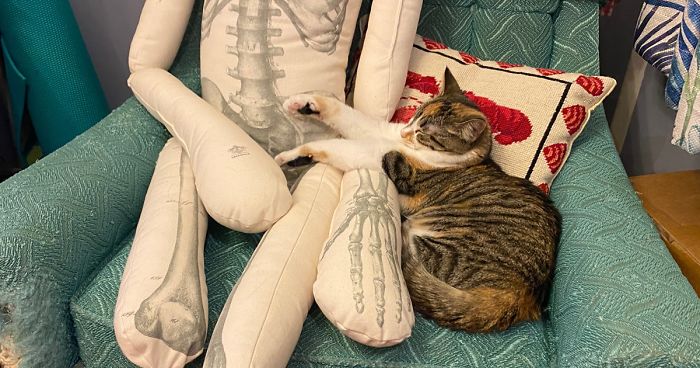
Every cat owner has wondered it at least once, usually while lying very still on the couch under a ten-pound loaf of judgment: “Does my cat love me… or am I mainly a warm furniture item that opens cans?” The viral story behind Woman Finds Out And Posts Pictures Of How Cats Would React If You Suddenly Died At Home takes that question and adds a Halloween-decoration twist. A woman shared photos of a cat calmly snuggling with a human-sized skeleton pillow, and the internet immediately understood the joke: if you suddenly died at home, your cat might not panic, call 911, or write a touching poem. Your cat might simply decide that your motionless body has become premium lounge real estate.
The star of the viral moment was a cat named Hazel, who appeared perfectly comfortable with a skeleton plush reportedly named Patella. The scene was absurd, cute, mildly spooky, and deeply cat-like. While a dog might bark, whine, and alert the neighborhood, Hazel gave the impression of a tiny landlord inspecting a newly available apartment. The internet laughed because the joke hit a familiar nerve: cats can be affectionate, loyal, and emotionally bonded, but they also have the facial expression of a Victorian widow who knows exactly where the insurance papers are hidden.
But behind the meme is a surprisingly interesting question: how would cats actually react if their owner suddenly died at home? The answer is less “evil mastermind” and more “confused, stressed, hungry, routine-obsessed creature with whiskers.” Cats are not cold little villains in fur pajamas. They are animals with attachment bonds, survival instincts, sharp noses, and a deep commitment to schedules. Especially breakfast schedules.
Why the Skeleton Photos Went Viral
The photos worked because they combined three things the internet loves: cats, spooky decor, and the uncomfortable suspicion that our pets are emotionally complicated roommates. The image of a cat relaxing beside a fake skeleton tells a whole comedy in one frame. There is no dramatic music, no tragic pause, no tiny paw pressed to a window. Just a cat saying, in body language, “This is fine. In fact, this is ergonomic.”
The joke also plays on the popular stereotype that cats are distant compared with dogs. Dogs are often portrayed as emotional golden retrievers even when they are chihuahuas named Kevin. Cats, meanwhile, are accused of being mysterious, aloof, judgmental, and possibly involved in tax fraud. Yet modern research has pushed back against the old “cats don’t care” myth. Studies on feline attachment show that many cats use their humans as a source of security, much like dogs and young children do. In other words, your cat may love you deeply and still look at you like you interrupted an important meeting.
That contrast is exactly why the meme is funny. A cat can adore its owner and still choose the coziest available surface. A cat can miss you and still sit on the mail. A cat can be emotionally attached and still knock your water glass off the nightstand while making eye contact like a tiny performance artist.
Do Cats Understand Death?
Cats probably do not understand death in the human, philosophical sense. They are not pacing the hallway thinking about mortality, estate planning, or whether the afterlife has heated floors. What they can understand is change. If a person who feeds them, plays with them, speaks to them, and maintains their daily rhythm suddenly stops moving, the cat notices that something is wrong.
Many cats react to loss with behavior changes. Veterinary behavior sources describe grieving or stress-related signs such as reduced appetite, altered sleep patterns, increased vocalization, hiding, clinginess, or searching behavior. Some cats become quieter. Some become needier. Some seem almost unchanged, which can look heartless but may simply reflect individual personality. Cats are experts at pretending nothing is happening until the exact moment they decide everything is happening.
The death of a human caregiver may create a double disruption: the person is gone, and the routine collapses. Meals may be late. The litter box may not be cleaned. The favorite lap is unavailable. The familiar voice is absent. To a cat, routine is not a small detail; it is the sacred constitution of the household. Break the routine and you may see stress, confusion, or withdrawal.
Would a Cat Try to Wake You Up?
Possibly. Some cats paw at, meow at, nudge, or climb on sleeping humans when they want food or attention. If an owner suddenly became unresponsive, a cat might initially behave as if the person were asleep. That could mean meowing, tapping a face, stepping on the chest, sitting nearby, or performing the classic “single paw to the cheek” maneuver that says, “Human, the sun is up and therefore so am I.”
But cats are not trained emergency responders. They do not have a dramatic rescue protocol tucked behind the scratching post. If their attempts get no response, some cats may become anxious; others may retreat; still others may stay close because the body is familiar, warm for a while, and smells like their person. The viral skeleton images exaggerate this into comedy, but the basic behaviorbeing calm around a human-shaped objectis not unrealistic for a cat that feels safe.
The Awkward Question: Would Cats Eat Their Deceased Owners?
This is the part everyone whispers about, then immediately regrets bringing up at dinner. The honest answer is: it can happen, but it is not the cartoonishly common betrayal people imagine. Forensic literature has documented cases of pets scavenging human remains indoors, especially when an owner dies alone and animals are trapped without food. This is not because the pet suddenly becomes a horror-movie villain. It is survival behavior under extreme conditions.
Cats are obligate carnivores, meaning their bodies are built around animal-based nutrition. If a cat is confined in a home with no access to food and no one arrives for days, survival instincts may override the social bond. The same general issue has been discussed with dogs as well. In death investigations, pet scavenging can complicate the scene because injuries after death may be mistaken for something suspicious. That is a forensic concern, not proof that pets are secretly plotting over your grocery list.
For everyday cat owners, the practical takeaway is not “fear the cat.” It is “make a plan.” A well-fed, cared-for cat with emergency contacts is not a problem. A pet left alone after an unexpected hospitalization, accident, or death is vulnerable. The danger is not feline betrayal; the danger is human lack of planning.
Cats Are More Attached Than Their Reputation Suggests
One reason the skeleton meme spread so widely is that it mocks the idea that cats are emotionally unavailable. Yet research on cat-human bonds shows a more tender truth. Many cats form secure attachments to their caregivers. When reunited with their person after a brief separation, securely attached cats may relax and return to exploring, using the human as a safe base. Insecurely attached cats may hide, cling, or show stress signals.
That explains why some cats seem independent without being indifferent. A confident cat may not need to perform affection like a Broadway musical. It may simply nap near you, follow you from room to room, blink slowly, or supervise your bathroom visits with the seriousness of airport security. These are not always dramatic signs, but they are signs.
Cats also recognize patterns in human voices and names. Many cat owners know the experience of calling a cat and receiving no response, followed by the same cat appearing instantly when a treat bag crinkles in another zip code. This does not mean cats are clueless. It means they are selective. A cat may know exactly what you said and still decide that the sofa cushion has seniority.
What a Cat Might Actually Do If You Suddenly Died at Home
1. Investigate the Situation
A cat may sniff, stare, paw, or circle. Cats rely heavily on scent, and a sudden change in breathing, movement, body temperature, and household energy would be noticeable. Your cat may not understand the event, but it would likely register that something is different.
2. Try Normal Communication
If the cat expects breakfast, playtime, medication, or an open door, it may meow, nudge, or climb on the person. To the cat, the first explanation might be simple: “The human is malfunctioning.” This is not very different from how cats treat closed doors, empty bowls, and printers.
3. Become Stressed or Withdrawn
Once the routine fails, the cat may hide or become restless. Stress in cats can appear as reduced appetite, overgrooming, litter box changes, unusual vocalization, aggression, or clinginess. Because cats often hide distress, silence does not always mean calm.
4. Stay Nearby
Some cats may remain close to the person because the scent is familiar. This can look eerie from the outside, especially in the context of skeleton memes, but proximity is often part of comfort-seeking behavior. Cats do not need a sentimental soundtrack to feel attached.
5. Search for Food
As time passes, hunger becomes a major factor. A cat may tear into food bags, knock items off counters, raid trash, or try to access cupboards. Any cat owner who has seen a determined feline open a cabinet knows they are not helpless. They are tiny locksmiths with whiskers.
Why Planning Matters More Than Panic
The viral photos are funny because the skeleton is fake. Real emergencies are not funny for pets. If a person lives alone with cats, the most loving thing they can do is create a pet emergency plan. Animal welfare organizations recommend keeping visible pet information, emergency contacts, feeding instructions, medical records, and caregiver details where responders or family members can find them quickly.
A practical pet plan can include a wallet card saying pets are at home, a window alert sticker, a trusted neighbor with a key, written feeding and medication instructions, carrier locations, microchip information, and the name of a veterinarian. It is also wise to choose both a short-term caregiver and a long-term guardian. The short-term person can step in during hospitalization or travel delays; the long-term person can care for the cat if the owner can no longer do so.
This may sound less entertaining than a skeleton pillow, but it is the part that actually protects cats. Your cat does not need to know your life insurance policy. Your cat needs someone who knows where the food is, how much thyroid medication goes in the morning dish, and why Mr. Pickles must never be placed in the blue carrier unless everyone is wearing long sleeves.
The Human Side of the Joke
Dark pet humor works because it lets people laugh at real fears without staring directly into them for too long. Living alone, aging, sudden illness, and emergency planning are uncomfortable topics. Add a cat cuddling a skeleton and suddenly people can talk about them. Humor opens the door, even if the cat immediately tries to close it again.
The “cat would sit on your corpse” joke is not really about cats being cruel. It is about how humans interpret feline independence. Cats are subtle. They may not perform grief in ways that look human. They may not howl beside the bed. They may not fetch help. But they can form bonds, miss companions, experience stress, and depend on their people for safety.
That is the secret sweetness under the spooky meme. Hazel lounging with Patella is funny because it looks heartless. But real cats are not heartless. They are practical, sensory-driven, routine-loving animals that express attachment through behavior we often misread. A cat sitting beside you may be saying, “You are my safe place.” It just happens to be saying it while also using your ribs as a mattress.
Experience-Based Reflections: What Cat Owners Recognize in This Story
Ask cat owners about this viral story and many will immediately say, “Yes, that is exactly my cat.” Not because they believe their cat is a furry villain, but because they have witnessed the strange emotional logic of feline companionship. Cats often show love in ways that are half tender, half ridiculous. A cat may ignore you all day, then panic because you closed the bathroom door. It may refuse the expensive bed you bought, then sleep inside the box it came in like a minimalist monk. It may act offended by affection, then curl against your ankle when you feel sad.
One common experience is the “fake death test,” where someone lies motionless to see what the cat will do. Results vary. Some cats sniff the face. Some meow. Some walk across the stomach with the full weight of a bowling ball. Some simply sit nearby, blinking slowly, as if waiting for the human to finish being dramatic. The funny part is that even the indifferent-looking reactions can be forms of investigation. Cats are not always expressive in the obvious ways people expect.
Another familiar experience is the cat’s devotion to routine. Many owners report that their cats know exactly when breakfast should happen, when the workday ends, and when the human is supposed to sit down and become furniture. If that routine breaks, the cat notices. A person sleeping late may wake to paw taps, loud meows, or a cat standing on their chest like a tiny emergency technician with no medical license. That behavior is funny until you realize it proves the cat is paying close attention.
Owners of senior cats or cats with medical needs often relate to the planning side of the story. A cat who needs medication, special food, or a calm environment cannot simply be “figured out later.” Many people have learned to keep written instructions for pet sitters after one disastrous weekend in which the sitter discovered that “she eats anything” actually meant “she eats only one brand, one flavor, served in the shallow bowl, at room temperature, while being complimented.” Cats are precise little bureaucrats.
The story also resonates with people who live alone. A cat can be a companion, alarm clock, comedy partner, and emotional support creature all at once. That bond deserves practical protection. Having a neighbor check in, leaving a pet alert card in a wallet, or telling family where the carrier is may feel overly seriousuntil it is needed. Responsible pet planning is simply love with paperwork.
In the end, the viral skeleton photos are more than a spooky joke. They remind us that cats are both hilarious and dependent, affectionate and independent, mysterious and predictable. If you suddenly stopped moving, your cat might not deliver a heroic speech. It might meow, sniff, sit nearby, search for dinner, or claim your hoodie. But behind all that strange behavior is a real bond. Your cat may not understand death, but it understands you as part of its world. And if that world changes, the cat needs humans who planned ahead.
Conclusion
Woman Finds Out And Posts Pictures Of How Cats Would React If You Suddenly Died At Home became viral because it turned a morbid question into a perfect cat joke. The image of a relaxed cat cuddling a skeleton feels absurd because it exaggerates what people already suspect: cats love us, but they love comfort too. Still, real feline behavior is more nuanced than the meme. Cats form attachments, recognize routines, respond to loss, and can become stressed when their human disappears.
The funniest answer is that your cat might sit on you. The truest answer is that your cat would be confused, disrupted, and eventually in need of help. So laugh at the skeleton pillow. Share the meme. Then make a pet emergency plan, choose a backup caregiver, and write down your cat’s needs. It may be the most unglamorous act of love possibleright after cleaning the litter box while your cat supervises like a tiny health inspector.