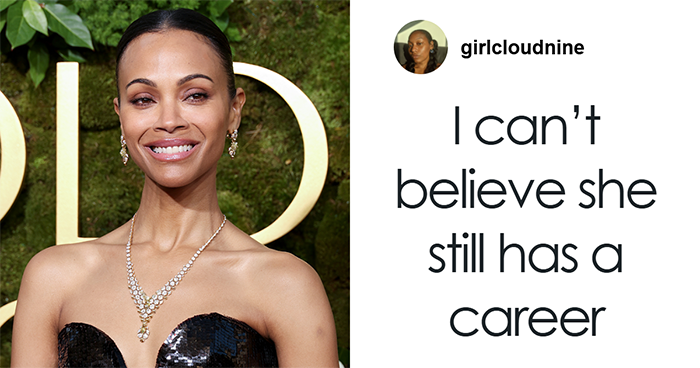

Zoe Saldaña has spent much of her career doing what very few actors ever manage: starring in massive box office worlds, leaping between blue aliens, green assassins, space crews, and prestige dramas without misplacing her Hollywood passport. But after her Oscar nomination and eventual awards-season triumph for Emilia Pérez, an older controversy returned to the spotlight with the subtlety of a marching band in a library.
The controversy centers on Saldaña’s portrayal of Nina Simone in the 2016 biopic Nina. Critics accused the production of using dark makeup, facial prosthetics, and other physical alterations to make Saldaña resemble Simone, a legendary Black singer, pianist, and civil rights activist. The backlash was not new. It began years before the film was released, intensified when promotional images and trailers appeared, and resurfaced again when Saldaña’s name entered the Oscar conversation.
For many viewers, the renewed anger was not simply about one casting choice. It reopened a larger debate about colorism, Hollywood’s long history of altering actors’ appearances, who gets to tell Black stories, and why certain mistakes seem to vanish until award season politely drags them back into the living room.
Why Zoe Saldaña’s Oscar Moment Reopened an Old Wound
Saldaña’s Oscar recognition came for her performance as Rita Mora Castro in Emilia Pérez, a musical crime drama that became one of the most talked-about films of its awards season. Her performance earned major industry attention, including recognition from the Academy, and she ultimately won Best Supporting Actress at the 97th Academy Awards.
Normally, that kind of achievement would inspire a clean victory lap: red carpets, emotional speeches, glossy interviews, and at least one headline about “career-defining work.” Instead, the celebration shared space with criticism. Social media users revisited her Nina role, asking whether Hollywood had truly reckoned with the controversy or simply placed it in a drawer labeled “awkward, please ignore.”
The timing mattered. Awards campaigns are memory machines. They do not just promote performances; they repackage careers. When an actor becomes a front-runner, audiences reexamine the highlight reel, and sometimes the blooper reel is still sitting right there, waving.
What Happened With the Nina Simone Biopic?
Nina was intended to tell part of the life story of Nina Simone, one of the most important artists of the twentieth century. Simone was not only a musician with a voice that could turn silence into a witness statement; she was also a political figure whose music was deeply tied to the Black freedom struggle. Songs such as “Mississippi Goddam” and “Four Women” made her art inseparable from questions of race, beauty, pain, and resistance.
That is why the casting of Saldaña was controversial from the beginning. Saldaña is Afro-Latina and has spoken about her own Black identity. However, critics argued that she did not physically resemble Simone and that the film’s decision to darken her skin and use facial prosthetics reflected a deeper failure. To many people, the issue was not whether Saldaña was “Black enough” as a person. The issue was why a darker-skinned Black actress with features closer to Simone’s could not have been cast in the first place.
The criticism became especially sharp after images showed Saldaña transformed for the role. Viewers objected to the dark makeup, prosthetic nose, and other changes. In a film meant to honor a woman who openly challenged Eurocentric beauty standards, the visual approach felt, to critics, painfully ironic. Imagine making a movie about a chef and then burning the recipe card on purpose. That was the emotional temperature of the response.
Why the Word “Blackface” Became Central to the Debate
The term “blackface” carries a heavy historical meaning in the United States. It refers to a racist performance tradition in which non-Black performers darkened their skin to mock, stereotype, and dehumanize Black people. Because of that history, accusations involving blackface are never casual. They touch a nerve shaped by centuries of entertainment, exploitation, and exclusion.
In Saldaña’s case, some defenders argued that the situation was not traditional blackface because she is a Black Latina actress portraying a Black historical figure. Critics, however, responded that the broader problem was still about artificial darkening, colorism, and the industry’s discomfort with casting darker-skinned women to portray darker-skinned icons.
That distinction is important. The backlash was not only about makeup. It was about a system. Hollywood has often celebrated Black stories while sidelining the Black people most connected to those stories. It has praised authenticity in speeches while making very unauthentic decisions in casting rooms. The Nina controversy became a case study in that contradiction.
How Nina Simone’s Estate and Fans Reacted
The backlash was not limited to random internet outrage. Nina Simone’s estate publicly criticized the project, and Simone’s daughter, Lisa Simone Kelly, also expressed concerns in interviews over the years. Fans argued that Simone’s legacy deserved a film that understood her politics, her artistry, and her physical presence.
This point matters because Nina Simone’s appearance was not separate from her public life. Simone often spoke and sang about Black womanhood in a world that punished dark skin and non-European features. Her face, voice, and defiant posture were part of her message. Changing another actor’s appearance to approximate those features felt, to many viewers, like missing the entire thesis of Nina Simone.
The film itself did not help matters. Nina was poorly received by many critics, who found it dramatically weak and historically unsatisfying. When a controversial casting choice appears in a strong, sensitive film, the debate may become complicated. When the movie is widely viewed as a misfire, the controversy becomes the main thing people remember. In this case, the scandal outlived the film by a comfortable margin.
Zoe Saldaña’s Initial Defense and Later Apology
At first, Saldaña defended her decision to play Simone. She suggested that Simone’s story needed to be told and that her own identity gave her a connection to the role. But years later, her position changed significantly.
In 2020, Saldaña apologized for taking the role and said she should not have played Nina Simone. She acknowledged that Simone deserved better and said another actor should have told that story. The apology was emotional and direct, and it was widely covered because it marked a clear reversal from her earlier defense.
For some people, that apology mattered. It showed growth, accountability, and an understanding that representation is not just about intention. For others, the apology did not erase the harm or the fact that the film existed. This is where celebrity accountability becomes messy. Public apologies can be sincere, but they do not come with a magic eraser. The internet, as everyone knows, keeps receipts in a folder, a backup folder, and possibly a cloud drive named “just in case.”
Why the Scandal Resurfaced After the Oscar Nomination
When Saldaña received Oscar attention for Emilia Pérez, online conversation expanded beyond her current performance. Critics resurfaced images and clips from Nina, arguing that the industry was celebrating an actress while failing to revisit unresolved questions from her past.
There is a predictable rhythm to this kind of resurfacing. First comes the nomination. Then come the congratulatory posts. Then someone says, “Wait, remember when…?” Suddenly, the discourse is fully awake, wearing slippers, holding coffee, and ready to work overtime.
In Saldaña’s case, the resurfaced criticism was intensified by the fact that Emilia Pérez was itself controversial. The film faced criticism over its portrayal of Mexico, its handling of trans identity, and separate backlash involving comments from co-star Karla Sofía Gascón. Saldaña addressed some of the Emilia Pérez backlash after her Oscar win, apologizing to Mexicans who felt hurt by the film while defending the project’s intentions.
That meant Saldaña’s awards season was surrounded by more than one conversation about representation. The Nina controversy was not an isolated blast from the past; it became part of a broader debate about prestige cinema, cultural responsibility, and whose pain gets turned into art for applause.
The Bigger Issue: Colorism in Hollywood Casting
One reason this controversy continues to sting is that it points to colorism, a form of discrimination that privileges lighter skin over darker skin within and outside communities of color. Hollywood has a long record of favoring lighter-skinned actors, especially women, even in stories where darker-skinned characters or real-life figures are central.
Nina Simone’s life makes that issue impossible to ignore. She experienced racism and colorism, and her work directly confronted both. Casting a lighter-skinned actress and then using makeup and prosthetics to darken and reshape her appearance seemed to critics like a perfect example of the very bias Simone challenged.
The industry often claims that casting is about talent, bankability, and availability. Those factors are real. But they can also become convenient umbrellas under which deeper patterns hide. When darker-skinned actresses are overlooked for roles specifically rooted in darker-skinned identity, audiences notice. And thanks to social media, they do not just notice quietly while eating popcorn. They post, quote, stitch, comment, and bring screenshots.
Was the Backlash Fair?
The fairest analysis is not the simplest one. Saldaña is not a random outsider to Black identity. She is an Afro-Latina woman who has spoken about race, heritage, and representation. Reducing the entire debate to “she is not Black” would be inaccurate and unfair.
At the same time, critics were not merely policing identity. Many were asking why the film required such heavy visual alteration in the first place. If the production needed to darken Saldaña’s skin and change her facial features to such a degree, that raised an obvious question: why not cast someone closer to Nina Simone’s appearance, history, and cultural symbolism?
That question remains valid even after Saldaña’s apology. Accountability does not require pretending people are monsters. It requires naming what happened clearly. In this case, the controversy involved a talented actor, a mishandled biopic, a revered cultural figure, and an industry that still struggles to understand the difference between representation and approximation.
How Awards Season Changes the Conversation
Awards season has a strange way of turning old controversies into current events. The Academy Awards are not just trophies; they are cultural spotlights. Once that spotlight turns on, everything in its beam becomes visible, including the dust.
Saldaña’s Oscar nomination and win brought her career to a new level of prestige. For supporters, it was overdue recognition for an actor who had carried major franchises and delivered a serious dramatic performance. For critics, it was also a reminder that Hollywood often moves forward without fully processing the damage behind earlier decisions.
The result was a divided conversation. Some praised her growth and argued that her 2020 apology should be acknowledged. Others said the apology did not erase the fact that darker-skinned actresses still face fewer opportunities. Both reactions can exist at once. Celebrity discourse often wants a clean verdict, but real cultural debates are messier than a junk drawer after tax season.
What This Says About Biopics
The Nina scandal also raises a larger question about biopics. How much should an actor resemble the person they portray? The answer depends on the role, the context, and the history involved.
No one expects every actor to be a photographic duplicate. Great acting often requires transformation. But transformation becomes complicated when it crosses into racialized appearance, especially when the subject’s physical identity is central to their life and work. Nina Simone’s dark skin and features were not random details. They were part of how the world treated her and part of how she fought back.
A responsible biopic should understand that. It should ask not only, “Can this actor perform the role?” but also, “What does this casting communicate?” In stories about race, gender, disability, sexuality, and cultural trauma, casting is not a neutral technical choice. It is part of the story before the first line of dialogue is spoken.
Public Memory Is Longer Than Hollywood Thinks
The resurfacing of the Saldaña controversy proves something entertainment studios keep learning the hard way: public memory is long, searchable, and slightly petty. A controversy that seems finished can return years later when a new achievement brings renewed attention.
That does not mean people can never grow. Saldaña’s apology should be part of the record. Growth matters. But growth does not mean the public must stop discussing the original issue, especially when the underlying industry pattern continues.
The better lesson is not “never forgive celebrities.” It is “stop treating representation problems as public relations problems.” When studios make better decisions at the beginning, actors are less likely to be left answering for them years later during what should be a career-defining celebration.
Experiences and Reflections Related to the Controversy
For many viewers, the Zoe Saldaña blackface scandal resurfacing after her Oscar nomination feels familiar because it mirrors a common experience in modern media culture: loving an artist’s work while feeling uncomfortable with part of their history. Audiences are not machines. They can admire Saldaña’s performance in Emilia Pérez, respect her blockbuster career, and still believe the Nina casting was wrong. That kind of mixed reaction is not hypocrisy. It is what happens when art, identity, and accountability all sit at the same dinner table and nobody knows who ordered the emotional appetizer.
One experience many people bring to this topic is the feeling of being misrepresented. For Black women, especially darker-skinned Black women, the Nina controversy was not an abstract Hollywood debate. It touched real frustrations about beauty standards, opportunity, and visibility. When a production chooses a lighter-skinned actress and then darkens her appearance, it can feel like the industry wants the image of dark skin without giving full opportunity to the people who live with that reality every day.
Another experience is the exhaustion of watching apologies arrive only after damage has already been done. Saldaña’s apology was meaningful to many people because it sounded reflective rather than robotic. Still, audiences often wonder why these lessons must come after the film, after the backlash, after the interviews, and after the cultural harm has already been packaged for sale. It is the entertainment version of fixing the smoke alarm after the kitchen has become a documentary about fire.
There is also an experience shared by fans who feel torn. Saldaña has been important to many viewers, particularly Latina and Afro-Latina audiences who rarely see themselves represented in major franchises. Her career includes roles in Avatar, Guardians of the Galaxy, and Star Trek, which means generations of fans have grown up seeing her as part of their movie universe. For those fans, the controversy can feel personal and complicated. Criticizing a public figure you admire is never as easy as throwing tomatoes from the balcony.
The topic also speaks to how fast social media can revive old conversations. A person may first learn about the Nina controversy through a viral post years after the movie came out. That post may include images, clips, quotes, and strong reactions, all compressed into a few seconds of scrolling. This can be useful because it keeps cultural memory alive. It can also flatten nuance if people do not look beyond the headline. The best approach is to hold both facts: the controversy was serious, and the full context matters.
For writers, critics, and everyday viewers, the lesson is to talk about representation with precision. It is possible to say that Saldaña is Afro-Latina while also saying the film’s visual transformation was harmful. It is possible to acknowledge her apology while still asking why Hollywood keeps repeating similar mistakes. It is possible to celebrate her Oscar achievement while refusing to pretend the Nina controversy never happened.
That is the real experience at the center of this story: learning to hold more than one truth at once. Zoe Saldaña’s Oscar moment was a milestone. The resurfaced blackface criticism was also a reminder. Hollywood loves a redemption arc, but audiences increasingly want something stronger than a good third act. They want better casting, better cultural awareness, and fewer “how did nobody in the meeting stop this?” moments. Honestly, that seems like a reasonable request. The bar is not on the moon. It is on the floor, wearing a tiny name tag that says “Please think first.”
Conclusion
Zoe Saldaña’s Oscar nomination and win placed her in the brightest spotlight of her career, but that same spotlight revived one of her most painful controversies. The backlash over her portrayal of Nina Simone in Nina remains powerful because it is not only about one actress or one film. It is about colorism, cultural memory, Hollywood casting, and the responsibility involved in telling stories about real people whose identities shaped their art.
Saldaña has apologized, and that apology deserves to be recognized. But the renewed anger shows that audiences are no longer willing to let prestige erase context. The conversation is uncomfortable, but it is also necessary. If Hollywood wants applause for telling important stories, it must be prepared to do the important work before the cameras roll.