
Long before GPS, carbon-fiber bows, trail cameras, and camouflage hoodies with more pockets than a magician’s coat, humans still had to answer one very basic question: “What’s for dinner?” The answer often depended on ingenuity, patience, teamwork, and occasionally a strategy so strange that it sounds like it was invented during a campfire dare.
Ancient hunting techniques were not primitive in the lazy sense of the word. Many were brilliantly adapted to local landscapes, animal behavior, weather, and available materials. Some relied on endurance. Some used birds as hunting partners. Some tricked fish into swimming into fences. Others involved throwing weighted cords at running animals, which is exactly as dramatic as it sounds.
Even more surprising, several of these traditional hunting methods are still in use today. Some survive as subsistence practices, some as cultural heritage, some as tightly regulated sport, and some as living demonstrations of how clever humans can be when the nearest sporting goods store is several thousand years away.
Before we begin, a respectful note: “bizarre” here means unusual to modern readers, not foolish or backward. These methods often reflect deep ecological knowledge and cultural identity. Also, many hunting practices are regulated by wildlife laws, treaty rights, conservation rules, and local customs. In other words, do not read this and decide your backyard needs a falcon, a fish weir, and a homemade mammoth trap by Tuesday.
Why Ancient Hunting Methods Still Matter
Traditional hunting methods reveal how people studied animals long before biology textbooks gave everything Latin names. Hunters learned migration routes, wind direction, breeding seasons, river currents, bird calls, hoofprints, and the tiny difference between “that bush is moving because of wind” and “that bush has dinner behind it.”
Today, these ancient practices also raise important questions about sustainability. A technique that worked for a small community may become harmful if scaled up commercially. A method used for cultural survival may be very different from one used for entertainment. That is why the modern story of ancient hunting is not just about cool tools. It is also about ethics, conservation, and respecting the people who kept this knowledge alive.
10 Bizarre Ancient Hunting Techniques Still In Use
1. Persistence Hunting: Winning by Refusing to Quit
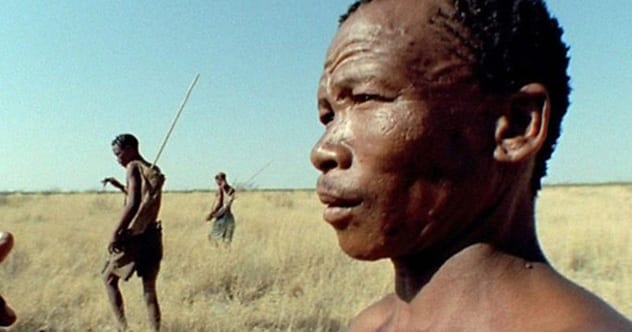
Persistence hunting may be the most human hunting technique ever invented because it weaponizes our greatest superpower: being weirdly stubborn. Instead of ambushing or shooting prey from a distance, persistence hunters track an animal for hours, sometimes in heat, forcing it to keep moving until it overheats or becomes exhausted.
This method is associated with some hunter-gatherer traditions in southern Africa and has also been studied as part of human evolutionary history. Humans are not the fastest mammals, but we are excellent endurance movers. We sweat efficiently, regulate heat well, and can follow tracks with remarkable patience. In short, a deer may sprint like a sports car, but humans are the minivan that never runs out of gas.
Today, persistence hunting is rare, but it has not vanished completely. In places where traditional tracking knowledge survives, it remains a powerful example of how hunting can depend more on observation and stamina than equipment.
2. Falconry: Hunting With a Feathered Fighter Jet
Falconry is the art of hunting wild quarry with trained birds of prey such as falcons, hawks, and eagles. It is ancient, elegant, difficult, and slightly humbling because the bird is clearly the athlete in the partnership. The human mostly provides transportation, snacks, and emotional support.
Falconry has been practiced for centuries across Central Asia, the Middle East, Europe, and beyond. In modern times, it is still active in countries around the world, including the United States, where falconers must follow strict licensing and wildlife regulations. The technique survives because it is not simply a hunting method; it is a relationship built on training, trust, timing, and the bird’s natural instincts.
One especially striking variation is eagle hunting among Kazakh communities in Mongolia, where hunters traditionally work with golden eagles from horseback. The image of a rider, a winter mountain landscape, and a massive eagle launching from a gloved arm is so cinematic that Hollywood would probably add slow motion and ruin it.
3. Cormorant Fishing: Letting Birds Do the Diving
Cormorant fishing is an ancient technique in which trained cormorants dive into rivers to catch fish. In Japan, the practice is known as ukai, and it has been associated with rivers such as the Nagara for more than a thousand years. It has also been practiced in parts of China.
The basic idea is both brilliant and odd: use a bird that is already an expert fisher, then work with it from a boat. Traditionally, fishers used lines or rings to manage the bird and retrieve the catch. In modern times, the practice often survives more as cultural performance and heritage tourism than as a primary food source.
Still, cormorant fishing is a reminder that humans did not just domesticate animals for meat, milk, or muscle. Sometimes we partnered with animals because they were better at a job than we were. A cormorant underwater is basically a sleek little submarine with feathers and attitude.
4. Atlatl Hunting: The Ancient Spear Launcher
The atlatl, or spear-thrower, is one of humanity’s great “why didn’t I think of that?” inventions. It works as a lever that extends the throwing arm, allowing a hunter to launch a dart or spear farther and with greater force than by hand alone.
Atlatls were used across many ancient cultures, including in the Americas, Australia, and parts of Europe. They helped hunters take fish, birds, and large game long before the bow became widespread in many regions. Archaeologists have found evidence of atlatl use in numerous prehistoric contexts, and ethnographic records show the tool surviving into more recent hunting traditions.
Today, atlatls are often used in target sport, experimental archaeology, heritage education, and, where legal, limited hunting or fishing contexts. The technique looks simple until you try it. Then the dart wobbles, the target remains emotionally untouched, and you gain sudden respect for prehistoric teenagers.
5. Blowgun Hunting: The Silent Tube of Doom
The blowgun is a long tube used to launch lightweight darts with breath pressure. It has appeared in different forms among Indigenous peoples in the Amazon, Southeast Asia, parts of North America, and elsewhere. In dense forests, where visibility is limited and silence matters, the blowgun made sense. It was quiet, lightweight, and suited for small animals such as birds and monkeys.
Some Amazonian hunting traditions used plant-based toxins on darts, though modern legal, ethical, and safety considerations vary widely. The key point is not the drama of poison, but the precision of forest knowledge. Hunters needed to know materials, dart balance, animal behavior, and how to move without snapping every twig like a marching band in hiking boots.
Blowguns still appear today in traditional communities, cultural demonstrations, and recreational target sports. As a hunting method, it remains highly localized and often tied to Indigenous knowledge systems.
6. Bolas and Boleadoras: Catching Legs With Flying Geometry
Bolas, or boleadoras, are throwing weapons made of weights connected by cords. When thrown correctly, they spin through the air and wrap around the legs of birds, guanacos, rheas, cattle, or other animals. If that sounds like lassoing with extra chaos, you are not wrong.
Bolas are strongly associated with Indigenous peoples of Patagonia and the Pampas, as well as later gaucho traditions in South America. They were useful in open landscapes where speed mattered and where hunters needed to stop fast-moving animals without necessarily killing them immediately.
Today, boleadoras survive in ranching heritage, folk demonstrations, and some rural traditions. Their continued use shows how a simple design can solve a complex problem: how to interrupt a running animal without needing wheels, engines, or a strongly worded email.
7. Throwing Sticks and Boomerangs: The Original Airborne Curveball
When many people hear “boomerang,” they picture a toy that returns, usually toward someone’s face at an alarming speed. But many traditional hunting boomerangs did not return. They were heavy, curved throwing sticks designed to strike birds, small mammals, or other targets.
Aboriginal Australian peoples developed many forms of boomerangs and throwing sticks for hunting, warfare, digging, fire-making, music, and ceremony. Similar throwing sticks, sometimes called rabbit sticks, were also used by Indigenous peoples in parts of North America.
Today, boomerangs and throwing sticks continue in cultural practice, sport, demonstrations, and in some hunting traditions where permitted. Their genius lies in their aerodynamics. A shaped piece of wood becomes a distance tool, a hunting weapon, and, in modern parks, a quick way to discover who has poor spatial awareness.
8. Fish Weirs and Basket Traps: Outsmarting the River
Fish weirs are barriers built in rivers, streams, or tidal areas to guide fish into traps or confined spaces. Basket traps work similarly, using funnel-like openings that let fish enter more easily than they can escape. The method is ancient, efficient, and beautifully low-tech.
Indigenous communities across North America used fish weirs, traps, nets, and spears to harvest salmon, whitefish, shad, herring, trout, and other species. In places such as Alaska and the Pacific Northwest, traditional and subsistence fishing knowledge remains culturally important. Similar fish-trapping principles exist around the world.
Unlike dramatic chase hunting, weirs are patient. They turn water movement and fish behavior into quiet labor. The river does most of the pushing. The trap does most of the waiting. The humans get to look clever, which is honestly half the point of engineering.
9. Harpoon Hunting From Boats and Kayaks
Harpoons are long spears or spear-like projectiles designed to secure fish or marine mammals with barbs, toggles, or attached lines. In Arctic and coastal cultures, harpoons were essential tools for hunting seals, whales, large fish, and other marine animals.
Traditional Inuit and other northern hunting systems often combined specialized boats, seal-skin floats, bone or ivory components, and deep knowledge of ice, wind, animal breathing holes, and migration. The hunter was not merely throwing a spear; he was reading an entire moving environment.
Harpoon use still exists in regulated subsistence whaling, sealing, and fishing contexts in some Indigenous communities. It is also seen in modern spearfishing forms, though equipment and rules differ greatly. The ancient principle remains: a projectile, a line, and the difficult job of not letting the ocean win.
10. Decoys, Calls, and Blinds: Lying to Ducks Professionally
One of the oldest tricks in hunting is pretending to be something else. Ancient hunters used decoys, animal skins, calls, blinds, and camouflage to lure or approach prey. Waterfowl decoys are especially fascinating because some of the oldest known examples from North America are more than 2,000 years old.
Native hunters in the Great Basin made duck decoys from tule reeds, feathers, and other materials to attract birds into range. Modern waterfowl hunters still use decoys, calls, blinds, and carefully planned concealment. The materials have changedplastic, paint, motion devices, and high-tech clothingbut the strategy is ancient: convince the ducks that everything is fine.
Of course, ducks are not fools. They notice wind, movement, sound, shine, and suspicious behavior. A hunter with a poor decoy spread may discover that ducks are judgmental little aircraft with feathers.
What These Techniques Reveal About Human Ingenuity
The strangest ancient hunting techniques often look bizarre because modern people separate technology from nature. We think of tools as gadgets. Ancient hunters thought of tools as extensions of weather, animal instinct, landscape, and community knowledge.
A fish weir is not just a fence; it is a conversation with current. A falcon is not a weapon; it is a partner with wings, hunger, and opinions. A duck decoy is not just a fake bird; it is applied psychology with feathers. Persistence hunting is not merely running; it is tracking, heat management, and mental discipline. The atlatl is not just a stick; it is physics wearing a prehistoric hat.
These methods also show that “advanced” does not always mean “complicated.” Sometimes the most effective tool is a carved branch, a braided cord, a basket, or a body trained to keep going. The sophistication lies in knowing when, where, and how to use it.
Modern Ethics: Ancient Does Not Always Mean Allowed
Many traditional hunting techniques are legal only under specific conditions. Some are protected as Indigenous subsistence rights. Some are allowed for licensed sport. Some are restricted or prohibited because they can harm wildlife populations, create animal welfare concerns, or threaten public safety.
That is why modern readers should admire these practices without copying them casually. Respect the law, respect local communities, and respect the animals involved. Ancient knowledge is not a free pass to improvise in a national park with a spear and a YouTube tutorial.
Experience Section: What It Feels Like to Study Ancient Hunting Today
Learning about ancient hunting techniques is a strange experience because it changes the way you look at ordinary landscapes. A river stops being “just water” and becomes a moving map of fish behavior. A marsh becomes a stage where wind, reeds, ducks, and human patience all play their parts. Even a simple stick on the ground starts to look suspiciously like technology waiting for a clever ancestor to pick it up.
The most powerful experience is realizing how much attention these methods required. Modern life rewards speed. Traditional hunting rewarded noticing. A tracker had to read bent grass, faint prints, broken twigs, bird alarm calls, cloud cover, smell, and silence. That kind of attention is almost uncomfortable at first. We are used to checking phones every few minutes. Ancient hunters had to check the entire world.
Watching demonstrations of tools like the atlatl or throwing stick can be humbling in the best way. On paper, the concept is simple: hold tool, throw projectile, hit target. In practice, the first attempts often look less like hunting and more like donating sticks to the landscape. Then, with guidance and repetition, the tool begins to make sense. You feel the leverage. You understand why a small design change matters. You discover that prehistoric engineering was not crude; your technique is crude.
Falconry creates a different impression. It is less about equipment and more about relationship. The bird is not a machine. It can choose, hesitate, ignore, return, hunt, or simply behave like a raptor with a better understanding of the sky than you will ever have. That makes falconry feel ancient in a deeply personal way. It depends on trust built over time, not instant control.
Fish weirs and decoys offer another lesson: sometimes the smartest hunter is the one who does less at the right moment. Instead of chasing fish, the weir waits. Instead of chasing ducks, the decoy invites. These strategies feel almost philosophical. They suggest that intelligence is not always force; sometimes it is arrangement.
The funniest part is how modern we are not. Give people a quiet forest, moving water, and a mystery track in the mud, and curiosity wakes up quickly. We may have apps, supermarkets, and climate-controlled kitchens, but the old questions still fascinate us: What passed here? Where is it going? How did people survive here before us?
That is the real value of studying bizarre ancient hunting techniques still in use. They are not merely odd facts for trivia night. They are living reminders that human survival was built on observation, cooperation, restraint, and creativity. They make the past feel less distant and the present feel a little less clever than it thinks it is.
Conclusion
The world’s ancient hunting techniques may seem bizarre at first glance, but most of them are brilliant responses to real environmental challenges. Persistence hunters turned endurance into strategy. Falconers partnered with raptors. Cormorant fishers relied on diving birds. Indigenous engineers built fish weirs, shaped decoys, carved harpoons, and designed tools that transformed human reach, speed, and accuracy.
These practices survive because they are more than old tricks. They carry cultural memory, ecological knowledge, and lessons about sustainable use when practiced responsibly. In a time when technology often separates people from the natural world, ancient hunting methods remind us that the sharpest tool humans ever had was not stone, bone, wood, or metal. It was attention.
Note: This article is for educational and cultural-interest purposes only. Hunting and fishing laws vary by location, species, season, equipment, and community rights. Always follow local regulations and respect Indigenous knowledge, wildlife conservation, and animal welfare standards.