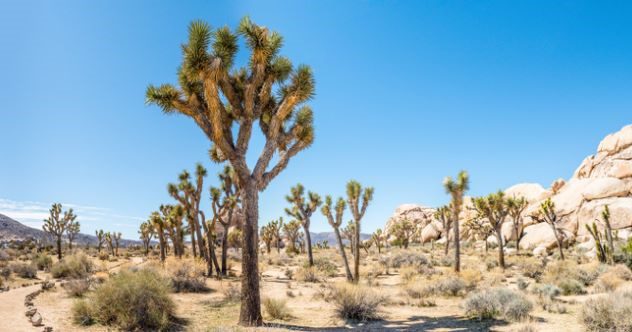

Joshua Tree National Park looks like a dream sketched by a very talented desert wizard: twisted Joshua trees, boulder fields stacked like nature forgot to clean up, and sunsets so dramatic they deserve their own agent. But behind the Instagram glow is a serious truth. This park can be beautiful, confusing, remote, brutally hot, and surprisingly unforgiving.
The stories below are not campfire myths or internet creepypasta. They are based on public reports, official park information, and reputable news coverage. Some involve experienced hikers. Some involve climbers. Some involve visitors who may have underestimated the desert by just a littleand in Joshua Tree, “just a little” can become a lot before your water bottle has time to panic.
This article explores 10 tragic disappearances and deaths in Joshua Tree National Park with respect for the people involved and with a practical lesson woven through each case: the desert is not out to get you, but it also does not negotiate.
Why Joshua Tree Can Become Dangerous So Quickly
Joshua Tree National Park spans nearly 800,000 acres of desert terrain where the Mojave and Colorado deserts meet. Its beauty is open, rocky, and cinematic, but the same features that make it unforgettable can also make search and rescue difficult. Many areas have limited or no cell service, water is scarce, trails can become hard to follow, and temperatures can swing from “pleasant postcard” to “portable oven” with very little warning.
The park’s own search-and-rescue history shows the range of emergencies responders face: missing hikers, climber falls, overdue parties, heat illness, and injuries in terrain where a simple ankle twist can become an expedition-level problem. Translation: Joshua Tree is not a theme park with cactus décor. It is real wilderness wearing a very photogenic outfit.
10 Tragic Disappearances and Deaths in Joshua Tree National Park
1. Rachel Nguyen and Joseph Orbeso: A Summer Hike That Became a National Story
In 2017, Rachel Nguyen and Joseph Orbeso vanished after going into Joshua Tree National Park during the summer. Their disappearance triggered a major search effort and drew national attention. Months later, their remains were found in remote terrain. Authorities later ruled the deaths a murder-suicide, though family and friends struggled with the conclusion and the heartbreak surrounding it.
The case became one of Joshua Tree’s most widely discussed tragedies because it carried so many unanswered emotional questions. It was also a stark reminder that summer hiking in the park can quickly become life-threatening. Searchers spent thousands of hours looking through rugged desert terrain, underscoring how easily people can become hidden from view even in an area that seems open and exposed.
The practical lesson is not complicated, but it is worth repeating: avoid long summer hikes during peak heat, tell someone your exact plan, and do not assume “popular park” means “easy rescue.” Joshua Tree may look wide open, but the terrain has plenty of places where a person can disappear from sight.
2. Paul Miller: The Canadian Hiker Who Vanished Near 49 Palms Oasis
Paul Miller, a 51-year-old visitor from Ontario, Canada, disappeared in July 2018 after setting out for a hike near the 49 Palms Oasis Trail. His wife reported him overdue when he did not return. The search was massive, involving ground teams, canine units, helicopters, and multiple agencies. For months, the case remained unresolved.
In late 2019, human remains and personal belongings were found in the 49 Palms Canyon area. In January 2020, officials identified the remains as Miller’s. His disappearance remains one of the park’s most sobering examples of how even a relatively known trail area can become dangerous when a hiker moves away from the expected route.
What makes this case especially haunting is that it did not begin as an extreme adventure. It began as a morning hike. Many desert incidents do. A short outing, a camera, a trailhead, a plan to be back soonand then the desert expands the story in a direction no one wanted.
3. Trammell Evans: An Experienced Hiker Lost in the Black Rock Area
Trammell Evans, 25, was last seen after being dropped off at Black Rock Campground in April 2023. He had planned a backcountry route involving Black Rock, Geology Tour Road, and the California Riding and Hiking Trail. When he did not arrive as expected, a search began.
Evans was described as an experienced long-distance hiker, which is part of what made the case so unsettling. Experience reduces risk, but it does not erase it. In January 2024, park researchers found an unattended backpack in the Black Rock area; nearby human remains were later identified as Evans. The cause of death was not immediately determined in public reports.
This tragedy challenges one of the biggest myths about outdoor safety: that only beginners get into trouble. In reality, deserts can humble experts, weekend warriors, and “I watched three survival videos, so I’m basically a ranger” visitors alike.
4. Benjamin Whittier: A Young Hiker in Extreme Heat
In September 2020, Benjamin Whittier, 20, of Yucaipa, died while hiking in the Turkey Flats area during extreme heat. Reports noted that temperatures in the area were estimated to be near 120 degrees. His hiking partner called for help, and search teams later found him near the base of Pinto Mountain, but rescuers could not revive him.
The case is a painful example of how dangerous heat can be in Joshua Tree. Heat does not always announce itself with movie-level drama. Sometimes it arrives as fatigue, confusion, dizziness, or the quiet realization that the trail back is longer than the water left in your bottle.
Visitors often underestimate desert heat because the air can feel dry rather than sweaty. That dryness is sneaky. Your body is still losing fluids, even if you do not feel like you are melting. By the time thirst becomes urgent, the desert may already have a head start.
5. Alberto Serrano Alvarez: Found Near Black Eagle Mine Road
In August 2020, Alberto Serrano Alvarez of Coachella Valley was found deceased near a sedan along Black Eagle Mine Road. The National Park Service noted that the road is unpaved, unmaintained, and open only to high-clearance, four-wheel-drive vehicles.
Not every Joshua Tree tragedy begins on a hiking trail. Some begin on remote roads. In a park with no fuel stations, limited cell service, and long stretches of harsh terrain, vehicle trouble can turn serious fast. A sedan on a rugged desert road is not a quirky travel choice; it can become a survival problem.
The lesson is simple enough to fit on a bumper sticker: your car is not a camel. If a road requires high clearance and four-wheel drive, believe the sign. Desert roads are not impressed by optimism, playlists, or the phrase “we’ll probably be fine.”
6. Susan Schoenfeldt: A Medical Emergency on the West Loop Trail
In April 2019, Susan Schoenfeldt, 52, of Yucca Valley, died while hiking in the Black Rock area. She was on the West Loop Trail with her daughter when she became ill, collapsed, and could not be revived despite emergency efforts.
This case is a reminder that outdoor risk is not only about getting lost or falling. Medical emergencies can happen anywhere, and a remote trail makes every minute more complicated. Even a trail that begins close to a campground can become difficult for emergency responders when terrain, distance, and communication gaps are involved.
It is wise for hikers to know their limits, avoid pushing through warning signs, and travel with someone when possible. Hiking is not a contest, and the trail does not award trophies for ignoring your body. It only offers consequences, and sometimes they are unforgiving.
7. The Rattlesnake Canyon Fatality: A Fall in Difficult Terrain
In January 2023, park rangers responded to a report of an injured hiker in Rattlesnake Canyon in the Indian Cove district. The hiker, an unidentified 50-year-old woman from Orange County, sustained fatal injuries in a fall. Officials reported no signs of foul play.
Rattlesnake Canyon and the surrounding Wonderland of Rocks are challenging areas. The terrain is rugged, navigation can be confusing, and cell service can be absent. The name “Wonderland of Rocks” sounds charming, like a children’s book with granite illustrations, but the landscape is serious business.
Falls in desert rock terrain can happen quickly. Smooth-looking stone can be slick, loose gravel can shift underfoot, and scrambling up is often easier than climbing safely back down. The best route is not always the shortest route; it is the one you can reverse safely.
8. Curtis Woodrow Stark II: A Fatal Climbing Accident at the Great Burrito
Joshua Tree is one of America’s iconic climbing destinations, but its climbing culture comes with real risk. In 2009, Curtis Woodrow Stark II, 67, of Riverside, died in a climbing accident at a rock formation known as the Great Burrito. Another climber was injured in the same incident.
For climbers, Joshua Tree is beloved for its traditional routes, textured granite, and old-school character. That character is part of the appealand part of the danger. Routes can be runout, protection can be tricky, and descents deserve just as much attention as ascents.
Climbing accidents often become safety lessons for the broader community. They remind climbers to inspect systems, communicate clearly, wear helmets, and avoid complacency. The rock does not care how many years someone has climbed. It only responds to physics, which is famously bad at making exceptions.
9. Michael Spitz: A Beloved Teacher and Climber Found Near Hidden Valley
In January 2022, Michael Spitz, 35, of San Diego, was found deceased near the Hidden Valley Nature Trail area. Reports identified him as a teacher at Santa Fe Christian Schools and described his death as connected to a climbing accident.
Hidden Valley is one of the park’s most visited areas, which may make it feel safer by default. But popularity does not remove risk. Climbers can be only a short distance from a trail and still face consequences from a mistake, equipment issue, route decision, or fall.
Spitz’s death affected students, colleagues, friends, and the climbing community. Outdoor tragedies are never just “incidents.” They ripple outward through classrooms, families, group chats, memorial posts, and the quiet places where people remember someone who loved adventure.
10. Tina Fiori: An Experienced Climber and a Rappelling Tragedy
In March 2022, experienced climber Tina Fiori died after a climbing accident near the Sheep Pass group campground area. Reports described the incident as involving a fall during the descent process after a climb. Friends remembered her as adventurous, generous, and deeply connected to the climbing community.
Her death became an important reminder that many climbing accidents happen not during the dramatic upward movement, but during transitions: lowering, rappelling, cleaning anchors, checking knots, or trusting fixed material. The end of a climb is not the end of risk.
For climbers, the lesson is clear: inspect everything, back up systems when appropriate, and treat descent procedures with full attention. Gravity is patient. It waits until you are tired, distracted, or celebrating too early.
Patterns Behind Joshua Tree Tragedies
Heat Is Often the Invisible Villain
Extreme heat appears again and again in Joshua Tree safety discussions. The danger is not only high temperature; it is exposure, exertion, low humidity, limited shade, and distance from help. A visitor may begin a hike feeling energetic and end it bargaining with a half-empty water bottle like it is a tiny plastic oracle.
Cell Service Can Disappear Before You Do
Many visitors rely on phones for maps, emergency calls, photos, and the occasional “look, I am outdoors and thriving” update. But cell service in Joshua Tree is unreliable. A phone should never be your only navigation plan. Carry a paper map, know your route, and download offline maps before entering the park.
Experience Helps, But It Is Not Armor
Several Joshua Tree cases involve people who were not careless beginners. Some were experienced hikers or climbers. Experience is valuable, but it can create confidence, and confidence occasionally wears a fake mustache and sneaks in as complacency.
Remote Roads Are Their Own Hazard
Joshua Tree’s backcountry roads can be rough, sandy, rocky, and isolated. Driving the wrong vehicle into the wrong place can leave visitors stranded without water, shade, or signal. Before taking a dirt road, check park guidance and be honest about your vehicle. A compact car with big dreams is still a compact car.
of Practical Experience: What These Stories Teach Every Visitor
The biggest experience-related lesson from these Joshua Tree tragedies is this: plan as if the park will not help you until much later. That does not mean rescuers are not skilled. Joshua Tree search-and-rescue teams are highly trained and deeply committed. It means the terrain is huge, the heat is real, and the desert does not come with a “skip difficulty” button.
Before entering the park, write down your plan and share it with someone who is not going with you. Include the trail name, parking area, route, expected return time, vehicle description, and what to do if you miss check-in. This sounds boring, yes. So does flossing. Both can save you from a painful situation.
Start early, especially in warm months. In summer, many experienced desert hikers avoid midday activity entirely. The safest hike may be the one you postpone. That is not weakness; that is wisdom wearing sunscreen. Carry more water than you think you need, and do not wait until you are thirsty to drink. Add salty snacks, sun protection, and layers for changing conditions.
Use real navigation tools. A phone is helpful, but a phone with no battery, no signal, and no clue is just a shiny rectangle. Bring a paper map, compass, or GPS device, and know how to use them. Stay on established trails unless you have the skill, equipment, and conditions for backcountry travel. If you lose the route, stop early. Wandering “just a bit farther” is how small confusion becomes a search area.
For climbers, double-check every part of the system, especially during descent. Inspect anchors, knots, belay communication, rope length, and any fixed material. Do partner checks even when you feel silly. Feeling silly is better than being sorry. Helmets are smart, fatigue matters, and the last climb of the day deserves the same focus as the first.
For drivers, respect road ratings. If a road is marked for high-clearance four-wheel-drive vehicles, do not treat it like a suggestion from an overprotective aunt. Carry emergency water in the vehicle, a spare tire, basic tools, and a way to signal for help. In Joshua Tree, your car is part of your safety plan.
Finally, treat the park with humility. The people in these stories were not characters in a warning poster. They were visitors, hikers, partners, parents, teachers, climbers, and friends. The best way to honor them is not fear. It is preparation. Enjoy the strange trees, the boulder mazes, the huge sky, and the silencebut bring enough water, enough caution, and enough respect for a place that is beautiful precisely because it is still wild.
Conclusion
Joshua Tree National Park is not dangerous because it is cruel. It is dangerous because it is real. The same desert that offers glowing sunsets, legendary climbs, and unforgettable hikes also demands preparation, patience, and humility. These 10 tragic disappearances and deaths in Joshua Tree National Park show that risk can come from heat, terrain, medical emergencies, navigation errors, climbing systems, remote roads, and simple bad timing.
The takeaway is not “stay home.” The takeaway is “go smarter.” Tell someone where you are going. Carry more water. Start early. Respect trail difficulty. Check your climbing systems. Bring navigation tools that do not depend on cell service. And when conditions look questionable, remember: the desert will still be there tomorrow, looking weird and magnificent, like it always does.