
A wooden blanket ladder is one of those rare home accessories that can rescue a blank wall, organize a pile of throws, and make a room feel warmer without demanding a contractor, a permit, or a dramatic “before” photo. It uses vertical space, keeps favorite textiles visible, and brings the natural character of wood into living rooms, bedrooms, nurseries, bathrooms, and covered porches.
The trick is to style it like a composition rather than treat it like a laundry rack that accidentally wandered into the living room. Home-design publications regularly recommend decorative ladders because they combine accessible blanket storage with color, pattern, and texture while drawing the eye upward in compact spaces.
These ten wooden blanket ladder decorating ideas range from quietly minimal to cheerfully seasonal. Each can be adapted to rustic farmhouse decor, modern interiors, coastal rooms, bohemian spaces, or whatever style currently has control of your shopping cart.
Before You Style Your Wooden Blanket Ladder
Start by checking the ladder itself. A decorative blanket ladder is not a climbing ladder, so make sure every joint is firm, the feet sit evenly, and the finish will not snag delicate fabric. Felt pads or nonslip rubber feet can protect flooring and reduce movement. If children or pets use the room, position the ladder in a low-traffic area and secure it appropriately to the wall. Southern Living specifically advises choosing a sturdy model and anchoring it where it could be knocked over, while the U.S. Consumer Product Safety Commission broadly recommends wall anchoring to reduce tip-over hazards around children.
Next, edit your materials. Three thoughtfully selected items usually look better than seven unrelated ones. Choose a color palette, decide whether the ladder should be a focal point or a supporting accent, and leave some wood visible. Negative space is not wasted space; it is where the ladder gets to breathe instead of looking as though it lost a wrestling match with the linen closet.
10 Wooden Blanket Ladder Decorating Ideas
1. Build a Coordinated Color Story
The easiest way to make a wooden blanket ladder look intentional is to repeat colors already present in the room. Pull one shade from the rug, another from the throw pillows, and a third from nearby artwork. In a neutral living room, that might mean cream, camel, and muted rust. In a coastal bedroom, try white, faded blue, and sandy beige.
Arrange blankets from light to dark for a soft ombré effect, or alternate light and dark pieces for contrast. Designers commonly recommend coordinating displayed blankets with the existing room while using subtle variations to prevent the arrangement from feeling flat.
2. Mix Textures Without Creating Visual Static
A blanket ladder is practically an invitation to play with texture. Pair a smooth cotton quilt with a nubby knit throw, a linen blanket, or a lightly fringed wool piece. The contrast adds depth even when every textile is the same color.
Keep the balance controlled: one chunky texture, one medium weave, and one flatter fabric is usually enough. Layering textiles and natural wood is a widely used way to soften rooms and create visual warmth without relying on loud color.
3. Showcase an Heirloom Quilt as Art
A handmade quilt, vintage coverlet, or meaningful family textile deserves better than permanent exile in a plastic bin. Fold it so the most attractive block, border, embroidery, or color combination faces outward, then give it the most visible rung.
For delicate or valuable textiles, avoid overcrowding and rotate the fold occasionally so the same fibers are not under constant pressure. Keep the ladder away from direct sunlight, damp areas, and anything that might transfer dye or roughen the fabric. The result feels personal because it is personal: your wall decor now has a history instead of merely having a receipt.
4. Create a Seasonal Rotation
Use the ladder as a small seasonal decorating zone rather than redecorating the entire room four times a year. Spring can bring lightweight cotton, soft green, and a small faux floral wreath. Summer suits indigo, stripes, or airy linen. Fall welcomes plaid, rust, mustard, and chunky knits. Winter can feature cream, evergreen, burgundy, or a restrained holiday pattern.
Seasonal blanket swaps are frequently recommended because they change the mood of a room while keeping the storage functional. Just stop before the ladder starts wearing every holiday at once; it should say “festive,” not “seasonal clearance aisle.”
5. Add a Small Wreath or Greenery Accent
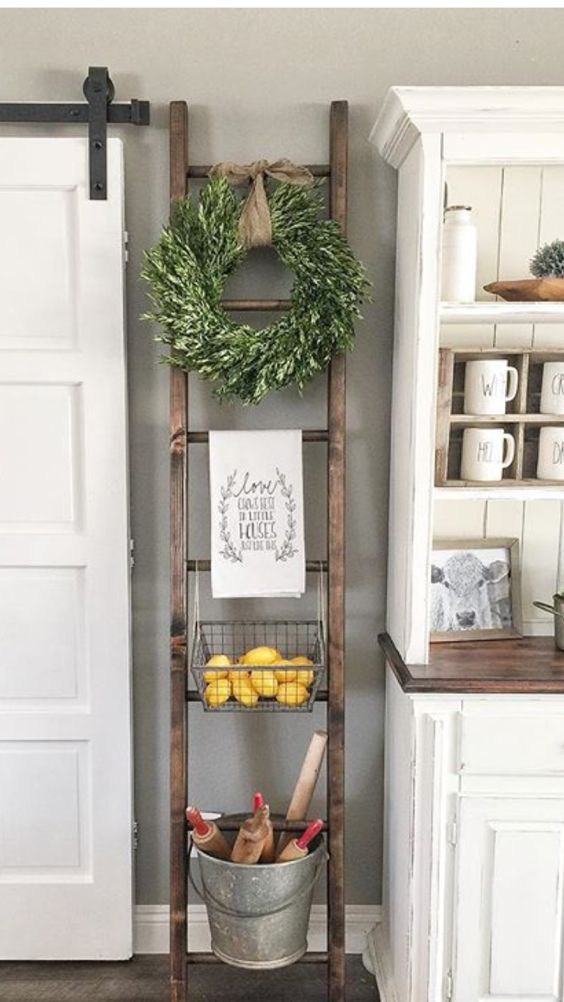
A mini wreath tied to the top rung gives the ladder a finished focal point. Choose eucalyptus, olive leaves, dried grasses, pine, or a simple grapevine form according to the season and room style. Secure it with ribbon, jute, leather cord, or removable floral wire.
Keep the greenery smaller than the ladder width so it acts as punctuation rather than a leafy hat. Faux stems are easiest indoors, while properly dried botanicals add natural texture. A nearby floor plant can also complete the vignette without adding weight to the ladder itself.
6. Use Soft Lighting for Evening Atmosphere
A thin strand of battery-operated indoor LED lights can turn a blanket ladder into a gentle evening accent. Wind the strand loosely around one rail or tuck it behind the rungs so the glow outlines the wood rather than competing with the textiles.
Use lights according to the manufacturer’s instructions, avoid open flames entirely, and keep fabric decor well away from fireplaces, heaters, and candles. NFPA candle-safety guidance recommends keeping candles at least one foot from anything that can burn, which is an excellent reason to choose flameless lighting around blankets.
7. Style the Side Rails With Lightweight Accessories
The rungs are not the only useful real estate. Small S-hooks or loops can hold a straw hat, a light market basket, wooden beads, or a fabric tote. In a bedroom, hang tomorrow’s scarf. In a bathroom, use a washable brush or small basket for rolled washcloths. In an entryway, add a reusable shopping bag that is attractive enough to stay visible.
Limit the extras to one or two items and keep them light. Bob Vila notes that a decorative ladder can look effective with a very simple accessory rather than being covered completely, while Apartment Therapy has highlighted ladder styling that goes beyond textiles.
8. Turn It Into a Reading-Nook Anchor
Place the wooden blanket ladder beside a comfortable chair, floor lamp, and small table. Add two throws: one lightweight option for everyday use and one warmer layer for cold evenings. A basket at the base can hold books, magazines, or slippers.
This arrangement gives the ladder a clear purpose and makes the entire corner feel planned. Cozy-room guidance often relies on layered textiles, warm light, and a comfortable seat; the ladder simply keeps those layers within arm’s reach.
9. Add a Basket at the Base
A woven basket grounds a tall ladder visually and provides concealed storage for extra throws, pillows, toys, or knitting supplies. Choose a basket wide enough to feel substantial but not so large that it blocks the lower rungs.
Match the basket to the ladder’s personality: seagrass for coastal or farmhouse rooms, black wire for industrial decor, felt for modern interiors, or a lidded woven basket for a cleaner look. Blanket-storage guides repeatedly combine ladders and baskets because one displays the prettiest textiles while the other hides the less photogenic supporting cast.
10. Let the Ladder Match the Room’s Design Style
The same wooden ladder can look completely different depending on its finish and accessories. For modern farmhouse style, combine warm wood with cream throws, black accents, and restrained plaid. For coastal decor, use whitewashed wood, blue stripes, and a woven basket. For a modern room, paint or stain the ladder black and display only one sculptural blanket. For bohemian style, mix an artisan textile, tassels, and a nearby plant.
Do not force the ladder to carry every design theme by itself. Echo two or three elements already present in the room, then stop. Decorative ladders work across farmhouse, minimalist, and maximalist spaces because the stylingnot the basic formdetermines the final mood.
How to Fold Blankets So the Display Looks Intentional
For a crisp look, fold each blanket lengthwise into thirds, then place the center over a rung with the ends hanging evenly. For a relaxed look, make a loose lengthwise fold and allow fringe or a patterned edge to fall naturally. If a blanket is bulky, use a higher rung so its weight does not crowd the pieces below.
Vary the drop length slightly, but avoid having every blanket end at a random height. Show the most decorative portion of each textile and leave at least one rung partly or completely open. Styling experts often use throws to introduce color and texture, while controlled folding prevents the arrangement from looking messy.
Common Wooden Blanket Ladder Decorating Mistakes
- Overloading every rung: Too many heavy textiles hide the wood and make the display look crowded.
- Ignoring scale: A tiny ladder on a large wall can look stranded, while an oversized ladder may overwhelm a narrow passage.
- Using unrelated colors: A ladder display should connect with the room, not resemble a fabric sample emergency.
- Blocking walkways: Leaning decor belongs in a stable, low-traffic location.
- Forgetting maintenance: Displayed blankets collect dust and should be cleaned according to their care labels.
- Treating it as climbable furniture: A decorative ladder is display storage only and should be secured when household conditions call for it.
Conclusion
Decorating a wooden blanket ladder works best when function and restraint cooperate. Choose a clear color story, layer contrasting textures, display one meaningful textile, and add only a few supporting accents. Seasonal swaps can refresh the room without a major purchase, while baskets, greenery, and soft lighting help the ladder become part of a complete vignette.
Most important, keep it stable, accessible, and easy to maintain. A successful blanket ladder should make the room look more relaxednot make you nervous every time the dog walks past it.
Experience Notes: What Homeowners Usually Learn After Styling One
The first surprise is how quickly a blanket ladder can become visually heavy. A homeowner may begin with the perfectly reasonable thought, “I own five blankets, and there are five rungs.” Mathematics approves. Interior design often does not. Once every rung is covered, the wood disappears, the blankets overlap, and the corner starts to look narrower. The most effective correction is usually subtraction: remove two throws, expose part of the frame, and let the remaining textiles become the stars.
The second lesson is that color coordination matters more than blanket price. An inexpensive cotton throw that repeats the blue in a nearby painting can look more intentional than a luxury blanket in a color that belongs to another house. Many homeowners get better results by carrying pillows, rug colors, or paint samples to the ladder and testing combinations in daylight. Phone photos help, too. A display that looks balanced in person may reveal one oddly dominant stripe the moment it appears on a screen. Cameras are brutally honest roommates.
Texture is where the ladder usually earns its keep. A smooth quilt beside a soft knit creates more interest than three nearly identical fleece throws. However, very thick blankets can swallow a narrow ladder. Folding bulky pieces into a slimmer stripor displaying only one heavy knitkeeps the silhouette controlled. Fringed blankets also need a little attention. Long tassels look charming until they brush the floor, collect dust, or become irresistible entertainment for a cat.
Placement often changes after the first week. The empty corner beside the sofa may seem perfect until someone bumps the ladder every evening. A spot near a fireplace may look cozy in a photo but be unsuitable if it places fabric near heat. Many people ultimately prefer a bedroom corner, reading nook, wide hallway, or wall beside a media console, where the ladder adds height without entering the main traffic path.
Seasonal decorating becomes easier once a small storage routine is established. Instead of buying a new set of throws for every holiday, homeowners often rotate one or two accent pieces and keep the neutral foundation year-round. A cream quilt can stay in place while rust plaid arrives for fall, evergreen appears in winter, and a faded blue cotton throw takes over in summer. This approach saves storage space and prevents the ladder from looking like it has been hired by a holiday catalog.
Finally, the best displays are used. A blanket that is too precious to touch may function as art, but an everyday ladder feels most welcoming when guests can actually grab a throw. Keeping washable, comfortable textiles on the most accessible rungs makes the decor practical. After a few rounds of experimentation, the winning formula is usually simple: two or three coordinated blankets, one small accent, visible wood, and enough breathing room for the arrangement to look effortlesseven though everyone now knows “effortless” required seventeen minutes of folding.