160 People Wanted to Be Buried in Space. Their Capsule Slammed Into the Ocean Instead.

Space burial sounds like the ultimate final adventure: a rocket launch, a few laps around Earth, and a keepsake capsule returned to the family with a story no ordinary urn could match. For 166 participants aboard the Perseverance Flight, most of that extraordinary itinerary actually happened. Their ashes or DNA reached orbit, circled the planet twice, survived atmospheric reentryand then disappeared into the Pacific Ocean when the recovery capsule failed during the final minutes of its journey.
The incident was heartbreaking for families, embarrassing for the companies involved, and technically fascinating for anyone interested in commercial spaceflight. It was also more complicated than the dramatic headlines suggested. Nobody had placed 166 complete sets of remains aboard the spacecraft. These were small, symbolic portions intended to return as memorial keepsakes. The mission was neither an ordinary funeral nor a simple rocket failure. It was an experimental spacecraft test carrying deeply personal cargo, which made every engineering decision unusually consequential.
What Happened to the Space Burial Capsule?
On June 23, 2025, a SpaceX Falcon 9 lifted off from Space Launch Complex 4 East at Vandenberg Space Force Base in California. The launch was Transporter-14, a rideshare mission carrying dozens of satellites and experimental payloads to low Earth orbit. Mounted at the top of the payload stack was Mission Possible, a demonstration spacecraft developed by the European aerospace startup The Exploration Company.
The capsule carried 25 customer and research payloads. Among them was the Perseverance Flight, organized by Houston-based Celestis, containing individual capsules with cremated remains or DNA from 166 participants. The cargo also included seeds and plant material associated with Martian Grow, a citizen-science project exploring how plants might respond to spaceflight conditions. It was an unusual manifest: aerospace experiments, memorial capsules, and cannabis genetics all sharing the same ride. Space logistics rarely produces a more unexpected passenger list.
A Launch and Orbit That Went According to Plan
The Falcon 9 portion of the mission worked. Mission Possible separated from the launch vehicle, activated its payloads, stabilized its orientation, and completed its orbital objectives. The Celestis payload traveled around Earth twice, satisfying the company’s criteria for an Earth Orbit memorial service. In that limited but meaningful sense, the participants really did reach space and orbit the planet.
The capsule then began its planned descent. Atmospheric reentry is one of the harshest parts of any mission, surrounding a spacecraft with superheated plasma and temporarily blocking radio communication. Mission Possible survived that stage and reestablished contact after the expected communications blackout. That was a significant technical achievement for a relatively young spacecraft program.
The Failure Came Near the Finish Line
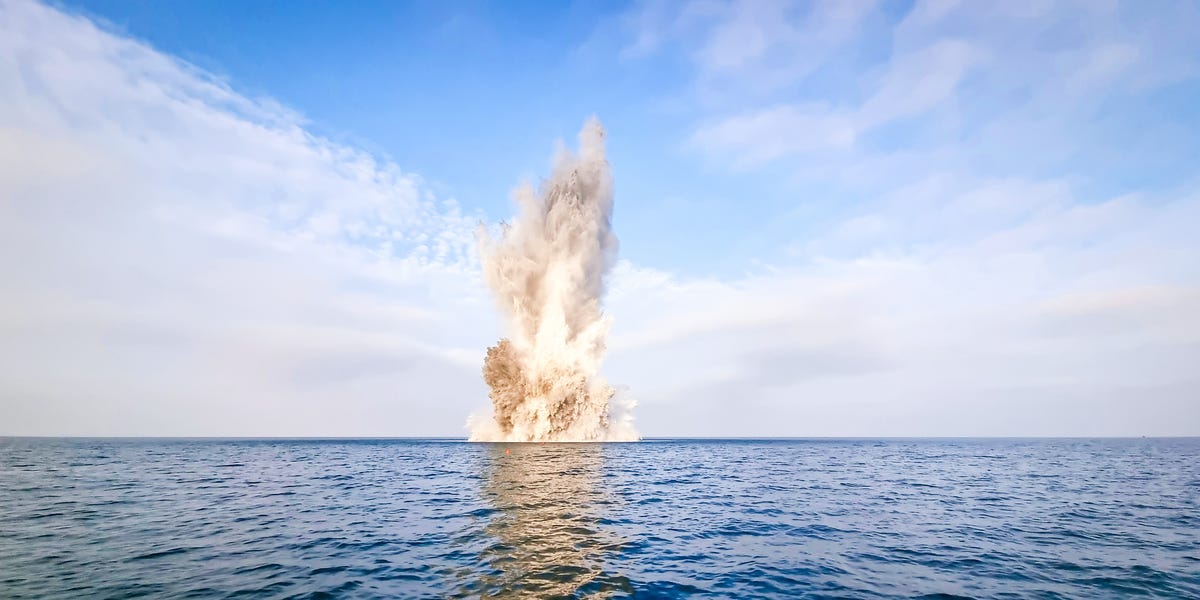
Only minutes before the anticipated splashdown, controllers lost contact again. The capsule struck the Pacific Ocean at high speed and could not be recovered. Celestis said the impact dispersed the payload at sea, making it unlikely that the individual memorial capsules would ever be returned to their families.
Initial official statements described the event as an anomaly and said the root cause was under investigation. Subsequent aerospace and science reporting identified a failure of the landing parachute system as the immediate reason the spacecraft did not slow properly before reaching the ocean. In other words, Mission Possible handled the fiery part of returning from orbit but apparently stumbled over the supposedly gentler part involving fabric, cords, and gravity. Space has a dark sense of timing.
Why the Parachute System Mattered So Much
A reentry capsule does not simply float down after surviving the atmosphere. It may still be traveling at hundreds of miles per hour when its descent system begins operating. Mission Possible was designed to deploy a smaller drogue parachute for stabilization, followed by a main parachute that would reduce its speed enough for a recoverable ocean landing.
The Exploration Company described the deployment sequence as beginning while the capsule was moving between approximately Mach 0.8 and Mach 0.6. Sensors and flight software had to recognize the correct conditions, release the drogue, transition to the main canopy, and keep the descending spacecraft stable. A failure in the trigger, deployment hardware, parachute packing, attachment system, avionics, or vehicle attitude could interrupt the process. Saying “the parachute failed” identifies the neighborhood of the problem, but not necessarily the exact address.
A Deliberately Lean Test Vehicle
Mission Possible was a 1.6-metric-ton demonstrator measuring about 2.5 meters, or 8.2 feet, across. It was built rapidly and at a fraction of the cost of many government spacecraft programs. The company openly described the mission as an opportunity to learn by flying early rather than waiting until every element had extensive flight heritage.
Prelaunch reporting noted that the demonstrator used a single parachute rather than a redundant landing system and relied on one primary flight computer. It also had not undergone a full parachute drop test before launch, a decision associated with the program’s effort to reduce cost and development time. The parachute design itself incorporated components with previous aerospace heritage, but proven hardware does not automatically make a new spacecraft configuration proven. Integration is where engineering gremlins often hold their family reunions.
This does not mean the company casually ignored safety. Mission Possible was uncrewed and was explicitly presented as an experimental pathfinder. However, the presence of customer propertyespecially memorial remainsblurred the emotional boundary between a development flight and a commercial service. Engineers may classify an outcome as a partial success because valuable data was collected. A grieving family waiting for a loved one’s capsule is unlikely to use the same scoring system.
Were 166 People Really Being Buried in Space?
The popular headline is compelling, but “space burial” can create the wrong picture. Celestis generally launches a symbolic portion of cremated remains, often measured in grams, or a DNA sample sealed inside a small flight capsule. Families can retain the rest of the ashes for burial, scattering, display, or another memorial.
The Perseverance Flight was part of Celestis’ Earth Rise service. Unlike services that permanently place a capsule in orbit, send it toward the Moon, or dispatch it into deep space, Earth Rise flights are supposed to return the memorial capsules to the families. At the time of the mission, the service started at approximately $3,495. One family profiled before the launch had submitted about one gram of an aerospace engineer’s ashes for the journey.
That distinction matters. The participants were not expecting their symbolic remains to stay in orbit forever. The planned memorial was a round trip: launch, orbit, reentry, recovery, and presentation of a space-flown keepsake. When the capsule crashed, the mission transformed unintentionally into something closer to a scattering at sea.
A Long History of Memorial Spaceflight
Celestis was founded in the 1990s and conducted its first private memorial spaceflight in April 1997. That mission carried small portions of the cremated remains of 24 people, including “Star Trek” creator Gene Roddenberry and psychologist and counterculture figure Timothy Leary. Since then, memorial payloads have flown to suborbital space, Earth orbit, the Moon, and trajectories extending into deep space.
The attraction is not difficult to understand. For astronauts, engineers, science-fiction fans, amateur astronomers, and people who spent their lives staring at the night sky, a conventional cemetery may feel less personal than a rocket launch. Memorial spaceflight combines ritual, technology, spectacle, and storytelling. It turns a private loss into an event connected with exploration.
The Human Cost Behind a “Partial Success”
The Exploration Company described Mission Possible as both a partial success and a partial failure. The vehicle reached orbit, operated its payloads, controlled its attitude, survived atmospheric entry, and restored communications afterward. Those accomplishments generated data that could help the company develop Nyx, a larger spacecraft intended to transport cargo to and from low Earth orbit.
From an engineering perspective, that framing is reasonable. Experimental missions are often designed to achieve a series of milestones rather than one all-or-nothing goal. Mission Possible passed most of its major stages and failed during the final recovery phase.
Celestis, however, acknowledged that technical accomplishments could not replace the personal meaning of the lost capsules. The company contacted participating families, apologized, and compared the outcome to an honored scattering at sea. That interpretation may have comforted some relatives. Others may reasonably have felt that a poetic rebranding could not substitute for the promised return of a loved one’s memorial keepsake.
One especially poignant story involved Wes Dreyer, a 77-year-old aerospace engineer who had worked on major defense and aviation programs and contributed to the investigation following the Challenger disaster. Before the flight, his daughter said that if something went wrong, her father probably would have laughed and wanted to help determine the cause. For that family, the accident almost fit the personality of the person being honored. But no single reaction can represent all 166 participants or their loved ones.
What the Crash Means for Commercial Spaceflight
Mission Possible illustrates a growing challenge in the commercial space industry: experimental vehicles are increasingly carrying real customer payloads. Rideshare launches have lowered the cost of reaching orbit, allowing universities, startups, artists, biological experiments, manufacturers, and memorial companies to purchase space on missions that once would have been financially impossible.
That accessibility is exciting, but it can make risk harder to communicate. “Successfully launched” does not mean “successfully completed.” A mission may depend on a launch provider, payload deployer, spacecraft manufacturer, communications network, reentry system, parachute, recovery vessel, and weather conditions. Any link can break.
Transparency Must Travel With the Payload
Customers considering memorial spaceflight should be told clearly whether the vehicle is operational, newly modified, or experimental. They should understand whether the mission includes redundant systems, whether recovery has been demonstrated, and what compensation or replacement options apply if the payload is destroyed or lost.
The most important question is not simply, “Will the rocket launch?” It is, “What must happen after launch for the company to fulfill its promise?” On the Perseverance Flight, the Falcon 9 performed its job. The spacecraft reached orbit. Reentry largely succeeded. Yet the commercial promise still failed because the memorial capsules did not come home.
The accident also underlines why drop testing matters. In 2026, The Exploration Company completed a dedicated Nyx recovery-system test in which an instrumented vehicle was released from a helicopter and successfully progressed from drogue parachutes to main parachutes. Such tests cannot reproduce every orbital condition, but they allow engineers to observe deployment dynamics without risking an entire orbital mission.
Space Burials Also Raise Cultural and Ethical Questions
Memorial flights are often discussed as a matter of individual choice, but destinations beyond Earth can carry shared cultural meaning. Proposals to place human remains on the Moon have prompted objections from the Navajo Nation, whose representatives have described the Moon as sacred. Ethical researchers have argued that commercial activity in space should account for Indigenous beliefs, cultural heritage, environmental stewardship, and the interests of people who never consented to treating celestial bodies as extensions of earthly cemeteries.
The Perseverance Flight did not create the same lunar controversy because its payload was intended to return to Earth. Nevertheless, its unexpected end demonstrates that memorial operators need contingency plans not only for hardware but also for meaning. What happens when a symbolic ritual ends somewhere other than the destination a family chose? Who gets to describe that outcome as a burial, scattering, accident, or completed memorial?
Experiences and Lessons From a Memorial Mission That Did Not Come Home
For families, a memorial spaceflight begins long before ignition. There are forms to complete, ashes or DNA to prepare, inscriptions to choose, travel plans to arrange, and personal stories to submit. Some relatives attend a multiday gathering near the launch site, where they meet other families, share memories, watch tribute presentations, and wait through the delays that are normal in rocketry.
That communal experience can be valuable even when the technical mission goes wrong. A launch gives mourners a specific moment around which to gather. Instead of a quiet graveside ceremony, they hear engines ignite and watch a column of fire carry a small physical connection to someone they loved into the sky. For people whose relatives worked in aerospace or dreamed about space, the ritual may feel remarkably appropriate.
The Perseverance Flight also shows how quickly wonder can become uncertainty. Families could celebrate the successful launch and two completed orbits, only to learn that the capsule had vanished during recovery. That creates a peculiar form of emotional whiplash: pride, relief, anticipation, silence, and loss arriving in rapid sequence.
Some participants may accept the Pacific Ocean as an unexpectedly beautiful resting place. Others may focus on the fact that the capsule reached space, fulfilling the most important part of the tribute. Still others may feel angry because the promised objectthe returned capsulewas central to the purchase. All of those reactions are valid. Grief is not an engineering review, and nobody is required to classify a failed recovery as inspirational.
Questions Families Should Ask Before Booking
Anyone considering a space memorial should ask whether the submitted material is the family’s only portion or merely a small sample. Keeping most of the ashes on Earth preserves other memorial options if the mission is delayed, canceled, or lost.
Families should also request a plain-language explanation of mission risk. Is the capsule flying on a proven recovery system? Has the exact spacecraft design completed a successful reentry? Is the payload covered by insurance? Will the company offer a reflight, refund, credit, or alternative memorial after a failure? Contracts should explain what counts as successful completion. Reaching space, completing an orbit, and returning the capsule are three different milestones.
It is equally useful to decide what the ritual means before launch. If the primary goal is to send a loved one into space, a successful ascent may be enough. If the goal is to receive a flown keepsake, recovery is essential. Making that distinction early can help families evaluate services and process an unexpected outcome.
The Experience Can Be Meaningful Without Pretending It Was Perfect
The easiest public response to an accident is to turn it into a tidy metaphor: the participants traveled among the stars and now rest in the ocean. That image is moving, but it should not erase accountability. The companies accepted payment for a return service, carried emotionally irreplaceable material, and failed to recover it.
At the same time, the crash did not erase everything that came before it. The participants launched from California, crossed the boundary into space, circled Earth twice, and returned through the atmosphere. Families attended a memorial, watched the flight, and became connected to a small chapter in the development of commercial spacecraft.
The honest version of the experience contains both realities. It was a genuine memorial journey and a failed recovery. It produced meaningful memories and painful disappointment. It advanced spacecraft research while revealing decisions that deserve scrutiny. Space exploration has always mixed ambition with risk; the Perseverance Flight simply carried that risk into one of the most personal services imaginable.
Conclusion: A Final Journey With an Unplanned Destination
The Nyx Mission Possible accident was not a case of a rocket immediately exploding or a spacecraft failing to reach orbit. It was a near-complete mission undone during its closing minutes. The capsule launched successfully, supported its payloads, completed two orbits, survived reentry, and then struck the Pacific after its recovery sequence failed.
For The Exploration Company, the flight delivered engineering data and a costly lesson about descent systems, testing, and redundancy. For Celestis, it exposed the difficulty of combining experimental space hardware with a deeply emotional consumer service. For the families of 166 participants, the outcome cannot be reduced to either success or failure. Their loved ones reached space, but the keepsakes meant to return home never did.
The final destination was not the one anyone purchased. Yet the mission remains part of each participant’s story: a journey from California to orbit, around the planet, through a wall of atmospheric fire, and ultimately into the Pacific Ocean. It was adventurous, imperfect, and unmistakably human.
Note: Official public statements initially described the loss as an anomaly with its root cause under investigation. Later reporting widely attributed the impact to nondeployment of the parachute system. Unless a complete public technical investigation is released, parachute failure should be understood as the reported immediate cause rather than a full forensic explanation.