
Anime villains are not simply “bad guys with better coats,” although, let’s be honest, many of them do dress like they own the weather. The best anime villains are the characters who make us yell at the screen, pause the episode, question humanity, and then immediately search for their best fight scenes on YouTube. They are cruel, stylish, brilliant, petty, tragic, absurd, and sometimes so charismatic that the hero has to work overtime just to remain the main character.
This list of 200 anime villains we just love to hate celebrates the antagonists who shaped battles, broke hearts, launched a thousand fan debates, and gave anime fans enough emotional damage to qualify as a seasonal subscription. From cosmic tyrants like Frieza to psychological nightmares like Johan Liebert, from charming monsters like DIO to elegant manipulators like Makima, anime villainy comes in many flavors. Some villains want world domination. Some want revenge. Some want a quiet life and, inconveniently, also murder. Anime: never boring.
Why Anime Villains Are So Addictive
A great villain does more than threaten the hero. They expose the hero’s weakness, challenge the story’s values, and force the audience to ask uncomfortable questions. Light Yagami from Death Note makes justice look clean until it becomes a personal dictatorship. Pain from Naruto Shippuden turns grief into ideology. Meruem from Hunter x Hunter begins as a monster and slowly becomes one of the most emotionally complicated characters in modern shonen. That is the magic trick: the villain scares us, then makes us think, then makes us mad because we almost understand them.
Anime is especially good at villains because it gives antagonists room to be theatrical. They do not merely enter a scene; they arrive with theme music, impossible hair, and the confidence of someone who has already read the manga. Whether they are masterminds, demons, cursed kings, crime bosses, fallen heroes, corrupt gods, or school bullies with Olympic-level emotional issues, anime villains stick because they are built with personality.
The 200 Anime Villains We Just Love To Hate
Below is a curated, discussion-friendly list of 200 anime villains, antagonists, and morally rotten scene-stealers. Some are pure evil. Some are tragic. Some are antiheroes depending on which corner of the fandom you accidentally wandered into. All of them made anime more memorable.
Iconic Shonen Villains
1. Frieza (Dragon Ball Z), 2. Cell (Dragon Ball Z), 3. Majin Buu (Dragon Ball Z), 4. Vegeta, early era (Dragon Ball Z), 5. King Piccolo (Dragon Ball), 6. Madara Uchiha (Naruto Shippuden), 7. Pain/Nagato (Naruto Shippuden), 8. Orochimaru (Naruto), 9. Itachi Uchiha, antagonist era (Naruto), 10. Obito Uchiha (Naruto Shippuden), 11. Zabuza Momochi (Naruto), 12. Hidan (Naruto Shippuden), 13. Deidara (Naruto Shippuden), 14. Sasori (Naruto Shippuden), 15. Kaguya Otsutsuki (Naruto Shippuden), 16. Sosuke Aizen (Bleach), 17. Yhwach (Bleach), 18. Ulquiorra Cifer (Bleach), 19. Grimmjow Jaegerjaquez (Bleach), 20. Gin Ichimaru (Bleach).
These are the villains who made power scaling into a national sport. Frieza brought galactic cruelty with a polished smile. Madara walked onto a battlefield and treated armies like light cardio. Aizen turned betrayal into fine art, calmly adjusting his glasses while the plot packed its bags and moved to another dimension.
Modern Monsters And New-Generation Nightmares
21. Ryomen Sukuna (Jujutsu Kaisen), 22. Mahito (Jujutsu Kaisen), 23. Suguru Geto (Jujutsu Kaisen), 24. Kenjaku (Jujutsu Kaisen), 25. Toji Fushiguro (Jujutsu Kaisen), 26. Muzan Kibutsuji (Demon Slayer), 27. Akaza (Demon Slayer), 28. Doma (Demon Slayer), 29. Kokushibo (Demon Slayer), 30. Gyutaro (Demon Slayer), 31. Makima (Chainsaw Man), 32. Gun Devil (Chainsaw Man), 33. Katana Man (Chainsaw Man), 34. Reze (Chainsaw Man), 35. Tomura Shigaraki (My Hero Academia), 36. All For One (My Hero Academia), 37. Dabi (My Hero Academia), 38. Himiko Toga (My Hero Academia), 39. Stain (My Hero Academia), 40. Overhaul (My Hero Academia).
New-generation anime villains are terrifying because they do not always announce themselves with old-school evil speeches. Makima smiles like your most supportive boss right before turning your life into paperwork. Mahito giggles through atrocities. Sukuna gives “ancient curse” energy with the casual arrogance of a celebrity chef judging your soup.
Psychological Villains Who Live Rent-Free In Our Brains
41. Johan Liebert (Monster), 42. Light Yagami (Death Note), 43. Ryuk (Death Note), 44. Misa Amane, Kira era (Death Note), 45. Shogo Makishima (Psycho-Pass), 46. Sibyl System (Psycho-Pass), 47. Kyubey (Puella Magi Madoka Magica), 48. Gendo Ikari (Neon Genesis Evangelion), 49. SEELE (Neon Genesis Evangelion), 50. Yuno Gasai (Future Diary), 51. Friend (20th Century Boys), 52. Izaya Orihara (Durarara!!), 53. Griffith/Femto (Berserk), 54. The Count (Gankutsuou), 55. Shou Tucker (Fullmetal Alchemist), 56. Father (Fullmetal Alchemist: Brotherhood), 57. Envy (Fullmetal Alchemist), 58. King Bradley/Wrath (Fullmetal Alchemist), 59. Lust (Fullmetal Alchemist), 60. Solf J. Kimblee (Fullmetal Alchemist).
These villains do not need to destroy planets. They destroy your trust. Johan Liebert is frightening because his evil feels quiet, almost polite. Light Yagami is horrifying because he starts with a notebook and ends with a god complex large enough to need its own zip code. Kyubey deserves special mention for proving that emotional devastation can come in a small, marketable package.
One Piece Villains With Big Dreams And Bigger Problems
61. Donquixote Doflamingo (One Piece), 62. Crocodile (One Piece), 63. Arlong (One Piece), 64. Enel (One Piece), 65. Rob Lucci (One Piece), 66. Akainu/Sakazuki (One Piece), 67. Blackbeard/Marshall D. Teach (One Piece), 68. Kaido (One Piece), 69. Big Mom/Charlotte Linlin (One Piece), 70. Hody Jones (One Piece), 71. Caesar Clown (One Piece), 72. Gecko Moria (One Piece), 73. Buggy, antagonist era (One Piece), 74. Kuro (One Piece), 75. Don Krieg (One Piece), 76. Wapol (One Piece), 77. Spandam (One Piece), 78. Orochi Kurozumi (One Piece), 79. Charlotte Katakuri (One Piece), 80. Imu (One Piece).
One Piece villains are proof that a great antagonist can be ridiculous and menacing at the same time. Doflamingo dresses like a flamingo who inherited a crime empire, yet he is one of anime’s most chilling power players. Crocodile has mob-boss swagger. Blackbeard feels like chaos with teeth. Buggy is somehow a clown, a menace, and a business model.
JoJo Villains Who Turned Evil Into Performance Art
81. DIO (JoJo’s Bizarre Adventure), 82. Dio Brando, Phantom Blood era (JoJo’s Bizarre Adventure), 83. Kars (Battle Tendency), 84. Esidisi (Battle Tendency), 85. Wamuu (Battle Tendency), 86. Yoshikage Kira (Diamond is Unbreakable), 87. Diavolo (Golden Wind), 88. Vinegar Doppio (Golden Wind), 89. Enrico Pucci (Stone Ocean), 90. Funny Valentine (Steel Ball Run), 91. Tooru (JoJolion), 92. Hol Horse (Stardust Crusaders), 93. Vanilla Ice (Stardust Crusaders), 94. Risotto Nero (Golden Wind), 95. Cioccolata (Golden Wind), 96. Secco (Golden Wind), 97. Rohan Kishibe, antagonist era (Diamond is Unbreakable), 98. Angelo (Diamond is Unbreakable), 99. Akira Otoishi (Diamond is Unbreakable), 100. Boingo and Oingo (Stardust Crusaders).
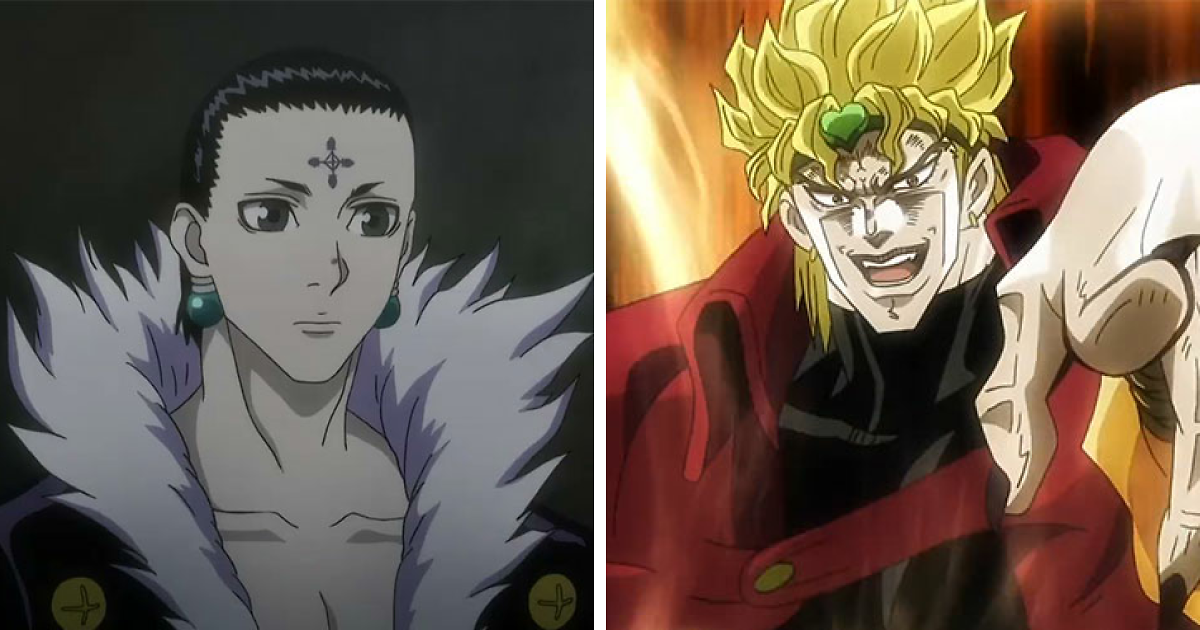
No anime villain list is complete without JoJo, where evil comes with poses, dramatic lighting, and names that sound like a prog-rock playlist. DIO is legendary because he is pure theatrical malice. Kira is frightening because he wants a normal life while being absolutely abnormal. Pucci turns faith into cosmic disaster. JoJo villains do not simply commit crimes; they commit crimes with choreography.
Dark Fantasy, Sci-Fi, And Cult Favorites
101. Vicious (Cowboy Bebop), 102. Knives Millions (Trigun), 103. Legato Bluesummers (Trigun), 104. Millions Knives, new adaptation (Trigun Stampede), 105. Char Aznable (Mobile Suit Gundam), 106. Rau Le Creuset (Gundam SEED), 107. Treize Khushrenada (Gundam Wing), 108. Zechs Merquise, antagonist era (Gundam Wing), 109. Queen Beryl (Sailor Moon), 110. Wiseman/Death Phantom (Sailor Moon R), 111. Sailor Galaxia (Sailor Moon Sailor Stars), 112. Naraku (Inuyasha), 113. Sesshomaru, antagonist era (Inuyasha), 114. Kagura (Inuyasha), 115. Bankotsu (Inuyasha), 116. Medusa Gorgon (Soul Eater), 117. Asura (Soul Eater), 118. Ragyo Kiryuin (Kill la Kill), 119. Nui Harime (Kill la Kill), 120. Satsuki Kiryuin, antagonist era (Kill la Kill).
This category is where anime villainy gets moody, stylish, and occasionally dressed in military capes. Char Aznable helped define the rival-pilot archetype. Vicious is almost more atmosphere than person, which somehow works. Ragyo Kiryuin is so extra that even her evil wardrobe seems to have a villain arc.
Hunter x Hunter, Yu Yu Hakusho, And Strategic Threats
121. Hisoka Morow (Hunter x Hunter), 122. Chrollo Lucilfer (Hunter x Hunter), 123. Meruem (Hunter x Hunter), 124. Neferpitou (Hunter x Hunter), 125. Shaiapouf (Hunter x Hunter), 126. Menthuthuyoupi (Hunter x Hunter), 127. Illumi Zoldyck (Hunter x Hunter), 128. Genthru (Hunter x Hunter), 129. Younger Toguro (Yu Yu Hakusho), 130. Elder Toguro (Yu Yu Hakusho), 131. Shinobu Sensui (Yu Yu Hakusho), 132. Karasu (Yu Yu Hakusho), 133. Bui (Yu Yu Hakusho), 134. Rando (Yu Yu Hakusho), 135. Raizen, antagonist presence (Yu Yu Hakusho), 136. Mukuro, antagonist presence (Yu Yu Hakusho), 137. Yomi (Yu Yu Hakusho), 138. Feitan Portor (Hunter x Hunter), 139. Phinks Magcub (Hunter x Hunter), 140. Machi Komacine (Hunter x Hunter).
Meruem is one of anime’s most remarkable villains because his arc moves from domination to self-discovery. Hisoka, meanwhile, is a walking red flag factory. Chrollo has the calm energy of someone planning five betrayals while ordering tea. Toguro remains a classic because his villainy is tied to strength, regret, and a deeply unhealthy gym routine.
Villains From Action, Sports, Horror, And School Chaos
141. Garou (One Punch Man), 142. Boros (One Punch Man), 143. Deep Sea King (One Punch Man), 144. Monster Association executives (One Punch Man), 145. Esdeath (Akame ga Kill!), 146. Prime Minister Honest (Akame ga Kill!), 147. Akame, antagonist framing era (Akame ga Kill!), 148. Zeref Dragneel (Fairy Tail), 149. Acnologia (Fairy Tail), 150. Jellal Fernandes, antagonist era (Fairy Tail), 151. Shishio Makoto (Rurouni Kenshin), 152. Sojiro Seta (Rurouni Kenshin), 153. Makoto Shishio’s Juppongatana (Rurouni Kenshin), 154. Raoh (Fist of the North Star), 155. Shin (Fist of the North Star), 156. Souther (Fist of the North Star), 157. Hanma Yujiro (Baki), 158. Jack Hanma, antagonist era (Baki), 159. Biscuit Oliva, antagonist era (Baki), 160. Pickle (Baki).
Some villains are terrifying because they have philosophy. Others are terrifying because they can fold a person like laundry. Yujiro Hanma is basically a natural disaster with biceps. Garou is fascinating because his hatred of heroes forces the story to examine what heroism really means. Esdeath is proof that charisma and cruelty can share the same uniform.
Movie, Cult, And Deep-Cut Anime Villains
161. Tetsuo Shima (Akira), 162. Colonel Shikishima (Akira), 163. Lady Eboshi (Princess Mononoke), 164. Yubaba (Spirited Away), 165. The Witch of the Waste (Howl’s Moving Castle), 166. The Puppet Master (Ghost in the Shell), 167. Laughing Man, antagonist framing (Ghost in the Shell: Stand Alone Complex), 168. Bondrewd (Made in Abyss), 169. Wazukyan (Made in Abyss), 170. Regu, antagonist framing moments (Made in Abyss), 171. Major Montana Max/Hellsing’s Major (Hellsing Ultimate), 172. Alexander Anderson, antagonist era (Hellsing), 173. Alucard, villainous framing (Hellsing), 174. Lucy/Kaede (Elfen Lied), 175. Dr. Kurama (Elfen Lied), 176. Shiro (Deadman Wonderland), 177. Tamaki Tsunenaga (Deadman Wonderland), 178. Hamdo (Now and Then, Here and There), 179. Ryo Asuka/Satan (Devilman Crybaby), 180. Sirene (Devilman).
Movie and cult anime villains often blur the line between monster and metaphor. Tetsuo is terrifying because his power grows faster than his emotional control. Lady Eboshi is complicated because she is both destructive and protective. Bondrewd is one of those villains who makes viewers whisper, “Surely it cannot get worse,” right before it gets worse.
Final 20 Villains Who Deserve The Boos
181. Rachel (Tower of God), 182. White (Tower of God), 183. Vetto (Black Clover), 184. Patolli (Black Clover), 185. Dante Zogratis (Black Clover), 186. Lucius Zogratis (Black Clover), 187. Zagred (Black Clover), 188. Betelgeuse Romanee-Conti (Re:Zero), 189. Elsa Granhiert (Re:Zero), 190. Roswaal L. Mathers, antagonist role (Re:Zero), 191. Satella/Witch of Envy (Re:Zero), 192. Petelgeuse’s Witch Cult (Re:Zero), 193. Donquixote Rosinante’s killers/Donquixote Family (One Piece), 194. Akito Sohma (Fruits Basket), 195. Takasugi Shinsuke (Gintama), 196. Utsuro (Gintama), 197. Ryo Shimazaki (Mob Psycho 100), 198. Claw’s Boss Toichiro Suzuki (Mob Psycho 100), 199. Isabella, early antagonist role (The Promised Neverland), 200. Peter Ratri (The Promised Neverland).
Rachel from Tower of God deserves a special chair in the “fans are still mad” hall of fame. Isabella begins as a nightmare wrapped in a lullaby. Akito Sohma shows that emotional control can be just as cruel as physical violence. These villains remind us that hateable does not always mean loud. Sometimes the quietest betrayal hits hardest.
What Makes A Villain Lovable To Hate?
The phrase “love to hate” sounds contradictory, but anime fans understand it perfectly. We do not love the villain’s actions. We love the effect they have on the story. A great anime villain raises the stakes. They make the hero sharper. They give the audience someone to fear, mock, analyze, and occasionally cosplay with alarming commitment.
The best anime villains usually have at least one of five qualities. First, they have presence. When Aizen, DIO, Madara, Makima, or Frieza enters a scene, the room belongs to them. Second, they have clear motivation, even if that motivation is deeply cursed. Third, they challenge the hero’s worldview. Fourth, they are memorable visually, because anime understands that evil should come with branding. Fifth, they make consequences feel real. A weak villain throws punches. A great villain changes the emotional weather of the entire series.
Fan Experience: Why We Keep Coming Back To Anime Villains
Every anime fan has a villain memory. Maybe it was the first time Frieza transformed and you realized the fight was nowhere near over. Maybe it was Light Yagami’s laugh, which sounded like a scholarship student losing a debate with his own ego. Maybe it was Makima calmly turning a conversation into psychological quicksand. These moments stick because they are not just plot points. They are experiences.
Watching anime villains is a little like riding a roller coaster designed by someone with trust issues. You know something terrible is coming, but you lean forward anyway. A hero’s victory is satisfying because the villain made it difficult. Naruto’s ideals matter more because Pain nearly breaks them. Gon’s innocence feels more fragile because Hisoka exists in the same universe. Tanjiro’s kindness shines brighter because Muzan represents the opposite: survival without mercy.
There is also a social side to loving anime villains. Few things unite fans faster than arguing about whether Johan is scarier than Griffith, whether Aizen planned too much, whether Madara was robbed by the story, or whether DIO is technically a villain, a meme engine, or an immortal theater kid with vampire privileges. Villain debates are fun because they mix power, writing, design, philosophy, and pure emotional reaction. Sometimes the “best” villain is not the strongest one. Sometimes it is the one who made you pause the episode and stare at the wall like you had just received bad news from a fictional universe.
Anime villains also give viewers a safe way to explore darker emotions. Rage, revenge, envy, ambition, pride, loneliness, fear, and obsession are all exaggerated through these characters. That exaggeration makes them entertaining, but it also makes them strangely useful. We can recognize destructive patterns from a distance. We can see how grief becomes cruelty in one story, how power becomes isolation in another, and how a charming smile can hide a moral black hole big enough to swallow an arc.
Personally, the best villain experiences are the ones where my opinion changes over time. A villain I hated as a teenager might feel more tragic later. A character I once thought was “cool” might become obviously horrifying after a rewatch. That is the beauty of anime storytelling: the villains age with us. Meruem feels different when you understand pride. Griffith feels worse when you understand betrayal. Light feels more frightening when you realize how easily intelligence can become arrogance. The villain stays on screen, but the viewer keeps growing.
And then there are the villains we hate in the simplest, purest way possible. Shou Tucker. Spandam. Rachel. Characters who make the fandom collectively point at the screen and say, “Nope.” Not every villain needs a grand ideology. Sometimes being unforgettable only requires one perfectly awful decision and the confidence to make everyone furious forever.
That is why anime villains remain such powerful parts of pop culture. They are not just obstacles. They are mirrors, storms, jokes, nightmares, and sometimes the reason a series becomes legendary. We love heroes because they inspire us. We love-to-hate villains because they test that inspiration until it either breaks or becomes stronger.
Conclusion
The world of anime would be a lot quieter without its villainsand honestly, a lot less stylish. From Frieza’s galactic tyranny to Johan Liebert’s psychological terror, from DIO’s immortal drama to Makima’s controlled menace, anime villains give stories their bite. They force heroes to grow, fandoms to argue, and viewers to keep clicking “next episode” even when bedtime has clearly lost the war.
These 200 anime villains we just love to hate represent decades of unforgettable storytelling. Some are legendary because they are powerful. Some are unforgettable because they are cruel. Some are complicated enough to inspire essays, debates, and comment sections that should probably come with helmets. But all of them prove one thing: a great anime villain does not just fight the hero. A great anime villain fights for a permanent place in our memory.