
Television has given humanity many gifts: breaking news, prestige dramas, cooking competitions where people cry over risotto, and, most importantly, the ability to laugh at a fake fire drill as if our own office were not already emotionally flammable. The funniest moments in TV history are not just jokes; they are cultural bookmarks. They are the scenes families quote at Thanksgiving, coworkers reference during stressful meetings, and friends shout while moving furniture up a staircase.
This list celebrates 22 unforgettable TV comedy moments that changed the rhythm of sitcoms, sketch shows, animation, and ensemble comedy. Some are elegant pieces of physical comedy. Some are perfect one-liners. Others are chaotic disasters involving turkeys, cowbells, curtains, cats, or cheese. Together, they show why television remains one of the best machines ever invented for turning embarrassment into joy.
Why These Funny TV Moments Still Matter
The best TV comedy moments do more than make viewers laugh once. They survive because they reveal character, build tension, and explode at exactly the right second. Great comedy is architecture with banana peels: the setup must be sturdy, the timing must be precise, and the fall must feel surprising even when we can see it coming.
From classic black-and-white sitcoms to modern mockumentaries, these scenes became legendary because they understood one simple truth: people are funniest when they are trying very hard not to be ridiculous.
22 of the Funniest Moments in TV History
1. Lucy Sells Vitameatavegamin I Love Lucy
Lucille Ball’s “Vitameatavegamin” commercial remains one of the greatest examples of physical comedy ever aired. Lucy Ricardo tries to sell a health tonic on live television, not realizing the product contains enough alcohol to turn a polite commercial into a one-woman shipwreck. Her smile gets wider, her diction gets wobblier, and the sales pitch becomes gloriously unhinged. The genius is that Lucy never stops trying to be professional. She is a disaster wearing lipstick and confidence.
2. Chuckles the Clown’s Funeral The Mary Tyler Moore Show
Dark comedy reached sitcom perfection when Mary Richards attends the funeral of Chuckles the Clown. Everyone else has already made jokes about his bizarre death, but Mary insists it is inappropriate. Then the service begins, and she loses the battle against laughter. The scene works because it captures a painfully human truth: the harder we try not to laugh, the louder our soul starts honking like a clown horn.
3. The Turkey Drop WKRP in Cincinnati
Few sitcom punchlines have landed with the force of the infamous turkey promotion gone wrong. The radio station plans a Thanksgiving stunt involving live turkeys dropped from a helicopter, only to learn a devastating biological fact: domestic turkeys are not exactly aerial professionals. The funniest part is not the unseen chaos but the breathless reporting and the defeated final admission from Mr. Carlson. It is corporate marketing, poultry science, and pure panic in one perfect scene.
4. “Don’t Mention the War” Fawlty Towers
Basil Fawlty telling everyone not to mention World War II, then repeatedly mentioning it himself, is a master class in comic self-sabotage. John Cleese turns Basil into a walking alarm bell: stiff, frantic, concussed, and absolutely incapable of behaving like a normal hotel manager. The scene is funny because Basil creates the exact social disaster he is trying to avoid. If embarrassment had a marching band, this would be the parade.
5. The Contest Seinfeld
“The Contest” proved that a sitcom could build an entire episode around a taboo topic without saying the obvious word. Jerry, George, Elaine, and Kramer enter a private competition of self-control, and every scene becomes funnier because of what the script refuses to say directly. The episode is clever, adult, and weirdly elegant. It is also a reminder that comedy often becomes sharper when it has to sneak past the censor wearing sunglasses and a trench coat.
6. The Couch Pivot Friends
Ross shouting “pivot” while trying to move a couch up a tight stairwell turned one ordinary furniture problem into a global comedy password. The scene works because everyone has lived some version of it: too much furniture, too little space, and one self-appointed logistics manager losing touch with reality. Chandler’s exhausted sarcasm seals the moment. After this, no one could move a sofa without hearing Ross in their head.
7. Dwight’s Fire Drill The Office
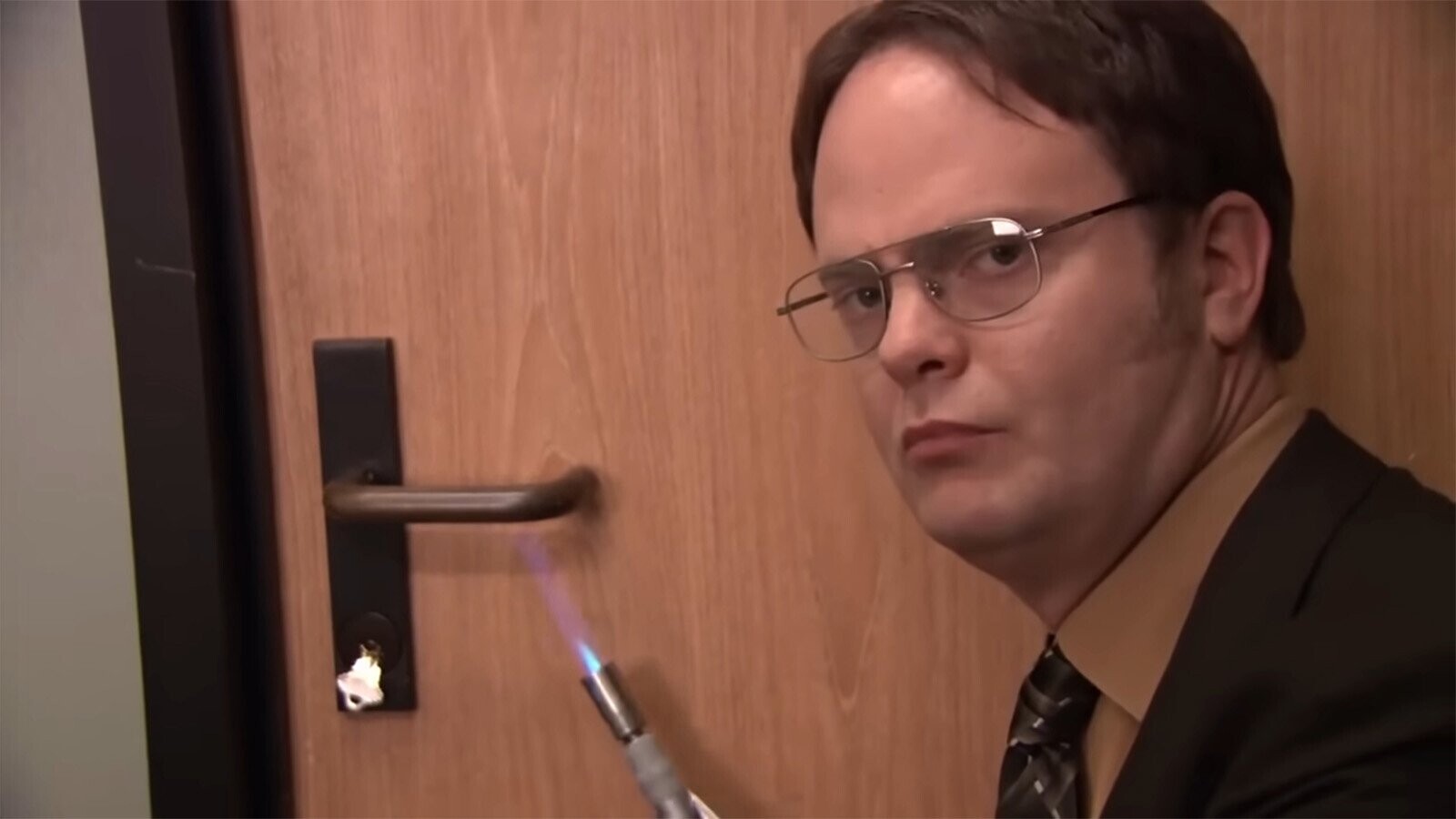
Dwight Schrute’s fake fire drill is workplace comedy at full emergency volume. He locks exits, creates smoke, and turns safety training into a psychological obstacle course. The employees panic in wildly character-specific ways: Kevin attacks the vending machine, Angela worries about her cat, Oscar climbs into the ceiling, and Michael turns leadership into property damage. It is funny because every reaction is wrong, yet somehow believable.
8. “Dental Plan! Lisa Needs Braces!” The Simpsons
In “Last Exit to Springfield,” Homer Simpson becomes a labor leader because his brain loops two phrases: “Dental plan” and “Lisa needs braces.” It is one of the most efficient jokes in animated TV history. The repetition becomes funnier each time because it shows Homer’s mind slowly connecting two dots with the speed of a sleepy fax machine. Satire, family stakes, and absurdity all click into place.
9. The Bluth Family Chicken Dances Arrested Development
No one in the Bluth family seems to have seen a chicken, and that ignorance gave television one of its strangest running gags. Each family member performs a different, aggressively inaccurate chicken dance, and every version reveals something ridiculous about the dancer. Gob flails, Lindsay poses, Lucille sneers, and Michael suffers. The joke gets better because the show trusts the audience to enjoy nonsense with layers.
10. “Werewolf Bar Mitzvah” 30 Rock
A tiny joke became a cult comedy anthem when Tracy Jordan’s novelty song “Werewolf Bar Mitzvah” appeared on 30 Rock. The idea is so silly that it loops back around to genius: a Halloween song about boys becoming men and men becoming wolves. It is exactly the kind of throwaway gag that 30 Rock specialized infast, absurd, oddly catchy, and confident enough to sprint away before viewers can ask questions.
11. Chris Traeger Gets the Flu Parks and Recreation
Chris Traeger is usually a human vitamin commercial, which makes his flu episode especially funny. Watching Rob Lowe’s ultra-healthy optimist collapse into sweaty despair turns a simple illness into a spiritual crisis. His attempt to command his body to stop misbehaving is both ridiculous and relatable. Anyone who has ever caught a stomach bug has briefly believed they could negotiate with biology. Biology, famously, does not take meetings.
12. The Thanksgiving Food Fight Cheers
“Thanksgiving Orphans” takes a room full of lonely, cranky adults and turns dinner into a full-scale food fight. What begins as holiday awkwardness becomes mashed-potato warfare. The brilliance is that the chaos feels earned: these characters love each other, annoy each other, and finally express everything with flying cranberry sauce. It is one of TV’s best holiday scenes because it understands that family is sometimes whoever throws pie at you.
13. Carol Burnett’s Curtain Dress The Carol Burnett Show
In the “Went with the Wind!” sketch, Carol Burnett descends a staircase wearing a gown made from curtainswith the curtain rod still attached. The sight gag is so perfect that it barely needs dialogue. It parodies old Hollywood glamour while also honoring it. Bob Mackie’s costume design turned fabric, fringe, and one brilliant rod into a comedy monument. Sometimes the funniest writing is tailoring.
14. “More Cowbell” Saturday Night Live
Christopher Walken demanding more cowbell while Will Ferrell commits fully to the world’s most unnecessary percussion part is sketch comedy gold. The joke is simple: one man believes the cowbell is essential; another man plays it like he is saving civilization. Ferrell’s too-tight shirt, Walken’s grave authority, and the band’s increasing frustration create a perfect storm of absurd confidence.
15. Prince Plays Basketball Chappelle’s Show
The Charlie Murphy story about playing basketball against Prince became one of the most surreal sketches in modern TV comedy. Dave Chappelle’s Prince is regal, mysterious, and unexpectedly athletic. The idea that a legendary musician could dominate a pickup game and then serve pancakes sounds fake, which is exactly why it is hilarious. The sketch works because it treats absurdity like historical documentary footage.
16. Laura Reveals Alan Brady Is Bald The Dick Van Dyke Show
On “Coast to Coast Big Mouth,” Laura Petrie accidentally reveals on television that Alan Brady is bald. The comedy comes from Mary Tyler Moore’s perfect blend of innocence, panic, and dawning horror. She does not intend to betray anyone; she simply talks herself into a trap. It remains one of the funniest classic sitcom moments because it turns a tiny secret into a national emergency.
17. Bob Newhart’s Drunk Thanksgiving The Bob Newhart Show
In “Over the River and Through the Woods,” Bob Hartley and company get drunk on Thanksgiving and try to order Chinese food. The scene is a triumph of understated comedy. Bob Newhart does not need chaos to be funny; he needs a phone, a pause, and a group of grown men slowly losing the ability to pronounce dinner. It is quiet, silly, and deeply human.
18. The Condom Scene The Golden Girls
The Golden Girls was fearless about topics many sitcoms tiptoed around, and its condom-buying scene remains a fan favorite. Dorothy, Blanche, and Rose try to handle an awkward purchase with dignity, only for the moment to become louder and more public than anyone intended. The joke is not just about embarrassment; it is about women refusing to become invisible. Also, it is about Rose misunderstanding things at Olympic level.
19. “Fold in the Cheese” Schitt’s Creek
Moira and David Rose trying to make enchiladas is a tiny domestic scene that becomes comedy magic. David does not know how to “fold in” cheese, and Moira cannot explain it because she also does not know. The argument escalates with the precision of a family recipe written by a ghost. It is funny because it captures the terror of pretending to understand instructions while holding shredded cheese.
20. The Carlton Dance The Fresh Prince of Bel-Air
Carlton Banks dancing with total commitment became one of the most recognizable comedy moves in TV history. The humor comes from Alfonso Ribeiro’s fearless physicality and Carlton’s complete lack of self-consciousness. He is not trying to be cool. He is trying to be Carlton, which is much funnier and more powerful. The dance became iconic because joy is contagious, especially when it arrives with swinging elbows.
21. Phil Dunphy Gets Physical Modern Family
Phil Dunphy’s funniest moments often involve good intentions colliding with poor coordination. Whether he is performing magic, attempting athletic heroics, or trying to look calm while clearly spiraling, Phil represents the comedy of earnest fatherhood. His best scenes are funny because he believes in himself so aggressively that reality has to file a complaint.
22. Selina Meyer’s Meltdown Machine Veep
Veep turned political panic into verbal fireworks, and Selina Meyer’s meltdowns remain some of the sharpest comedy writing on modern television. The show’s funniest moments are not gentle; they are fast, brutal, and beautifully crafted. Selina and her staff speak in insults, damage control, and ego defense. It is comedy for anyone who has watched a meeting go wrong and thought, “This could use more screaming, but better vocabulary.”
What These Moments Teach Us About Great TV Comedy
Looking across these legendary scenes, a few patterns emerge. First, great comedy usually starts with character. Lucy gets drunk on tonic because she is ambitious and desperate to perform. Dwight creates disaster because he believes rules should be enforced with the subtlety of a medieval catapult. Moira cannot fold in cheese because she has built an entire personality around sounding competent while floating above practical life.
Second, timing matters. The pause before a punchline can be as funny as the punchline itself. Bob Newhart built a career on silence. Seinfeld built laughs from coded language and delayed revelation. The Office used mockumentary glances as emotional punctuation. The best TV comedy lets viewers feel the joke arriving, then still surprises them when it crashes through the wall.
Third, the funniest TV moments are often social nightmares. A funeral. A workplace emergency. A holiday dinner. A public purchase. A hotel full of guests. Comedy loves pressure, because pressure reveals who people really are. Under stress, polite adults become children, leaders become lunatics, and someone always throws a pie.
A Viewing Experience: Why Rewatching These Scenes Feels Like Visiting Old Friends
There is a special pleasure in rewatching the funniest moments in TV history. The first viewing gives you surprise; the second gives you anticipation. By the fifth viewing, you are laughing before the joke lands because your brain has already set the table. That is not a weakness of old comedy. That is the magic trick. A great TV scene becomes a ritual.
Think about watching “Pivot” with friends. Someone always starts repeating Ross too early. Someone else becomes Chandler and complains from the emotional basement. The scene turns the room into a chorus. The same thing happens with “More Cowbell.” Even people who have never played an instrument suddenly develop strong opinions about percussion levels. The joke expands beyond the screen and becomes a shared language.
Classic comedy also carries memory with it. Many viewers first saw I Love Lucy, The Mary Tyler Moore Show, or The Carol Burnett Show through reruns with parents or grandparents. The laughter came with living rooms, snacks, and the strange comfort of shows that seemed to exist outside time. Black-and-white television can feel distant, but Lucille Ball’s timing is still immediate. Carol Burnett’s curtain rod still looks wonderfully ridiculous. Good comedy does not expire; it just changes streaming platforms.
Modern shows create a different kind of experience. Fans share clips, GIFs, memes, and reaction images. Dwight’s fire drill is perfect for describing office chaos. “Fold in the cheese” belongs to anyone who has ever pretended to understand a recipe. “Dental plan” and “Lisa needs braces” can loop in the mind during any boring benefits meeting. These scenes became shorthand because they identify everyday absurdity with surgical accuracy.
The best part of revisiting funny TV moments is noticing the craft behind the chaos. A scene may look spontaneous, but it is usually built with careful writing, blocking, editing, performance, and rhythm. The turkey drop is hilarious because the disaster happens mostly off-screen. The Bluth chicken dances work because each actor commits to a different wrong answer. Veep lands because the insults arrive like machine-gun poetry. Comedy may feel light, but making it last is serious work.
And maybe that is why these moments endure. They offer relief without asking us to ignore reality. Work is stressful. Families are weird. Holidays go wrong. Instructions are unclear. People reveal secrets, misread situations, panic under pressure, and occasionally believe turkeys can fly. TV comedy takes those ordinary humiliations and makes them safe to enjoy. It reminds us that everyone is ridiculous sometimes, and that laughter is one of the kinder ways to admit it.
Conclusion
The funniest moments in TV history survive because they are more than punchlines. They are tiny masterpieces of character, timing, surprise, and emotional truth. Whether it is Lucy wobbling through a commercial, Dwight turning fire safety into horror theater, Carol Burnett weaponizing a curtain rod, or Moira Rose failing to explain cheese, these scenes prove that television comedy is at its best when it makes human foolishness feel universal.
Great TV laughter does not belong to one generation. It travels. Parents pass it to kids. Friends send clips at midnight. Coworkers quote scenes during meetings that should have been emails. The screens change, but the jokes keep finding new audiences. That is the real history here: not just 22 funny moments, but 22 reminders that a well-built joke can outlive fashion, technology, and even the couch that absolutely will not pivot.
Note: This article is an original synthesis based on documented television episodes, entertainment history, and widely recognized comedy moments. It is written for web publication without source-link clutter inside the article body.