
Note: The examples in this article are fictional composite scenarios inspired by common online behavior. No private messages, usernames, or real screenshots are reproduced.
There are two kinds of people online: people who have sent an awkward message, and people who are one accidental tap away from joining the club. The internet has many wonderful talents, including helping us learn new skills, reconnect with old friends, and watch a raccoon steal a sandwich. Unfortunately, it also has a suspiciously good memory.
A deleted post can be gone in seconds, but a screenshot can survive group chats, reposts, reaction threads, cloud backups, and that one friend who keeps a folder called “Receipts.” Screenshots are the digital version of glitter: once they escape, they somehow appear everywhere for years.
Some screenshots are funny because they capture harmless overconfidence, chaotic autocorrect, or a spectacularly mistimed emoji. Others are sad because they reveal betrayal, cruelty, dishonesty, or a person having a rough moment in front of an audience that did not need to be there. The difference matters. A harmless typo deserves a laugh. Someone’s humiliation does not deserve a stadium full of strangers with popcorn.
Why Screenshots Have Such a Long Digital Life
Screenshots are powerful because they freeze a moment before someone can edit, delete, explain, or suddenly claim their account was “hacked by a raccoon.” They make a temporary online conversation feel permanent. A message that took three seconds to send can become a tiny digital fossil, preserved with a timestamp, profile picture, and enough context to make everyone involved wish they had put their phone in airplane mode.
The problem is that screenshots rarely carry the whole story. A cropped conversation may remove the apology, the joke, the previous message, or the relationship between the people involved. That is why screenshot culture can be entertaining and misleading at the same time. The internet loves a clean villain, a dramatic plot twist, and a caption that says, “I cannot believe this happened.” Real life is usually messier.
Still, the lesson is useful: pause before posting, avoid sharing private details, and remember that a direct message is only as private as the person receiving it. The safest assumption is simple: anything typed online can be saved, forwarded, misunderstood, or brought up years later when you are trying to look professional.
50 Cringy and Sad Internet Moments That Screenshots Never Forget
1. The Accidental Reply-All Disaster
- The boss roast sent to the boss. Someone types a dramatic complaint about their manager, then accidentally sends it directly to the manager. The office suddenly becomes quieter than a library during final exams.
- The family group chat mistake. A person thinks they are texting one sibling, but their message lands in the entire family thread. Grandma reads it. Grandma has questions.
- The breakup message sent to the wrong person. Nothing says “this relationship is over” quite like sending the breakup speech to the person you are still dating instead of your best friend.
- The accidental voice-note monologue. Someone records a long rant, forgets to stop, and sends forty-seven seconds of unfiltered panic, snack chewing, and bad opinions.
- The client email with unfinished notes. A draft includes a private comment such as “make this sound less boring,” and then gets sent to the client. Somewhere, a marketing intern feels their soul leave their body.
2. The Confidence That Arrived Before the Facts
- The expert who confidently gets everything wrong. A person corrects someone online with enormous confidence, only to discover that a two-second search would have saved them from becoming a screenshot classic.
- The fake job title. Someone claims to be a CEO, consultant, strategist, founder, innovator, and “visionary thought leader.” Their profile says they are seventeen and sell phone cases on weekends.
- The motivational post copied from a scam account. A dramatic quote about success is posted with a luxury car photo, except the image still has another person’s watermark in the corner.
- The “I don’t need anyone” announcement. A person posts a powerful speech about independence, then comments “Why is nobody checking on me?” twenty minutes later.
- The online argument with a professional. Someone tries to explain medicine to a doctor, music to a musician, or law to an attorney. The screenshot becomes educational material for everyone except the original poster.
3. The Romance Fails That Needed a Draft Folder
- The public breakup countdown. A couple posts increasingly vague messages until everyone realizes the relationship is ending in real time, like a sad television series with no finale.
- The copy-and-paste love message. Someone sends the same romantic paragraph to multiple people, but forgets to change the name. Romance has left the building.
- The anniversary post with the wrong date. A person celebrates “three amazing years” with a partner they started dating eight months earlier. Mathematics quietly requests a day off.
- The jealous comment marathon. Instead of having a private conversation, someone comments under every photo with suspicious emojis, passive-aggressive jokes, and enough question marks to open a punctuation museum.
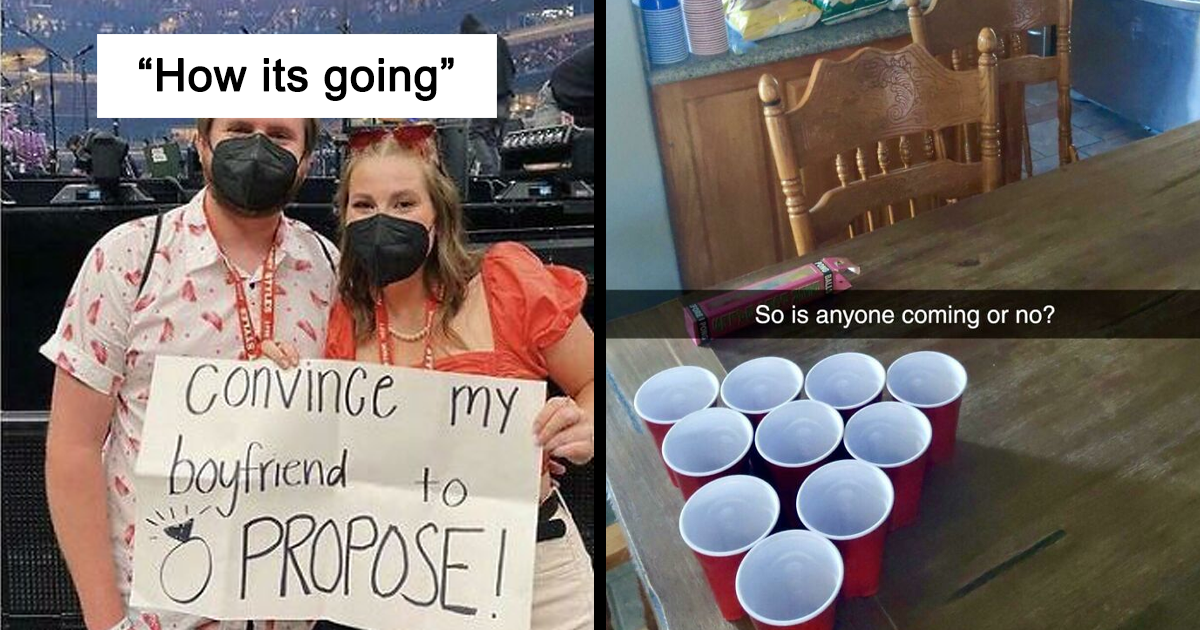
- The engagement announcement nobody agreed to. One person posts a surprise proposal story while the other person has not said yes. The comments become a stressful mixture of heart emojis and concerned silence.
4. The Workplace Moments That Age Like Milk
- The fake sick day selfie. Someone calls in sick, then uploads photos from a concert, beach, mall, or brunch table that looks suspiciously energetic.
- The “open to work” post from a current employee. A person publicly announces they are looking for a new job before telling their current employer. Their manager finds out through a like notification.
- The rude customer-service message. A customer sends an aggressive complaint, only to discover the business owner has politely posted the full exchange with names removed and receipts included.
- The meeting chat sent to everyone. “This meeting could have been an email” is typed into the meeting chat, except the host can see it. So can the vice president. So can the person giving the presentation.
- The résumé exaggeration exposed. A person claims advanced skills in software they cannot open without asking where the login button is.
5. The Social Media Flex That Backfires Immediately
- The rented luxury photo. Someone posts beside an expensive car with a caption about “hard work paying off,” while the rental agency tag remains visible.
- The fake vacation. A person shares beach photos while their reflection reveals a rainy parking lot, a green screen, or a suspiciously familiar wallpaper.
- The “no-filter” photo with seven filters. The caption promises authenticity while the person’s face looks smoother than a freshly polished bowling ball.
- The expensive dinner with a payment problem. A glamorous restaurant photo is followed by an awkward message asking friends to send money because the bill was “unexpected.”
- The borrowed achievement. Someone posts a friend’s award, diploma, or project as though it belongs to them. The original owner comments congratulations to themselves.
6. The Friendship Moments That Hurt More Than They Should
- The group photo exclusion. Someone sees their entire friend group together in a photo and realizes they were not invited. No dramatic caption is needed; the screenshot says enough.
- The private joke posted publicly. A friend shares a supposedly harmless story that embarrasses someone else. The laughs pile up, but the original person is not laughing.
- The birthday post with the wrong person tagged. Someone writes a heartfelt birthday message and tags an old friend, ex, or complete stranger. The comments become a digital crime scene.
- The “best friend” ranking list. A person posts a public list of their closest friends. Several people discover they were apparently demoted without a performance review.
- The secret shared for attention. Someone tells a private story online because it gets reactions, forgetting that the story belongs to more than one person.
7. The Autocorrect and Typo Hall of Fame
- The innocent typo that changes everything. Autocorrect swaps one harmless word for another, and suddenly a polite message sounds like it came from a confused villain.
- The missing punctuation emergency. “Let’s eat, Grandma” and “Let’s eat Grandma” are not the same sentence. Punctuation is not optional when Grandma is involved.
- The wrong emoji. Someone reacts to sad news with a laughing face, sends a heart to a work announcement, or replies with a fire emoji to something deeply inappropriate.
- The accidental all-caps message. A person thinks they are emphasizing a point but instead sounds like they are trying to start a small digital rebellion.
- The autocorrect betrayal in a formal email. A professional message turns into nonsense because one word changes at the last second. Suddenly, “Regards” becomes a phrase no one can explain.
8. The “I Should Have Logged Off” Moments
- The 2 a.m. opinion thread. Someone posts a long, emotional rant in the middle of the night and wakes up to hundreds of replies, most of which are not supportive.
- The comment war with strangers. Two people argue for hours over something neither can change. By the end, both have lost time, patience, and perhaps several keyboard keys.
- The vague post that names nobody and accuses everybody. “Some people are fake” appears online, followed by friends texting each other like detectives in a low-budget mystery show.
- The live-posted meltdown. Instead of stepping away, someone posts every emotional thought as it arrives. The result is less “honest expression” and more “please put the phone down.”
- The deleted post that everyone already saved. Someone realizes a post was a mistake, deletes it quickly, then learns six people took screenshots before breakfast.
9. The Sadder Side of Screenshot Culture
- The humiliating photo shared without consent. A candid image is posted to mock someone’s appearance, mistake, or vulnerable moment. It may get laughs, but the harm can stay long after the post disappears.
- The private message used as entertainment. A personal conversation gets reposted for likes, turning trust into content and leaving one person wondering why they ever opened up.
- The rumor screenshot. A cropped message spreads an accusation without context. People share it because it is dramatic, not because they know whether it is true.
- The cruel group-chat pile-on. One person becomes the target of jokes in a group chat while others stay silent, react with laughing emojis, or take screenshots instead of stepping in.
- The apology treated like a meme. Someone makes a real attempt to apologize, but the response is endless mockery. Accountability matters, but public humiliation is not the same thing as growth.
10. The Lessons Everyone Learns Eventually
- The screen recording surprise. A person thinks disappearing messages are untouchable, only to learn that another device can record almost anything.
- The private account that is not truly private. A person trusts a small follower list, forgetting that followers can still save, forward, or repeat what they see.
- The old post found during a big moment. Years later, an outdated joke, opinion, or photo resurfaces at the exact moment someone is applying for a job, school, or public opportunity.
- The friend who becomes a receipts archive. After an argument, someone discovers that every odd message they ever sent has been carefully saved and categorized like evidence in a courtroom drama.
- The realization that kindness was the better screenshot. The most lasting online moment is not always the funniest insult. Sometimes it is the person who refused to spread something cruel.
How to Avoid Becoming Screenshot Content
You do not need to live in fear of your phone. You just need a small pause button between your thoughts and the send icon. Before posting, ask whether you would be comfortable seeing the message on a classroom projector, in front of your family, or beside your future résumé. That mental exercise is not glamorous, but neither is explaining a five-year-old angry comment to someone interviewing you.
Keep sensitive conversations private, avoid posting another person’s messages without permission, and never share photos that could embarrass someone. A good rule is this: if the joke only works because another person cannot defend themselves, it is probably not a great joke.
Use privacy settings, limit what personal information is visible on public profiles, and think carefully about location tags, school details, daily routines, and financial information. Privacy settings are useful, but they are not magic. A trusted follower can still take a screenshot.
When a Screenshot Stops Being Funny
Some screenshots are harmless. Others involve bullying, harassment, threats, scams, impersonation, or private content shared without consent. Those situations deserve a different response. Do not repost the material for entertainment. Save evidence only when it is needed to report the issue, block the account involved, and tell a trusted adult, school staff member, parent, guardian, or platform support team.
When someone is being targeted, a quiet message of support can matter more than a clever public response. You do not have to become a hero in a comment section. You can refuse to share the post, report harmful content, check in privately, and avoid adding another laughing reaction to someone else’s worst day.
Extended Experiences: What Screenshot Culture Feels Like in Real Life
Most people have a small personal museum of online embarrassment. Maybe it is a message sent too quickly, a caption that sounded funnier in your head, or an old profile photo that now makes you wonder whether you had access to mirrors at the time. These moments are uncomfortable, but they are also part of growing up in public. Previous generations had awkward school photos hidden in drawers. Today, awkward moments can be rediscovered by a classmate who has a long memory and an alarming amount of free time.
The strange thing about screenshot culture is that it can make normal mistakes feel larger than they really are. A person might spend hours replaying a typo that everyone else forgot in five minutes. They may worry that one awkward comment defines their personality forever. It does not. People are allowed to learn, change their minds, communicate badly once in a while, and survive a badly timed emoji.
At the same time, the internet can reward people for treating someone else’s embarrassment like a sport. A screenshot gets reposted because it is dramatic. A caption gets sharper because it earns attention. Then more people join in, often without knowing the person involved or the full context. That is where funny becomes cruel. The original poster may move on quickly, but the person in the screenshot can feel exposed long after everyone else has scrolled away.
There is also a quieter sadness in seeing private trust become public entertainment. Friends share personal conversations after arguments. Couples post vague accusations instead of talking privately. Group chats become places where people perform loyalty by mocking someone who is not there. Screenshots make it easy to prove a point, but they can also make it harder to repair a relationship.
A healthier approach is not to pretend that mistakes never happen. It is to treat them proportionally. Laugh at harmless chaos, such as a typo, a weird autocorrect suggestion, or an accidental like on a very old photo. But stop before turning someone’s vulnerable moment into a crowd event. The best digital habit is not perfect posting. It is remembering that there is a real person on the other side of every screen.
Eventually, most of us become less embarrassed by the old screenshots. We look back and realize we were younger, less experienced, more emotional, or simply operating with poor Wi-Fi and worse judgment. The internet may keep receipts, but it does not get to decide who we become. Growth is still possible, even when somebody somewhere has a screenshot folder.
Conclusion: Be Careful, Be Funny, and Be Human
The internet will always preserve strange messages, awkward captions, accidental reply-alls, and spectacular online overconfidence. That is part of the deal. But the best response to screenshot culture is not paranoia. It is judgment. Think before you post, protect your privacy, avoid sharing private conversations, and remember that someone else’s cringe moment may be their genuinely difficult day.
There is plenty of room online for humor. Just leave room for empathy, too. The funniest screenshot is usually the harmless one. The smartest person in the group chat is often the person who knows when not to hit send.