
Note: This article is playful on purpose. The joke is about how German can feel to learners, not about German speakers or German culture. In fact, German is rich, precise, expressive, and far more lovable than this title pretends.
If you have ever tried learning German, you probably started with dangerous optimism. After all, it is a cousin of English. How bad could it be? Then, about fifteen minutes later, German politely hands you three grammatical genders, four cases, verbs that wander off until the end of the sentence, and a noun so long it looks like it should come with hiking boots.
That is why the internet keeps circling back to the same joke: the German language is the worst. Not actually the worst, of course. If anything, German is one of the funniest languages to learn because it seems to combine military-grade precision with maximum dramatic tension. It can be logical, elegant, and weirdly poetic, yet it can also make a beginner feel like they accidentally signed up for a grammar obstacle course.
So let us roast it lovingly. Here are 50 hilarious reasons why the German language feels impossible, ridiculous, and secretly brilliant all at once.
50 Hilarious Reasons Why German Feels So Brutal
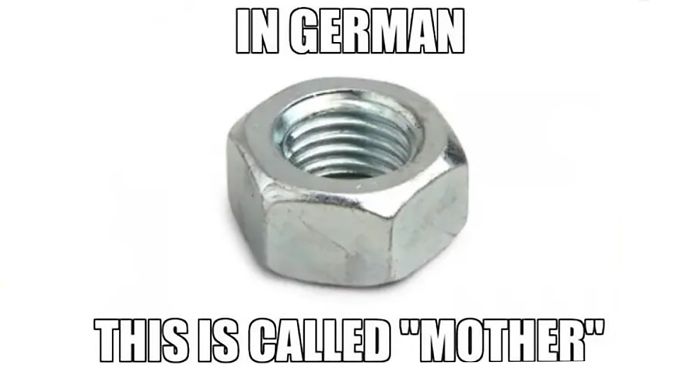
- Every noun has a gender, because apparently plain old “object” was too easy. A table is masculine, a door is feminine, and a window is neuter. None of this asks for your opinion.
- You cannot just learn the noun. You have to learn the noun with its article. In German, “book” is not enough. You need das Buch, because forgetting the article means future-you will suffer publicly.
- The word for “girl” is neuter. German took one look at common sense, nodded politely, and left the room.
- There are four cases waiting to jump out of a dark alley. Nominative, accusative, dative, and genitive sound less like grammar and more like a law firm that bills by the hour.
- The article changes shape depending on the case. You thought you had mastered der, die, and das. That was adorable.
- Prepositions are tiny dictators. One little word strolls into the sentence, and suddenly your noun has to change outfits and report to a new grammatical department.
- Some prepositions change case depending on motion or location. So now you are not just speaking. You are doing geometry, too.
- Plural forms are the language version of surprise boxes. Sometimes you add -e, sometimes -er, sometimes -n, sometimes nothing, and sometimes an umlaut appears like a jump scare.
- German nouns are always capitalized. Every Noun enters the sentence like it owns Stock in the Company.
- Compound nouns do not believe in personal space. English says “insurance company executive meeting.” German says, “Why waste the gaps?”
- Some compound words are the length of a medium-sized podcast episode. You do not read them. You commit to them.
- The last part of a compound often controls the meaning. Which means you stare at the end of the word first, like a detective trying to solve a linguistic crime scene.
- The verb likes suspense more than any Netflix writer alive. German often makes you wait until the end of the clause to discover what is actually happening.
- Subordinate clauses are basically delayed gratification as a grammar system. You hear the setup, the detail, the context, the emotional framing, and then finallythree business days laterthe verb.
- Separable verbs are pure chaos with paperwork. Half the verb stays near the front. The other half wanders to the end like it forgot where it parked.
- Then in a subordinate clause, those separable verb parts reunite. German breaks the family apart, then announces a dramatic reunion in the final scene.
- Word order is less a rule and more a puzzle box. Position two matters. Final position matters. First position matters. Basically, every position is having a moment.
- If your sentence begins with a dependent clause, the next part flips. It is the grammatical equivalent of stepping on a moving escalator while carrying soup.
- Modal verbs shove other verbs to the end. So the sentence starts normal and ends with a verbal traffic jam.
- Perfect tense likes to leave past participles in the back corner. By the time the important word arrives, you may have emotionally moved on.
- Adjective endings are everywhere. German took the modest English adjective and said, “What if this also had an advanced costume department?”
- And those adjective endings depend on gender, case, number, and article type. One adjective can feel like filing taxes in four dimensions.
- The sound spelled ch can humble a confident adult in seconds. It is the noise many learners make right before they realize they are not actually pronouncing it correctly.
- Umlauts look cute, but they are not decorative. Those two tiny dots can change pronunciation, grammar, and meaning while pretending to be harmless.
- Then there is ß, the letter that looks like a smug little side quest. It is not a B. It is not exactly “ss.” It is here to make keyboards nervous.
- When the special characters are not available, the spelling changes again. Suddenly ä becomes ae, ö becomes oe, and ü becomes ue. Because why stop the fun now?
- Pronunciation is often more systematic than English, yet it still feels like a trap. The problem is not that German is random. The problem is that it is confidently specific.
- German sounds intense even when it is discussing bread. You could be ordering pastries and still sound like you are briefing a small army.
- False friends are everywhere, waiting to embarrass you. Gift means poison, not a present. That is a rough vocabulary lesson.
- Bekommen does not mean “become.” It means “receive,” which is how German receives your trust and immediately betrays it.
- Bald does not mean hairless. It means “soon,” which is funny because many learners discover this only slightly too late.
- Also often means something closer to “so” or “well.” German borrowed an English-looking word and then gave it a completely different job.
- Rat means advice. So yes, German can produce a sentence where you sincerely ask for a rat and mean wisdom.
- The language gives you tiny words with giant emotional power. A word like doch can carry contradiction, persuasion, reassurance, and attitude, all in one syllable.
- Formal and informal “you” can turn a casual chat into a social minefield. Choosing between du and Sie can feel like guessing the dress code with your reputation on the line.
- Some verbs look familiar and then behave like villains. You think you recognize them because of English. They think that is hilarious.
- German loves precision so much it can make a simple thought sound officially certified. Need to say something basic? Here are three grammatical checkpoints and a pronunciation audit.
- The language has regional variation just to keep you humble. You study textbook German, then meet real speakers and suddenly wonder whether you accidentally opened the wrong universe.
- Standard German itself has a long history of compromise. Which somehow feels appropriate for a language that negotiates every sentence like a treaty.
- Newspaper-style sentences can become endurance sports. You start reading with confidence and finish with the spiritual exhaustion of someone who just assembled furniture without instructions.
- Mark Twain made fun of German over a century ago, and learners still nod in painful agreement. Nothing says timeless comedy like grammar-induced despair surviving multiple generations.
- You cannot trust the ending of a word to save you every time. Sometimes the endings help with gender. Other times they shrug and leave you to your fate.
- Pronouns change forms, too. So even your tiny, innocent little “him” and “them” are out here doing acrobatics.
- German rewards memorization like it is giving out medals. Learn the rule, learn the exception, learn the exception to the exception, and maybe you may pass.
- Many verbs with prefixes shift meaning in ways that are not obvious. One small attachment can turn a familiar verb into a whole new personality.
- Sometimes the stressed syllable changes the feel of the word dramatically. So now pronunciation is not just pronunciation. It is a trust fall.
- The sentence can be perfectly logical and still feel emotionally threatening. German often sounds stricter than it really is, like a language wearing an ironed shirt.
- It tricks English speakers by being just familiar enough. Because German and English are related, the language lures you in with false comfort before opening the grammar trapdoor.
- It is efficient in all the least relaxing ways. German can pack a shocking amount of detail into one word, one article change, or one sentence ending.
- Just when you think you understand a rule, a beautiful exception appears. German does not simply test knowledge. It tests character.
- And worst of all, after all that suffering, you start to admire it. The language is so smart, strange, and expressive that the roast eventually turns into respect.
Why the Joke Keeps Working
The reason this topic lands so well is simple: German really does create memorable learner pain. It is not impossible, and it is not badly designed. In fact, many parts of German are beautifully systematic. But it asks you to care about details that English speakers can often ignore. Articles matter. Endings matter. Word order matters. Tiny dots over vowels matter. The location of a prefix matters. By the time you realize how much matters, you are already emotionally invested.
That is also why German language jokes perform so well in search. People want validation. They want to know they are not the only ones staring at a sentence, waiting for the verb like it is a late train. They want someone to confirm that yes, a 22-letter noun is objectively funny, and yes, der, die, and das really do feel like three managers emailing you at once.
And still, there is something satisfying about it all. German can be extremely precise. It can build meaning with almost mechanical clarity once you understand the system. That is the secret twist in every “why German is hard” article: the language can drive you crazy, but it also rewards the effort in a big way.
A 500-Word Learner Experience: What It Actually Feels Like to Study German
Imagine sitting down to learn German with a fresh notebook, a strong coffee, and the confidence of someone who once survived high school Spanish. At first, things seem manageable. The alphabet looks familiar. A few words resemble English. You learn Haus, Wasser, Winter, and suddenly you feel like a genius with international range. Then German quietly closes the door and starts the real meeting.
The first crack in your confidence comes from articles. You do not just learn “table.” You learn der Tisch. Then “door” is die Tür, and “window” is das Fenster. Fine, you think. Three genders. Weird, but survivable. Then you discover those articles do not stay put. They change depending on what the noun is doing in the sentence. This is the moment where your study session stops feeling academic and starts feeling personal.
Next comes word order. You read a short German sentence and feel pretty good. Then you hit a longer one with a subordinate clause. Suddenly the main idea disappears into a tunnel, and you are left carrying a flashlight, looking for the verb. You keep reading because surely it must be nearby. It is not. There are adverbs, objects, time phrases, and maybe a polite little extra detail about someone’s afternoon plans. Then, finally, at the end, the verb appears like a magician who knows exactly how long to keep the audience uncomfortable.
But the truly humbling part is that German often makes sense once you calm down. That is what keeps learners coming back. Under the initial chaos, there is structure. The articles are not changing just to be rude. The cases are doing jobs. The word order is following patterns. Even those monster compound nouns are often just smaller words snapped together like linguistic building blocks. German can feel cruel at 8:00 a.m. and brilliantly organized by 8:20.
Then pronunciation joins the party. You meet ch, umlauts, and ß, and your mouth starts renegotiating its contract. You listen to native speakers and think, “That sounded elegant.” Then you repeat it and produce a sound that resembles a disappointed radiator. You laugh, try again, and slowly improve. That is the rhythm of learning German: confusion, comedy, progress, repeat.
Eventually, something magical happens. A sentence that once looked impossible becomes readable. A case ending starts to feel normal. A long noun becomes decipherable instead of terrifying. You stop seeing German as “the worst” and start seeing it as the language version of a strict teacher who turned out to be right about everything. It still annoys you. It still ambushes you. It still hides verbs and hands out random-looking genders like party favors. But you also start to admire its precision, its weird humor, and the oddly satisfying click of everything locking into place. That is the real experience of learning German: half comedy routine, half brain workout, and all the more rewarding because it refuses to be easy.
Final Thoughts
So, is the German language really the worst? Of course not. It is just one of the easiest languages to exaggerate for laughs. Its grammar is loaded, its word order is dramatic, and its spelling can look like it was designed by people who hate empty space. But that is exactly what makes German so memorable.
If you are searching for funny German language facts, wondering why German is hard, or trying to make peace with German grammar, take heart: the struggle is part of the charm. German may test your patience, your pronunciation, and your relationship with articles, but it also gives you precision, expressive vocabulary, and a steady supply of stories you will retell forever.
In other words, the German language is not the worst. It is just spectacularly committed to making you earn it.