
Modern Christmas has problems, of course. Someone will burn the rolls, someone will start a family debate over the thermostat, and someone will swear the tree looked “way fuller” at the lot. But compared with Christmases past, we are living in a velvet-lined holiday miracle. Today’s Christmas comes with indoor plumbing, fire-safe lights, paid holidays for many workers, grocery stores, delivery tracking, and the option to mute group chats. Earlier generations were not so lucky.
The Christmas of history was not always a cozy snow-globe scene of cocoa, carols, and emotionally stable relatives. In different eras, the season could involve public drunkenness, strict religious bans, dangerous decorations, scary folklore, grim poverty, and social tension sharp enough to send city officials scrambling. The past had charm, yes, but it also had soot, hunger, open flames, and a surprising number of people demanding alcohol at your front door.
So before we complain about tangled LED lights, let’s take a merry little stroll through six ways Christmases past used to be terrible. Bring a scarf, a sense of humor, and possibly a fire extinguisher.
1. Christmas Was Sometimes Illegal
Imagine waking up on December 25, humming a carol, reaching for a mince pie, and then remembering that celebrating Christmas could get you fined. That was not a comedy sketch; it was real life in parts of colonial New England.
In 1659, the Puritan-led Massachusetts Bay Colony passed a law punishing people who observed Christmas by feasting, resting from work, or otherwise treating the day as special. The fine was five shillings, which was not pocket change for ordinary colonists. To the Puritans, Christmas looked suspiciously like a mixture of pagan leftovers, Catholic tradition, and bad public behavior. They preferred solemn worship, not holly, plum pudding, and your uncle loudly singing after too much ale.
That meant Christmas in some communities was not a public holiday but an ordinary workday. Shops opened, labor continued, and anyone hoping for a cheerful community celebration had to be careful. The ban was eventually repealed, but Puritan suspicion of Christmas lingered for generations. Massachusetts did not officially recognize Christmas as a legal holiday until the 19th century.
Why that made Christmas terrible
Being forced to work on Christmas is bad enough. Being fined for enjoying it adds a special historical sprinkle of misery. The Puritan dislike of Christmas also reminds us that the holiday’s warm, family-centered image is not ancient and universal. It was built over time, and in some places it had to fight its way past religious resistance, civic suspicion, and a general fear that people would turn December into a festival of bad decisions.
2. Wassailing Could Feel Less Like Caroling and More Like Holiday Extortion
Today, carolers are usually imagined as sweet neighbors in scarves singing politely on the porch. In earlier centuries, wassailing could be a little more intense. The custom often involved groups going house to house, singing and asking for food, drink, or money. In its gentler form, it was a festive exchange: the visitors offered blessings and songs, while householders offered hospitality.
In its less charming form, wassailing could become noisy, drunken, and threatening. The lyrics “Now bring us some figgy pudding” sound cute when sung by a children’s choir. They sound different when shouted by a crowd of rowdy young men who insist they “won’t go until we get some.” Suddenly, the song is less “holiday cheer” and more “open the pantry, Gerald.”
Old Christmas customs also included mumming and masking, in which people dressed in costumes, performed skits, and moved through neighborhoods. These traditions could be playful, but they also gave people anonymity. Add alcohol, class resentment, and winter boredom, and the result was not always wholesome.
The darker side of “good cheer”
For wealthy households, Christmas visitors were sometimes less like guests and more like seasonal pressure. Refusing food or drink could lead to insults, curses, vandalism, or worse. The holiday temporarily flipped social expectations: the poor could demand generosity from the rich, and the rich were expected to provide it. That sounds almost noble in theory. In practice, it could become chaotic fast.
This is one reason the modern domestic Christmas grew so attractive in the 19th century. Reformers and middle-class families liked the idea of moving Christmas indoors, centering it on children, gifts, and family affection rather than street noise and public disorder. Basically, they wanted fewer drunken mobs and more stockings.
3. Christmas Riots Were a Real Thing
When people say Christmas used to be livelier, they are not kidding. In early 19th-century American cities, Christmas could become a season of disorder. New York, in particular, saw holiday rowdiness connected to unemployment, class conflict, and public drinking. In 1828, a violent Christmas riot helped push the city toward creating a more organized police force.
Think about that for a moment. Today, a rough Christmas might involve a delayed package or an overcooked ham. In old New York, holiday unrest could involve crowds, smashed property, street violence, and authorities deciding, “Maybe we need professional police now.” That is a very different kind of Christmas special.
The rowdy holiday culture did not come from nowhere. Christmas had long been associated with feasting, drinking, role reversals, and public celebration. In crowded cities with sharp economic divisions, those customs could turn volatile. Young working-class men, immigrants, and the poor might use holiday revelry as a way to blow off steam or challenge social boundaries. Wealthier residents often saw the same behavior as a threat.
From street carnival to living-room Christmas
The peaceful Christmas of decorated parlors, children’s gifts, and sentimental stories was partly a response to this rougher public holiday. Writers such as Washington Irving and Charles Dickens helped popularize a warmer, more domestic vision of Christmas. The season gradually shifted from public misrule to private comfort. Santa Claus, in this new version, was not a symbol of neighborhood chaos. He was a jolly home visitor who brought toys, encouraged good behavior, and did not smash windows.
That transformation was successful, but it also shows how messy the holiday once was. The old Christmas was not always “merry and bright.” Sometimes it was loud, tense, and one bad cup of punch away from a police report.
4. Decorations Were Beautiful, Flammable, and Occasionally Horrifying
Before electric Christmas lights became common, many families lit Christmas trees with real candles. It looked magical for about five seconds. Then everyone had to stare at the tree like nervous hawks because dry evergreen branches and open flames are not exactly best friends.
Victorian and early modern Christmas decorations could be gorgeous, but they came with hazards. Candle holders were attached to branches, and families had to trim greenery carefully to reduce the chance of fire. Even then, one careless movement, one dry branch, or one curious child could turn “O Tannenbaum” into “O No, The Curtains.”
Modern safety advice is clear: do not use lit candles to decorate Christmas trees. That warning exists because the danger is obvious. A dry tree can burn with frightening speed. In homes heated by fireplaces or stoves, filled with paper decorations, fabric, and wooden furniture, the risk was even more serious.
Victorian cards were not always cozy either
And then there were the Christmas cards. Today’s cards usually show snowmen, angels, dogs in scarves, or families pretending everyone was happy during the photo shoot. Some early Victorian cards were much stranger. They featured insects, frogs, clowns, devils, dead birds, and other images that now look less like Christmas greetings and more like something found in a haunted attic.
This odd imagery made sense in a time when Christmas symbolism was still developing. The holiday had not yet settled into today’s standardized visual language of Santa, reindeer, trees, red ribbons, and tasteful sparkle. But for modern eyes, some old cards are deeply unsettling. Nothing says “peace on earth” quite like a dead robin on a decorative branch, apparently.
5. Poverty Made Christmas Painfully Unequal
The sentimental Christmas we inherited from the 19th century is full of warm fires, generous meals, and grateful children. But it developed alongside severe poverty. Charles Dickens published A Christmas Carol in 1843, and the story struck a nerve because it spoke to real anxieties about wealth, hunger, work, and moral responsibility.
Dickens did not invent poverty for dramatic effect. Industrial cities in the 19th century were crowded, polluted, and unequal. Many workers had long hours, insecure wages, and little protection. Families could struggle to afford heat, food, rent, or medical care. For poor children, Christmas did not automatically mean toys and sweets. It could mean cold rooms, thin meals, and watching wealthier families enjoy abundance from the outside.
This inequality gave Christmas charity a special emotional force. Holiday giving was not just about being nice; it was a response to visible hardship. The image of the generous Christmas feast mattered because many people did not have one. The idea of a transformed Scrooge mattered because selfishness had consequences in a society where poverty could be brutal.
The holiday could sharpen sadness
Christmas has always had a way of magnifying whatever people are already feeling. If life is stable, the season can feel magical. If life is hard, the same music, lights, and feasts can make hardship feel even sharper. In the past, when social safety nets were weaker and winter itself was more dangerous, the contrast between rich and poor could be painful.
For many families, Christmas was not terrible because they disliked the holiday. It was terrible because the holiday promised warmth and plenty while real life delivered hunger, cold, and debt. That is why old Christmas stories so often mix joy with ghosts, charity with guilt, and celebration with moral pressure.
6. Christmas Was Dark, Cold, Spooky, and Not Always Comforting
Modern Christmas leans heavily on comfort. We like glowing lights, soft blankets, sweet drinks, and movies where every small town has a suspiciously profitable bakery. But older Christmas traditions often had a darker edge. Winter nights were long. Homes were dim. Travel was difficult. Illness spread easily. Food preservation was limited. And entertainment sometimes meant telling ghost stories around the fire until everyone regretted having an imagination.
Christmas ghost stories were once a major seasonal tradition. Dickens’s A Christmas Carol is the most famous example, but it was part of a broader habit of associating winter gatherings with supernatural tales. Before radio, television, streaming, and endless scrolling, people entertained one another with stories. Since winter was already dark and eerie, ghosts fit the mood nicely.
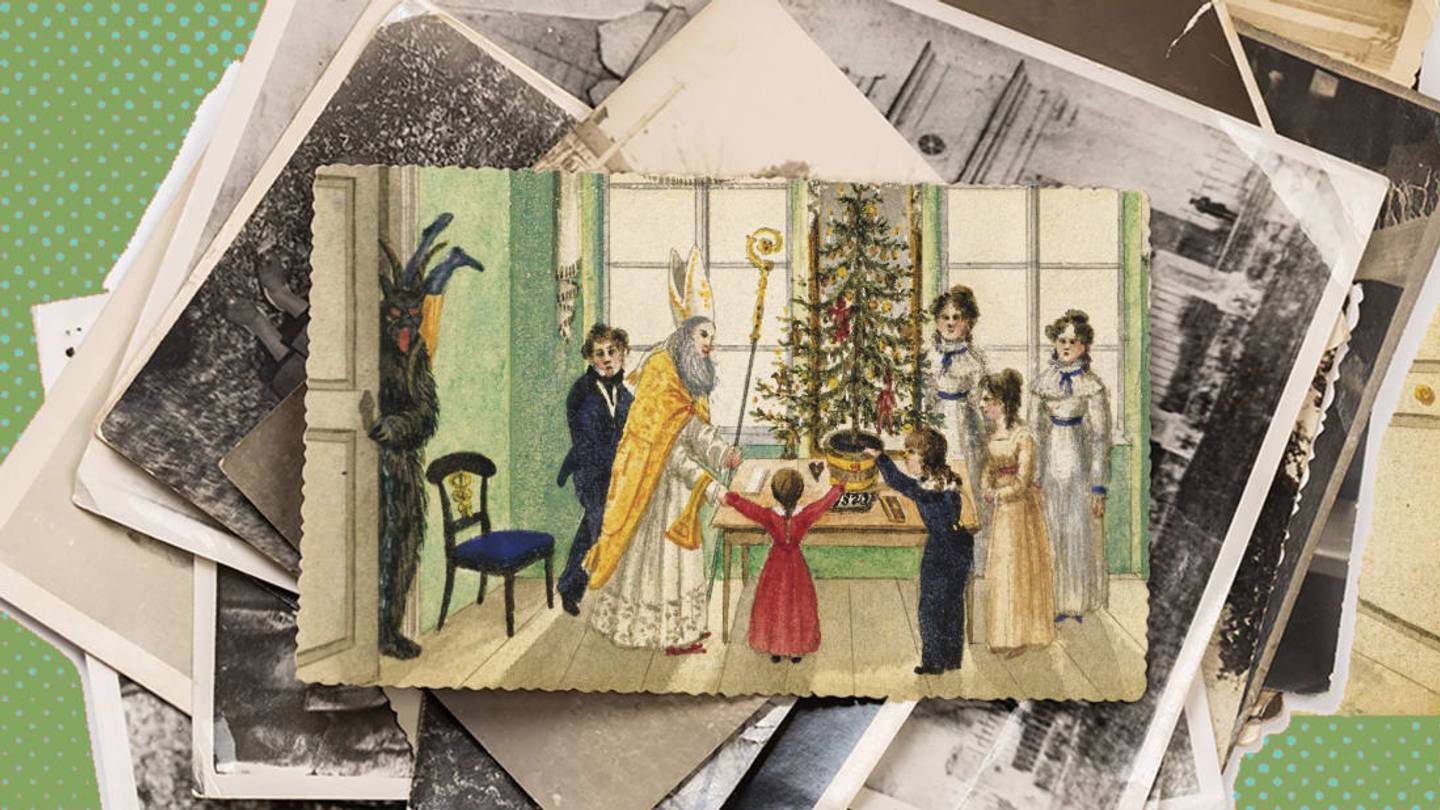
There was also a harsher version of Santa in some older imagery. Not every Christmas visitor was the soft, cookie-loving fellow we know now. Some depictions emphasized punishment for naughty children, including frightening figures carrying switches. For children, the season could mix excitement with moral surveillance. Be good, or a soot-covered man with disciplinary accessories might appear. Sweet dreams, little ones.
Winter itself was the villain
Beyond folklore, winter made Christmas hard. Heating was labor-intensive. Roads could be muddy, frozen, or dangerous. Fresh food was limited. A serious storm could isolate households. A minor illness could become frightening. The cozy “old-fashioned Christmas” we imagine often leaves out the work required to survive it: chopping wood, tending fires, preserving food, caring for animals, and hoping no one got sick when the doctor was far away.
That does not mean every Christmas in the past was miserable. People laughed, sang, feasted, flirted, prayed, and made memories. But the season carried risks and discomforts that modern nostalgia tends to airbrush away. The past had candlelight because it lacked safe, cheap electricity. It had roaring fires because central heating was not waiting politely in the hallway. It had ghost stories because the dark was very, very dark.
What These Terrible Christmases Teach Us
Looking back at terrible Christmases past does more than make us grateful for LED lights and grocery pickup. It shows that Christmas has always been changing. The holiday has been banned, reinvented, commercialized, softened, moralized, and repackaged many times. What feels “traditional” today is often a blend of old customs, 19th-century literature, immigrant traditions, retail culture, religious practice, and family habits.
It also reminds us that nostalgia is selective. We remember sleigh bells, not frostbite. We admire candlelit trees, not burning drapes. We romanticize wassailing, not the possibility that the wassailers might refuse to leave. We picture Victorian Christmas cards as elegant, then discover one with a beetle dancing near a dead bird and quietly close the browser.
Still, the unpleasant parts of Christmas history make the holiday more interesting. Christmas survived because people kept adapting it to fit new needs. When public revelry became too chaotic, families brought the celebration indoors. When poverty became impossible to ignore, charity became central to the season’s moral message. When candles set trees on fire, electric lights eventually took over. When scary folklore felt too heavy, Santa became rounder, warmer, and much less likely to threaten anyone with a switch.
Experience Section: Imagining a Christmas Past From the Inside
Picture stepping into a Christmas from several centuries ago. The first thing you might notice is not the beauty but the effort. The house is cold unless someone has kept the fire alive. The room smells of smoke, wax, damp wool, and whatever has been cooking for hours. There is no quick trip to the store for forgotten cinnamon, no thermostat to rescue chilly guests, and no cheerful app announcing that your package is eight stops away. Every comfort has to be made by hand, carried by hand, or preserved through luck and labor.
If you are in a strict Puritan town, the day may not feel festive at all. You might hear ordinary work outside. A neighbor could disapprove of decorations. A family that wants to feast may do so quietly, aware that celebration can look like rebellion. Instead of a bright public holiday, Christmas feels like a disputed idea. Some people miss the old customs; others believe those customs are sinful. The tension sits in the room like an unwanted guest who refuses to remove his boots.
Now imagine a different Christmas, in a crowded city where the season spills into the streets. You hear singing, but it is not gentle background music. It is loud, uneven, and fueled by drink. A group gathers outside a wealthy home, demanding food and ale. Some are cheerful. Some are angry. The boundary between celebration and intimidation is thin. If the household gives generously, the crowd may move on with blessings. If not, the mood can sour. In that moment, Christmas is not a private family postcard. It is public negotiation, social pressure, and class conflict wearing a holiday hat.
In a Victorian home, the tree glows with candlelight, and for a moment it is breathtaking. Tiny flames flicker against ornaments, sweets, paper decorations, and greenery. Children stare in wonder while adults pretend not to worry. But everyone knows the danger. The tree cannot be ignored. The candles cannot burn too long. A festive room can become a disaster in seconds. Beauty and risk sit on the same branch.
At dinner, the food may be rich if the family can afford it. If they cannot, Christmas becomes a reminder of everything missing. The smell of roasting meat from another house can feel cruel. A child may dream of oranges, sweets, or toys that never arrive. Parents may try to create joy from almost nothing, stretching a small meal into a celebration with songs, stories, and forced cheer. That kind of Christmas is not less meaningful, but it is heavier. It asks people to be merry while carrying worry in their pockets.
After dark, the family gathers near the fire. Someone tells a ghost story because winter invites ghosts. Outside, the road is black. Inside, shadows move across the walls. The story is frightening, but it also brings everyone closer together. That may be the secret of old Christmas: it was terrible in many practical ways, yet people kept making warmth where they could. They sang through cold, joked through hunger, watched the candles carefully, and turned fear into stories. Compared with them, our modern problems look smaller. A tangled light string is annoying, yes, but at least it is not an open flame clipped to a dry tree.
Conclusion
Christmases past were not all terrible, but many were far rougher than our polished holiday memories suggest. The season could be illegal, rowdy, dangerous, unequal, spooky, and physically uncomfortable. Yet those difficulties helped shape the Christmas we know today. The family-centered holiday, the emphasis on generosity, safer decorations, cheerful cards, and child-friendly traditions all grew partly as answers to older problems.
So the next time the wrapping paper runs out or someone forgets the cranberry sauce, take heart. At least you are probably not being fined for celebrating, threatened by drunken wassailers, reading a card with a dead bird on it, or guarding a candlelit tree like a volunteer firefighter in slippers. Merry Christmas, modern world. You may be stressful, but historically speaking, you are doing pretty well.