
Rabbits are adorable right up until they turn your vegetable garden into a midnight salad bar. One evening, your lettuce is standing proudly. By breakfast, it looks as though someone attacked it with tiny hedge clippers.
The best rabbit repellents discourage feeding without trapping, poisoning, or harming wildlife. Depending on your yard, that may mean a bad-smelling foliar spray, an easy-to-scatter granular formula, or a motion-activated sprinkler that gives trespassing bunnies a surprise shower.
This 2025 guide compares seven useful options for different gardens, budgets, weather conditions, and pet-owning households. It also explains what “dog-safe” actually means, because a product labeled safe around pets is not automatically an invitation for Fido to eat the container.
Best Rabbit Repellents at a Glance
| Product | Best For | Format | Main Advantage |
|---|---|---|---|
| Liquid Fence Deer & Rabbit Repellent | Best overall | Ready-to-use spray | Easy application and rain-resistant protection |
| I Must Garden Rabbit Repellent | Best dog-conscious botanical spray | Ready-to-use spray | Mint-forward scent and plant-based oils |
| Plantskydd Granular Animal Repellent | Best organic option | Granules | OMRI-listed formula with long application intervals |
| Bonide Repels-All Granules | Best budget multi-animal repellent | Granules | Targets rabbits and numerous other garden visitors |
| EPIC Rabbit Scram | Best rabbit-specific granular repellent | Granules | Designed specifically around rabbit behavior |
| Bobbex-R Animal Repellent | Best for rainy climates | Foliar spray | Strong adhesion and odor-plus-taste deterrence |
| Orbit Yard Enforcer | Best chemical-free deterrent | Motion-activated sprinkler | Protects without applying anything to plants |
How We Chose the Best Rabbit Repellents
We compared product labels, application methods, active ingredient styles, rain-resistance claims, maintenance requirements, plant compatibility, and directions for households with pets. We also considered research-based wildlife-control guidance from U.S. government agencies and university extension programs.
No commercial rabbit deterrent works perfectly in every yard. A hungry rabbit can be remarkably motivated, especially when young vegetables are the best meal available. Physical exclusion remains the most dependable defense, so repellents generally work best as part of a broader strategy that includes fencing, habitat cleanup, and prompt treatment of new plant growth.
The selections below represent different use cases rather than a single universal ranking. A spray that is ideal for rose bushes may be inconvenient for a large lawn, while a granular product may be unsuitable near a dog that treats mysterious yard sprinkles like gourmet seasoning.
1. Liquid Fence Deer & Rabbit Repellent Best Overall
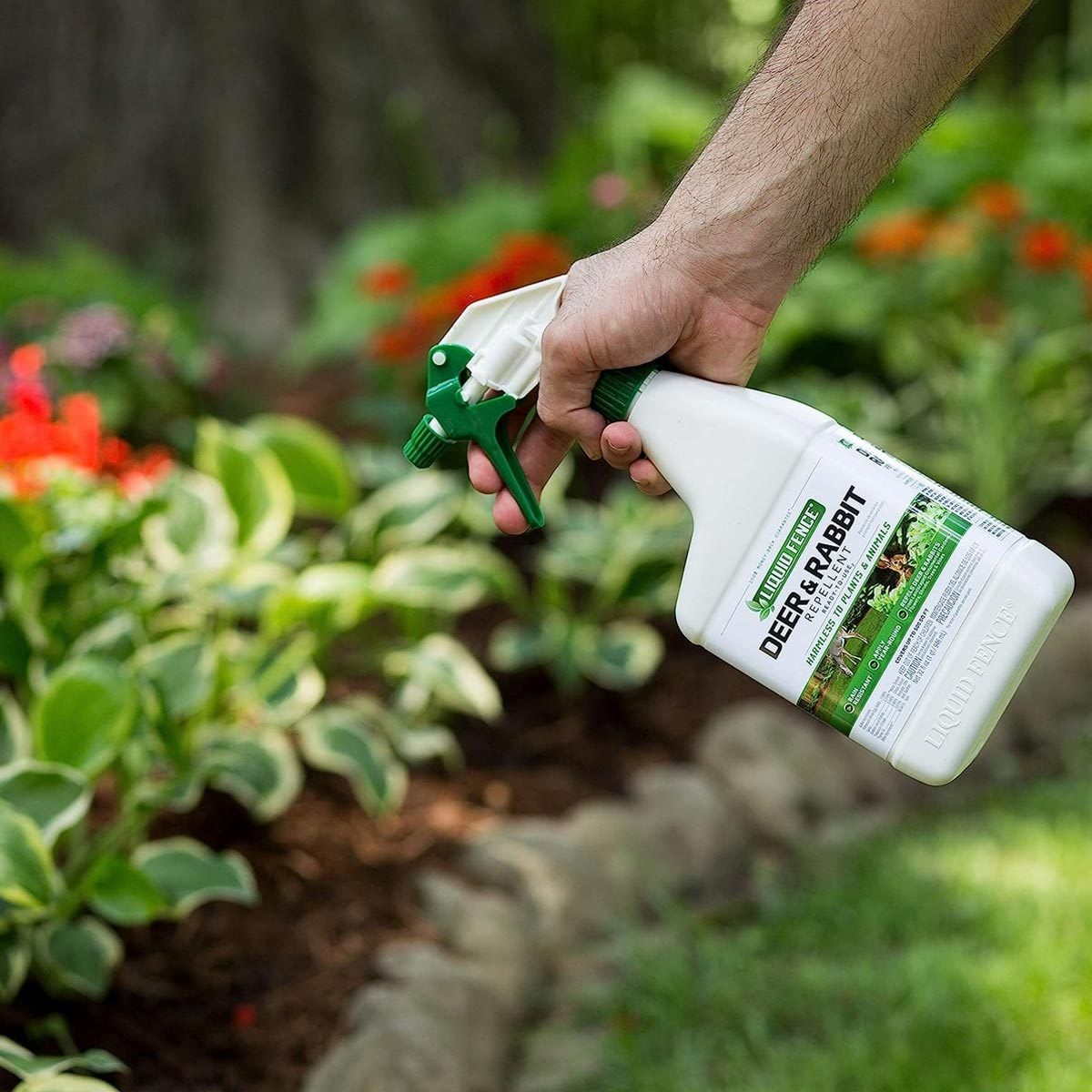
Liquid Fence is a practical starting point for homeowners who want an uncomplicated rabbit repellent spray. Its odor-based formula is designed to discourage rabbits before they bite treated plants, rather than requiring them to sample a leaf and immediately reconsider their life choices.
The ready-to-use version requires no mixing and can be applied to landscaped ornamental gardens, shrubs, flowers, trees, and vines where permitted by the label. The formula is marketed as rain resistant and suitable for year-round use, although newly emerging foliage may require additional treatment.
Why It Stands Out
Liquid Fence combines broad availability with simple application. It is especially convenient for gardeners who need to protect scattered plants instead of creating a continuous perimeter around a large property.
Potential Drawbacks
The smell during application can be powerful. That is not a manufacturing accident; the offensive odor is part of the strategy. Apply it when windows are closed, avoid windy conditions, and give the treatment time to dry before inviting guests over for an elegant patio dinner.
Best use: Flower beds, shrubs, hostas, ornamental borders, and small gardens experiencing regular rabbit browsing.
2. I Must Garden Rabbit Repellent Best Dog-Conscious Botanical Spray
I Must Garden Rabbit Repellent uses a blend of botanical ingredients that may include peppermint, rosemary, lemongrass, garlic, and castor oils. The formula is designed to create both scent and taste signals that make treated plants less appealing to rabbits.
Compared with formulas dominated by putrescent egg odors, this product has a more mint-forward smell. Rabbits are not expected to appreciate the fragrance, but human noses may find it easier to tolerate while spraying around patios and frequently used outdoor spaces.
Why It Stands Out
The ready-to-use bottle is convenient for spot treatment, and the botanical formula is marketed as safe around people, pets, and pollinators when applied according to its directions. It is a sensible choice for households seeking a rabbit deterrent without a harsh lingering odor.
Potential Drawbacks
Botanical does not mean edible or completely risk-free. Dogs should not be allowed to lick freshly treated foliage, drink from puddles containing runoff, or chew the bottle. Reapplication may also be needed as plants grow or after extended wet weather.
Best use: Small residential gardens, patios, ornamental containers, and yards shared with supervised dogs.
3. Plantskydd Granular Animal Repellent Best Organic Option
Plantskydd Granular Animal Repellent is made with dried animal blood and is listed by the Organic Materials Review Institute for appropriate organic use. Its predator-associated scent is intended to make rabbits and other herbivores perceive the treated area as risky.
The granules are particularly useful around low-growing plants, bulbs, garden borders, and vegetation under approximately two feet tall. Manufacturer guidance indicates that granular applications may provide several weeks of protection during active growing periods, although local weather and feeding pressure can shorten that interval.
Why It Stands Out
Plantskydd offers an organic-gardening option that does not require coating every leaf. It can be distributed around the edges of beds and near common rabbit entry routes, making it useful where spraying individual plants would take too long.
Potential Drawbacks
The blood-based odor may interest certain dogs, even though the product is marketed for use around pets when directions are followed. Store the container securely, prevent pets from eating the granules, and supervise curious dogs after application.
Best use: Organic ornamental gardens, bulb beds, low plantings, and border treatments.
4. Bonide Repels-All Granules Best Budget Multi-Animal Repellent
Bonide Repels-All is a useful choice when rabbits are only one member of the backyard troublemaking committee. The granules are labeled to deter numerous listed animals, including rabbits, deer, squirrels, chipmunks, raccoons, skunks, and groundhogs.
The formula relies on unpleasant scent, taste, and irritation signals rather than poison. It can be shaken around lawns, trees, shrubs, gardens, and property borders where allowed by the package directions.
Why It Stands Out
A single multi-animal product may be more economical than buying separate repellents for rabbits, squirrels, and groundhogs. The shaker-style container also makes perimeter application faster than walking around with a trigger sprayer and repeatedly squeezing until your hand files a formal complaint.
Potential Drawbacks
Granules can become unevenly distributed on slopes, bare soil, or heavily mulched beds. They may also require replacement after severe weather, irrigation, or disturbance from pets and yard work.
Best use: Lawns, landscape borders, larger garden beds, and properties visited by several types of wildlife.
5. EPIC Rabbit Scram Best Rabbit-Specific Granular Repellent
EPIC Rabbit Scram differs from broad-spectrum animal repellents because it is marketed specifically for rabbits. The granular formulation is intended to create a scent barrier around vulnerable plants, reducing nibbling, clipping, and bark damage without trapping or injuring the animals.
It works well for gardeners who prefer not to spray foliage or who need to establish a defensive perimeter around beds. The granules can be concentrated near known travel routes, gaps under gates, and the edges of vegetable or flower gardens.
Why It Stands Out
Rabbit-specific positioning makes this product attractive when the identity of the garden thief is no mystery. If you have seen rabbits, found pea-sized droppings, and discovered stems cut at neat angles, there is little reason to purchase a deterrent designed primarily for moles or insects.
Potential Drawbacks
Perimeter repellents can lose effectiveness when rabbits enter from an untreated direction or when plant growth extends beyond the protected zone. Complete, consistent coverage matters more than scattering a ceremonial handful near the garden and hoping for diplomatic cooperation.
Best use: Vegetable beds, flower borders, rabbit travel paths, and gardeners who prefer granules over foliar sprays.
6. Bobbex-R Animal Repellent Best for Rainy Climates
Bobbex-R is a foliar spray formulated for rabbits, groundhogs, squirrels, chipmunks, voles, and other browsing animals. It combines unpleasant odor and taste signals and is designed to adhere to vegetation rather than disappearing after the first light shower.
This makes it appealing in regions where frequent rain turns ordinary repellents into expensive garden runoff. It can be used on many landscape plants according to the label, but gardeners should carefully review restrictions before treating edible crops or plant parts intended for harvest.
Why It Stands Out
Strong adhesion can reduce the frustration of reapplying a product every time clouds appear. Bobbex-R is particularly useful on woody ornamentals, shrubs, and plants that rabbits repeatedly browse.
Potential Drawbacks
Foliar sprays require thorough coverage and appropriate drying conditions. Dense gardens can take time to treat, and overspray may land on walkways, siding, outdoor furniture, or nearby objects unless the nozzle is carefully controlled.
Best use: Rain-prone regions, ornamental shrubs, woody plants, and landscapes needing durable foliar protection.
7. Orbit Yard Enforcer Best Chemical-Free Rabbit Deterrent
The Orbit Yard Enforcer takes a completely different approach. Instead of making plants smell or taste bad, it detects movement and releases a sudden burst of water. The surprise encourages rabbits to leave without applying repellent ingredients to the garden.
The unit offers an adjustable infrared sensor, a wide field of view, and day, night, or continuous operating modes. It connects to a standard garden hose and requires batteries for the sensor.
Why It Stands Out
This is the cleanest option for gardeners who do not want sprays or granules near edible plants, children’s play spaces, or pets. It can also deter deer, squirrels, cats, and other animals that cross the detection zone.
Potential Drawbacks
Small rabbits may occasionally pass beneath a poorly positioned sensor, so setup and testing are important. The sprinkler also needs a pressurized hose connection and may enthusiastically soak dogs, delivery drivers, gardeners, and unsuspecting relatives.
Best use: Chemical-free gardens, visible entry points, vegetable patches, and homeowners willing to experiment with sensor placement.
What Does “Dog-Safe Rabbit Repellent” Really Mean?
In most cases, “pet-safe” or “dog-safe” means the product can be used around pets when every label instruction is followed. It does not mean the formula should be eaten, licked from wet leaves, inhaled as spray mist, or poured into a dog’s favorite digging hole.
Some natural rabbit repellents contain garlic-derived ingredients or concentrated botanical oils. Garlic can be harmful to dogs when enough is consumed, and concentrated oils may cause irritation or digestive problems. The risk associated with a properly diluted, correctly applied product is not the same as the risk from ingesting concentrated ingredients, but storage and supervision still matter.
Basic Pet-Safety Rules
- Read the complete label before opening the product.
- Remove pets, toys, bowls, and bedding from the application area.
- Keep dogs away until sprays have fully dried or for the period stated on the label.
- Prevent pets from eating granules, treated leaves, or spilled concentrate.
- Never spray directly on an animal.
- Store repellents in their original containers inside a locked or inaccessible location.
- Contact a veterinarian or pet poison-control service after suspected ingestion.
How to Make Rabbit Repellent Work Better
Apply It Before Major Damage Begins
Repellents are more effective when rabbits encounter them before establishing a feeding routine. Treat seedlings, tulips, hostas, young shrubs, and other tempting plants as soon as they emerge.
Cover New Growth
A treated leaf may remain unpleasant, but the fresh leaf growing beside it is unprotected. Inspect fast-growing plants regularly and treat new foliage according to the product directions.
Remove Rabbit Hiding Places
Trim tall weeds, remove brush piles, close spaces beneath sheds, and reduce dense ground-level cover. Rabbits prefer dining areas with a convenient escape route and nearby shelter.
Add a Physical Barrier
For high-value vegetable gardens, small-gap wire fencing remains the strongest long-term solution. A fence approximately two feet tall can stop most rabbits, while burying or pinning the lower edge helps prevent them from slipping underneath.
Use More Than One Deterrent
A strong strategy might combine repellent spray on foliage, granules along the perimeter, and wire around especially vulnerable plants. A motion sprinkler can guard the main entrance. Think of it as layered garden security, minus the tiny surveillance badges.
Practical Experience Notes: What Gardeners Commonly Learn
The following examples are representative real-world scenarios based on common application experiences, label directions, and recurring gardener feedback. They are not presented as personal laboratory tests.
The First Application Is Often Too Late
A common scenario begins with a gardener discovering that rabbits have already eaten half a row of beans. The repellent is then applied to the remaining plants, but the rabbits return because they have learned that the garden is a dependable food source. The better experience usually comes from treating plants as soon as seedlings emerge. Preventing the first successful meal is much easier than convincing a rabbit to abandon its favorite restaurant.
More Product Is Not Always Better
When an application fails, the natural reaction is to double or triple the amount. That can create excessive odor, visible residue, plant stress, or unnecessary pet exposure. Uniform coverage is usually more important than soaking a plant. A thin, complete application made under the correct weather conditions tends to outperform random heavy spraying.
Rain Timing Makes a Huge Difference
Many disappointing results occur because a spray is applied shortly before rain, irrigation, or heavy evening dew. Even rain-resistant products need time to dry and bond to plant surfaces. Gardeners generally get better results by checking the forecast, treating dry plants, and allowing the full drying period specified by the manufacturer.
Dogs Complicate Granular Applications
Granular formulas are wonderfully convenient until a food-motivated dog starts investigating them. In dog-owning households, gardeners often have a better experience when they apply granules outside fenced pet zones, work them only into label-approved locations, or choose a foliar spray that dries on plants. A motion-activated sprinkler may be the simplest answer where a dog persistently eats or rolls in anything scattered on the ground.
One Sprinkler Rarely Protects Every Angle
Motion sprinklers work best when they face a known access route. Problems arise when the device is placed in the center of a garden while rabbits approach behind shrubs, fencing, or raised beds that block the sensor. Successful setups usually begin with a little detective work: locate droppings, tracks, clipped stems, and gaps beneath gates, then aim the sensor toward those points.
Repellent Performance Changes With Food Pressure
A formula that works beautifully in spring may struggle during drought, winter, or periods when natural food is scarce. Rabbits become less selective when alternatives disappear. During those periods, gardeners often need more frequent applications, stronger perimeter protection, or temporary fencing around valuable plants.
The Best Results Usually Come From Layering
The most reliable experience is rarely “spray once and forget it.” A more effective routine combines habitat cleanup, correctly timed repellent applications, protection of fresh growth, and physical barriers around the most valuable crops. For example, a gardener might use Liquid Fence on ornamental shrubs, Plantskydd granules outside the bed, and small-gap wire around lettuce and peas. None of the individual methods must be perfect because each one supports the others.
Consistency Beats Constant Product Switching
Gardeners sometimes purchase several repellents in rapid succession without giving any of them a fair application schedule. Before declaring a product useless, confirm that it was appropriate for the plant, applied at the correct rate, allowed to dry, and renewed when necessary. Changing products may help in some situations, but fixing inconsistent coverage is often the less expensive solution.
Final Verdict
Liquid Fence Deer & Rabbit Repellent is the best general-purpose choice for straightforward plant protection. I Must Garden is appealing for households that prefer a botanical, mint-scented spray, while Plantskydd provides an OMRI-listed option for organic growing systems.
Bonide Repels-All offers good value when several animal species are causing damage, and Rabbit Scram is a focused choice for rabbit-specific perimeter protection. Bobbex-R suits wet climates and persistent browsing, while the Orbit Yard Enforcer provides a chemical-free alternative for gardens with suitable hose access.
Whichever product you select, follow the current package label rather than relying solely on advertising language or online advice. Begin treatment early, protect new growth, keep pets away during application, and combine repellents with fencing when the neighborhood rabbits are especially ambitious.
SEO Metadata