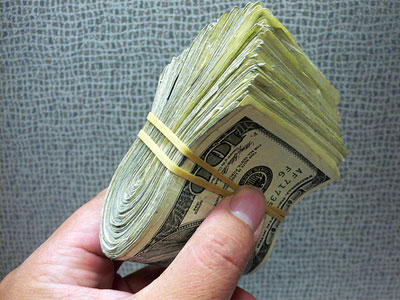

At the checkout counter, the question seems almost comically simple: cash or credit? But if your real goal is to save money, the answer gets more interesting. Cash can make spending feel painfully real, while credit cards can earn rewards, protect purchases, help build credit, and occasionally save you money. Unfortunately, credit cards can also turn a $60 dinner into a long-term financial relationship if you carry the balance.
So, should you pay by cash or credit card to save the most money? For most people, the smartest strategy is not choosing one forever. It is using each payment method where it has the biggest advantage. Cash can provide powerful spending discipline, especially for discretionary purchases. Credit cards can be financially rewarding when you budget carefully, avoid interest, and pay the statement balance in full every month.
Here is how to decide which piece of your wallet should do the heavy lifting.
Cash vs. Credit Card: The Fundamental Difference
When you pay with cash, the transaction is essentially finished. You hand over $40, your wallet becomes $40 lighter, and nobody sends you a bill three weeks later asking whether you would like to turn that $40 into debt.
A credit card works differently. The card issuer pays the merchant, and you repay the issuer later. If your card provides a grace period and you pay your statement balance in full by the due date, you can generally make purchases without paying interest. Carry the balance, however, and interest can quickly overwhelm any cash-back rewards you earned.
| Factor | Cash | Credit Card |
|---|---|---|
| Spending control | Excellent | Depends on discipline |
| Rewards | Usually none | Cash back, points, or miles |
| Interest risk | None | Potentially expensive |
| Fraud protection | Limited if lost | Strong legal and issuer protections |
| Budget visibility | Very tangible | Requires monitoring |
| Online convenience | Poor | Excellent |
| Credit building | No | Yes, when managed responsibly |
Why Paying With Cash Can Help You Save Money
1. Cash Makes Spending Feel Real
Digital payments are wonderfully convenient. Sometimes they are a little too wonderful.
Psychological and behavioral research has repeatedly suggested that payment methods can influence spending behavior. Research involving MIT scholars found that credit card purchasing can activate reward-related brain activity differently from cash purchases. In everyday terms, swiping or tapping a card may feel less restrictive than physically handing over bills.
Imagine walking into a store with $100 in cash. A $70 pair of shoes means watching 70% of your spending money disappear immediately. Put the shoes on a credit card and the emotional impact may feel softer because your checking account has not changed yet.
Your bank account will eventually receive the memo, of course.
2. Cash Creates a Natural Spending Limit
One of cash’s biggest advantages is almost embarrassingly simple: you cannot spend cash you do not have.
If you bring $80 to dinner, your theoretical spending ceiling is $80. There is no $400 credit line hiding behind your wallet saying, “Dessert for everyone?”
This makes cash particularly effective for flexible spending categories such as:
- Restaurants and takeout
- Entertainment
- Clothing
- Coffee and snacks
- Hobbies
- Weekend activities
- Impulse shopping
These are categories where spending can quietly expand because there is no obvious stopping point.
3. Cash Works Well With the Envelope Budgeting Method
The cash envelope system, sometimes called cash stuffing, assigns a fixed amount of money to individual spending categories.
For example, suppose your monthly discretionary budget includes:
- $500 for groceries
- $200 for restaurants
- $100 for entertainment
- $100 for personal shopping
You place those amounts into separate envelopes. When the restaurant envelope becomes suspiciously thin on the 17th of the month, you have immediate feedback. When it reaches zero, restaurant spending stops unless you deliberately transfer money from another category.
The system adds friction to purchases, and that friction can be valuable for people who frequently wonder where their money disappeared.
4. Cash Eliminates Credit Card Interest
A 2% cash-back reward sounds nice. Paying double-digit interest because you carried the purchase for months sounds considerably less nice.
If you routinely carry credit card debt, switching new discretionary purchases to cash can prevent your balance from growing while you work on repayment.
This is one of the most important rules in the entire cash-versus-credit debate: rewards rarely compensate for credit card interest.
When Credit Cards Can Actually Save You More Money
Cash wins the psychological battle, but credit cards have several financial advantages when used carefully.
1. Credit Card Rewards Can Reduce Your Effective Spending
Many credit cards offer cash back, points, or travel miles. Suppose you normally spend $2,000 per month on expenses that can safely be charged to a card and paid immediately from your budget.
With a flat 2% cash-back card, that could theoretically generate about:
$2,000 × 2% = $40 per month
Over 12 months, that becomes $480.
That is real valuebut only if you would have spent the $2,000 anyway and pay the card balance in full. Buying an unnecessary $500 gadget to earn $10 of cash back is not saving money. It is spending $490 with excellent marketing support.
2. Credit Cards Offer Better Protection for Many Purchases
Credit cards can provide significant protection against unauthorized transactions and billing errors. Federal consumer protections limit liability for unauthorized credit card charges, and many issuers voluntarily provide zero-liability policies.
Some cards may also include benefits such as:
- Purchase protection
- Extended warranty coverage
- Travel protections
- Rental-car coverage
- Return protection
- Fraud monitoring
Benefits vary by card, so always read the actual card agreement instead of assuming your shiny piece of plastic comes with a superhero cape.
3. Credit Cards Are Often Better for Online Shopping
Online shopping is another area where credit cards frequently beat physical cash for obvious practical reasons.
Beyond convenience, credit cards provide a structured process for disputing certain billing errors. If merchandise never arrives or a merchant incorrectly charges you twice, credit card protections can make resolving the problem easier.
For expensive online purchases, that added layer of separation between the merchant and your bank account can be valuable.
4. Responsible Credit Card Use Can Help Build Credit
Cash purchases do not contribute to your credit history. Responsible credit card use can.
Paying your obligations on time and avoiding excessive balances can help establish a positive credit record. Good credit may eventually affect borrowing costs for mortgages, auto loans, and other financing.
Therefore, someone capable of controlling card spending may receive long-term financial benefits that a cash-only lifestyle cannot provide directly.
The Biggest Credit Card Trap: Spending More to Earn Rewards
Rewards cards are designed to encourage card usage. That does not automatically make them bad. It simply means you should remember who invented the game.
Suppose your card earns 3% cash back at restaurants. You planned to cook tonight, but then you remember the restaurant rewards.
“We’re practically making money!” you announce while ordering a $70 dinner.
You are not.
You earned $2.10 and spent $70.
The smartest rewards strategy is therefore remarkably boring: earn rewards on purchases already included in your budget. Groceries, gasoline, utilities, insurance, and other predictable expenses can be excellent candidates when card payments do not add significant fees.
When Cash Is Clearly the Better Choice
Consider using cash when:
- You regularly carry credit card balances.
- You struggle with impulse purchases.
- You frequently exceed your monthly budget.
- A merchant offers a meaningful cash discount.
- A credit card surcharge is larger than your card rewards.
- You want strict limits for entertainment or dining.
- You are trying to reset unhealthy spending habits.
If your card has become a permission slip rather than a payment tool, switching some spending categories to cash can provide an immediate reality check.
When a Credit Card Is Usually the Better Choice
Credit cards may make more sense when:
- You always pay the statement balance in full.
- The purchase qualifies for useful rewards.
- You are shopping online.
- You want stronger billing-dispute protections.
- You are booking travel.
- Your card offers useful purchase or travel benefits.
- You want to build credit responsibly.
- You need detailed digital records of your spending.
The key phrase remains pay the statement balance in full. Without that habit, the financial advantages can disappear surprisingly quickly.
Watch Out for Credit Card Surcharges
Some merchants charge customers extra for paying with a credit card or advertise lower cash prices. Gas stations, restaurants, government payments, and smaller service businesses are common places to encounter payment differences.
Always compare the surcharge against your reward rate.
Imagine a merchant charges a 3% card fee while your card earns 2% cash back. Paying by card leaves you roughly 1% behind before considering any other benefit.
For a $1,000 purchase:
- Card surcharge: $30
- 2% reward: $20
- Net additional cost: approximately $10
In that situation, cash or another fee-free payment option generally makes more financial sense.
The Best Strategy: Use a Hybrid Payment System
For many households, the best way to save money is not “cash versus credit.” It is cash and credit, with each assigned a specific job.
Use Credit for Planned, Trackable Expenses
Consider charging expenses such as:
- Groceries
- Gasoline
- Utilities with no card fee
- Insurance
- Travel bookings
- Planned online purchases
These purchases are easier to predict and budget. You can earn rewards while maintaining useful transaction records.
Use Cash for Spending Categories That Cause Trouble
Reserve cash for categories where you personally tend to overspend.
For one person, that might be restaurants. For another, it might be clothing. Someone else may mysteriously transform $150 every month into iced coffee.
The payment strategy should match your behavior rather than someone else’s financial ideology.
A Simple Rule for Choosing Cash or Credit
Before reaching for a payment method, ask four questions:
- Would I buy this if I had to pay cash?
- Can I pay the full credit card statement balance by the due date?
- Will the card reward exceed any surcharge?
- Does the credit card provide valuable protection for this purchase?
If you hesitate on the first two questions, cash is often the safer choice.
How to Use Credit Cards Without Destroying Your Budget
Treat Your Credit Limit as Irrelevant
A $15,000 credit limit does not mean you have $15,000 available to spend. Your real spending limit is whatever your budget and checking account can support.
Set Up Automatic Payments
Automatic payments can reduce the risk of accidentally missing a due date. Many disciplined card users set autopay for the full statement balance while still checking their account regularly.
Track Purchases Throughout the Month
Do not wait for the statement to discover how adventurous you became financially. Review transactions weekly or use spending alerts.
Never Chase Rewards With Extra Spending
Rewards should follow your budget. Your budget should never follow rewards.
A signup bonus that requires spending $4,000 is valuable only when you were already planning at least $4,000 of legitimate expenses during the qualifying period.
Real-Life Experience: What Happens When You Try Both Methods
One of the most useful ways to understand the cash-versus-credit debate is to experiment with both rather than treating personal finance like a religious argument.
Consider a typical household that pays almost everything by credit card. Groceries go on the card. Coffee goes on the card. Dinner goes on the card. A $12 streaming subscription quietly renews on the card. Then another subscription does the same thing. Eventually, the monthly statement arrives looking like an archaeological record of hundreds of tiny decisions.
The household might still pay the statement balance in full, but there is another problem: spending has become almost invisible.
Switching restaurant, entertainment, and personal spending to cash for one month can produce an interesting result. Suddenly, every purchase has weight.
Suppose the restaurant budget is $250. At the beginning of the month, $250 feels generous. After two family dinners and several lunches, only $83 remains. Now the decision to order pizza on Friday looks different.
That is cash’s greatest strength. It provides immediate feedback without requiring a spreadsheet, notification, pie chart, financial coach, or strongly worded email from your future self.
However, going completely cash-only introduces inconveniences. Online purchases become awkward. Booking hotels may be more difficult. Carrying hundreds of dollars around feels unnecessary. You may also give up valuable rewards on purchases you were going to make anyway.
This is why a hybrid experiment often works better.
During the second month, imagine returning predictable expenses to a cash-back credit card while keeping restaurant and entertainment money in cash. The card handles groceries, gasoline, utilities, and planned online purchases. Each card purchase is entered against the monthly budget immediately instead of waiting for the statement.
Now you get both benefits.
The cash envelopes put a physical ceiling on the categories most likely to expand, while the credit card earns rewards on boring, predictable expenses. The statement balance is automatically paid in full from money already sitting in the checking account.
After several months, another lesson usually appears: the best payment method is not necessarily the one with the mathematically highest reward rate. It is the method that produces the best behavior.
If paying cash causes you to spend $100 less every month, that is potentially worth far more than earning another $15 in card rewards. On the other hand, if you already have excellent spending discipline, abandoning a no-fee rewards card may leave legitimate benefits on the table.
A useful personal experiment is therefore to choose two or three problem categories and pay only with cash for 30 days. Compare your spending with the previous month. Then evaluate whether the reduced spending is larger than the rewards you sacrificed.
You may discover that groceries work perfectly on credit while restaurant spending needs cash. You may find that using a card for gasoline is harmless but carrying a card into a shopping mall is financially equivalent to bringing a Labrador into a sausage factory.
There is no prize for ideological purity. Personal finance is about outcomes.
Conclusion: Should You Pay By Cash or Credit Card?
If your primary problem is overspending, cash may be the best way to save money because it creates visible limits and makes purchases feel immediate. If you already budget consistently and pay every statement balance in full, a well-chosen credit card can offer rewards, purchase protections, convenience, and credit-building benefits without costing you interest.
The strongest strategy for many people is a hybrid approach: use credit cards for planned purchases that fit comfortably inside your budget, and use cash for categories where spending tends to escape.
Remember that a payment method is only a tool. Cash does not magically create discipline, and a credit card does not automatically create debt. Your spending habits determine which tool saves you more.
If the card makes you spend an extra $200 to earn $4 in rewards, cash wins. If you spend exactly what you planned, pay the balance in full, avoid surcharges, and collect rewards along the way, credit wins.
And if you can do both strategically, your wallet finally gets to function as a team instead of hosting a tiny financial civil war.
SEO Information
Note: This article provides general educational information about personal finance and should not be considered individualized financial, credit, or investment advice.