
Note: This guide is for general laundry use only. Always test an inconspicuous area first, use gloves if you have sensitive skin, and never mix any bleach product with ammonia, vinegar, or other cleaners.
If the words oxygen bleach make you picture a lab coat, bubbling beakers, and a smoke alarm filing a formal complaint, take a breath. Laundry oxygen bleach is much less dramatic than it sounds. In fact, it is one of the easiest ways to brighten dingy fabrics, loosen stubborn stains, and freshen laundry without reaching for chlorine bleach and hoping your favorite shirt survives the experience.
Still, there is one important truth right up front: true commercial oxygen bleach is usually a powder made with ingredients such as sodium percarbonate, and that dry chemistry is designed for shelf stability. A fully homemade version made in your kitchen is not exactly the same thing. What you can make at home, though, is a fresh oxygen bleach-style laundry booster using household ingredients that work on the same broad principle: active oxygen plus alkaline cleaning power.
That is the sweet spot for a smart DIY. You get a practical, low-fuss laundry helper for whites, towels, sheets, socks, workout wear, and many colorfast fabrics, without pretending you just opened a detergent factory next to the coffee maker.
What Oxygen Bleach Actually Is
Oxygen bleach is often called color-safe bleach or non-chlorine bleach. Unlike chlorine bleach, which can strip dye, weaken certain fibers, and turn laundry mishaps into permanent modern art, oxygen bleach works more gently. In commercial laundry products, the active ingredient is usually sodium percarbonate or another oxygen-releasing compound. When it hits water, it breaks down and releases hydrogen peroxide and alkaline builders that help lift stains, dullness, and odor-causing residue.
That is why powdered oxygen bleach is such a laundry workhorse. It helps brighten whites, revive towels, freshen smelly fabrics, and loosen organic stains like coffee, tea, sweat, food splatter, and the mysterious tan smudge on a pillowcase that nobody wants to discuss at breakfast.
The catch is that commercial powdered oxygen bleach is stable when dry, not when wet. Once oxygen-releasing ingredients are dissolved, they start working immediately and then gradually lose strength. So if you want a DIY version, the goal is not to create a giant jar of homemade miracle powder. The goal is to make a fresh-use laundry solution right before wash day.
Can You Really Make Homemade Oxygen Bleach?
Yes, in a practical laundry sense. No, in an industrial chemistry sense.
If you want the truest form of oxygen bleach, buying a ready-made sodium percarbonate powder is the easiest route. But if your goal is a DIY oxygen bleach for laundry that brightens fabrics and helps with stains, you can make a very workable substitute by combining 3% hydrogen peroxide with washing soda and warm water right before use.
Hydrogen peroxide brings the active oxygen. Washing soda boosts the pH, improves cleaning power, and helps break through body oils and grime. Together, they create a fresh laundry booster that behaves a lot like the kind of “color-safe brightening” people want from oxygen bleach. It is not magic. It is just smart chemistry doing a very unglamorous but extremely satisfying job.
Homemade Oxygen Bleach Recipe for Laundry
Ingredients
- 1 cup 3% hydrogen peroxide
- 1/2 cup washing soda
- 2 cups very warm water
- A plastic or glass container for mixing
- A spoon that is not metal, or a reusable plastic stirrer
How to Make It
- Pour the warm water into a glass or plastic bowl, pitcher, or jar.
- Add the washing soda and stir until it dissolves as much as possible.
- Add the hydrogen peroxide last and stir gently.
- Use the mixture right away. Do not cap it tightly for storage, and do not try to save it for next week’s laundry marathon.
This is the most important part of the whole article: make it fresh, then use it fresh. Once hydrogen peroxide is mixed into water and exposed to light, air, and residue, it gradually loses strength. So this is a same-day recipe, not a pantry product.
Why These Ingredients Work
Hydrogen peroxide is an oxidizer, which means it helps break down many stain molecules and brightens fabrics. Washing soda, which is not the same thing as baking soda, is more alkaline and better at loosening greasy soil and boosting detergent performance. Together, they can help brighten laundry and lift residue without the harshness of chlorine bleach.
How to Use Homemade Oxygen Bleach in the Laundry Room
For a Regular Washer Load
Add your normal detergent first. Then pour the fresh DIY mixture into the washer drum after it has started filling, or add it to the detergent phase according to your machine’s design. Do not pour it onto dry clothes and walk away like you are seasoning a salad. Dilution matters.
This method works best for:
- Dingy white T-shirts
- Socks that have seen things
- Towels that smell “clean-ish” instead of actually clean
- Sheets and pillowcases with body-oil buildup
- Light-colored everyday laundry that needs brightening
For a Laundry Soak
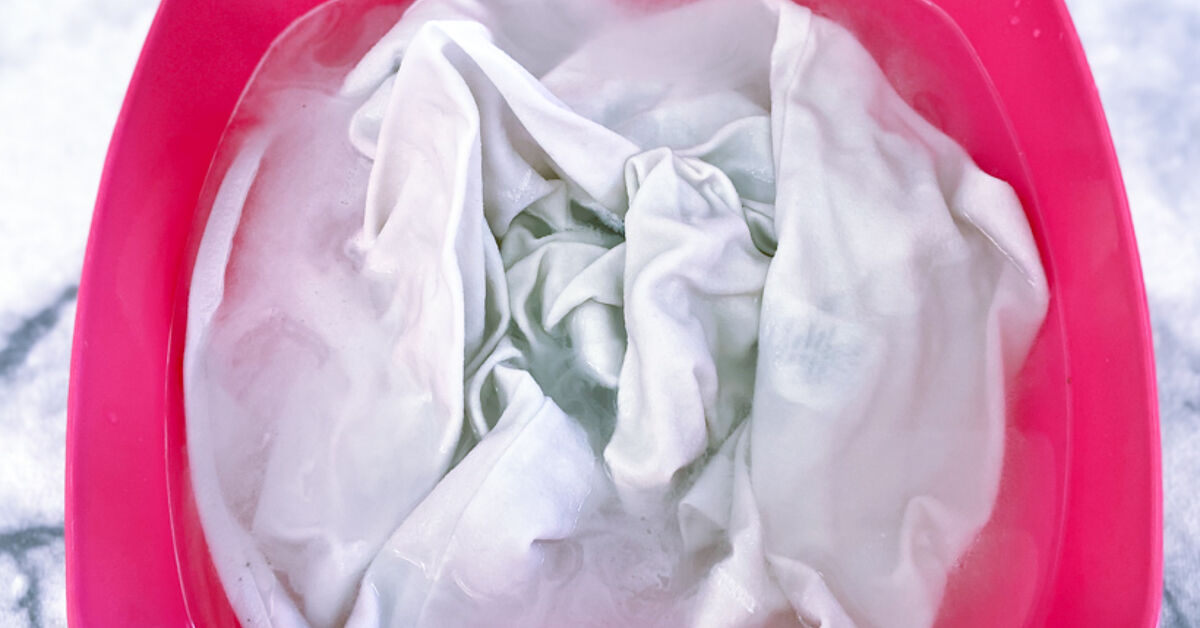
Fill a sink, tub, or bucket with warm water, then add a fresh batch of the DIY oxygen bleach mixture. Let garments soak for 30 minutes to 2 hours, depending on how dingy they are. For badly yellowed whites, old towels, or washcloths that look like they survived a camping trip and a barbecue, a longer soak usually gives better results.
After soaking, wash the items with regular detergent as usual.
For Spot Treatment
For white or very light-colored fabrics, dab a small amount of 3% hydrogen peroxide directly on the stain, let it sit for about 5 to 10 minutes, then rinse and wash. This can be helpful for blood, sweat marks, food splatter, and some drink stains. Always do a hidden spot test first.
For sweat stains on white shirts, a paste can work well: mix equal parts hydrogen peroxide, water, and a powder such as baking soda or a small amount of washing soda. Apply it to the underarm area, let it sit, then wash. Use this only on whites, because peroxide can lighten dye.
The Best Fabrics and Stains for DIY Oxygen Bleach
This homemade laundry booster tends to perform best on stains and buildup caused by everyday life, which is a polite way of saying “the messes humans make when they insist on eating, sweating, and existing.”
It Can Help With:
- Coffee and tea stains
- Body oil and underarm residue
- General dinginess on whites
- Light mildew odors
- Food stains
- Yellowing on sheets and pillowcases
- Musty towels and washcloths
It Is Less Effective For:
- Rust stains
- Paint
- Set-in dye transfer
- Heavy grease without a degreasing pre-treatment
- Delicate dry-clean-only fabrics
For greasy stains, start with a heavy-duty detergent or dish-soap-based pre-treatment. For protein stains like blood, rinse first in cold water before using peroxide. For mildew, you may need repeated washing, not one heroic soak and a pep talk.
What Not to Wash With Homemade Oxygen Bleach
Even “gentler than chlorine bleach” does not mean “safe for every textile on Earth.” Use caution or skip this DIY recipe on:
- Silk
- Wool
- Leather
- Spandex-heavy performance fabrics
- Dry-clean-only garments
- Anything with unstable dye, embellishments, or delicate trims
And yes, you really do need to spot test first. It is not the glamorous part of laundry, but it is the difference between “smart cleaning” and “why is one sleeve lighter than the other?”
DIY Oxygen Bleach vs. Chlorine Bleach
If chlorine bleach is the loud, dramatic friend who solves one problem and creates three more, oxygen bleach is the calmer one who shows up on time, brings snacks, and does not ruin your blue shirt.
Homemade Oxygen Bleach-Style Mix
- Better for brightening and stain lifting than harsh disinfecting
- Usually gentler on fabrics and dyes than chlorine bleach
- Good for whites and many colorfast items
- Works best when made fresh
Chlorine Bleach
- Much harsher on fabric and color
- Can damage wool, silk, spandex, and other sensitive fibers
- Should never be mixed with ammonia, vinegar, or acids
- Better suited to true disinfecting jobs on bleach-safe items
If your goal is brighten, deodorize, lift stains, and freshen laundry, the DIY oxygen bleach route makes more sense. If your goal is disinfecting a bleach-safe white item and the care label allows it, chlorine bleach may still have a place. Laundry is not a religion. It is just chemistry with a hamper.
Common Mistakes That Make DIY Laundry Boosters Flop
1. Using Baking Soda Instead of Washing Soda
Baking soda is great for deodorizing, but washing soda is much stronger and more alkaline. If you swap them casually, your DIY mix becomes the laundry equivalent of decaf espresso. Helpful, maybe. Powerful, not really.
2. Storing the Mixture for Later
Fresh matters. Once mixed, the solution slowly loses potency. Make only what you need for that wash.
3. Using It on Dark Fabrics Without Testing
Hydrogen peroxide can fade dye. Test first, especially on bright, dark, or saturated colors.
4. Dumping It Straight on Dry Fabric
Always dilute or use it in a controlled spot treatment. Random splashing is not a cleaning strategy.
5. Treating It Like a Universal Stain Eraser
No laundry product fixes everything. Rust, paint, and cooked-in stains often need a specialized approach.
Extra Tips to Get Better Results
- Wash whites separately so they stay white instead of becoming “mystery oatmeal.”
- Do not overload the washer. Water and chemistry need space to move.
- Use the warmest water safe for the fabric when brightening with oxygen bleach-style products.
- Pre-treat oily or protein-based stains before washing.
- Rinse thoroughly after spot treatment.
- Use glass or plastic tools for mixing, not metal.
- Store hydrogen peroxide in its original opaque bottle, away from light.
Real-Life Experiences With Homemade Oxygen Bleach for Laundry
The most interesting thing about homemade oxygen bleach for laundry DIY is that people rarely start using it because they love chemistry. They start using it because something in the laundry room annoys them enough to take action. Usually it is one of three things: white shirts turning beige, towels smelling weird after washing, or socks that come out technically clean but emotionally suspicious.
A common first experience is with towels. You wash them, dry them, fold them, and somehow they still smell like they spent the afternoon in a gym bag. A fresh peroxide-and-washing-soda soak can make a noticeable difference because it helps loosen detergent residue, body oil, and stale buildup that regular detergent sometimes leaves behind. Many people are surprised that the fix is not more fragrance. It is actually less residue. Your towels do not need to smell like a tropical candle. They need to stop hoarding soap and sweat.
Then there is the classic white T-shirt experiment. Nearly everyone has one shirt that lives a hard life under jackets, sweaters, or around the house. It starts crisp and bright, then slowly drifts into that gray-yellow zone where it still functions but no longer inspires confidence. A DIY oxygen bleach soak often works best here when paired with patience. Not five dramatic minutes. More like a decent soak, followed by a proper wash, maybe repeated once more. Laundry rewards persistence far more than theatrics.
Sheets and pillowcases are another big one. People often assume dingy bedding needs hotter water, stronger detergent, or a complete spiritual reset. In reality, fabric yellowing on bedding is frequently linked to body oils, skincare residue, sweat, and detergent buildup. A homemade oxygen bleach-style booster can help lift that film and bring back brightness without the harshness that chlorine bleach can bring to fibers over time. It is one of those chores where the results are not flashy, but they are deeply satisfying. You put clean sheets on the bed and suddenly feel like you have your life together. Briefly. Enjoy it.
For stain treatment, the most memorable experiences usually involve underarm marks, food drips, and old mystery spots discovered right before leaving the house. Hydrogen peroxide can be very useful as a spot treatment on whites and light fabrics, especially when used early. The lesson most people learn, though, is that speed matters. Fresh stains are polite. Old stains are stubborn and vindictive.
There is also a learning curve. People often expect one homemade mix to replace every product in the laundry aisle. It will not. It is excellent for brightening, deodorizing, and helping with many washable stains, but it is not a cure-all for rust, paint, or badly set dye transfer. The happiest users are usually the ones who treat it like a strong helper, not a miracle potion. They use it for the right loads, mix it fresh, test fabrics first, and keep expectations realistic. In other words, they behave like sensible adults, which is a lot to ask on laundry day.
In everyday use, that is really the charm of it. Homemade oxygen bleach is not trendy. It is not glamorous. It will never become the main character of your weekend. But when it revives towels, brightens tees, freshens sheets, and gives old whites a second chance, it earns a very respectable place in the laundry routine.
Conclusion
If you want a practical, affordable, and fabric-friendlier alternative to chlorine bleach, a homemade oxygen bleach-style laundry booster is absolutely worth trying. The key is understanding what it is and what it is not. It is not a shelf-stable factory-made sodium percarbonate powder. It is a fresh-use DIY mix built around hydrogen peroxide, washing soda, and warm water to brighten laundry, loosen common stains, and freshen fabrics.
Used correctly, it can become one of the handiest tools in your laundry routine. Make it fresh, test fabrics first, keep it away from delicate textiles, and do not mix it with other cleaners. Do that, and you will have a smart little laundry trick that punches well above its weight class.