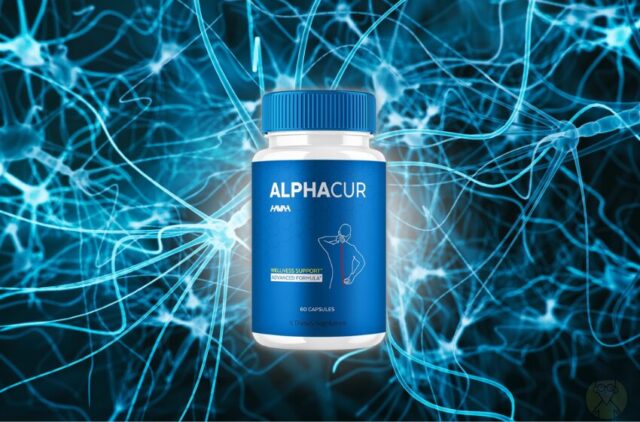

Note: This is an editorial review based on public product information, medical guidance, and ingredient research. It is not medical advice, and it does not claim that AlphaCur itself has been proven in large clinical trials.
Let’s be honest: the internet has turned nerve-support supplements into a carnival. Every bottle promises to “restore,” “repair,” “relieve,” and possibly help you fold laundry with the enthusiasm of a golden retriever. AlphaCur is one of the names making the rounds, especially among people dealing with tingling, burning, numbness, and the kind of stubborn discomfort that makes socks feel like a personal attack.
So what happens when you strip away the fireworks, read the product claims carefully, compare them with real medical guidance, and ask the least glamorous question on earth: Is this actually worth the money? That is what this review is here to do.
After reviewing AlphaCur’s official sales material, refund policy, health disclaimer, and a wider mix of U.S.-based medical and regulatory sources, the short answer is this: AlphaCur looks like a nerve-support supplement built around ingredients that have some scientific plausibility, but the product itself is not independently proven in the way the marketing language may suggest. In plain English, that means it may be reasonable for some shoppers to consider, but it should not be mistaken for a medically validated cure for neuropathy.
What AlphaCur Is Actually Selling
AlphaCur is marketed as a supplement for nerve discomfort and neuropathy-style symptoms. The official product pages highlight ingredients such as magnesium glycinate, alpha-lipoic acid, butcher’s broom, L-carnitine, turmeric, and CoQ10. Interestingly, the site’s FAQ also calls palmitoylethanolamide (PEA) the “primary ingredient,” which creates an immediate eyebrow-raise because the main ingredient section and the FAQ are not perfectly aligned. That does not automatically make the product bad, but it does suggest that the public-facing information is not as clean or as transparent as careful buyers usually want.
That matters because supplement shoppers are not buying fairy dust. They are buying a formula. If the formula presentation feels a little like it was assembled during a caffeine emergency, trust becomes part of the conversation.
AlphaCur also leans heavily on phrases like “scientifically formulated,” “natural relief,” and “long-term nerve support.” Those are common supplement-industry phrases, and they are not meaningless. But they are not the same thing as saying the finished product has been tested in strong randomized clinical trials. That distinction is huge. It is the difference between saying, “these ingredients have some promising evidence” and saying, “this exact bottle is clinically proven to solve your problem.” Those are not twins. They are not cousins. They are barely on speaking terms.
The First Big Reality Check: FDA Language vs. Marketing Language
One of the smartest things you can do when reviewing any supplement is to translate the marketing into normal human language. AlphaCur’s pages say the formula is made in the United States, in an FDA-registered facility, and under GMP-style standards. That sounds reassuring, and some of it is. Manufacturing standards matter. Facility registration matters. Basic quality controls matter.
But here is the part many shoppers miss: dietary supplements are not FDA-approved the way prescription drugs are. If a supplement website casually nudges you toward thinking “FDA registered” means “FDA approved,” that is a marketing shortcut, not a scientific upgrade. The product’s own disclaimer also says the classic line that the statements have not been evaluated by the FDA and that the product is not intended to diagnose, treat, cure, or prevent disease.
That disclaimer is not a red flag by itself. It is standard. Still, it is the legal version of the record scratch in a movie. One minute you are reading about dramatic relief and nerve repair; the next minute the site is reminding you that this is not a disease treatment. That tension is why AlphaCur should be judged as a support supplement, not as a substitute for diagnosis or treatment of peripheral neuropathy.
Ingredient-by-Ingredient: Where AlphaCur Has a Case
Alpha-Lipoic Acid
If AlphaCur has a strongest science angle, alpha-lipoic acid is probably it. This ingredient has long been studied in relation to diabetic neuropathy and oxidative stress. Mayo Clinic notes that alpha-lipoic acid may help some neuropathy symptoms, although more research is still needed and it may also affect blood sugar. In other words, this is not snake oil territory. It is one of the more serious ingredients in the nerve-support category.
That said, a promising ingredient does not automatically prove a finished blend. Dose matters. Form matters. Duration matters. And unless a company clearly shows the amounts and explains why the combination is built the way it is, consumers are left doing nutritional detective work with half the clues.
Turmeric
Turmeric brings anti-inflammatory appeal to the formula, and yes, curcumin has legitimate research interest behind it. U.S. medical sources generally describe the evidence as encouraging in some pain-related conditions, especially osteoarthritis-style discomfort, but still not definitive. That is a pattern you will see a lot in supplement land: potentially helpful, not magical, and definitely not a hall pass to write “miracle” in 72-point font.
Turmeric also is not automatically gentle for everyone. It can cause digestive side effects, and people taking blood thinners or juggling multiple medications should be careful. That is why the phrase “all natural” should never be confused with “risk free.” Nature gave us poison ivy too. Marketing tends to leave that part out.
Magnesium Glycinate
Magnesium is important for nerve and muscle function, and magnesium glycinate is widely marketed as a more absorbable, easier-on-the-stomach form. That gives AlphaCur a decent foundational ingredient. Still, magnesium is more of a support player than a solo superstar in neuropathy-style conditions. It is useful in the body, but it is not a stand-in for diagnosing why numbness or burning is happening in the first place. Also, people with kidney disease should be cautious with magnesium supplements.
CoQ10
CoQ10 makes sense in a formula focused on cellular energy and antioxidant support. It has real biological credibility, and Mayo Clinic describes it as an antioxidant the body naturally makes. But once again, credibility is not the same thing as proof that AlphaCur itself will transform day-to-day symptoms. CoQ10 also can interact with warfarin, which means the “just try it” mindset is not always a smart one.
L-Carnitine, PEA, and Butcher’s Broom
This is where AlphaCur becomes more interesting and more complicated. L-carnitine has some literature behind nerve support and energy metabolism. PEA has been studied in chronic pain and neuropathic pain discussions and is often described as promising. Butcher’s broom has a more circulation-oriented reputation than a slam-dunk neuropathy reputation. Put together, these ingredients make the formula sound broader and more ambitious than a one-note vitamin blend.
The catch is that “broader” does not always equal “better.” The wider the formula, the more important transparency becomes. Buyers should want to know exactly what is in the bottle, in what amount, and why those amounts were chosen. AlphaCur’s public-facing materials do not make that process as easy as they should.
Where the Hype Starts Jogging Ahead of the Facts
If you read the sales copy alone, AlphaCur can sound like the missing puzzle piece for nearly every form of nerve discomfort: diabetic neuropathy, age-related nerve decline, circulation problems, chronic inflammation, and more. The problem is that peripheral neuropathy is not one single condition with one single cause. Mayo Clinic and Cleveland Clinic both make it clear that neuropathy can be linked to diabetes, toxins, injury, infections, metabolic problems, autoimmune issues, and other causes.
That matters because the best treatment depends on the cause. If numbness is related to uncontrolled diabetes, supplementing around the edges while ignoring blood sugar management is like repainting a house with a broken foundation. If burning pain is tied to nerve injury or an underlying disorder, a supplement may help around the margins, but it is not the whole plan.
So here is the grounded take: AlphaCur may make sense as part of a broader wellness strategy for some adults who already understand what is driving their symptoms. It makes much less sense as a first move for someone using the internet to self-diagnose “neuropathy” because their feet feel weird after work.
What About the “$200 and 120 Days” Claim?
This is where the review gets especially practical. The official pricing I reviewed did not show a standard 120-day package. Instead, the most visible options were roughly:
- 2 bottles for about $158, marketed as a 60-day supply
- 3 bottles for about $207, marketed as a 90-day supply
- 6 bottles for about $294, marketed as a 180-day supply
So if you came in expecting a neat “$200 gets you 120 days” equation, the official site does not really support that. The closest figure near $200 is the three-bottle bundle, which is positioned as a 90-day supply, not 120 days. That does not kill the product, but it does mean the title phrase works better as a headline hook than as a verified official offer.
On top of that, AlphaCur’s refund policy on the official site is a 60-day satisfaction promise. That is decent for a supplement, but it is not unusually generous. For buyers, the practical lesson is simple: check the current pricing page before purchasing and do not assume affiliate headlines, reposts, or third-party sales pages reflect the official deal terms.
Pros, Cons, and the Real Buyer Experience
What AlphaCur Does Well
AlphaCur’s formula is not random junk drawer nutrition. The ingredient theme is coherent: antioxidant support, inflammation support, circulation support, and nerve-function support. For shoppers who prefer a multi-ingredient approach over buying five separate bottles, that convenience has value. The official site also presents a refund policy, shipping information, and a clear wellness disclaimer, which is better than the shadowy “buy now and pray” model some supplements use.
What Keeps It From Being an Easy Recommendation
The biggest weakness is not the idea behind the formula. It is the evidence gap between the ingredients and the finished product claims. AlphaCur may be built from ingredients with some supportive research, but that does not mean AlphaCur itself has the kind of independent, product-specific data that would justify overconfident promises.
The second weakness is presentation. When one section emphasizes six ingredients and another spotlights PEA as the primary ingredient, careful readers notice. When supplement sites lean on language that sounds almost pharmaceutical while still relying on the standard FDA disclaimer, careful readers notice that too. And frankly, careful readers are the ones keeping the internet from turning entirely into a glitter cannon of wellness adjectives.
Who Might Consider AlphaCur?
AlphaCur may be worth a look for adults who:
- already know the likely cause of their nerve discomfort,
- want a supplement with ingredients that at least have some scientific rationale,
- prefer a bundled formula instead of buying separate ingredients, and
- understand that results, if any, are likely to be gradual rather than dramatic.
It is a much weaker choice for people who want a guaranteed fix, who are skipping proper medical evaluation, or who are taking complex medication regimens without checking interactions first. Anyone with diabetes, kidney disease, heavy alcohol use, or blood-thinner use should be especially careful and talk with a clinician before adding a product like this.
Final Verdict: Is AlphaCur Worth Buying?
AlphaCur is not nonsense, but it is not proven magic either. It sits in the middle ground where many supplements live: a formula with plausible ingredients, respectable marketing hooks, imperfect transparency, and a finished product that has far less independent proof than the headlines imply.
If you judge it like a drug, it comes up short. If you judge it like a premium nerve-support supplement, it looks more reasonable. The best version of the AlphaCur case is that it offers a convenient blend of ingredients with some real scientific relevance to inflammation, oxidative stress, circulation, and nerve support. The weakest version of the AlphaCur case is that the sales language can make the product sound more settled and more certain than the evidence truly is.
That leaves us with a sober conclusion: AlphaCur may be worth trying for some adults who want a conservative, short-term supplement trial and who are comfortable with the cost, but it should be approached as supportive wellness, not as a verified cure for neuropathy. Buy it with curiosity if you want. Just do not buy it with blind faith, because blind faith is expensive, and supplements are already very good at helping your wallet lose sensation.
Extended Experience Section: What a Realistic 90- to 120-Day Trial Usually Looks Like
When people search for “real proof” after a few months on a supplement like AlphaCur, what they usually want is not a lab lecture. They want to know what daily life might actually feel like. Fair enough. In the real world, a supplement trial is rarely a movie montage where dramatic music plays and your feet suddenly stop buzzing by Wednesday. It is usually quieter than that.
For many shoppers, the first week is mostly about routine. You start taking the capsules. You pay more attention to your symptoms than usual. You notice every tingle, every calm morning, every bad night, and every moment you think, “Wait, is this working, or am I just sitting in a more comfortable chair?” That uncertainty is normal. Early impressions can be encouraging, but they can also be unreliable because symptom intensity naturally rises and falls.
By the second or third week, the experience often becomes more practical. People tend to ask smaller questions: Am I sleeping a little better? Is the burning sensation less annoying at night? Do my feet feel less angry after a long day? These are the kinds of changes people actually care about, and they are also the kinds of changes that are hard to measure cleanly without medical monitoring. This is why disciplined buyers keep notes instead of relying on memory and vibes alone.
At around the one- to two-month mark, reality usually separates hope from hype. If a product is helping, the changes are often incremental rather than dramatic. Some people may feel that the edge has come off the discomfort. Others may notice no meaningful difference at all. And some may decide the formula seems helpful, but not helpful enough to justify repeat purchases. That is not failure. That is honest consumer math.
The longer timeline matters too. A three-month or near-120-day trial makes more sense than judging a nerve-support supplement after five days, especially when the marketing itself suggests continued use. But longer use also raises the cost question. Once you get close to the $200 range, the buyer experience becomes part health experiment and part budget decision. If a supplement gives only mild improvement, some people will call that a win. Others will call it premium-priced optimism in capsule form.
The smartest “real proof” mindset is not expecting miracles. It is watching for functional changes: better sleep, fewer flare-ups, improved comfort when walking, less irritation at night, or less dependence on constantly adjusting your day around discomfort. Those outcomes are more meaningful than flashy phrases. If none of that changes over a realistic trial period, the honest answer may simply be that AlphaCur is not your supplement.
That is the most grounded way to think about the experience: not as a viral success story, but as a measured test. If it helps, great. If it does not, at least you evaluated it with your eyes open instead of falling for the internet’s favorite sales strategy, which is basically yelling “natural breakthrough” until someone reaches for a credit card.