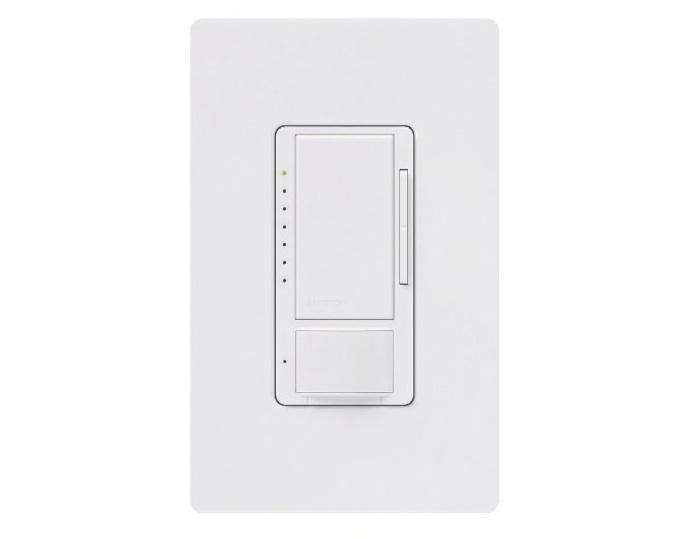

The Lutron Maestro Vacancy Sensor with Eco-dim Dimmer is one of those tiny wall devices that quietly solves a very common household problem: lights left on in empty rooms. It does not yell. It does not send a dramatic notification. It simply waits, watches for motion, and turns the lights off when the room is vacant. In other words, it is the polite roommate your utility bill has always wanted.
More specifically, the product most shoppers are usually looking for is the Lutron Maestro LED+ Motion Sensor Dimmer, Vacancy model, commonly identified by model number MSCL-VP153M. It combines a manual-on vacancy sensor, automatic shutoff, and smooth dimming control in one in-wall device. That makes it especially useful in bedrooms, bathrooms, laundry rooms, closets, media rooms, hallways, and other areas where people often forget to flip the switch on the way out.
This article explains what the Lutron Maestro vacancy sensor dimmer does, how Eco-dim-style energy savings fit into the picture, where the device works best, what to know before buying, and how real-world use feels after the novelty wears off. Spoiler: the best smart home upgrades are often the ones you stop noticing because they just work.
What Is the Lutron Maestro Vacancy Sensor with Eco-dim Dimmer?
The Lutron Maestro vacancy sensor dimmer is a wall-mounted lighting control that blends three functions into one device: a light switch, a dimmer, and a motion-based vacancy sensor. Unlike a basic motion sensor that may turn lights on automatically when someone walks into a room, a vacancy sensor requires you to turn the lights on manually. After you leave, it automatically turns them off when no motion is detected.
That manual-on, auto-off design is the heart of the product. It gives you control when you enter the room, but it also helps prevent wasted electricity when you leave. This is especially helpful in spaces where automatic-on lighting can be annoying, such as a bedroom at midnight, a nursery, a home theater, or a bathroom where pets may wander by and accidentally trigger the lights.
The Maestro design also includes dimming control, so you are not limited to harsh full brightness. You can set a preferred light level, tap the switch to turn the lights on, and adjust brightness depending on the task. Morning laundry? Brighten it up. Late-night bathroom visit? Keep it low and preserve your dignity.
Key Features at a Glance
- Manual-on, automatic-off operation: You turn lights on when needed; the sensor turns them off after the room is vacant.
- LED+ dimming: Designed for dimmable LED bulbs and compatible incandescent or halogen loads.
- Load rating: Common MSCL-VP153M models are rated for up to 150 watts of dimmable LED/CFL or 600 watts of incandescent/halogen lighting.
- Passive infrared sensing: The built-in PIR sensor detects motion in the room.
- XCT technology: Lutron’s fine-motion detection helps reduce unwanted shutoffs while someone is reading, typing, folding laundry, or doing other small movements.
- Wide coverage: The sensor offers a 180-degree field of view, with coverage suitable for many typical residential rooms.
- Adjustable timeout: Depending on configuration, users can set how long lights stay on after motion stops.
- No neutral required: Many homes, especially older ones, do not have a neutral wire in every switch box, so this feature is a big practical advantage.
- Single-pole and multi-location capability: It can be used in standard single-switch setups and certain multi-location applications with compatible controls.
How the Vacancy Sensor Works
A vacancy sensor is different from an occupancy sensor. The difference sounds small, but it matters. An occupancy sensor can turn lights on automatically when someone enters. A vacancy sensor usually requires manual-on operation, then turns lights off automatically when the room is empty.
That small difference makes vacancy sensing more intentional. You only use the lights when you decide they are needed. If the sun is pouring through the window, you can walk into the room and leave the lights off. If you need illumination, you tap the switch. When you leave, the sensor handles the forgetful-human part.
The Maestro vacancy sensor uses passive infrared technology, often called PIR. PIR sensors detect changes in heat and movement within the sensor’s field of view. In normal everyday terms, the device notices when a warm human body moves around. Lutron’s XCT technology is designed to pick up smaller motions, which helps prevent the classic motion-sensor problem: lights going out while you are still in the room but not moving much.
What Does “Eco-dim” Mean Here?
Eco-dim is closely associated with Lutron’s long-running energy-saving dimmer concept. The basic idea is simple: dimming lights reduces energy use, and automatic shutoff reduces wasted runtime. When dimming and vacancy sensing work together, the result is a lighting control that saves energy in two ways.
First, you can run lights below full brightness. In many rooms, 60% to 80% brightness is more than enough for comfort. Second, the vacancy sensor turns lights off after the space is empty. That matters because even efficient LED bulbs waste electricity when they are lighting a room occupied by absolutely no one except maybe a suspicious-looking laundry basket.
For homes with incandescent or halogen bulbs, dimming can also reduce heat and may extend lamp life. For LED lighting, the biggest practical benefits are lower energy use, better ambiance, and more control over brightness. The key is using dimmable bulbs that are compatible with the dimmer.
Best Rooms for the Lutron Maestro Vacancy Sensor Dimmer
Bathrooms
Bathrooms are one of the best places for a vacancy sensor dimmer. People often leave bathroom lights on after brushing teeth, washing hands, or doing the mysterious “I went in for one thing and forgot why” routine. Manual-on operation is also useful at night because it prevents lights from blasting on automatically when someone walks past the doorway.
Laundry Rooms
Laundry rooms are perfect candidates because people frequently enter with full hands. You can turn the light on, sort clothes, move items between machines, and leave without worrying about the switch. The sensor takes care of shutoff after the room is vacant.
Closets and Pantries
Closets and pantries are famous for forgotten lights. A vacancy sensor dimmer can prevent hours of wasted lighting after a quick search for cereal, shoes, or that one charging cable everyone swears they saw last week.
Bedrooms
Bedrooms benefit from manual-on operation because automatic-on lighting can be disruptive. You may not want the lights to turn on every time someone moves during the night. A dimmer also lets you set a softer brightness level for evening routines.
Home Offices
Home offices can work well if the sensor has a clear view of the workspace. Because the Maestro model includes fine-motion detection, it may perform better than basic sensors when someone is typing or reading. Still, placement matters. If the switch is behind furniture or blocked by a door, sensing performance can suffer.
LED Compatibility: The Detail You Should Not Ignore
Not every LED bulb behaves perfectly with every dimmer. Some combinations flicker, buzz, pop on suddenly, fail to dim low enough, or act like they have a tiny electrical ghost living inside them. This is not unique to Lutron; it is a common issue across LED dimming because LED drivers vary by brand, model, and bulb design.
Before buying bulbs or installing the dimmer, check compatibility. Lutron maintains LED compatibility resources for its dimmers, and this step is worth the few minutes it takes. Look for bulbs listed as dimmable and compatible with Maestro LED+ controls. If you already have LED bulbs installed, test them carefully after installation at low, medium, and high brightness.
For the best experience, avoid mixing too many bulb types on the same dimmer. A fixture with four identical dimmable LEDs is usually more predictable than a fixture with one bargain bulb, one mystery bulb, one old LED, and one bulb that came from a drawer labeled “probably works.”
Installation Considerations
The Lutron Maestro vacancy sensor dimmer is designed as an in-wall control. Many versions do not require a neutral wire, which makes installation easier in many residential switch boxes. That said, electrical work still deserves respect. Turn off power at the breaker, verify the circuit is off, follow the wiring diagram, and hire a licensed electrician if anything is unclear.
Wall plates are often sold separately, so check the package contents before installation day. Nothing ruins a satisfying upgrade like finishing the wiring and realizing the final look is missing the front plate. Also confirm whether your setup is single-pole, 3-way, or multi-location. Multi-location installations can require compatible companion dimmers or specific wiring steps.
Sensor placement matters too. The device needs a reasonable view of the area where people move. If the switch is hidden behind a door, blocked by a towel rack, or positioned around a corner from the main activity zone, the sensor may not perform as expected. Motion sensors are clever, but they are not psychic.
Performance and Everyday Use
In daily life, the Maestro vacancy sensor dimmer feels more like a convenience upgrade than a gadget. You tap the switch to turn lights on, adjust brightness as needed, and then forget about it. When the room empties, the lights fade off after the timeout period.
The fade-off effect is a small detail, but it makes the device feel more refined than a basic snap-off sensor. Instead of plunging the room into instant darkness, the light transitions down smoothly. That is especially nice in bedrooms, bathrooms, and media rooms where harsh lighting changes can feel jarring.
The manual-on design also keeps the device from becoming annoying. In rooms with daylight, pets, or frequent pass-by traffic, automatic-on sensors can turn into tiny wall-mounted drama queens. The vacancy model avoids that by waiting for you to decide when light is actually needed.
Energy-Saving Benefits
The energy-saving value comes from two habits the device encourages automatically. First, dimming means the lights do not always run at full output. Second, vacancy sensing means lights do not stay on indefinitely in empty rooms.
Actual savings vary depending on room use, bulb wattage, timeout setting, and how forgetful the household is. A family that already turns every light off perfectly may see smaller savings. A family with kids, guests, busy mornings, or a hallway light that somehow stays on until next Tuesday may see a more noticeable difference.
Vacancy sensors are especially practical because they preserve user choice. You can leave lights off when daylight is enough, use low brightness for comfort, and still have automatic shutoff as a backup. It is not flashy energy efficiency. It is quiet, practical energy efficiencythe kind that does not require a spreadsheet to appreciate.
Pros and Cons
Pros
- Combines dimming and vacancy sensing in one device.
- Manual-on operation prevents unwanted automatic lighting.
- Automatic-off helps reduce wasted electricity.
- Works well in bathrooms, bedrooms, closets, laundry rooms, and home offices.
- Compatible with many dimmable LED bulbs when selected properly.
- No-neutral installation can be helpful in older homes.
- Fine-motion detection improves comfort compared with basic motion sensors.
Cons
- Requires compatible dimmable bulbs for best performance.
- Sensor placement affects reliability.
- May require programming adjustments for timeout or sensitivity preferences.
- Wall plate may be sold separately.
- Multi-location wiring can be more complex than a basic single-pole switch.
Who Should Buy It?
The Lutron Maestro Vacancy Sensor with Eco-dim Dimmer is a smart choice for homeowners who want practical lighting control without turning every room into a complicated smart home project. It is also ideal for people who want energy savings but do not want to rely on apps, Wi-Fi, voice assistants, or cloud services.
It is especially useful for families, rental properties, guest bathrooms, utility spaces, and rooms where lights are frequently left on. It is also a strong option for anyone who prefers manual control but likes having automatic shutoff as a safety net.
It may not be the best fit if you specifically want automatic-on lighting every time someone enters. In that case, an occupancy sensor model may be more appropriate. It also may not be ideal in rooms where the wall switch has a poor view of the space unless the layout allows proper detection.
Buying Tips
Before purchasing, confirm the exact model number. The vacancy-only model is different from the occupancy/vacancy version. If you want manual-on and auto-off behavior, look for the vacancy model, often labeled MSCL-VP153M. Also confirm the color finish, because Lutron offers multiple finishes and not every store stocks every version.
Check your lighting load. The common rating is 150 watts for dimmable LED/CFL and 600 watts for incandescent or halogen. Most modern LED rooms fall well below 150 watts, but it is still smart to add up the wattage of every bulb controlled by the dimmer.
Finally, check bulb compatibility. A high-quality dimmer paired with incompatible bulbs can still create flicker or poor low-end dimming. The dimmer is only half the relationship; the bulb has to be a good dance partner.
Real-World Experiences with the Lutron Maestro Vacancy Sensor with Eco-dim Dimmer
After living with a vacancy sensor dimmer, the first thing most people notice is not the energy savings. It is the absence of small annoyances. The bathroom light is not left on all morning. The laundry room is not glowing like a tiny appliance museum. The closet no longer becomes a 24-hour showroom for jackets nobody is wearing.
In a bathroom, the experience feels especially natural. You walk in, tap the switch, set the brightness, and go about your routine. During the day, you may not turn the light on at all if there is enough natural light. At night, you can use a lower dim level so the room is visible without feeling like a stadium. When you leave, the light shuts off after the programmed delay. There is no ceremony. There is no app. It just behaves.
In a laundry room, the dimmer is less about ambiance and more about convenience. Laundry spaces are often entered for short bursts: toss clothes in, move clothes out, grab detergent, rescue one sock from behind the machine, repeat forever. A vacancy sensor works well here because it catches the forgotten-light problem without forcing automatic-on behavior every time someone walks past.
Bedrooms are where the manual-on design really proves its value. Automatic-on sensors can be frustrating in sleeping areas because motion does not always mean you want light. The vacancy version avoids that issue. You choose when the light turns on, and the dimmer remembers the general idea of comfort. Soft light in the evening feels better than full brightness, especially when your eyes are still negotiating with reality.
Home offices can be slightly more layout-dependent. If the switch faces the desk area, the sensor can be very convenient. Fine-motion sensing helps when you are typing, reading, or working at a computer. However, if the desk is behind the sensor or blocked by furniture, you may need to adjust sensitivity, timeout, or placement expectations. Motion sensors are excellent tools, but they still obey physics.
The most satisfying experience is the way the product disappears into normal life. At first, you may notice the automatic shutoff and think, “Nice.” After a few weeks, you stop thinking about it. Then you visit a room with a regular switch and realize the light has been on for three hours because everyone assumed someone else would turn it off. That is when the Maestro vacancy sensor dimmer starts to feel less like a gadget and more like common sense in plastic form.
There are a few learning moments. The timeout setting matters. Too short, and the lights may turn off when someone is still present but sitting still. Too long, and the energy-saving benefit is reduced. Many people find a middle setting works best for bathrooms and laundry rooms, while longer settings may be better for offices or hobby spaces. Low-end dimming may also need adjustment depending on the bulbs. If the lights flicker at the lowest setting, the solution is often a compatible bulb or a slightly higher low-end trim.
The device also changes household behavior in a subtle way. Because it is manual-on, people become more aware of whether they actually need artificial light. During daylight hours, they may skip the switch entirely. That choice is where vacancy sensing has an advantage over automatic-on controls. It saves energy not only by turning lights off, but also by not turning them on unnecessarily in the first place.
Overall, the Lutron Maestro Vacancy Sensor with Eco-dim Dimmer delivers the kind of upgrade that feels boring in the best possible way. It is not a flashy smart display. It does not tell jokes. It does not require firmware updates before breakfast. It simply makes lighting more efficient, more comfortable, and less dependent on human memorywhich, as any parent, roommate, or electricity bill can confirm, is not always a premium-grade system.
Conclusion
The Lutron Maestro Vacancy Sensor with Eco-dim Dimmer is a practical lighting upgrade for homes that need better control, softer dimming, and less wasted electricity. Its manual-on, automatic-off design makes it more intentional than a standard occupancy sensor, while the dimming function adds comfort and flexibility. For the right room, with compatible bulbs and proper installation, it can make lighting feel smoother, smarter, and more efficient without adding unnecessary complexity.
If you want a simple way to reduce forgotten lights, improve room ambiance, and avoid automatic-on surprises, this Maestro vacancy sensor dimmer deserves a serious look. It is the rare electrical device that does its job best when nobody has to think about it.
Note: This article is for general product education and web publishing. For electrical installation, always follow the manufacturer’s instructions, local code requirements, and consult a qualified electrician when needed.