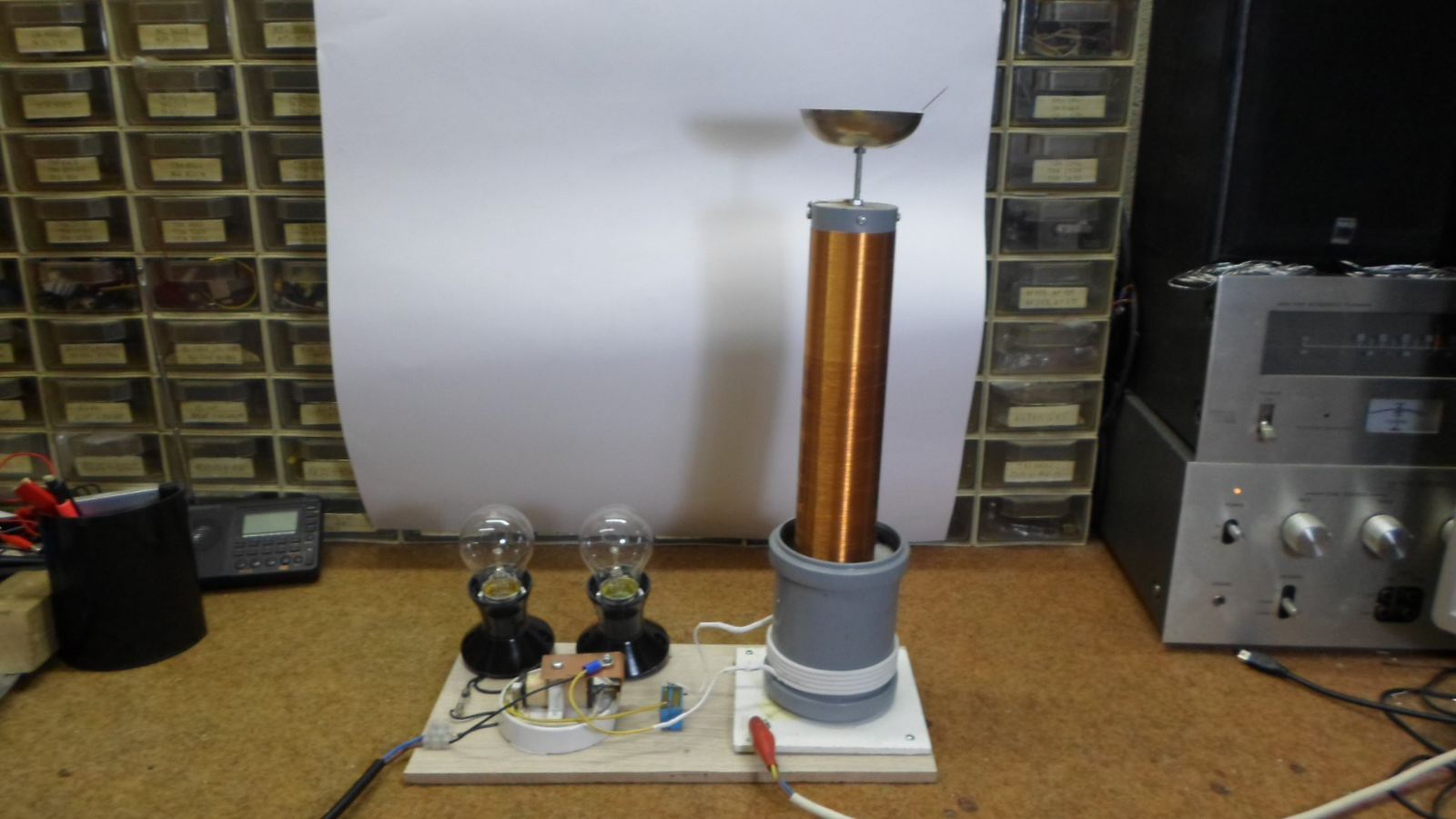

A Tesla coil sounds like something that should require a secret laboratory, a stormy night, and a dramatic assistant named Igor. In reality, the basic idea behind a very small Tesla coil can be surprisingly simple: create a rapidly changing electric current, send it through a coil, and use electromagnetic resonance to produce a high-voltage effect. That is the magic behind the phrase “extremely simple Tesla coil with only 3 components.”
Before anyone reaches for wire cutters and a superhero cape, let us be clear: a Tesla coil is not a toy. Even small versions can produce high voltage, electrical noise, heat, ozone, and sparks. The goal of this article is to explain the concept, the science, the appeal, and the practical expectations behind ultra-simple Tesla coil designsnot to encourage careless experimentation. Electricity is useful, beautiful, and occasionally rude enough to bite.
With that warning politely flashing like a neon sign, let’s explore how a minimalist Tesla coil works, why “only 3 components” is both exciting and a little misleading, and what beginners should understand before admiring those tiny purple arcs.
What Is a Tesla Coil?
A Tesla coil is a resonant transformer circuit designed to generate high-voltage, high-frequency alternating current. Nikola Tesla introduced the concept in the late 19th century while experimenting with wireless power, lighting, radio-frequency energy, and high-voltage electrical phenomena. In simple terms, a Tesla coil takes electrical energy and uses resonance to build a much higher voltage than the original input.
Classic Tesla coils often include a primary coil, secondary coil, capacitor, spark gap, power supply, and a top terminal. Large coils can throw dramatic lightning-like arcs into the air. Museum coils can make crowds gasp. Musical Tesla coils can play recognizable tunes by modulating sparks. Mini Tesla coils, however, usually aim for a gentler goal: lighting a small fluorescent bulb nearby, creating a faint corona, or demonstrating wireless energy transfer at close range.
Why the “Only 3 Components” Idea Is So Popular
The phrase “Tesla coil with only 3 components” is popular because it makes a complicated topic feel approachable. Instead of a bench full of parts, the simplified concept usually focuses on three core items:
1. A Coil
The coil is the star of the show. In a mini Tesla coil, the secondary coil is typically made from many turns of fine insulated copper wire wrapped around a nonconductive tube. This coil helps produce the high-voltage field that makes the project visually interesting.
2. A Switching Device
A transistor or similar semiconductor acts like a very fast electronic switch. Its job is to interrupt and restart current flow rapidly. That rapid switching creates the changing magnetic field needed for induction and resonance.
3. A Resistor or Feedback Element
A resistor or feedback path helps control the transistor’s behavior. In many simple “Slayer exciter” style circuits, feedback from the coil helps the transistor switch at a frequency related to the coil’s natural resonance.
Now for the tiny footnote wearing steel-toed boots: a real working setup still needs a power source, connecting wires, insulation, a support structure, and safe spacing. So, “only 3 components” usually means the core circuit is extremely minimalnot that the entire physical project exists as three lonely objects floating in space. Physics is impressive, but it has not yet learned to solder itself.
How an Extremely Simple Tesla Coil Works
The basic science behind a mini Tesla coil rests on three ideas: electromagnetic induction, resonance, and voltage transformation.
Electromagnetic Induction
When electric current flows through a coil of wire, it creates a magnetic field. When that current changes quickly, the magnetic field changes quickly too. A nearby coil can respond to that changing magnetic field by developing voltage. This is called electromagnetic induction, and it is the same broad principle used in transformers, wireless chargers, electric motors, and many other devices that quietly keep modern life from becoming a candlelit inconvenience.
Resonance
Resonance is what happens when a system naturally vibrates or oscillates at a particular frequency. Push a swing at the right rhythm, and the motion grows. Push at the wrong rhythm, and you mostly look confused in public. A Tesla coil uses electrical resonance in a similar way. The coil and its natural capacitance form a resonant system. When the switching circuit excites that system at the right frequency, voltage can rise dramatically.
High Voltage, Low Current
Tesla coils are famous for high voltage, but that does not mean unlimited power. Many small Tesla coils produce high voltage at relatively low current. This is why a nearby fluorescent tube may glow without being plugged in. The electric field around the coil excites the gas inside the tube. It feels like wizardry, but it is really physics wearing a sparkly jacket.
What Makes a Mini Tesla Coil Different From a Classic Tesla Coil?
A classic spark-gap Tesla coil and a simple mini Tesla coil are relatives, but they are not identical twins. A traditional Tesla coil uses a primary capacitor and spark gap to create powerful pulses in the primary circuit. The secondary coil resonates and produces impressive high-voltage discharges.
A mini “3-component” style Tesla coil is usually closer to a self-oscillating transistor circuit. It is often called a Slayer exciter. Instead of using a large spark gap and high-voltage transformer, the transistor switches current through a small primary winding. Feedback helps the circuit oscillate. The secondary coil then produces a high-frequency, high-voltage field.
The result is smaller, cheaper, quieter, and far less dramatic than a full-size Tesla coil. It may light small lamps at close range or create a tiny corona at the top terminal. It will not power your house, charge your electric car, or summon thunderclouds. If it does, please step away and call a qualified electrical engineer immediately.
The Three Main Parts Explained in Plain English
The Secondary Coil: The Voltage Builder
The secondary coil usually has many more turns than the primary side. More turns help build higher voltage. The wire must be insulated because the voltage difference between sections of the coil can become significant. A neat winding also helps performance. Messy coils may still work, but they behave like a poorly organized closet: technically functional, emotionally stressful.
The Transistor: The Fast Little Gatekeeper
The transistor acts as the switch that drives the oscillation. In simple circuits, it turns on and off quickly, allowing pulses of current to energize the primary coil. The switching rate is not chosen randomly; it is influenced by the coil, feedback path, and circuit conditions.
The Resistor: The Civilized Referee
The resistor helps limit current and shape the behavior of the transistor. Without proper current control, a transistor can overheat or fail. In electronics, smoke is rarely a feature. It is usually the component’s dramatic farewell speech.
What Can a Simple Tesla Coil Actually Do?
An extremely simple Tesla coil is best viewed as an educational demonstration. Depending on its design and power level, it may:
- Light a small fluorescent or neon lamp held nearby
- Create a faint purple corona at the top of the coil
- Demonstrate wireless energy transfer over a short distance
- Show how resonance affects voltage
- Introduce basic concepts in coils, transistors, and high-frequency circuits
It should not be treated as a practical power device. Tesla coils are inefficient for everyday energy transmission, and even small ones can interfere with nearby electronics. They are wonderful for learning, but terrible roommates for sensitive gadgets.
Safety Comes First, Second, and Third
Any article about a Tesla coil must talk about safety. High voltage can injure people, damage electronics, start fires, and create unpleasant gases such as ozone and nitrogen oxides. Even when current is low, the risks are not zero. Radio-frequency currents can behave differently from ordinary household electricity, but “different” does not mean “safe.”
Here are the most important safety principles:
- Never touch a Tesla coil while it is powered.
- Do not operate one near phones, laptops, pacemakers, hearing aids, or medical devices.
- Keep flammable materials away from sparks and hot parts.
- Use only low-voltage, battery-powered educational designs under proper supervision.
- Avoid large capacitors or mains-powered designs unless you are trained.
- Operate in a well-ventilated area because electrical discharges can produce ozone.
- Keep bystanders, pets, and curious fingers at a safe distance.
A mini Tesla coil may look cute, but cute electronics can still misbehave. Think of it as a tiny dragon: fascinating, photogenic, and not something you poke in the nose.
Common Myths About Simple Tesla Coils
Myth 1: “High Frequency Makes It Harmless”
This is one of the most dangerous myths. Some people claim that high-frequency current travels only on the surface of the body and is therefore safe. That oversimplifies the science and encourages risky behavior. Tesla coil discharges can burn skin, interfere with medical devices, and cause injury under the wrong conditions.
Myth 2: “Only 3 Components Means It Is Beginner-Proof”
A simple parts list does not automatically mean a safe or easy project. A sharp knife also has only one main component, and nobody calls it beginner-proof. The challenge with Tesla coils is not merely the number of parts; it is understanding insulation, heat, current limits, grounding, spacing, and electrical fields.
Myth 3: “A Tiny Tesla Coil Can Power a Room Wirelessly”
No. A small Tesla coil can demonstrate wireless energy transfer at short distances, often enough to light a small lamp nearby. It cannot efficiently run household devices across a room. If your goal is practical wireless charging, modern inductive charging systems are far more controlled and useful.
Why This Project Fascinates Makers and Students
The simple Tesla coil is popular because it turns invisible physics into visible results. Most electronic circuits do their work quietly. A resistor resists. A capacitor stores charge. A transistor switches. Very polite, very boring at parties. A Tesla coil, by contrast, glows, buzzes, lights lamps through the air, and makes people ask, “Wait, how is that happening?”
For students, it connects multiple science topics in one dramatic demonstration: magnetism, electricity, resonance, frequency, voltage, current, and energy transfer. For hobbyists, it offers a satisfying bridge between basic electronics and high-voltage experimentation. For content creators, it photographs beautifullyas long as safety is handled responsibly.
Practical Expectations: What Beginners Should Know
If you are learning about simple Tesla coils, set realistic expectations. The first version of a mini coil may not produce visible sparks. It may only light a nearby fluorescent tube. It may work best in dim lighting. It may require careful placement of parts. It may also refuse to work because one wire is loose, one transistor is installed incorrectly, or the universe has chosen comedy.
That is normal. Electronics is often a conversation between theory and troubleshooting. The circuit teaches patience. It also teaches that “simple” does not mean “automatic.” A three-component concept still depends on good connections, proper insulation, appropriate power, and a healthy respect for what high voltage can do.
Better Ways to Learn Before Building
Before attempting any physical Tesla coil project, beginners should study basic electronics first. Learn how resistors, transistors, inductors, and power supplies behave. Practice with low-voltage LED circuits. Understand polarity, heat, short circuits, and current limits. Learn to use a multimeter properly. Read safety guidance from credible electrical and science education sources.
Another smart option is to observe professionally designed demonstrations at museums, science centers, or school labs. These displays use controlled environments, distance barriers, trained operators, and safety procedures. Watching a safe demonstration can be more valuable than rushing into a project without enough knowledge.
Experiences Related to an Extremely Simple Tesla Coil With Only 3 Components
The first experience many people have with a simple Tesla coil is pure surprise. You bring a small fluorescent tube near the coil, and suddenly it glows without being plugged into anything. For a moment, your brain files a complaint. Lamps are supposed to need wires. That is the rule. Then the physics shows up and calmly explains that the high-frequency electric field is exciting the gas inside the tube. Mystery solvedbut the sense of wonder remains.
One of the most memorable parts of working around a small Tesla coil is how it changes your understanding of electricity. In everyday life, electricity feels hidden. It lives inside walls, chargers, appliances, and cables. A Tesla coil makes the field visible. You begin to see that electricity is not just “stuff in wires.” It is part of a larger electromagnetic environment. The air around the coil becomes active. Nearby lamps respond. Small metal objects may influence the discharge. Suddenly, the invisible has stage lighting.
Another common experience is learning humility. Many beginners assume a minimal circuit will behave perfectly because the diagram looks simple. Then reality arrives with a clipboard. The coil winding is uneven. The transistor gets warm. The lamp glows only from one angle. The circuit works on Tuesday and acts offended on Wednesday. These moments can be frustrating, but they are also useful. They teach that electronics is not only about copying a design; it is about understanding why the design works.
People also discover that layout matters. In low-frequency circuits, a messy arrangement may still function. In high-frequency circuits, physical placement can change performance. Wire length, coil spacing, insulation, and nearby objects all matter more than expected. A simple Tesla coil can therefore become a friendly introduction to the strange world of radio-frequency behavior. It is like regular electronics, except the circuit has opinions about furniture placement.
Safety is another experience that becomes real very quickly. Even a small coil can make you respect distance, heat, and interference. You learn not to place it near a laptop. You learn not to touch the output. You learn that the smell after electrical discharge is not “science perfume,” but a sign that ventilation matters. Responsible experimenters become calmer and more careful over time. They stop chasing bigger sparks and start asking better questions.
The best experience, however, is educational satisfaction. A simple Tesla coil demonstrates several abstract ideas in one compact project. It shows that a transistor can switch rapidly, that coils can store and transfer energy, that resonance can increase voltage, and that wireless energy transfer is real under limited conditions. It also shows the difference between a classroom formula and a physical device. That connection is powerful.
For writers, teachers, makers, and students, the “only 3 components” Tesla coil is less about building the ultimate machine and more about opening a door. Behind that door are electromagnetism, Nikola Tesla’s legacy, circuit design, safety engineering, and the joy of seeing a small lamp glow because an invisible field told it to wake up. That is a pretty good return on three core components.
Conclusion
An extremely simple Tesla coil with only 3 components is a fascinating way to understand high-voltage electronics at a beginner-friendly conceptual level. The minimalist idea usually centers on a coil, a switching transistor, and a resistor or feedback element. Together, these parts can create oscillation, excite a secondary coil, and produce a high-frequency electric field capable of lighting small lamps nearby.
Still, the simplicity should not be mistaken for harmlessness. Tesla coils involve high voltage, electromagnetic interference, heat, and possible injury. The smartest approach is to treat them as educational science demonstrations, not casual toys. Learn the principles, respect the risks, and remember that the most impressive maker skill is not producing the biggest sparkit is keeping the experiment safe, controlled, and understandable.