
A treasure map with a bright red X? Buried gold in the Dutch countryside? Nazi-looted valuables hidden under a tree line near a quiet village? On paper, this story sounds like Hollywood accidentally wandered into a history seminar. In reality, the headline “Hidden Nazi Treasure: New Map Reveals Buried Gold in Netherlands” is tied to a very real archive release, a real Dutch village called Ommeren, and a mystery that refuses to stay buried.
The short version is this: a declassified World War II-era map released by the Dutch National Archives reignited claims that German soldiers buried stolen valuables near Ommeren as the war was ending. The rumored cache reportedly included gold, jewelry, coins, precious stones, and other loot taken after a bank explosion in Arnhem in 1944. Treasure hunters showed up with metal detectors and shovels. Officials warned them to back off. Archaeologists conducted a formal dig. And in the end? The treasure itself remained stubbornly absent, like the world’s rudest RSVP.
But the real story is bigger than a missing stash of gold. It touches on Nazi looting, wartime chaos in the Netherlands, the long afterlife of archival discoveries, and the strange power that a single hand-drawn map can have over the public imagination. It is part historical puzzle, part cautionary tale, and part reminder that not every “treasure” story is really about treasure.
Why This Story Went Viral So Fast
The Ommeren map had all the ingredients of a modern history obsession. First, it came from official archives, not a random rumor passed around a pub table after three beers and a strong opinion. Second, it carried the irresistible symbolism of a literal X marking a possible burial site. Third, it connected to World War II, one of the most studied and emotionally charged periods in modern history.
Once the map became public, news spread quickly. International coverage described modern-day treasure hunters heading into fields near Ommeren with printouts, phone screenshots, and detection gear. The village itself became an unlikely stage for a historical gold rush. That reaction makes sense. The combination of Nazi treasure, buried gold in the Netherlands, and newly released map is basically catnip for anyone who loves history, mysteries, or the phrase “what if.”
Still, what made the story especially compelling was the tension between fantasy and paperwork. This was not a pirate legend. It was an archival file. It was tied to testimony, postwar investigations, and earlier search efforts. In other words, this was not just a fun yarn. It came with receipts, even if the gold itself never showed up to the meeting.
What the Map Actually Allegedly Showed
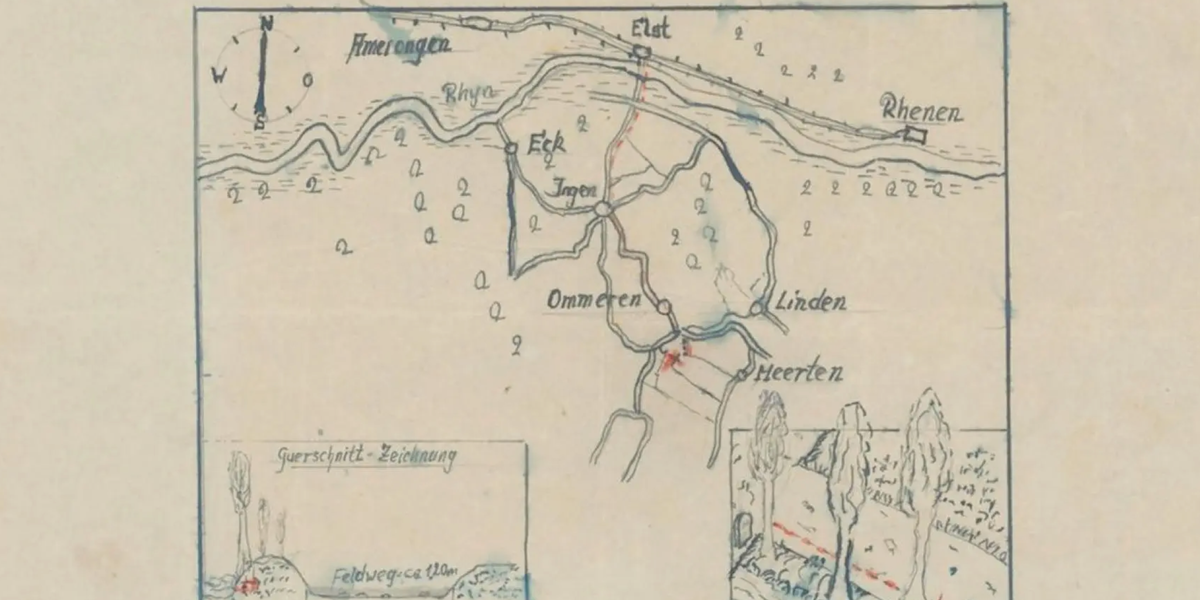
The map was released after the Dutch archive’s standard confidentiality period expired. According to reporting on the case, the document was linked to a postwar investigation into valuables that German soldiers may have buried near Ommeren in 1945. The sketch reportedly included a road section, nearby landmarks, and a marked point near a group of trees. That red X did most of the public-relations heavy lifting.
The alleged treasure was said to include gold coins, jewelry, diamonds, rubies, and other valuables. Some reports estimated the haul could be worth millions in today’s money, though such numbers should always be treated carefully. When treasure values start flying around headlines, journalists and readers alike can get a little starry-eyed.
One important detail often gets simplified in retellings: the map did not “prove” treasure existed. It pointed to a claim. It suggested a location based on testimony and archived records. That distinction matters. A map can preserve a story without confirming the outcome of the story. History, annoyingly but correctly, loves nuance.
How the Loot Was Supposedly Buried
The backstory begins in Arnhem in the summer of 1944, when a bank was hit during wartime violence. Reports tied to the archive release said valuables from the damaged vault ended up scattered and exposed. German soldiers allegedly grabbed what they could, packed it into boxes, and later moved the loot as the war situation deteriorated.
As Allied forces advanced and German control weakened, the story goes, the soldiers buried the valuables near Ommeren in 1945. The goods were supposedly packed into ammunition boxes and hidden underground for later retrieval. In classic treasure-story fashion, there is both precision and uncertainty here. The account is specific enough to feel believable, but not complete enough to settle the matter forever.
This wider wartime context also matters. Arnhem and the surrounding region were deeply shaped by the fighting in the Netherlands during World War II, especially around Operation Market Garden. That failed Allied offensive in September 1944 left the area marked by violence, disruption, and strategic instability. In such an environment, burying stolen valuables may sound dramatic, but it also sounds entirely possible.
Why Historians and Officials Stayed Cautious
Here is where the story gets more interesting than the headline. Dutch officials and archive researchers did not treat the map like a guaranteed route to riches. They treated it as a credible historical lead. That is a very different thing.
Reports on the release noted that the postwar Dutch authorities had already tried to find the treasure in 1947. Those searches failed. In some accounts, the ground was frozen during one attempt; later efforts after the thaw also turned up nothing. There was also a theory that someone may have already dug up the cache long ago. Another possibility is that the map reflected a real plan but not a lasting burial place. Yet another is that key details were wrong, incomplete, or misremembered.
In other words, the case sat in that maddening historical zone where the story seems plausible, the documentation is intriguing, and the evidence refuses to produce a clean ending. That is catnip for the internet, but it is also exactly why professional historians tend to speak with caution instead of dramatic soundtrack music.
The Treasure Hunters Arrive, and So Do the Problems
After the map became public, Ommeren drew treasure seekers almost immediately. Some came with metal detectors. Others came with shovels. Some reportedly dug holes on or near private land. Residents found themselves living inside a history headline they had not exactly volunteered to host.
Local authorities had practical concerns that went far beyond trespassing. The area had wartime history, which raised the risk of unexploded ordnance. Officials also pointed to rules limiting metal detection in the municipality. In plain English: this was not the sort of place where enthusiastic amateurs should wander around poking the ground because a viral map told them to.
That tension gave the story a second life. It was not only about possible Nazi gold in the Netherlands. It was also about how quickly a historical discovery can become a public spectacle. Archives exist to preserve records, but once a fascinating record goes public, it can generate consequences well beyond the reading room.
The Official Dig That Came Up Empty
In May 2023, a formal search led by archaeologists took place in Ommeren. This was the moment that seemed most likely to deliver a cinematic payoff. Professionals used equipment, examined signals, and dug in approved areas. If the treasure was still there, this was supposed to be the grown-up, evidence-based way to find it.
Instead, the search found no buried cache of Nazi loot. Reports described a few wartime remnants and scrap items, not boxes of gold or precious stones. That result did not necessarily disprove the original story, but it did drain much of the fever from the hunt. A formal excavation had a chance to settle the question, and it did not produce the jackpot.
For many readers, that outcome only deepened the mystery. No treasure found can mean many things: the goods never existed, the location was off, someone recovered them decades earlier, or the map was only part of a larger chain of events. History’s favorite hobby is keeping one door open just wide enough to keep people talking.
The Bigger Story: Nazi Looting Was Real, Systematic, and Vast
To understand why the Ommeren story captured so much attention, it helps to zoom out. The phrase Nazi treasure can sound sensational, but Nazi theft across Europe was horrifyingly real. The regime and its agents confiscated gold, jewelry, cash, art, religious objects, homes, businesses, books, and personal property on a massive scale. This was not a side hustle of war. It was a system.
Holocaust and World War II scholarship has documented the looting of Jewish property and other stolen assets in extraordinary detail. Gold and valuables did not simply vanish into legend; they moved through banks, private hands, military channels, black markets, and postwar recovery efforts. Some were recovered. Many were not. Some items were restituted. Many cases remained unresolved for decades.
That context changes the tone of the Ommeren mystery. The buried-gold angle makes for a clickable headline, but the underlying subject is wartime theft and the afterlife of stolen property. Behind every glittering rumor may be a darker human story involving loss, displacement, murder, and unfinished justice. That is why good coverage of this topic has to balance curiosity with seriousness.
Why People Cannot Resist Stories Like This
Treasure stories tap into something ancient in the human brain. A map, a secret, a hidden fortune, a missing final chapterthose ingredients work almost every time. Add World War II and official documents, and the story becomes even harder to ignore.
But the Ommeren case also reveals something modern: we live in an era where archival releases can turn into real-world events overnight. A document that sat quietly in a file can suddenly trigger global headlines, social media speculation, amateur expeditions, and endless “could it still be there?” threads.
The emotional appeal is obvious. People want history to feel alive. They want the past to leave clues. They want one lucky discovery to crack open a forgotten chapter of time. And yes, they want the X to actually mark the spot. We are, as a species, extremely vulnerable to a good map.
Could the Treasure Still Be Out There?
Technically, maybe. Realistically, the odds look slim.
If the buried cache ever existed, several explanations compete. Someone may have retrieved it shortly after burial. The original witness may have been partly right but imprecise about the location. The landscape may have changed enough to complicate the search. Or the goods may have been moved, split up, or quietly absorbed into the chaos of the postwar years.
That uncertainty is exactly why the story survives. No definitive discovery means no definitive ending. The mystery remains suspended between archive and folklore, between evidence and imagination. And that is probably why people still keep an eye on it. Every unsolved historical puzzle leaves a tiny space for hope, speculation, and the occasional very muddy boot.
Final Take
Hidden Nazi Treasure: New Map Reveals Buried Gold in Netherlands is one of those rare stories that feels cinematic while staying rooted in real documents and real wartime history. The Ommeren map did not produce a mountain of gold, but it did reveal something more durable: how powerfully the past can resurface when archives open, how quickly mystery travels, and how important it is to remember that “treasure” in this context often begins as stolen property wrapped in violence.
The buried-gold angle may be the headline grabber, but the deeper story is about memory, evidence, and the stubborn unfinished business of World War II. So yes, the map is fascinating. Yes, the mystery is irresistible. But the best way to read this story is not as a fairy tale of lost riches. It is as a reminder that history still leaves cluesjust not always the kind that fit neatly inside a treasure chest.
Experiences Related to the Topic: What the Ommeren Treasure Hunt Felt Like
One reason the Ommeren story keeps resonating is that it is easy to imagine the human experience around it. Picture a quiet Dutch village waking up to international headlines. One day it is a peaceful rural place; the next it is the answer to a question nobody asked out loud: “What happens when the internet discovers your backyard might contain Nazi loot?”
For residents, the experience was likely strange, exhausting, and oddly surreal. Imagine walking past familiar fields and seeing strangers scanning the ground with metal detectors, studying phone screens, and staring at tree lines like they are in the final act of a war thriller. For locals, the romance of the treasure hunt probably faded fast once holes started appearing and curiosity became disruption. A mystery may be fun online, but it feels different when it parks next to your front gate.
For amateur treasure hunters, though, the experience must have been electric. Even with long odds, the possibility of finding something extraordinary can make common sense sit in the back seat for a while. There is a special kind of adrenaline in searching a real place tied to a real historical document. Every beep from a detector feels loaded. Every patch of soil becomes a question mark. Every old nail probably causes ten seconds of wild optimism before reality clears its throat.
Archaeologists and historians would have experienced the story differently. For them, Ommeren was not just a puzzle but a test of method. The excitement had to be filtered through evidence, maps, terrain changes, wartime context, and the limits of memory. A professional search is much less “Eureka!” and much more “Let’s verify this carefully, then dig, then verify again.” That kind of experience is quieter, slower, and much less photogenic than popular culture would like, but it is also how real historical work gets done.
Then there is the experience of the wider public, which is perhaps the most revealing of all. People around the world did not simply consume the Ommeren story; they projected themselves into it. They imagined being the one to spot the clue others missed. They imagined history becoming tangible in a single lucky moment. That is why the story traveled so well. It offered a rare combination of danger, mystery, wartime history, and physical place. It felt discoverable.
In that sense, the biggest “experience” connected to this story may be emotional rather than physical. Curiosity. Excitement. Unease. Skepticism. A little greed, if we are being honest. Also a dose of humility when the official dig turned up mostly disappointment and scrap. That emotional arc is what makes the Ommeren mystery memorable. It begins with the fantasy of buried gold and ends with a deeper realization: history is not a vending machine where you insert a map and receive a chest of answers.
And maybe that is why the story still lingers. Not because the treasure has been found, but because it has not. The experience of Ommeren is the experience of history itselfpart clue, part silence, part mud, and part wonder.
Note: This article reflects the historical claims surrounding the Ommeren map and related reporting. As of the most widely reported official searches, no buried treasure has been conclusively recovered from the site.