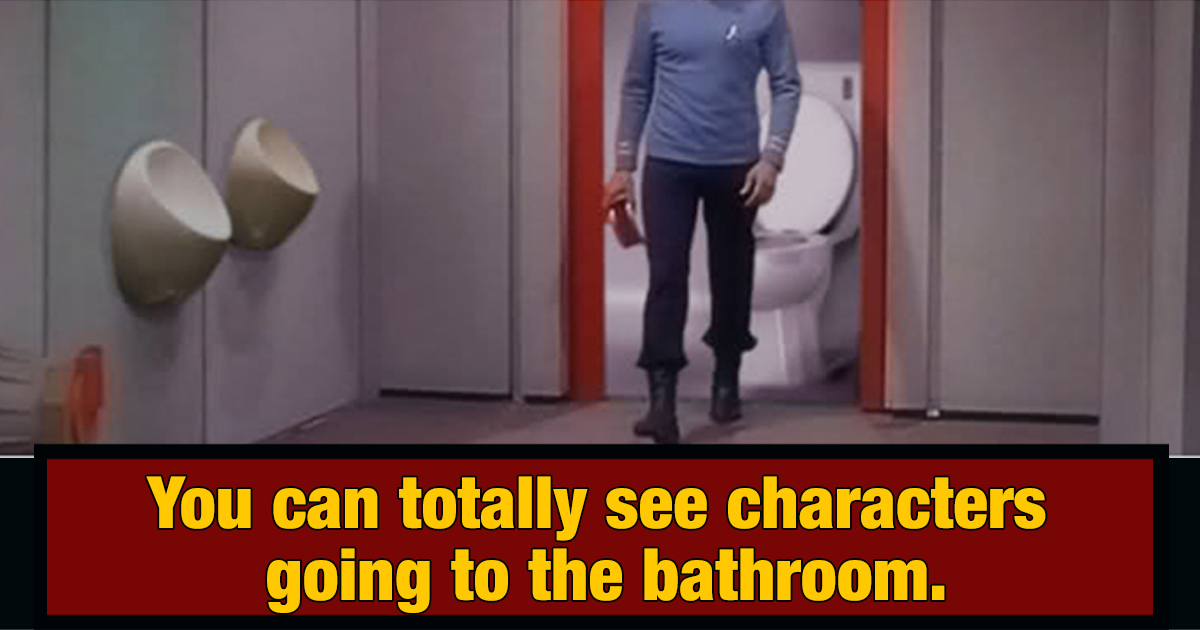

If you have ever watched Star Trek with your finger hovering over the pause button like a starship captain over the self-destruct sequence, congratulations: you already understand the franchise’s most delightful habit. Trek does not just build worlds in dialogue. It hides them in plaques, wall graphics, set labels, computer readouts, corridor architecture, and the sort of background details that most shows would treat like decorative wallpaper. In Star Trek, the wallpaper is practically canon.
That is why the best background details in Trek feel a little insane. Not “someone forgot a coffee cup in frame” insane. More like “the tiny label behind Picard contains a joke for the art department, a nod to real science, and a breadcrumb for lore nerds who will still be arguing about it 30 years later” insane. The franchise has spent decades rewarding obsessive viewers, and the result is a galaxy where a bridge plaque can double as a secret credits roll and a random door sign can quietly imply that dolphins work for Starfleet.
So let’s boldly go where the casual viewer rarely goes: the corners of the frame. These are nine of the wildest hidden Star Trek background details that prove the franchise was never content with doing just enough. It had to do extra. Sometimes gloriously, beautifully extra.
1. Jefferies Tubes Are Basically a Permanent Thank-You Note to Matt Jefferies
Most fans know Jefferies tubes as those cramped maintenance shafts where engineers crawl, sparks fly, and somebody inevitably says, “I can reroute it from here.” What is easy to miss is that the name itself is a background tribute. The tubes were named in honor of Matt Jefferies, the legendary designer of the original Enterprise and one of the most important visual architects in all of Star Trek.
That means every time a character gets jammed into a wall tube with a plasma leak breathing down their neck, the show is quietly tipping its hat to one of the franchise’s founding designers. It is an in-joke that became canon, then became tradition, and then basically became part of Trek’s DNA. That is a very Trek move: take a production joke, feed it enough warp power, and let it become lore.
It also says something important about how the franchise thinks. Trek often treats its designers, illustrators, and technical artists like invisible world-builders. The Jefferies tube is a rare case where the invisibles get immortalized right in the dialogue and set language. In other words, the crawlspace is also a monument. That is kind of poetic, in a very “future engineers are rock stars” sort of way.
Why it matters
This detail reveals how deeply Star Trek respects its own production history. The franchise does not just remember who built its world. It literally writes their names into the world.
2. Okudagrams Turned Background Screens Into Storytelling Machines
If Jefferies helped define the shape of Trek, Michael Okuda helped define its brain. His famous interface graphics, often called Okudagrams, transformed walls, consoles, panels, and readouts into sleek, futuristic information systems. They looked elegant, organized, and just technical enough to make viewers believe the ship really worked.
That was the genius of it. Okudagrams were not random squiggles tossed on a screen five minutes before lunch. They were designed to suggest that Starfleet had already solved the usability nightmare that modern software still wrestles with. Curves, blocks, clean hierarchy, distinct color zones: the interfaces implied a civilization that had figured out how to make complexity readable. That is one reason the Enterprise-D still feels oddly believable. Its computers do not look magical. They look managed.
There was also a practical side. These graphics were cheaper and faster than building endless physical blinking buttons, which meant Trek accidentally stumbled into a production method that also happened to look futuristic. Efficiency met aesthetics, shook hands, and invented one of the most iconic visual languages in science fiction.
Even better, the displays were not empty. They carried technical jargon, deck maps, science terms, tactical cues, and little bits of worldbuilding that rewarded the viewer who paused at exactly the right moment. Trek did not just decorate a set. It built an ecosystem of readable fiction.
3. Hidden LCARS Text Is Full of Staff Jokes, Fake Science, and Nerd Mischief
Now we arrive at one of Trek’s most charming bad habits: hiding jokes in the graphics. Background displays often contain text that looks like serious technical information until you zoom in and realize the art department was having the time of its life.
Some of these are wonderfully subtle. A chemical or explosive on a display might sound completely plausible, right up until you discover the name is actually a quiet nod to a real crew member. “Toddtracium” is one of those glorious examples. Elsewhere, a historical reference like the “Post-Ramirez Era” turns out to be named after an assistant camera operator. The joke works because it is buried inside something that looks incredibly official. Trek weaponized professionalism for comedy.
And that, honestly, is the perfect kind of humor for this franchise. It is not broad. It is not winking at the camera. It is hidden inside the decorative machinery of the future, where only the truly obsessive viewer will find it. The result is a visual style that feels dense, lived-in, and unexpectedly human. Beneath all that polished Starfleet confidence, somebody in the art department was still thinking, “You know what would be funny? Sneaking Steve from camera crew into a historical timeline.”
This is why Trek backgrounds age so well. They are not just set dressing. They are tiny treasure chests.
4. The Enterprise-D Quietly Named Shuttlecraft After Real-World Figures
One of the best “wait, what?” details lives in the shuttlebay operations displays. If you pause those LCARS readouts, you can find shuttlecraft and shuttlepods with names like Einstein, Von Braun, J.F. Kennedy, Chris Pike, and El-Baz. These are not random choices. They connect Starfleet’s future to real scientific, historical, and aspirational lineages.
That is background worldbuilding doing real work. In a single blink-and-you-miss-it display, Trek suggests that the Federation remembers human exploration history, scientific ambition, and the people who made reaching the stars feel imaginable. It is not shouting this message in a speech. It is whispering it from a maintenance screen.
And yes, it also tells you the Trek art team was incapable of half-measures. They could have labeled those craft Shuttle 1, Shuttle 2, and Shuttle 3. Instead, they turned a utility display into a mini museum of space-age memory. That is why longtime fans love pausing these episodes. Every display looks like it has a backstory because, annoyingly and magnificently, it often does.
5. Cetacean Ops Started as a Tiny Joke and Evolved Into Full-Blown Canon Madness
Few background details in Star Trek are as delightfully unhinged as Cetacean Ops. The basic idea is simple: some Starfleet ships apparently have operational spaces for whales and dolphins, who can serve as navigation specialists. The less basic part is realizing how long Trek spent teasing this idea before it fully surfaced onscreen.
Early hints appeared in the background, including signage that implied a bottlenose dolphin crew facility on the Enterprise-D. Later, the concept kept resurfacing in reference material and dialogue, turning a weird little possibility into one of the franchise’s most beloved pieces of hidden lore. Then newer Trek finally leaned into the madness and showed versions of Cetacean Ops more openly.
This is one of the best examples of how Trek’s background details can snowball. What begins as a blink-and-you’ll-miss-it joke ends up growing roots, branches, fan theories, and eventually screen time. It is like the franchise looked at one strange idea and said, “Actually, yes. Let’s keep that forever.”
And good for it. Science fiction should occasionally be brave enough to ask, “What if the navigation department needed more water?”
Why fans adore it
Cetacean Ops feels like classic Trek in miniature: idealistic, a little absurd, weirdly thoughtful, and more committed to its bit than almost any other franchise on television.
6. Bridge Dedication Plaques Are Secret Credit Sequences in Disguise
Bridge plaques are easy to ignore because they look like ceremonial props. Nice metal plate, official quote, registry number, very dignified, probably polished by someone who takes their job too seriously. But look closer and the plaques become one of Trek’s smartest hidden traditions.
In-universe, these plaques commemorate the ship. In real life, they often list production staff as if they were Starfleet personnel. Gene Roddenberry shows up in admiral-like fashion. Designers, visual effects people, and key staff appear as engineers, officers, and builders. Some plaques also include quotes that add tone or sly literary flavor. In other words, the plaque is not just a prop. It is a hybrid object: part worldbuilding, part memorial, part backstage roll call.
This is a perfect Trek detail because it creates a bridge between fiction and production without ruining the illusion. Casual viewers see ship history. Hardcore fans see the fingerprints of the people who made the ship possible. Everybody wins.
It also reinforces an important Trek theme: starships are built by communities. On screen, that means Starfleet. Off screen, that means artists, model makers, writers, technicians, and designers. The plaque quietly honors both.
7. Star Trek Is Literally Built on Top of Older Star Trek
If the franchise ever opens a museum called Layers of Space, I will buy a ticket immediately. Why? Because the production history is bonkers. According to longtime Trek veterans Michael and Denise Okuda, many sets were built on top of older sets, creating what they jokingly described as a kind of “Star Trek archaeology.”
That phrase is too good to ignore, and it captures something magical. Behind the walls of a “new” set, there might be pieces of an older incarnation. A bridge might be redressed into another bridge. A corridor might become another ship, another station, another century. The franchise does not just reuse physical assets. It stacks them, mutates them, and sends them back into service like some benevolent recycling program run by production wizards.
The same logic extends to models. Throughout Trek history, studio models were recycled, refurbished, reflipped, repainted, and repurposed to represent different ships and even different species. Sometimes a model came back in a new role with only enough cosmetic changes to fool the camera and everyone not currently freeze-framing at home. Which, to be fair, used to be most people. Not anymore.
This makes Trek feel strangely alive. Its past is not gone. It is hidden beneath the present, waiting to be rediscovered by fans with Blu-ray players and suspicious amounts of free time.
8. Deep Space Nine’s Cardassian Design Tells a Political Story Without Saying a Word
Deep Space Nine remains one of the most visually intelligent entries in the franchise, and a huge reason is the station itself. DS9 is not just a cool location. It is political architecture. The place was built under Cardassian occupation, and the design language never lets you forget it.
The station’s look is harsher, darker, more metallic, more angular, and more exposed than the softer Federation environments fans were used to. Cardassian design favors visible structure: beams, columns, hard surfaces, strong lines. It is architecture that does not try to comfort you. It tries to impress upon you that power exists here, and it is not interested in apologizing for itself.
That is why Starfleet personnel seem slightly out of place on the station, especially early on. They are functioning inside someone else’s aesthetic logic. Even when DS9 becomes a home, it never stops carrying the visual scars of occupation and control. The station remembers what it was built for.
This is elite background storytelling. No one needs to stop the episode and lecture you about set philosophy. You can feel it. The Promenade, the corridors, the control surfaces, the looming shapes: all of it whispers that this is not the Enterprise. This is a repurposed instrument of empire trying, slowly and painfully, to become a community.
9. Modern Trek Still Hides Deep-Cut Easter Eggs in Plain Sight
If you assumed newer Trek would calm down and stop stuffing the frame with lore confetti, absolutely not. Shows like Discovery prove the franchise remains deeply committed to making its backgrounds work overtime.
Captain Georgiou’s ready room, for example, contains books whose titles reference earlier Trek episodes, plus items like Chateau Picard that connect her space to wider franchise history. Lorca’s lab is basically a nerd booby trap, packed with things like a Gorn skeleton, a tribble, and Cardassian voles. These are not meaningless props. They are continuity grenades for attentive viewers.
And that is what makes Trek backgrounds so special across eras. The franchise has changed formats, budgets, effects pipelines, and visual styles, but it has not lost the instinct to hide story in the margins. The modern shows still understand that a room can reveal character, a shelf can hint at history, and a prop can function like a secret handshake with the audience.
In other words, the pause-button game is still alive. Trek remains a franchise built for both the viewer who watches once and the viewer who watches five times, zooms in, and texts a friend, “Hold on. Is that a reference to Mirror Phlox’s vole?”
The Real Magic of Star Trek Background Details
What makes these hidden Star Trek background details so memorable is not just that they exist. It is that they reveal a creative culture. Trek’s artists and designers were not filling space. They were expanding the universe one plaque, one screen, one corridor, and one absurdly overqualified dolphin facility at a time.
The best science fiction always makes the world feel larger than the immediate plot. Trek does that constantly. It suggests untold stories, unseen departments, forgotten designers, strange traditions, and layers of history sitting just behind the actors. That density is a big part of why the franchise endures. It rewards curiosity. It treats attention like a virtue.
So the next time you watch Star Trek, do what the franchise has secretly trained you to do: ignore the obvious thing for a moment and stare at the weird sign on the wall. Odds are, somebody hid a joke there, somebody hid a tribute there, or somebody hid a tiny piece of worldbuilding that makes the galaxy feel a little bigger. And in Trek, bigger is always better. Preferably with better lighting and a plaque nearby.
Extra Fan Experience: Why These Details Make Watching Star Trek So Much More Fun
There is a very specific kind of joy that comes from realizing Star Trek was made by people who loved overthinking the future. Not just imagining it, but overthinking it with gusto. That is what makes the viewing experience different from a lot of other science fiction. You are not only following a plot. You are wandering through a world that has been stuffed with background evidence of lives, departments, jokes, and histories that the episode itself barely has time to mention.
For longtime fans, that changes the rhythm of watching. A first viewing is often about the story: the anomaly, the diplomatic crisis, the Klingons having a very intense disagreement about honor, the captain making a speech so inspiring it could probably power a warp core. But later viewings become scavenger hunts. Suddenly, a pause is not an interruption. It is a tool. You pause to inspect a display, read a plaque, squint at a prop shelf, or confirm that yes, someone on this show really did hide a reference that would only be caught by a person who has seen six series, three films, and maybe one technical manual nobody should own on purpose.
That is part of the emotional experience too. These details make the franchise feel generous. Trek does not just want to entertain you once. It wants to reward loyalty. It wants to say, “Thanks for paying attention. Here is a tiny joke in a science readout. Here is a secret credit for the production staff. Here is a bizarre cetacean breadcrumb you can carry around in your brain for the next 20 years.”
And honestly, that generosity is why so many fans stay attached to the franchise. The ships feel inhabited. The stations feel historical. The props feel like they belong to real institutions with rules and memory. Even when the stories get wild, the background details keep things grounded. They whisper that somebody thought about how this world works when the camera is not looking.
So yes, these hidden details are fun trivia. But they are also something bigger. They are proof that Star Trek respects imagination enough to build it all the way out to the edges of the frame. Once you notice that, the franchise becomes even harder to quit. One day you are casually watching an episode. The next day you are freeze-framing a corridor sign and muttering, “Well, that explains a lot.” That, in its own deeply nerdy way, is the full Trek experience.
SEO Tags