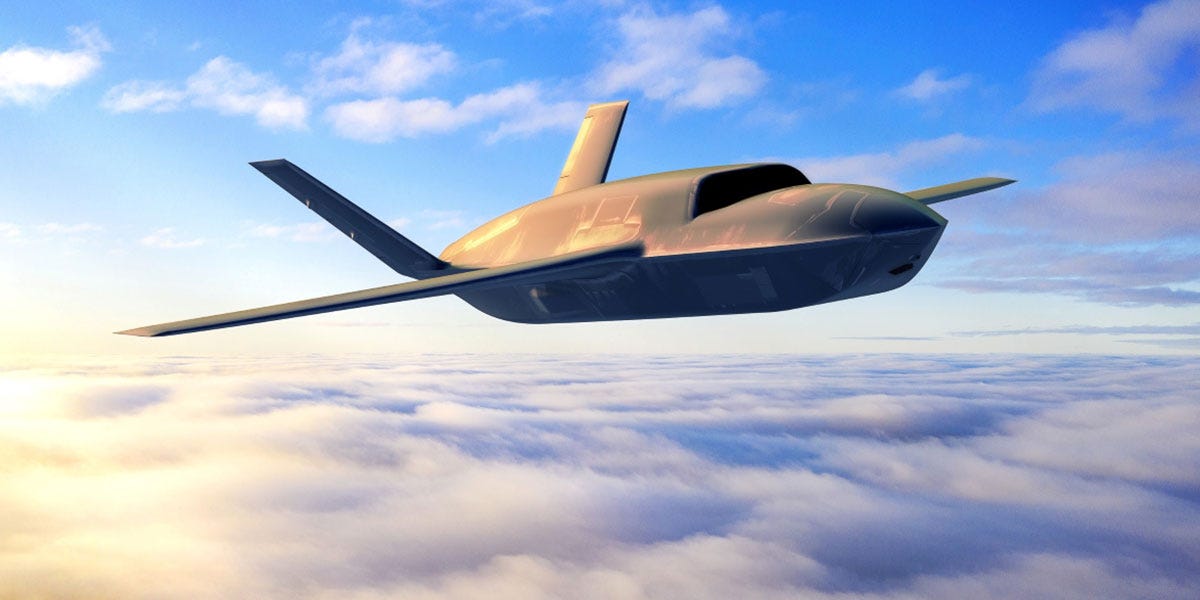

The phrase fighter drone sounds like something a Hollywood screenwriter would blurt out after three coffees and a binge of old jet movies. But in this case, reality beat the screenplay to the runway. The U.S. Air Force has officially given its new Collaborative Combat Aircraft, the YFQ-42A and YFQ-44A, fighter-style designations. That matters because this is not just another drone story. It is a category shift in military aviation, one that could change how air superiority is built, bought, and fought over in the decades ahead.
These aircraft are not meant to replace every pilot with a laptop and a smug grin. They are designed to work with crewed fighters, extending their range, carrying sensors or weapons, jamming enemy systems, acting as decoys, or rushing into places where a human pilot would rather not become a cautionary PowerPoint slide. In short, the United States is trying to build a future in which one human-led formation can control multiple semi-autonomous aircraft and create more combat mass at lower cost.
That is why the headline matters. The U.S. is not merely making better drones. It is pushing toward a world in which unmanned aircraft are formally treated as fighters, integrated into the air combat ecosystem, and expected to contribute to air superiority missions. That is a much bigger deal than “cool new robot plane.”
What Makes These Aircraft Different?
Military drones are hardly new. The U.S. has used unmanned aircraft for surveillance, strikes, and reconnaissance for years. Other countries have also fielded armed drones and experimental combat aircraft. So the important distinction here is not that the world has never seen an aircraft without a pilot throw a punch. It is that the Air Force has crossed an organizational and doctrinal line by giving these aircraft an F designation, the same letter associated with fighters.
That little letter carries a lot of meaning. It signals how the service wants these aircraft to be perceived, funded, tested, and eventually used. This is not a side project off in the corner wearing a visitor badge. It is an effort to make unmanned aircraft part of the main air combat conversation.
So, is “world’s first unmanned fighter aircraft” fair? With precision, the safest version is this: these are the first formally designated U.S. uncrewed fighter aircraft and the first uncrewed aircraft to receive that kind of fighter designation from the Air Force. That may not fit as neatly on a billboard, but it is accurate, and accuracy is still a nice habit when discussing machines that may someday carry missiles.
Meet the New Machines: YFQ-42A and YFQ-44A
YFQ-42A
The YFQ-42A is General Atomics’ entrant in the first increment of the Collaborative Combat Aircraft program. It is designed as a production-representative test vehicle and has already moved through ground testing and into flight testing. The aircraft represents the Air Force’s push to field an uncrewed platform quickly, then improve it through iterative upgrades rather than waiting forever for a perfect, exquisite, late, and painfully expensive masterpiece.
That approach is significant. For years, military aviation has struggled with the “gold-plated problem,” where each new platform tries to do absolutely everything except maybe make breakfast. The YFQ-42A points toward a more modular model: build faster, learn faster, upgrade faster.
YFQ-44A
The YFQ-44A, developed by Anduril, plays the same broad role in the program while reflecting a slightly different industrial style. It has been presented as a mass-producible, lower-cost, semi-autonomous combat aircraft that can operate in highly contested environments. It is designed to team with crewed fighters, support air superiority, and fit into a broader system of software-defined warfare.
If the old image of a fighter jet is a lone ace in mirrored sunglasses, the YFQ-44A represents the updated version: a networked teammate with fast software integration, mission flexibility, and no need for an ejection seat. Aviation has entered its “bring your smartest algorithm” era.
What Fighter Drones Actually Do
The term unmanned fighter aircraft can sound misleading if readers imagine these drones dogfighting solo like a robot version of a classic jet movie. In reality, the immediate value of these aircraft is broader and more practical.
First, they can serve as loyal wingmen. One crewed aircraft may eventually direct multiple uncrewed partners, sending them ahead to scout, jam, or absorb risk. That changes the math of survivability. If an enemy has to sort real fighters from decoys, manned platforms from unmanned escorts, and sensors from shooters, the problem becomes much harder.
Second, they can carry payloads. These payloads may include sensors, electronic warfare packages, communication relays, or weapons. Recent testing activity involving inert munitions shows the program is already moving beyond pretty renderings and into the practical question every weapons program must face: can the aircraft safely carry what warfighters want on it?
Third, they can deliver affordable mass. That phrase may sound like it was invented by someone who enjoys both spreadsheets and war games, but it matters. The Air Force wants more aircraft in the fight without paying full fighter-jet prices for every tail number. If a crewed fighter is precious and scarce, a lower-cost uncrewed partner can expand options without expanding panic.
Why the Air Force Is Betting Big
The strategic logic is straightforward. The Air Force expects future conflicts to involve dense air defenses, heavy electronic warfare, long ranges, and increasingly fast kill chains. In such an environment, relying only on expensive crewed aircraft creates a nasty mix of operational risk and budget pain. You cannot be everywhere at once, and you definitely cannot do it cheaply with only top-tier manned fighters.
Collaborative Combat Aircraft are meant to help solve that problem. The service has repeatedly linked them to the future of human-machine teaming and to the broader Next-Generation Air Dominance ecosystem. That means CCAs are not just supporting actors. They are part of the larger script for how the U.S. expects to maintain air superiority against capable adversaries, especially in the Pacific.
Cost is another major driver. Earlier public estimates suggested the Air Force wanted CCAs to cost a fraction of an F-35, roughly around one-third or less. More recent reporting suggests officials believe the program is meeting or even beating early cost targets. If that trend holds, the case for scaling procurement gets much stronger.
And scale matters. The Air Force has signaled interest in buying large numbers of these aircraft over time, and public budget reporting now shows real money moving toward procurement. Once a Pentagon program starts shifting from concept art and slogans to budget lines and test milestones, everyone in defense policy starts paying closer attention. Funny how that works.
The Importance of Open Architecture
One of the smartest aspects of the CCA effort is its emphasis on open architecture. That means the Air Force wants a modular system where autonomy software, mission systems, sensors, and payloads can be integrated more easily across vendors. In plain English: the service does not want to buy a robot jet that throws a tantrum every time someone tries to install new software.
This matters for speed. Traditional combat aircraft upgrades can take years and mountains of paperwork. CCAs are supposed to support more agile improvements, faster software updates, and a wider ecosystem of suppliers. That makes the aircraft more adaptable and reduces dependence on a single company’s closed system.
Open architecture also hints at the Air Force’s real ambition: building not just two interesting aircraft, but an entire combat ecosystem of semi-autonomous platforms, mission packages, and software layers that evolve over time. The airframe is important, but the architecture behind it may be the real long game.
Why This Is Bigger Than a Naming Ceremony
When the Air Force gave the YFQ-42A and YFQ-44A their designations, it was easy for outsiders to see that as a branding exercise. It was more than that. Designations shape doctrine, identity, procurement, and expectations. By calling these aircraft fighters, the service is telling industry, Congress, allies, and adversaries that unmanned systems are moving from support roles toward the center of combat aviation.
That does not mean human pilots are obsolete. It means the definition of a fighter formation is changing. Tomorrow’s air package may include a crewed aircraft serving as mission commander, plus several semi-autonomous aircraft handling sensing, deception, weapons carriage, communications, or forward risk. The formation becomes a team rather than a collection of individual cockpits.
For aviation culture, that is almost philosophical. The mystique of the fighter pilot has long been tied to human reflexes, human courage, and human presence in the cockpit. CCAs do not erase that tradition, but they do force a rewrite. Air combat is becoming less about one heroic platform and more about a distributed, software-enabled network of machines and decisions.
The Skeptical Questions Still Matter
Of course, this is defense technology, so the fine print matters as much as the headline. The biggest question is autonomy. How much decision-making will these aircraft actually perform on their own, and under what rules? “Semi-autonomous” sounds reassuring, but it can cover a lot of technical and operational territory.
There are also questions about reliability, security, and command-and-control. An aircraft that depends on software, data links, and modular systems must be resilient against jamming, cyber attack, and degraded communications. If the aircraft is brilliant on the lab bench but confused in a messy electronic warfare environment, the magic fades quickly.
Then there is the acquisition challenge. The Air Force wants speed, affordability, and flexibility. History suggests the Pentagon sometimes gets one of those things, occasionally two, and throws a parade if all three show up at once. The program has made real progress, but scaling test success into sustained production is where many ambitious programs discover their most creative headaches.
What Happens Next?
As of early 2026, the program has moved beyond labels and into the hard middle of development. The aircraft have been designated, ground-tested, flown, and pushed into weapons integration work. Public reporting also indicates the Air Force is preparing for a production decision and seeking serious procurement funding in fiscal year 2027.
That next phase will be crucial. The service must decide whether to select one design, carry more than one into production, or shape future increments around different mission sets. At the same time, it is broadening the ecosystem through open architecture and additional autonomy work. In other words, the Air Force is not just testing airplanes. It is testing an operating concept for the future of air combat.
If that concept succeeds, the YFQ-42A and YFQ-44A may be remembered as transitional aircraft in the best possible sense: not the end state, but the moment the idea became real. The same way early stealth aircraft changed what airpower looked like, these early unmanned fighters could mark the point where air combat stopped being defined only by who sat inside the jet.
Experiences From the Edge of a New Air Combat Era
One of the most interesting parts of this story is not just the hardware, but the experience of living through this transition. For pilots, planners, maintainers, and even ordinary defense watchers, the rise of unmanned fighter aircraft changes what modern airpower feels like. It is one thing to read that a drone can team with a crewed fighter. It is another to realize that this idea is moving from concept slides into actual flight tests, captive-carry evaluations, and procurement budgets.
For a pilot, the experience is likely both empowering and strange. Traditional fighter culture is built around skill, awareness, and direct control. A pilot trusts the jet because the pilot flies the jet. In the emerging drone-wingman model, the pilot becomes something closer to a mission commander, directing multiple assets and relying more on software, automation, and networked teamwork. That does not reduce the human role. If anything, it raises the cognitive stakes. The pilot may have fewer hands-on tasks, but more decisions to make and more moving pieces to manage. It is less lone ranger, more airborne quarterback.
For commanders, the experience is about options. A formation with unmanned fighters can probe dangerous airspace, complicate enemy targeting, and distribute risk in ways older force structures could not. The emotional experience of command changes when losing an aircraft does not automatically mean losing a pilot. That does not make loss easy or cheap, but it changes the operational calculus. It opens doors that might otherwise stay closed.
For maintainers and acquisition teams, the experience is different again. These aircraft represent a shift toward software updates, modular payloads, open systems, and faster iteration. Instead of treating a combat aircraft like a sacred relic that must not be touched, the new model encourages continuous refinement. That can be exciting, but it also demands new skills, new workflows, and a comfort level with rapid change that large institutions do not always wear gracefully.
For the public, the experience is a mix of fascination and unease. The idea of unmanned fighters taps into two powerful instincts at once: admiration for technological progress and concern about where autonomy leads in war. People see the promise of protecting pilots and lowering costs, but they also worry about what happens when military decisions become more software-driven. Those concerns are not signs of fearfulness. They are signs that the questions are important.
And for allies and rivals, the experience is strategic. Allies are watching how quickly the U.S. can turn this concept into deployable power. Rivals are watching how these aircraft might affect deterrence, force size, and the survivability of American air operations. Everyone understands that this is not only about two prototypes with fresh paint and impressive names. It is about whether the next generation of air superiority will be built around teams of humans and machines rather than around cockpits alone.
That is why the emergence of the YFQ-42A and YFQ-44A feels like more than another procurement story. It feels like a threshold moment. Not because the future is fully here, but because the runway to that future is suddenly visible.
Conclusion
The U.S. Air Force’s new fighter drones are important not because they appeared out of nowhere, but because they formalize a new vision of air combat. The YFQ-42A and YFQ-44A are the first uncrewed aircraft the Air Force has designated as fighters, and that simple shift in naming reflects a much deeper shift in strategy. These aircraft are meant to deliver affordable mass, extend the reach of crewed fighters, and make human-machine teaming a normal part of air warfare rather than an experimental novelty.
There is still a long road ahead. Testing must continue. Budgets must hold. Software must perform. Doctrine must evolve. But the direction is clear: the future fighter force will not be made up only of people in cockpits. It will increasingly include semi-autonomous partners that scout, carry, jam, deceive, and fight alongside them. The world has seen combat drones before. What is new here is that the United States is beginning to treat unmanned aircraft as fighters in the formal, institutional, operational sense. That is the real milestone, and it may prove far more important than the headline shorthand suggests.