Tire Shop Employee Shares Pics Of The Things He Has Seen On The Job, And Here Are 28 Of The Craziest Ones

Every workplace has its “you had to be there” moments. In an office, it might be someone microwaving fish at 9:07 a.m. In a tire shop, it is a customer calmly driving in with a bolt the size of a submarine periscope sticking out of the tread and asking, “Can you just air it up?” Tire shop employees see the road’s greatest hits: nails, screws, shredded rubber, mysterious rattles, bald tires smoother than a bowling lane, and wheels that look like they lost a fistfight with a curb.
The viral appeal of tire shop photos is easy to understand. They are funny, slightly terrifying, and weirdly educational. One picture can tell a whole story: a driver ignored a warning light, a pothole had a personal vendetta, or someone believed tire sealant was magic soup. But behind the laughs is a serious point. Tires are the only part of your car that touches the road, so when they fail, crack, bubble, split, or go bald, the problem is not cosmetic. It is safety with sidewall lettering.
This article looks at 28 of the craziest things a tire shop employee might see on the job, why they happen, what they teach us about tire maintenance, and how drivers can avoid becoming the next “please tell me this is satire” photo on the shop wall.
Why Tire Shop Photos Go Viral
Tire damage has a special kind of internet power. It is relatable enough for anyone who owns a car, but shocking enough to make even non-car people lean forward and say, “Wait, they drove on that?” The best tire shop pictures usually combine three ingredients: visible danger, customer confidence, and mechanical chaos. A tire with steel cords showing is already bad. A tire with steel cords showing and a customer saying it “just started making noise yesterday” is modern folklore.
The humor comes from disbelief, but the lesson is practical. A tire can look “fine” from ten feet away and still be dangerously worn, underinflated, overinflated, punctured, aged, or structurally damaged. Tire professionals are trained to notice things drivers miss: uneven tread wear, sidewall bubbles, plug-only repairs, exposed belts, cracked rubber, bent wheels, and punctures too close to the shoulder to repair safely.
28 Of The Craziest Things Seen In A Tire Shop
1. The Tire With More Nails Than Tread
One nail is bad luck. Five nails is a construction site souvenir. Some tires roll into shops looking like they tried to hug a hardware aisle. The scary part is that multiple punctures can weaken the tire, especially if they are close together or near the sidewall.
2. The Screw That Became A Permanent Resident
A screw lodged cleanly in the tread can sometimes be repaired if it is in the correct area and the puncture is not too large. But if it has been driven on for weeks, the tire may have hidden internal damage. The screw may look small, but it can quietly invite air pressure to leave the party.
3. The Sidewall Bubble
A bubble on the sidewall is not a cute tire pimple. It usually means the internal structure has been damaged, often from impact with a pothole, curb, or road debris. Sidewall bubbles generally require replacement, not repair, because the sidewall flexes constantly while driving.
4. The Bald Tire That Could Double As A Mirror
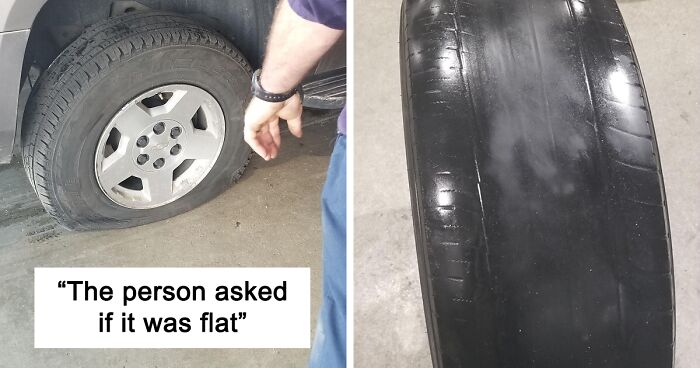
Some tires arrive so smooth they look polished. Bald tires lose traction badly on wet roads because the grooves can no longer move water away from the contact patch. That is how hydroplaning happens, and hydroplaning is basically your car auditioning to become a boat.
5. The Tire Showing Steel Belts
When cords or steel belts are visible, the tire is far beyond “keep an eye on it.” It has already crossed into “stop driving on it” territory. Exposed belts mean the rubber has worn away enough to reveal the tire’s internal reinforcement, and failure can happen suddenly.
6. The Plug-On-Plug-On-Plug Repair
Temporary plugs are not supposed to become a tire’s personality. A proper repair generally involves removing the tire from the wheel, inspecting the inside, and using an appropriate patch-plug method when the puncture is repairable. A tire full of exterior plugs is a rolling reminder that shortcuts eventually send invoices.
7. The Tire Filled With Sealant Soup
Emergency sealant can help in some roadside situations, but tire technicians know the horror of opening a tire and finding a sticky swamp inside. Sealant can make repairs harder, hide the true damage, and create a mess that looks like a science project escaped.
8. The Wheel Bent Into Modern Art
Potholes do not play fair. A hard impact can bend a wheel, cause vibration, damage the bead seal, or injure the tire internally. Some wheels arrive looking less like automotive parts and more like abstract sculpture titled “City Infrastructure, 2026.”
9. The Tire With A Bolt The Size Of A Thumb
A small nail is one thing. A thick bolt is another. Large punctures can exceed safe repair limits, especially if the hole is bigger than common industry repair guidelines allow. When the object looks like it belongs in a bridge, the tire may not be a repair candidate.
10. The Mismatched Set Of Four
Some vehicles show up wearing four different tires: different brands, different tread depths, different ages, and sometimes different personalities. Mismatched tires can affect handling, braking, traction control, and all-wheel-drive systems. A car should not look like it got dressed in the dark.
11. The Inside Edge Worn To Nothing
A tire can look decent from the outside while the inner edge is completely destroyed. This often points to alignment problems, worn suspension parts, or neglected rotations. It is one reason quick driveway inspections should include turning the wheel or checking from multiple angles.
12. The Tire That Was Driven Flat
Driving on a flat tire can destroy the sidewall from the inside. By the time the vehicle reaches the shop, the outside may not fully reveal the damage. Technicians may find rubber dust inside, a sign that the tire has been chewed up internally by running without proper air pressure.
13. The Ancient Spare Tire
Spare tires are often forgotten until the exact moment they are desperately needed. Some look unused but are too old, cracked, underinflated, or unsafe. A spare tire that has been hiding under the trunk floor since the flip-phone era deserves inspection before road-trip season.
14. The Tire With Dry Rot Cracks
Rubber ages. Heat, sunlight, ozone, moisture, and time can cause cracking, especially on rarely driven vehicles. A tire can have plenty of tread and still be unsafe if the rubber has deteriorated. “But I barely drive it” is not a force field against aging.
15. The Valve Stem Leak Mystery
Not every slow leak comes from a nail. Valve stems can crack, leak, or fail. Sometimes a driver keeps adding air every few days without realizing the tire itself is not the villain. The tiny valve stem has been quietly betraying everyone.
16. The Bead Leak From Corrosion
Where the tire seals against the wheel is called the bead area. Corrosion, dirt, or wheel damage can cause slow leaks. This is common in areas with road salt, moisture, and winter grime. The tire may be healthy, but the wheel surface needs attention.
17. The Tire Installed Backward
Directional tires are designed to rotate a specific way. If installed backward, they may not channel water as intended. The sidewall markings are there for a reason, not because tire engineers enjoy writing tiny riddles.
18. The “Just Needs Air” Tire With A Giant Split
Some customers arrive hoping air pressure will fix visible structural damage. Unfortunately, air is not a mechanic. A split, deep cut, exposed cord, or bulging sidewall usually means replacement is the safe option.
19. The Tire With A Screwdriver In It
Yes, tire shops sometimes see objects that seem impossible: screwdrivers, metal shards, keys, blades, bolts, and mystery pieces from unknown machines. Roads collect debris like junk drawers collect batteries nobody can identify.
20. The Overinflated Tire Wearing Down The Center
Too much air can cause the center tread to wear faster. Overinflation may also reduce ride comfort and make the tire more vulnerable to impact damage. More pressure is not automatically better. Tires are not basketballs.
21. The Underinflated Tire Wearing Both Shoulders
Underinflation causes excessive heat, poor fuel economy, and accelerated wear on the outer edges. It can also damage the tire internally. If a tire looks tired, saggy, and grumpy, check the pressure before it becomes a roadside event.
22. The Feathered Tread From Alignment Trouble
Feathering is a wear pattern where tread blocks feel smooth in one direction and sharp in the other. It often points to alignment problems. It is one of those issues a driver may hear as road noise before they visually notice anything wrong.
23. The Tire With A Patch In The Wrong Place
Punctures in the shoulder or sidewall are generally not safe to repair. A patch in the wrong area may look reassuring, but the flexing forces near the sidewall can make repairs unreliable. Tire repair is not just about sealing air; it is about preserving structure.
24. The Donut Spare Used Like A Regular Tire
Compact spare tires are usually temporary solutions with speed and distance limits. Yet shops see donut spares worn down from weeks or months of regular use. A donut spare is not a lifestyle. It is a short-term escape plan.
25. The Tire With Uneven Wear From Skipped Rotations
Rotations help tires wear evenly. Skip them long enough, and one pair may age into retirement while the other pair still has life left. Regular rotation is not glamorous, but neither is buying tires earlier than necessary.
26. The Customer Who Drove In On A Rim
Sometimes the tire is gone, shredded, or barely attached, and the vehicle arrives riding on the wheel itself. This can damage the rim, suspension, brakes, and surrounding components. At that point, the tire is not the only thing asking for help.
27. The Tire With A Bubble And Bald Tread
One major safety issue is enough. Two is a double feature nobody bought tickets for. A tire with both a sidewall bubble and nearly no tread is a clear replacement case. No amount of optimism can restore internal cords or tread depth.
28. The Perfectly Normal Tire With A Hidden Problem
The craziest tire is sometimes the one that looks boring. A slow leak, internal damage, aged rubber, or uneven wear can hide in plain sight. That is why regular inspections matter. Tire trouble is often quiet until it becomes expensive, dramatic, or both.
What These Crazy Tire Shop Moments Teach Drivers
The biggest lesson is simple: tires communicate. They squeal, vibrate, leak, crack, bulge, wear unevenly, and sometimes pick up a roofing nail as if applying for a second job. Drivers do not need to become tire engineers, but they should learn the basics.
Check tire pressure at least monthly and before long trips. Use the pressure listed on the vehicle placard or owner’s manual, not the maximum pressure printed on the tire sidewall. Inspect tread depth regularly, especially before rainy or winter driving. Look for cuts, cracks, bulges, exposed cords, embedded objects, and uneven wear. Rotate tires according to the vehicle manufacturer’s schedule or a reputable tire-care interval. And if a tire warning light appears, do not treat it like a dashboard decoration.
Also, know when repair is not the answer. A puncture in the center tread area may be repairable if it is small enough and the tire has not been driven flat. But sidewall damage, shoulder punctures, large holes, bubbles, severe cracking, exposed cords, and internal damage usually mean replacement. The safest tire repair is not the one that gets you out the door cheapest; it is the one that keeps the tire reliable under heat, load, speed, and flex.
Why Drivers Ignore Tire Problems
Most people do not ignore tire damage because they enjoy danger. They ignore it because tire problems are inconvenient, expensive, confusing, or easy to underestimate. A tire may still hold air. The car may still drive. The noise may seem minor. The warning light may disappear after adding air. That creates a false sense of control.
But tires work under harsh conditions. They carry thousands of pounds, absorb impacts, handle cornering forces, resist heat, push water away, and keep the vehicle connected to the road. A weak tire does not always fail slowly. Sometimes it fails suddenly, especially at highway speeds or in hot weather. That is why tire technicians often sound firm when they say a tire is unsafe. They are not trying to ruin anyone’s afternoon. They have simply seen what happens when rubber, steel, heat, speed, and wishful thinking form a committee.
How To Avoid Becoming The Next Viral Tire Shop Photo
Start with a five-minute inspection once a month. Walk around the car and look closely. Check pressure when the tires are cold. Use a tread-depth gauge if possible, or at least know the penny test as a quick warning sign. Look at both outer and inner tread edges. Check the sidewalls for bulges, slices, or cracks. If the car pulls, vibrates, hums, or wears tires unevenly, schedule an inspection.
Be careful after pothole impacts. A tire can be damaged internally even if it does not go flat immediately. If you hit a curb or pothole hard enough to make you apologize to the car out loud, inspect the tire and wheel soon after. Watch for new vibrations, pressure loss, steering changes, or sidewall bulges.
Finally, do not treat a spare tire as an afterthought. Learn whether your vehicle has a full-size spare, compact spare, run-flat tires, or a sealant kit. Check the spare’s air pressure and age. Nothing adds drama to a flat tire like discovering your backup plan retired in 2014.
Extra Field Notes: Real-World Experiences From The Tire Shop Side Of Life
The most memorable tire shop experiences are rarely the clean, simple repairs. They are the strange conversations, the impossible objects, and the moments when everyone in the bay silently agrees that physics has been very patient today. A customer may arrive convinced the tire only needs a “quick patch,” while the technician can see a sidewall split large enough to mail a postcard through. Another driver might say the car “shakes a little,” and the wheel turns out to be bent so badly it looks like it tried to fold itself in half.
One common experience is the slow-leak mystery. A driver keeps adding air every few days and assumes there must be a nail. The technician checks the tread and finds nothing. Then comes the dunk tank or leak test, and tiny bubbles appear near the valve stem or bead. The customer looks surprised because the tire itself seemed innocent. That is tire work in a nutshell: the obvious suspect is not always guilty, and the tiny part nobody noticed may be causing all the trouble.
Another unforgettable category is “I drove here like this.” Tire shop workers have seen cars arrive with tires shredded into ribbons, steel belts whipping around, rubber missing from entire sections, and rims grinding against pavement. The driver often says, “It started making a weird noise.” That phrase is legendary because it can describe anything from a pebble in the tread to a tire that has achieved complete structural resignation.
Then there are the mystery objects. Nails and screws are normal. But technicians also encounter metal fragments, drill bits, box-cutter blades, chunks of spring, pieces of brake hardware, and objects nobody in the shop can identify. The tire gets removed, the object gets pulled out, and the whole bay gathers around like archaeologists discovering an artifact from the Age of Bad Decisions.
The emotional side is real, too. Tires are expensive, and not every customer is ready for replacement news. A good technician explains the issue clearly: where the damage is, why it cannot be safely repaired, what the risks are, and what options exist. The best shops do not scare people for sport. They educate. They show the damage, explain tread depth, point out sidewall hazards, and help the driver understand that safe tires are not a luxury upgrade. They are basic vehicle safety.
The funniest tire shop photos may get the clicks, but the best outcome is prevention. When drivers check pressure, rotate tires, replace unsafe rubber, and respond early to warning signs, they avoid the expensive spectacle. They also make the roads safer for everyone else. So yes, laugh at the tire with three screws, a bolt, and a suspicious chunk of metal sticking out of it. But after laughing, go check your own tires. The internet does not need another star.
Conclusion
Tire shop employees see the road’s hidden comedy and its hidden danger. The wildest photos are funny because they look unbelievable, but they are also reminders that tire care is not optional. Bald tread, sidewall bubbles, exposed cords, improper repairs, old spares, and neglected pressure checks can turn an ordinary drive into a very bad day.
The good news is that most tire disasters give warning signs. Check your tires monthly, rotate them regularly, take punctures seriously, and listen when a technician says a tire is not safe to repair. A tire shop employee may enjoy a good “look at this thing” moment, but everyone would rather see you arrive before the tire becomes internet history.
Note: This article is written for general automotive education and entertainment. For tire damage, punctures, sidewall issues, or unusual wear, consult a qualified tire technician before driving further.