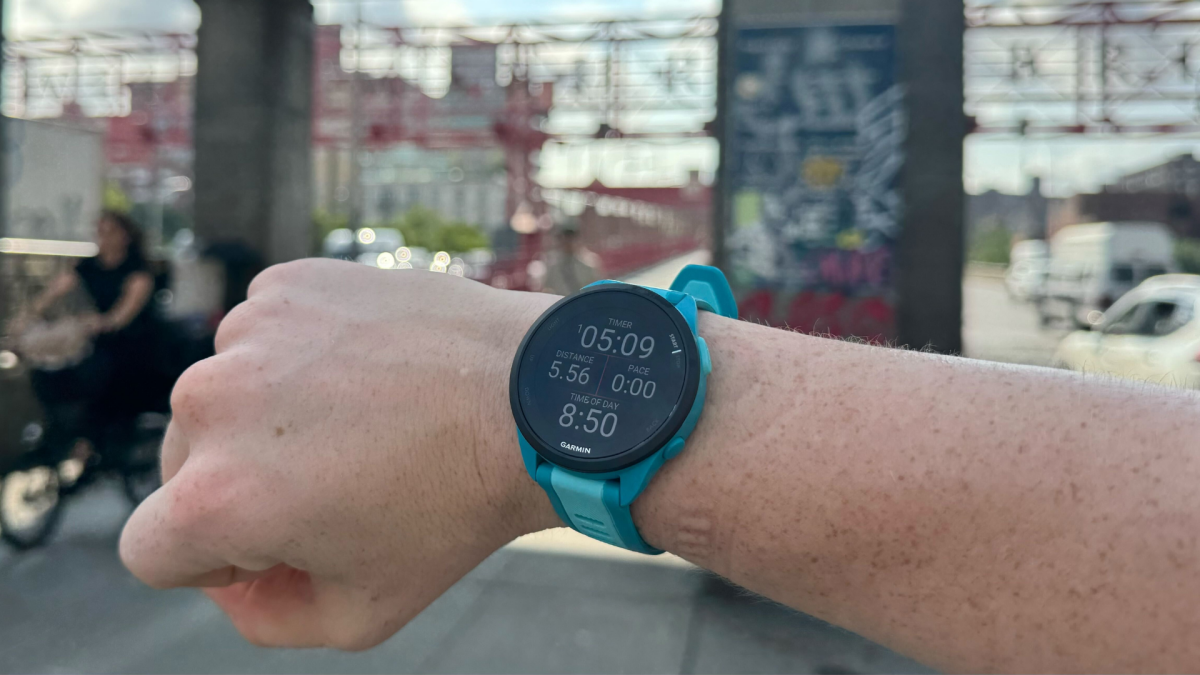
Review: The Garmin Forerunner 165 Music Is the Perfect Entry Point for Runners Who Want Serious Metrics

The Garmin Forerunner 165 Music sits in a sweet spot that every runner eventually discovers: the place between “I just want to know how far I ran” and “Please tell me my cadence, recovery, sleep quality, training effect, and whether my left shoelace is emotionally available.” It is not Garmin’s most advanced running watch, and that is exactly why it works so well. It gives newer and developing runners a serious training dashboard without forcing them to take out a small loan or study a user manual the size of a sandwich board.
At its core, the Forerunner 165 Music is an entry-level GPS running watch with a bright AMOLED touchscreen, physical buttons, wrist-based heart rate, sleep and recovery insights, Garmin Coach, music storage, Garmin Pay, and enough run-tracking tools to make your old step counter look like a fridge magnet. It is built for runners who want to train smarter, not just collect colorful digital badges while jogging past the same mailbox every Tuesday.
The big question is not whether the Garmin Forerunner 165 Music is good. It is. The better question is whether it is the right watch for runners who want real metrics without paying for elite features they may never use. After reviewing the specs, expert testing, and long-term user impressions, the answer is refreshingly simple: for most beginner-to-intermediate runners, this may be the most sensible Garmin entry point available.
What Is the Garmin Forerunner 165 Music?
The Garmin Forerunner 165 Music is the music-enabled version of the Forerunner 165, Garmin’s accessible AMOLED running watch. The standard version focuses on GPS, training metrics, health tracking, and smartwatch basics. The Music edition adds onboard music support, letting runners download playlists or podcasts and pair Bluetooth headphones for phone-free runs.
That music feature matters more than it sounds. Running with a phone bouncing around in a pocket can feel like carrying a nervous toaster. With the Forerunner 165 Music, you can leave the phone behind, start a GPS workout, listen to your training playlist, and still track your pace, distance, heart rate, cadence, and workout impact. For runners who want fewer distractions and fewer items to charge, carry, drop, or accidentally sweat on, that is a major win.
The watch also includes a 1.2-inch AMOLED display, up to 11 days of battery life in smartwatch mode, GPS tracking, more than 25 sport profiles, health monitoring, recovery insights, and adaptive training plans. In plain English: it is designed to help runners understand what their body is doing before, during, and after a workout.
Design and Comfort: Light, Simple, and Runner-Friendly
The Forerunner 165 Music looks like a modern Garmin, which means it is sporty, clean, and unlikely to be mistaken for a luxury dress watch at a wedding. That is not a criticism. Running watches should not try too hard to look like jewelry. They should be light, readable, comfortable, and easy to operate when your lungs are negotiating a surrender treaty halfway through a tempo run.
The polymer case keeps the watch lightweight, and the silicone strap is comfortable enough for all-day wear. This matters because Garmin’s health and recovery features work best when the watch stays on your wrist beyond the run. If you only wear it for workouts, you miss out on sleep tracking, Body Battery, resting heart rate trends, stress tracking, and recovery context.
The five-button layout is classic Garmin and still one of the best designs for running. Touchscreens are nice when you are scrolling through widgets at breakfast, but buttons are better when your hands are sweaty, cold, or busy trying not to spill water at a race aid station. The Forerunner 165 Music gives you both: a touchscreen for everyday convenience and physical buttons for reliable workout control.
The AMOLED Display Is the Upgrade You Notice Immediately
The bright AMOLED display is one of the biggest reasons the Forerunner 165 Music feels more premium than older entry-level running watches. The screen is crisp, colorful, and easy to read in normal daily use. Metrics look sharp during runs, notifications are easier to scan, and menus feel less like they were designed for a calculator from 2007.
For runners upgrading from an older memory-in-pixel Garmin display, the AMOLED screen can feel like switching from a camping lantern to a smartphone. Data fields are clearer, watch faces look more modern, and post-run summaries are more pleasant to review. It is not just cosmetic. A readable display reduces friction. When you can quickly see lap pace, heart rate zone, elapsed time, and distance, you spend less energy poking at your wrist and more energy running.
The trade-off, of course, is battery life. AMOLED screens use more power than traditional low-power displays, especially with always-on mode enabled. Still, the Forerunner 165 Music manages battery life well enough that most runners will not feel trapped near a charger. Unless you are running ultramarathons every weekend or treating GPS mode like a lifestyle, the battery is more than practical.
Running Metrics: Serious Enough to Actually Change Your Training
The reason to buy a Forerunner instead of a generic smartwatch is the training data. The Garmin Forerunner 165 Music tracks the basics very well: distance, pace, heart rate, time, laps, calories, GPS route, and cadence. But it also steps into more useful performance territory with features such as Training Effect, recovery time, running power, race predictor, VO2 max estimates, and daily suggested workouts.
These metrics are not just digital confetti. Used properly, they help runners make better decisions. Training Effect can show whether a workout improved aerobic or anaerobic fitness. Recovery time can encourage you not to turn every run into a dramatic personal documentary. VO2 max estimates provide a rough sense of fitness progress. Daily suggested workouts can help runners avoid the classic beginner mistake of doing every run at “slightly too hard but pretending it’s fine” pace.
The Forerunner 165 Music is especially helpful for runners preparing for a 5K, 10K, or half marathon. Garmin Coach and adaptive plans give structure to training, while pace alerts and workout screens help you stay honest during intervals. For example, if your plan calls for six 400-meter repeats, the watch can guide the session instead of forcing you to memorize splits like a stressed mathlete in racing shoes.
GPS and Heart Rate Accuracy: Reliable for Everyday Training
The Forerunner 165 Music supports multi-system GNSS, including major satellite systems used for outdoor tracking. It does not include Garmin’s more advanced multi-band GPS, which is found on pricier models, but for most road running, park loops, treadmill-adjacent optimism, and neighborhood routes, its GPS performance is strong.
In real-world terms, that means the watch should be reliable for daily runs, long runs, workouts, and races. Runners in dense downtown areas, mountain terrain, or GPS-hostile environments may benefit from higher-end models with multi-band support, but most entry-level and intermediate runners will be perfectly happy with the Forerunner 165 Music’s tracking.
Wrist-based heart rate is also useful, though no optical sensor is perfect. For steady runs, easy runs, and general training, it performs well enough for most users. For high-intensity intervals or runners who demand maximum precision, pairing a chest strap is still the gold standard. The nice thing is that Garmin plays well with external sensors, so the Forerunner 165 Music can grow with you as your training gets more serious.
Music Without a Phone: The Feature You Think Is Optional Until You Use It
The “Music” in Garmin Forerunner 165 Music is not decorative. It is one of the strongest reasons to choose this model over the standard Forerunner 165. With compatible music services or manually transferred audio files, you can store playlists and listen through Bluetooth headphones without carrying your phone.
This is excellent for runners who want to disconnect. No texts. No doom-scrolling temptation. No phone slapping your thigh with every stride. Just music, GPS, and the quiet realization that your “easy pace” may not be as easy as you claimed on Strava.
The setup process can take a little patience. Garmin’s ecosystem is powerful, but it is not always as frictionless as Apple’s. Syncing music, installing apps, or moving through Garmin Connect menus may require a few minutes of fiddling. Once configured, however, phone-free running feels wonderfully clean. For many runners, it becomes the feature they would not want to give up.
Battery Life: Strong for an AMOLED Running Watch
Battery life is one of Garmin’s traditional strengths, and the Forerunner 165 Music keeps that reputation intact. Garmin rates the watch for up to 11 days in smartwatch mode, with shorter life when using GPS, always-on display, or music playback. In normal use, most runners should expect several days between charges, even with regular workouts.
The key is expectation. If you enable always-on display, run frequently with GPS, stream music from the watch, and check every health widget like you are monitoring a spaceship, the battery will drain faster. If you use gesture-based display and charge during a shower or while working at a desk, battery anxiety should rarely enter the conversation.
Compared with general-purpose smartwatches that often need daily charging, the Forerunner 165 Music feels liberating. It is the kind of watch you can wear overnight, track sleep, run in the morning, and still not panic when the battery icon drops below 50 percent.
Smartwatch Features: Useful, Not Overstuffed
The Forerunner 165 Music is not trying to be a tiny phone. That is a good thing. It delivers practical smartwatch features: notifications, weather, calendar alerts, Garmin Pay, safety features when paired with a phone, music controls, and Connect IQ customization. It does not have the app depth of an Apple Watch, nor does it need to.
For runners, less can be more. The watch keeps the focus on training while still offering enough everyday convenience to stay on your wrist all day. Garmin Pay is especially useful for post-run coffee, emergency water, or the sacred recovery muffin. Notifications are handy, but they can also be muted when you want the watch to behave like a training tool instead of a gossip delivery device.
Health and Recovery Tracking: The Quiet Advantage
Where the Forerunner 165 Music really becomes valuable is in daily health context. It tracks sleep, heart rate variability, resting heart rate, respiration, stress, Body Battery, Pulse Ox, and recovery. Not every metric will be equally useful to every runner, and some should be treated as directional rather than medical-grade truth. Still, patterns matter.
If your resting heart rate is elevated, sleep is poor, and Body Battery looks like a phone at 3 percent, maybe today is not the day for heroic hill repeats. If your recovery looks strong and your suggested workout lines up with your goals, you can train with more confidence. The watch does not replace common sense, but it does provide a helpful mirror. Sometimes that mirror says, “Go crush it.” Sometimes it says, “Maybe try stretching and being less ridiculous.”
Who Should Buy the Garmin Forerunner 165 Music?
The Forerunner 165 Music is ideal for runners who want serious metrics without stepping into the price range of advanced models like the Forerunner 265, 570, 965, or 970. It is especially good for beginners who are ready to move beyond casual tracking, intermediate runners training for races, and fitness-focused users who want strong battery life with real running tools.
It is also a smart pick for runners who care about music. If phone-free listening is important, choose the Music edition. If you always carry your phone or do not listen to audio while running, the standard Forerunner 165 may be enough.
Who Should Skip It?
Advanced runners, triathletes, and data-hungry endurance athletes may want more. The Forerunner 165 Music lacks some premium training analysis tools, advanced mapping, multi-band GPS, and full multisport features found in higher-end Garmin models. If you race triathlons, train on complex mountain routes, or want every possible performance metric, this watch may feel like a gateway rather than a final destination.
It is also not the best choice for people who primarily want a smartwatch. If replying to messages, using third-party apps, voice assistants, and deep phone integration matter more than run tracking, a mainstream smartwatch may suit you better. The Forerunner 165 Music is a running watch first, a smartwatch second, and a tiny wrist DJ third.
Garmin Forerunner 165 Music vs. More Expensive Garmin Watches
The Forerunner 165 Music borrows enough from Garmin’s higher-end ecosystem to feel serious, but Garmin still protects its premium models. Compared with the Forerunner 265 or newer advanced models, the 165 Music has fewer training readiness tools, fewer sport profiles, no multi-band GPS, and less advanced performance analysis.
But that does not make it weak. It makes it focused. Many runners do not need the extra features. In fact, too much data can become its own sport. The Forerunner 165 Music gives you the metrics most runners will actually use: pace, distance, heart rate, cadence, recovery, suggested workouts, race estimates, and training impact. It avoids turning every jog into a NASA briefing.
Real-World Experience: What It Feels Like to Train With the Forerunner 165 Music
The experience of using the Garmin Forerunner 165 Music starts before the run. In the morning, you glance at sleep, recovery, and Body Battery. Maybe the watch says you slept well and are ready for a tempo workout. Maybe it says your body is running on vibes, caffeine, and questionable decisions. Either way, you get context before tying your shoes.
During an easy run, the watch is calm and readable. A simple data screen with elapsed time, distance, lap pace, and heart rate is enough. The AMOLED display makes the numbers easy to see, while the buttons keep control simple. Auto-lap gives mile splits, and heart rate zones help prevent the classic easy-run crime of accidentally racing a stranger who has no idea they are involved.
During workouts, the watch becomes more valuable. Suppose you are doing a 10K training session with warm-up, intervals, recovery jogs, and cooldown. Instead of checking your phone or trying to remember the workout structure, the Forerunner guides each step. It buzzes at the right time, shows the target pace or effort, and records the results. Afterward, you can review how consistent your splits were and whether your heart rate drifted.
On long runs, the lightweight design matters. A bulky watch can become annoying after 90 minutes, especially when sweat, heat, and fatigue join the party. The Forerunner 165 Music stays comfortable enough to forget about, which is exactly what you want from a running watch. The best gear disappears until you need it.
The music feature changes the vibe of solo runs. Download a playlist, pair headphones, start GPS, and go. No phone. No bouncing pocket. No mid-run notification from a group chat discussing dinner plans with the urgency of a national emergency. For runners who use music or podcasts to stay motivated, this makes training feel cleaner and more intentional.
Post-run analysis is where Garmin shines. The watch and Garmin Connect app show pace, heart rate, route, elevation, cadence, training effect, recovery, and more. A beginner can start with the basics, while a growing runner can gradually explore deeper metrics. That learning curve is one of the Forerunner 165 Music’s biggest strengths. It does not force you to become a data nerd on day one, but it leaves the door open when curiosity kicks in.
Over several weeks, the watch encourages better habits. You start noticing that poor sleep affects pace. You learn that easy runs should actually feel easy. You discover that recovery days are not laziness; they are training with fewer dramatic sound effects. The Forerunner 165 Music is not magic, but it nudges runners toward consistency, and consistency is where progress lives.
Verdict: The Best Kind of Entry-Level Watch
The Garmin Forerunner 165 Music is entry-level only in Garmin’s universe, where “entry-level” still means GPS, AMOLED, training plans, recovery insights, music, payments, health tracking, and more charts than a middle-school science fair. For runners who want serious metrics without overspending, it lands beautifully.
It is not perfect. Music setup can be clunky, advanced athletes may want deeper tools, and newer Garmin models may offer more future-facing software. But the Forerunner 165 Music remains a smart, capable, runner-first watch with an excellent mix of comfort, battery life, display quality, and training intelligence.
If you are buying your first real running watch, upgrading from a basic fitness tracker, or finally ready to understand what your training is actually doing, the Garmin Forerunner 165 Music is a fantastic place to start. It gives you enough data to improve, enough simplicity to avoid overwhelm, and enough music storage to survive a long run without your phone. That is not just an entry point. For many runners, it is the point where training finally starts to make sense.
Extra Experience Notes: Living With a Watch That Makes Running Feel More Intentional
One of the most relatable things about the Garmin Forerunner 165 Music is how quickly it changes the rhythm of training. Before using a real running watch, many runners operate on vibes. The route is “about three miles.” The pace is “pretty good.” The effort is “why am I like this?” That approach can work for a while, but it becomes limiting once you want progress you can measure.
The Forerunner 165 Music gives structure without making running feel like homework. A runner preparing for a first 5K might start by checking distance and pace. After a few weeks, they may begin looking at cadence, heart rate zones, and recovery. Later, they may use Garmin Coach or daily suggested workouts to add variety. The watch grows with the runner, which is exactly what an entry-level training device should do.
The most useful experience is probably the way it separates effort from ego. Many runners think they know what easy pace feels like until a heart rate graph quietly exposes the truth. The watch can show that a “comfortable” run was actually too hard, especially if heart rate stayed high or recovery time jumped afterward. That kind of feedback can prevent burnout and make training more sustainable.
It also helps with race preparation. During a 10K or half-marathon build, workout alerts and lap data make pacing easier. Instead of blasting the first interval and then bargaining with the universe on the fifth, you can stay inside a target range. The watch becomes a calm little coach on your wrist, minus the whistle and motivational shouting.
For everyday wear, the health tracking adds quiet value. Sleep score, resting heart rate, HRV trends, and Body Battery are not perfect crystal balls, but they can explain why one run feels smooth and another feels like dragging a shopping cart through wet cement. When the watch shows poor recovery after late nights, heavy stress, or back-to-back hard sessions, it becomes easier to adjust training instead of blaming your shoes, the weather, or the moon.
The music experience is especially satisfying for runners who want simple, focused sessions. A phone-free run feels lighter. You are not checking messages at stoplights or wondering if your phone is slowly escaping your pocket. You start the playlist, lock into the route, and let the watch handle tracking. That small reduction in friction can make running feel more peaceful.
There is also a motivational side. Garmin’s post-run summaries make progress visible. Seeing a faster average pace, improved cadence, lower heart rate at the same effort, or a completed training week can be surprisingly rewarding. It turns invisible fitness gains into something concrete. And yes, the badges are silly. They are also weirdly effective. Humans are complicated; sometimes we run for health, and sometimes we run because a cartoon badge said “nice job.”
After the honeymoon phase, the Forerunner 165 Music still works because it focuses on fundamentals. It does not need to impress you every day with futuristic tricks. It simply tracks runs well, delivers useful feedback, lasts long enough between charges, and stays comfortable. That consistency is what makes it such a strong recommendation. The watch is not trying to be everything. It is trying to be the running watch most people actually need.