
A white porcelain sink is gorgeous in the same way a white shirt is gorgeous at a spaghetti dinner: elegant, bright, and just waiting for real life to happen. Coffee rings, tomato sauce splashes, gray pot marks, toothpaste drips, and mysterious “I swear I didn’t do that” stains can turn a clean-looking sink into a tired little drama queen. The good news is that you can clean a white porcelain sink with Clorox bleach when you use it correctly, carefully, and sparingly.
The key word here is correctly. Bleach is powerful, but it is not a magical all-purpose fairy in a bottle. It disinfects, whitens, and helps lift organic stains, but it can also damage surfaces, irritate skin, and create dangerous fumes if mixed with other cleaners. So before you go full cleaning-warrior mode, take a breath, grab gloves, open a window, and let’s make that sink shine without turning your bathroom or kitchen into a chemistry experiment.
Can You Use Clorox Bleach on a White Porcelain Sink?
Yes, you can use diluted Clorox bleach on many modern white porcelain sinks, especially when the porcelain is glazed, intact, and nonporous. Bleach can help brighten dingy areas, remove some discoloration, and disinfect the surface after regular cleaning. However, it should not be your everyday cleaner. Think of it as the guest star, not the main character.
Before using bleach, check the sink manufacturer’s care instructions if possible. Some porcelain, porcelain enamel, fireclay, and enameled cast iron sinks have special finishes that can be damaged by harsh or frequent bleach use. Avoid bleach on vintage porcelain, colored porcelain, cracked enamel, chipped glaze, decorative finishes, metal trim, natural stone, brass drains, copper fittings, and anything that already looks fragile enough to send you an emotional invoice.
What Bleach Does Welland What It Does Not Do
Clorox bleach is best for whitening and disinfecting hard, nonporous surfaces when properly diluted. It works especially well on organic stains such as mildew discoloration, light food staining, and general dinginess. It is also useful after raw meat prep, illness in the home, or any situation where you want to disinfect a sink after washing it first.
Bleach is not the best solution for every stain. Rust stains, hard water marks, mineral buildup, and black metal scuffs often need a different approach. In fact, bleach can make some rust stains look worse because it may oxidize iron-based discoloration. If your sink has orange, brown, chalky white, or crusty stains, you may be dealing with minerals rather than grime. In that case, start with gentler porcelain-safe methods before reaching for bleach.
Safety Rules Before Cleaning With Clorox Bleach
Bleach is effective, but it demands respect. No need to bow to the bottle, but do follow the rules.
Never Mix Bleach With Other Cleaners
Never mix Clorox bleach with vinegar, ammonia, toilet bowl cleaner, drain cleaner, hydrogen peroxide, rubbing alcohol, acidic cleaners, or any mystery spray hiding under the sink since 2019. Mixing bleach with other products can release toxic fumes. If you recently cleaned the sink with vinegar, a limescale remover, or another product, rinse the sink thoroughly with water and wait before using bleach.
Ventilate the Area
Open a window, turn on the bathroom fan, or keep air moving. Bleach fumes can irritate your eyes, throat, and lungs, especially in small bathrooms or closed kitchens. Your sink should get brighter; your sinuses should not file a complaint.
Wear Gloves and Protect Your Clothes
Use rubber or nitrile gloves to protect your hands. Wear old clothes or an apron because bleach does not care how much you loved that navy T-shirt. One splash and suddenly you own abstract fashion.
Use Bleach Only on an Intact White Surface
Do not use bleach on chipped, cracked, unsealed, or worn porcelain. If the protective glaze is damaged, bleach can seep into the material and make future staining worse. Also avoid bleach on colored porcelain because it can lighten or blotch the finish.
Supplies You Need
- Clorox Disinfecting Bleach or regular household bleach
- Cool or room-temperature water
- Measuring cup or measuring spoons
- Clean spray bottle, bucket, or bowl used only for bleach solution
- Mild dish soap
- Soft sponge or microfiber cloth
- Paper towels for stubborn stains
- Rubber or nitrile gloves
- Clean dry towel
The Best Bleach Ratio for a White Porcelain Sink
For general disinfecting, a common household bleach solution is 1/3 cup bleach per 1 gallon of water, or about 4 teaspoons bleach per quart of water. Always read the label on your Clorox bottle because formulas and usage directions can vary. Use cool or room-temperature water, not hot water. Hot water can increase fumes and may reduce the effectiveness of the bleach solution.
For small sink jobs, you do not need a whole gallon unless your sink has achieved “haunted farmhouse” status. A quart of diluted solution is usually plenty for spraying or wiping the basin. Make a fresh solution each time you clean because diluted bleach loses strength over time.
How to Clean a White Porcelain Sink With Clorox Bleach
Step 1: Remove Everything From the Sink
Take out dishes, toothbrush cups, soap trays, sink mats, drain strainers, and anything else sitting in or around the sink. Bleach should not touch items that are not meant to be bleached. If you have a metal sink grid, remove it and clean it separately according to its material.
Step 2: Rinse Away Loose Debris
Run warm water over the sink to remove loose crumbs, toothpaste, hair, soap film, or food residue. This quick rinse keeps you from smearing grime around like you are frosting a cake nobody asked for.
Step 3: Wash the Sink First With Dish Soap
Before disinfecting or whitening, clean the sink with mild dish soap and a soft sponge. Scrub gently in circular motions, focusing on greasy areas, drain edges, and the back wall of the sink where splashes love to gather. Rinse thoroughly. This step matters because bleach works better on a clean surface. Dirt and soap film can block disinfectants from doing their job.
Step 4: Prepare the Diluted Clorox Bleach Solution
Put on gloves. Mix 4 teaspoons of bleach with 1 quart of cool water, or use the ratio listed on your bottle for hard, nonporous surfaces. Add water first, then bleach. Label your spray bottle if you use one, and do not store leftover solution for later.
Step 5: Apply the Bleach Solution
Spray or wipe the diluted bleach solution over the porcelain surface. Make sure the stained or dingy areas are evenly wet, but do not flood the sink unnecessarily. Avoid soaking metal drains, faucet bases, or exposed hardware for long periods because bleach can be harsh on some metals.
Step 6: Let It Sit Briefly
For disinfecting, keep the surface visibly wet for the contact time listed on your Clorox product label. Many household bleach directions recommend several minutes of wet contact. For stain lifting, let the solution sit for about 5 minutes at first. Do not let bleach dry on the sink. If it begins drying, reapply a little solution or move to the rinse step.
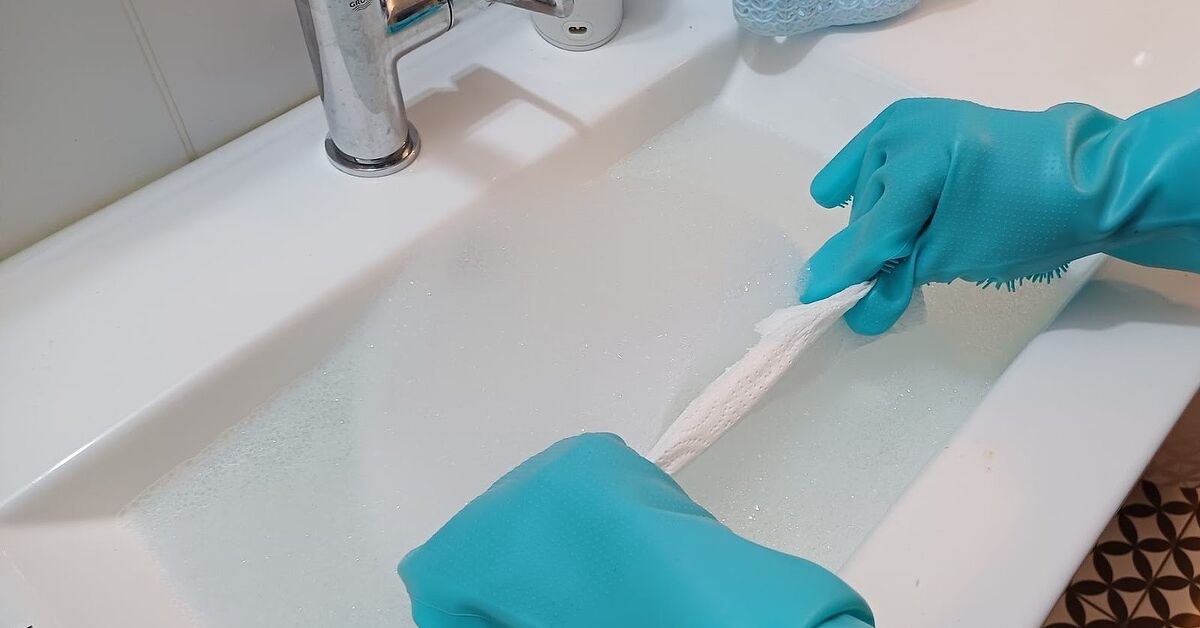
Step 7: Use the Paper Towel Method for Stubborn Discoloration
If the sink has yellowish areas, dull patches, or old-looking stains, cover the stained area with white paper towels. Spray the diluted bleach solution onto the paper towels until they cling to the porcelain. Let them sit for 5 to 10 minutes, checking often. This keeps the bleach solution in contact with the stain without using full-strength bleach. Do not leave bleach-soaked towels on porcelain for hours. More time does not always mean more sparkle; sometimes it means more damage.
Step 8: Rinse Very Thoroughly
Rinse the sink with plenty of clean water. Rinse the basin, corners, overflow area, drain edge, and faucet splash zone. This is especially important in kitchen sinks where food, dishes, utensils, or baby bottles may touch the surface later. Bleach residue can irritate skin and may damage finishes over time.
Step 9: Dry and Buff the Sink
Use a clean microfiber cloth or towel to dry the porcelain. Drying helps prevent water spots, mineral marks, and that cloudy film that makes a freshly cleaned sink look like it is still considering retirement. A dry buff also brings back the shine.
How Often Should You Use Bleach on a Porcelain Sink?
Use bleach only when needed. For most homes, once every few weeks or once a month is enough for whitening and disinfecting, depending on use. Daily maintenance should be much gentler: dish soap, warm water, a soft sponge, and a quick towel dry. If your sink sees heavy coffee, tea, makeup, hair dye, raw meat prep, or toddler science experiments, you may need deeper cleaning more often, but bleach should still be used carefully.
Too much bleach can dull certain finishes, weaken worn enamel, and shorten the life of the sink’s glossy surface. The goal is a clean white porcelain sink, not a sink that has survived a chemical boot camp.
What to Do About Common Porcelain Sink Stains
Coffee and Tea Stains
Coffee and tea can leave brownish rings on white porcelain, especially if they sit overnight. Start with dish soap and baking soda. If discoloration remains, use diluted Clorox bleach for a short contact time, then rinse well.
Tomato Sauce, Berry Juice, and Food Stains
Food pigments can cling to porcelain, particularly around scratches or dull spots. Clean with soap first, then use diluted bleach if the stain is organic and the sink is white and intact. Rinse thoroughly before placing dishes or food-prep items in the sink.
Gray Pot Marks
Those gray streaks are often metal transfer from pans, not dirt. Bleach may not remove them. Try a non-abrasive porcelain-safe cleanser, baking soda paste, or a manufacturer-approved cleaner. Avoid steel wool because it can scratch the glaze and leave rust-prone particles behind.
Rust Stains
Bleach is usually the wrong choice for rust. Rust needs a porcelain-safe rust remover or a gentler acid-based method, but acids must never be mixed with bleach. If you use a rust remover, rinse thoroughly and wait before using any bleach product later.
Hard Water Stains
Hard water stains look chalky, cloudy, or crusty. Bleach does not dissolve minerals well. Use methods designed for mineral buildup, then rinse completely. Once the sink is free of mineral residue, diluted bleach can be used separately for whitening or disinfecting if appropriate.
Mistakes to Avoid When Cleaning a White Porcelain Sink With Bleach
Using Bleach Full Strength
Undiluted bleach is too harsh for routine sink cleaning. It can damage surfaces, increase fumes, and create unnecessary risk. Dilution gives you cleaning power without overdoing it.
Scrubbing With Abrasive Pads
Porcelain is durable, but the glaze can scratch. Avoid steel wool, wire brushes, harsh scouring pads, and gritty powders unless the manufacturer specifically approves them. Scratches collect grime, which means future you will have to clean more. Future you already has emails to answer.
Leaving Bleach on Too Long
Do not let bleach sit indefinitely. Long soaking can damage finishes and may affect nearby hardware. Keep the contact time controlled, then rinse.
Forgetting the Drain and Overflow Area
The drain rim, overflow opening, and faucet base are where grime likes to hold secret meetings. Clean them gently with soap first. When using bleach, avoid prolonged contact with metal parts and rinse thoroughly.
Using Bleach After Vinegar
Vinegar is often used for hard water stains, but vinegar and bleach are a dangerous combination. If vinegar or any acid cleaner has been used, rinse the sink repeatedly with water and give the area time to air out before using bleach.
A Gentle Weekly Routine for a White Porcelain Sink
For regular maintenance, rinse the sink after use, wipe it with mild dish soap, and dry it with a soft cloth. Once a week, sprinkle a little baking soda on a damp sponge and gently polish dull areas. Rinse well and dry. This keeps stains from becoming permanent residents.
For kitchens, avoid letting coffee, tea, tomato sauce, wine, curry, or berry juice sit in the sink. For bathrooms, rinse away toothpaste, makeup, shaving cream, hair dye, and mouthwash splashes quickly. A white sink rewards speed. Ignore a stain for three days and it starts acting like it pays rent.
When Not to Use Clorox Bleach
Skip bleach if your sink is colored, antique, cracked, chipped, matte-finished, unglazed, or already damaged. Also avoid bleach if the manufacturer’s care guide says not to use chlorine bleach. If you are unsure whether your sink is true porcelain, porcelain enamel, fireclay, ceramic, acrylic, stone composite, or something else, test a small hidden area first or choose a gentler cleaner.
Do not use bleach as a shortcut for clogs, drain odor, or heavy mineral buildup. A smelly drain may need drain cleaning, trap cleaning, or enzyme-based maintenance. A stained basin may need stain-specific treatment. Bleach has talents, but plumbing therapy is not one of them.
Experience Notes: What Actually Works in Real Homes
In real life, cleaning a white porcelain sink is less about one dramatic deep clean and more about not letting the sink become a museum of everything that touched it. The best results usually come from a layered approach: rinse daily, clean gently, dry often, and use diluted Clorox bleach only when the sink needs whitening or disinfecting.
One common experience is the “clean but still dirty” sink. You scrub it with dish soap, rinse it, and somehow it still looks gray, beige, or generally disappointed in you. That usually means the surface has either light staining, mineral film, or tiny scratches holding residue. Bleach can help if the discoloration is organic, but it will not fix physical wear. If the glaze is scratched, dirt will settle into those micro-marks again. That is why soft tools matter so much. A rough pad may make the sink look better for one afternoon, then worse forever. It is the cleaning equivalent of cutting your own bangs at midnight.
Another practical lesson: the paper towel method is often more effective than spraying bleach solution and hoping for the best. Vertical sink walls, curved corners, and drain slopes do not hold liquid well. A damp paper towel keeps the diluted solution against the stain long enough to work. The trick is moderation. Five to ten minutes is often enough for light discoloration. If the stain does not improve, repeating a careful treatment another day is safer than leaving bleach on for an hour and praying to the porcelain gods.
Kitchen sinks tend to stain faster than bathroom sinks because they deal with stronger pigments and more grease. Coffee grounds, tea bags, tomato sauce, turmeric, berry juice, and cast iron cookware all leave their little autographs. The easiest habit is to rinse immediately after dumping anything colorful. It sounds too simple, but it prevents most sink drama. A quick rinse after coffee is worth more than a heroic bleach session later.
Bathroom porcelain has different enemies: toothpaste, makeup, shaving residue, hair products, and hard water. Bleach can brighten a white bathroom sink, but soap scum and mineral film should be removed first with non-bleach methods. Otherwise, the bleach is sitting on top of buildup instead of reaching the porcelain. Clean first, disinfect second. That order matters.
Drying the sink may feel fussy until you try it for a week. A dry sink stays brighter because water spots and minerals do not get a chance to settle. Keep a microfiber cloth nearby and wipe the basin after the last use of the evening. It takes less than a minute and makes the sink look freshly cleaned even when your life is held together by coffee and calendar reminders.
The biggest real-world warning is chemical overlap. Many people use vinegar for hard water, baking soda for scrubbing, peroxide for stains, and bleach for whitening. These can all have a place in cleaning, but not at the same time. Rinse thoroughly between methods, use one product family per cleaning session, and never mix bleach with anything except water. The sink should sparkle quietly, not audition for a disaster documentary.
Finally, accept that some old porcelain sinks will never look brand-new without refinishing. That does not mean they are dirty. It may mean the glaze is worn, etched, or scratched after years of faithful service. Clean is not always the same as perfect. A well-maintained white porcelain sink can still look charming with a few age markslike a farmhouse apron, but less likely to show up in a lifestyle photo holding lavender.
Conclusion
Cleaning a white porcelain sink with Clorox bleach is simple when you respect the surface and the product. Start with mild soap and water, use only diluted bleach, keep the area ventilated, avoid mixing chemicals, rinse thoroughly, and dry the sink afterward. Bleach can whiten and disinfect, but it should be used sparingly and safelynot as an everyday scrubber or a cure for every stain.
For the best long-term shine, clean spills quickly, avoid abrasive pads, use a soft sponge, and treat stains according to what caused them. Your porcelain sink does not need a daily bleach bath. It needs regular care, quick rinses, and the occasional careful deep clean. Do that, and your white sink can stay bright enough to make the rest of the kitchen look like it should maybe try harder.