The Boob-Ogling Kid Who Played Wormser Won’t Apologize for ‘Revenge of the Nerds’

Note: This article is written as a cultural commentary and SEO feature based on publicly available film history, cast interviews, entertainment reporting, and modern reassessments of Revenge of the Nerds.
Why Wormser Still Gets People Talking
Few 1980s comedies come with as much nostalgic baggage, awkward laughter, and “Wait, did that really happen?” energy as Revenge of the Nerds. Released in 1984, the movie became a cult favorite by turning campus outcasts into unlikely heroes. It gave audiences Lewis Skolnick, Gilbert Lowe, Booger, Poindexter, Lamar, Takashi, and one small but unforgettable character: Harold Wormser, the child prodigy played by Andrew Cassese.
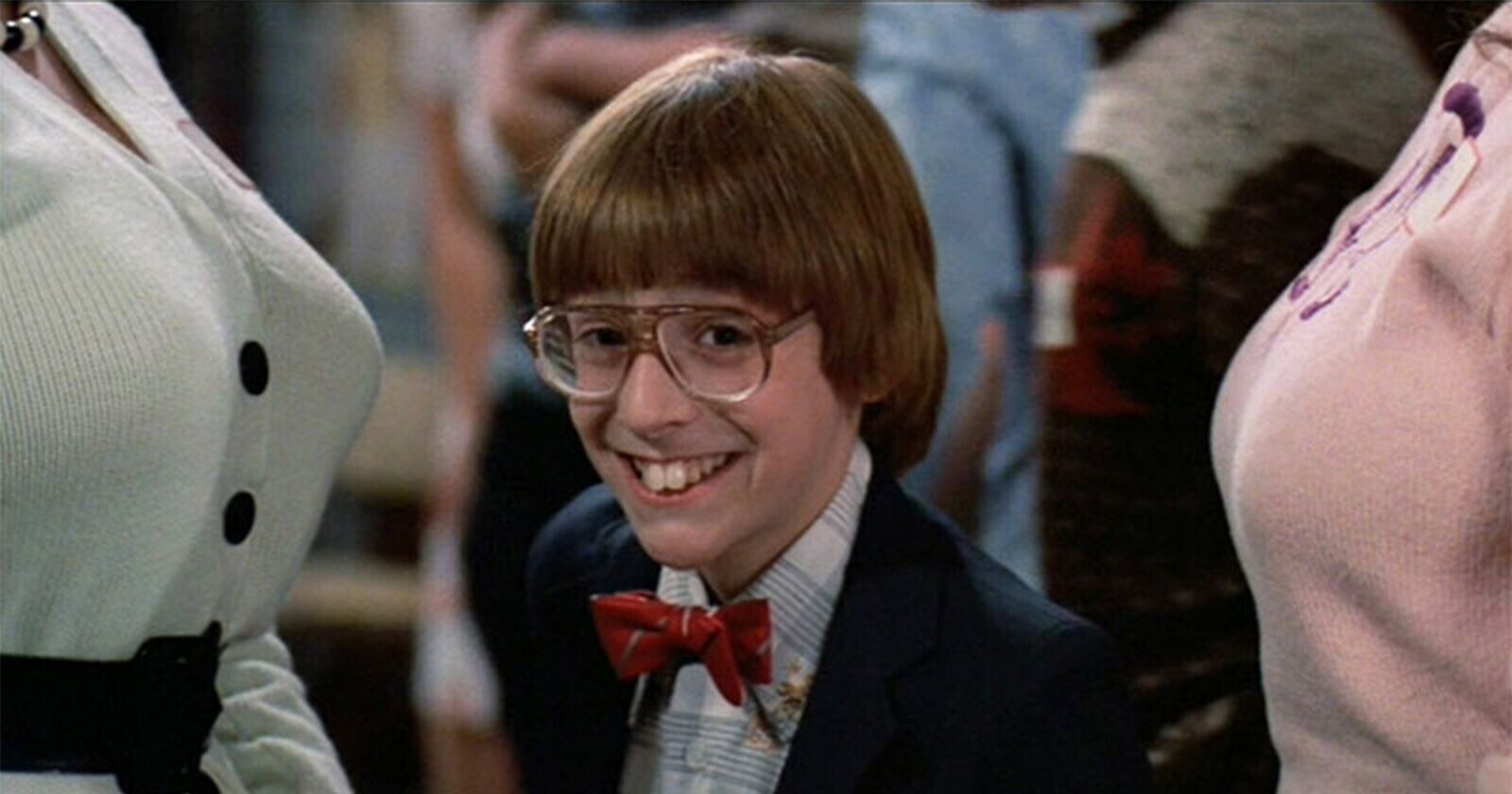
Wormser was the kid in the room where, honestly, no kid probably should have been. He was small, brainy, deadpan, and placed inside a raunchy college comedy that proudly operated with the subtlety of a marching band falling down a staircase. His presence made the movie stranger, funnier to some viewers, and more uncomfortable to others. That is partly why Cassese’s later comments about the film attracted attention. He has not presented himself as someone eager to apologize for the movie’s existence. Instead, he has defended the idea that a reboot should not simply become an apology tour in a cardigan.
That position sits right at the center of today’s debate over Revenge of the Nerds: can viewers still enjoy a film that helped define nerd comedy while admitting that several of its jokes aged like unrefrigerated cafeteria meat? The answer is complicated, which is exactly why people are still discussing it more than four decades later.
Who Was Andrew Cassese Before and After Wormser?
Andrew Cassese played Harold Wormser in Revenge of the Nerds and returned for Revenge of the Nerds II: Nerds in Paradise. As Wormser, he was not the lead, but he was a memorable part of the Tri-Lamb crew. His character’s joke was simple: a very young genius somehow winds up among college misfits, behaving like a miniature adult while still clearly being a kid.
Cassese’s career did not begin and end with Wormser. He has worked as an actor, musician, and stage performer, with credits connected to television, theater, and musical productions. But pop culture has a funny habit of freezing actors inside the role fans remember most. For Cassese, that role is Wormser: the pint-sized member of a fraternity of outsiders who somehow became an emblem of the movie’s bizarre comic universe.
In interviews and podcast appearances, Cassese has leaned into the film’s cult status. He has discussed the experience of being part of a movie that was wild, messy, beloved, criticized, and quoted by generations of viewers. He has also said he wrote a reboot script, suggesting he is not only willing to revisit the franchise but interested in reshaping it on his own terms.
The Movie That Made Nerds Cool Before Tech Billionaires Did
When Revenge of the Nerds arrived in theaters, the word “nerd” did not carry the polished shine it has today. Before smartphones, start-ups, superhero cinematic universes, and billion-dollar software companies made geek culture mainstream, nerds were often depicted as socially doomed, physically awkward, and romantically invisible. The movie flipped that script by making the outsiders the heroes.
The story follows a group of bullied college freshmen at fictional Adams College. After the Alpha Beta jocks take over their living space, the nerds eventually form their own fraternity, Lambda Lambda Lambda, and fight back against the campus social order. It is an underdog story, and that is why it worked. Audiences love watching the underestimated characters get the final cheer. It is the same reason sports movies end with slow motion, swelling music, and at least one person in the crowd suddenly believing in humanity again.
The film also had real commercial impact. It was made for a relatively modest budget and earned strong box office returns. It launched sequels, inspired reunion panels, and remained a fixture of cable television, home video, and dorm-room comedy history. For many viewers, it was not just a movie. It was proof that the weird kids could win.
Why the Film Has Aged So Unevenly
Here is where the cafeteria tray hits the floor. Revenge of the Nerds is remembered fondly by many fans, but modern viewers often notice serious problems that earlier audiences either ignored, minimized, or laughed past. Some scenes involve privacy violations, cruel stereotypes, and behavior played for comedy that does not read as harmless today.
The central issue is not that the movie is “old.” Plenty of older comedies still work beautifully. The issue is that the movie asks viewers to cheer for underdogs even when those underdogs behave badly. That creates a moral traffic jam. On one side, the nerds are bullied, excluded, and humiliated. On the other side, some of their revenge crosses lines that contemporary audiences are much less willing to excuse.
This is why conversations about Revenge of the Nerds often become arguments about context. Fans may say, “That was the style of the era.” Critics may answer, “Sure, but that does not make it good.” Both points can be true. A movie can be historically important and ethically messy. It can be funny in places and uncomfortable in others. It can mean a lot to viewers who felt like outsiders while still containing material that deserves criticism.
What Cassese’s “Won’t Apologize” Attitude Really Means
The phrase “won’t apologize” can sound combative, as if someone is standing on a table wearing a pocket protector and daring the internet to fight. But Cassese’s point, based on his public comments, seems more specific. He has pushed back against the idea that a new version of Revenge of the Nerds should exist mainly to apologize for the old one.
That is a meaningful distinction. There is a difference between acknowledging that a film has problems and building a reboot whose entire personality is “Sorry about 1984.” A successful update would need to understand why the original connected with audiences: the pain of exclusion, the joy of found family, the absurdity of campus status games, and the fantasy of outcasts claiming dignity. It would also need to avoid repeating the original’s worst instincts.
In other words, Cassese’s stance can be read less as “nothing was wrong” and more as “do not erase the comic engine.” That engine was underdog rebellion. The trick is finding a way to keep the engine without filling the tank with jokes that now smell like expired gym socks.
Could a Revenge of the Nerds Reboot Work Today?
A modern Revenge of the Nerds reboot would face a challenge bigger than any Alpha Beta. Nerds are no longer automatically powerless. In today’s culture, the nerd might be the person running the platform, building the app, moderating the server, designing the game, or owning the company that just bought your favorite company. The social hierarchy has changed.
That does not mean the concept is dead. Outsider stories are eternal. Every generation has people who feel mocked, rejected, underestimated, or locked out of the cool kids’ table. A smart reboot could shift the focus from “nerds versus jocks” to something more current: social media clout, tech elitism, academic pressure, influencer culture, startup arrogance, or the loneliness of being talented but unseen.
The new villains would not need varsity jackets. They might wear expensive hoodies, speak entirely in pitch-deck language, and say things like “disrupting community” while ruining an actual community. Comedy has plenty of targets. The key would be making the protagonists sympathetic without making them creeps. That should not be impossible. Hollywood has successfully rebooted stranger things, including toys, theme park rides, and movies that had no business surviving the first poster meeting.
Wormser as a Symbol of the Movie’s Weird Charm
Wormser works as a symbol because he captures both the charm and the strangeness of Revenge of the Nerds. He is a child genius among college students, a walking punchline, and a reminder that the film’s world is not realistic. It is cartoonish, exaggerated, and proudly ridiculous.
At the same time, his presence makes some scenes more uncomfortable when revisited today. The movie’s raunchy tone was designed for adults, but Wormser’s character is a minor inside that environment. The comedy depends on shock value, and modern viewers are more alert to why that kind of joke can feel off. That does not mean every viewer must have the same reaction. It does mean the conversation has changed.
For Cassese, Wormser is also part of his own professional history. Asking an actor to denounce a role that shaped public memory of his career is not a small request. Performers often have complicated relationships with early work, especially when the culture around that work changes. Some apologize. Some contextualize. Some defend the art while admitting flaws. Some simply say, “That was the movie we made.” Cassese appears closer to the last two categories.
How to Watch Revenge of the Nerds Without Turning Off Your Brain
The best way to revisit Revenge of the Nerds today is not to pretend it is perfect. It is also not necessary to toss it into a cultural volcano and declare the matter closed. A more useful approach is to watch it as a time capsule: a loud, crude, influential comedy that reveals what 1980s mainstream entertainment found funny, what it overlooked, and what audiences have learned to question since.
That kind of viewing can actually make the movie more interesting. The laughs that still land show the strength of its underdog formula. The jokes that do not land reveal the limits of that formula. The cast chemistry remains a major reason people remember the film. Robert Carradine and Anthony Edwards give the story its nervous heart. Curtis Armstrong’s Booger is pure chaos in human form. Larry B. Scott’s Lamar brought visibility, even within the limits of the script. John Goodman, still early in his career, turns Coach Harris into a loud, ridiculous authority figure.
Then there is Wormser, calmly sitting in the middle of the madness like someone accidentally dropped a gifted middle-schooler into a frat-house tornado. That image is part of why the movie remains so strange. It is also why articles about Cassese still attract readers. Wormser is not the biggest role, but he is one of the roles people remember because he makes the film’s absurdity impossible to miss.
What the Debate Says About Comedy, Nostalgia, and Accountability
The ongoing debate over Revenge of the Nerds is not just about one movie. It is about how audiences handle old comedy. Nostalgia wants comfort. Criticism wants honesty. The internet wants a fight by noon and a reaction video by lunch. Somewhere between those impulses is a better question: what do we do with entertainment that mattered to people but also deserves a serious second look?
One answer is to separate appreciation from endorsement. You can appreciate the movie’s place in nerd culture without endorsing every joke. You can understand why Cassese does not want the franchise reduced to public penance while still recognizing that any modern reboot would need different standards. You can laugh at the absurdity of the Tri-Lambs while admitting that some scenes should remain in the past, wearing a dusty VHS jacket and thinking about what they did.
Comedy evolves because audiences evolve. Jokes that once passed unnoticed may now seem lazy or harmful. That does not automatically erase the past, but it does challenge creators to do better. A reboot that truly understands Revenge of the Nerds would not simply polish the old trophy. It would ask what being an outsider means now, who gets mocked today, and how revenge can become self-respect without becoming cruelty.
Experiences Related to the Topic: Revisiting Wormser and Revenge of the Nerds Today
The experience of revisiting Revenge of the Nerds today is a little like opening an old yearbook and discovering that everyone’s haircut was a felony against mirrors. At first, there is nostalgia. The music, the campus setting, the broad characters, the big underdog energyit all feels unmistakably 1980s. The movie has the rhythm of a time when comedies moved fast, shouted often, and solved social conflict with talent shows. Subtle? Not even slightly. Entertaining? In places, absolutely.
Then the second reaction arrives: surprise. A modern viewer may remember the movie as a goofy nerd comedy and forget how far some of the jokes go. That surprise can be uncomfortable, especially for audiences who grew up hearing the film quoted as a harmless classic. Watching it now requires a different kind of attention. You are not only asking, “Is this funny?” You are also asking, “What did this movie assume the audience would accept?”
Wormser makes that experience even more unusual. Andrew Cassese’s character is funny because he is so out of place. He looks like he should be doing homework, not hanging around a college fraternity. His small size and serious expression create a visual punchline before he even speaks. But that same out-of-place quality also sharpens the modern discomfort. When a raunchy comedy includes a child character, the viewer becomes more aware of tone, boundaries, and what the filmmakers expected people to laugh at.
For longtime fans, the experience can be defensive at first. Nobody enjoys being told that a movie they loved has problems. Nostalgia is personal. People attach old comedies to sleepovers, cable reruns, college memories, family jokes, and the simple joy of laughing before every movie was instantly turned into a courtroom exhibit online. But criticism does not have to destroy nostalgia. It can make nostalgia more honest.
A balanced viewing experience allows two ideas to sit together. First, Revenge of the Nerds gave many viewers a fantasy of social revenge at a time when nerds were easy targets. Second, some of the methods the characters use are not defensible by today’s standards. The movie’s emotional appeal remains understandable; its worst moments remain worth calling out. That is not contradiction. That is adulthood, unfortunately arriving without snacks.
This is also why Cassese’s refusal to frame the movie only as something shameful matters. For him, Wormser is not merely a problematic footnote. It is a role, a memory, a professional milestone, and a connection to fans who still approach the film with affection. His stance challenges viewers to consider whether cultural accountability must always mean apology, or whether it can also mean context, conversation, and smarter storytelling next time.
In the end, the experience of revisiting Wormser and Revenge of the Nerds is not clean. It is funny, awkward, revealing, nostalgic, and occasionally cringe-inducing. That messy reaction is exactly why the movie remains relevant. A forgettable comedy disappears. A complicated one keeps starting arguments decades later.
Conclusion
Andrew Cassese’s association with Wormser remains one of the oddest and most memorable pieces of Revenge of the Nerds history. His unwillingness to apologize for the film in a simple, headline-friendly way reflects a larger cultural tension: people want old movies to be either beloved classics or embarrassing relics, but many are both.
Revenge of the Nerds still matters because it captured the emotional thrill of outsiders fighting back. It also still gets criticized because some of its jokes crossed lines that modern audiences can see more clearly. Wormser sits right in the middle of that debate, a tiny genius in a giant mess. And maybe that is the most honest legacy the movie could have: not spotless, not canceled from memory, but still being rewatched, questioned, laughed at, and argued over like a true cult comedy with a pocket protector full of problems.